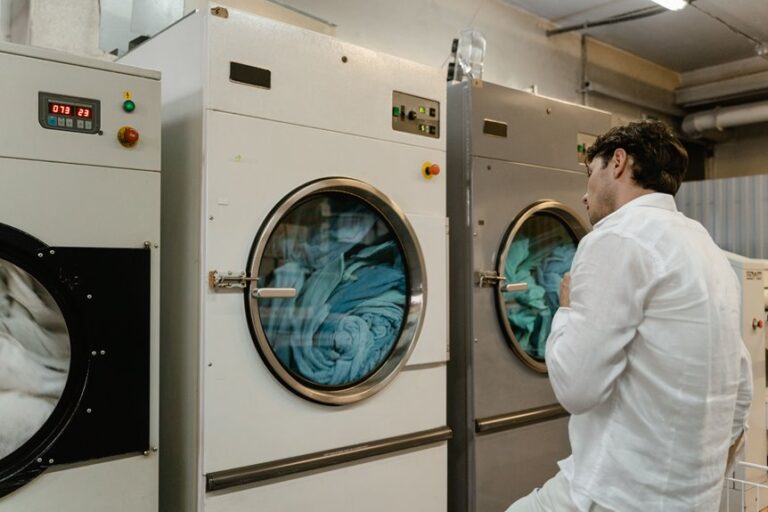
Dryers take longer to dry when airflow is blocked, the drum is overloaded, or clothes start out too wet. Lint-clogged vents and filters reduce heat and circulation, stretching cycle times. A failing heating element, thermostat, or moisture sensor can also slow drying. Using proper load sizes, regular lint removal, and dryer-vent cleaning restores normal performance. Routine maintenance and quick repairs cut drying time and prevent bigger problems.
Common Reasons a Dryer Dries Slowly
When your dryer is taking much longer than usual, the problem often starts with one of a few common issues that slow the drying cycle down.
You might be overloading it, which leaves clothes packed tight and stops warm air from moving well.
Different fabric types also dry at different speeds, so thick towels and jeans need more time than light shirts.
If your home room feels cold or damp, the dryer works harder and loses energy efficiency.
You may also have a weak power supply or the wrong heat setting, both of which can leave laundry half-dry.
Even a few heavy items can throw off the balance.
The good news is that these problems are common, and you’re not dealing with some mystery from another planet.
Clean the Lint Filter First
A clogged lint filter is often the initial thing to check, because it can slow your dryer down more than you’d expect. You can pull it out, peel off the lint, and wash it with warm water should film build up. Then let it dry fully before you slide it back in.
Whenever you do this every load, you help air move the way it should and keep clothes from feeling damp at the end. Should your filter look worn, you might need to replace gasket parts around the housing so the fit stays snug. You can also inspect nozzle openings for stray lint or residue.
These small steps take only minutes, but they can make your dryer feel like part of the household team again.
Check for a Clogged Dryer Vent
In case your dryer still takes too long, check the vent for blockages like weak airflow, extra heat around the dryer, or clothes that stay damp after a full cycle.
A clogged vent can trap moist air, which makes your dryer work harder and can even leave lint behind in places you can’t see. Cleaning the vent duct can restore airflow and help your dryer dry faster without all that wasted effort.
Signs Of Vent Blockage
A clogged dryer vent can sneak up on you and make laundry day drag on far longer than it should. You may notice a blocked flapper outside, lint around the opening, or even signs of vent rodents nesting nearby.
These clues matter because they point to a vent that isn’t clearing out air the way it should. Whenever you check the vent hood, look for a flap that stays shut, sticks, or won’t move freely. Also, listen for odd scratching or rustling sounds near the vent line.
Should you spot these warning signs, you’re not alone, and you’re not stuck with them either. A quick inspection can help you catch the problem at an earlier stage and keep your dryer working with less hassle for your household.
Reduced Airflow Effects
Whenever your dryer can’t breathe, the whole cycle can slow to a crawl. You might notice damp towels, extra heat, or a load that still feels heavy after one run. That’s often a vent restriction, and it can leave you frustrated whenever you just want clean clothes done right. A fan obstruction can also weaken the pull, so moist air lingers inside the drum.
| Effect | What You Notice |
|---|---|
| Slow drying | Clothes stay wet |
| Heat build | Dryer feels hot |
| Weak exhaust | Little air at vent |
| Longer cycles | More waiting |
If airflow drops, your dryer works harder and your routine gets longer. You’re not doing anything wrong. You’re just seeing the strain of poor venting, and fixing it starts with noticing these signs promptly.
Cleaning Vent Ducts
Clearing the vent duct can make a big difference fast, because lint buildup can choke the dryer’s airflow and trap moist air inside. Whenever you clean it, you help your load finish sooner, and you also lower stress on your machine. You can feel more in control whenever laundry day stops dragging on.
- Unplug the dryer and pull it away from the wall.
- Remove lint from the duct, vent cover, and hose.
- Check for a seasonal pest nest or crushed tubing.
If clothes still stay damp, ask for a professional inspection. That extra step can catch concealed blockages and weak airflow before they turn into bigger trouble. With a clear vent, your dryer works like it should, and your laundry room feels easier to manage.
Don’t Overload the Dryer Drum
Whenever you pack the dryer too full, your clothes can’t move freely, and that slows drying down fast.
A proper load size gives warm air room to flow through the drum and reach every item.
In the event the drum is stuffed, you can trap moisture inside, so even a good dryer has to work harder than it should.
Proper Load Size
A packed dryer drum can turn a quick laundry task into a long wait, and it’s one of the most common reasons clothes stay damp. Whenever you create balanced loads, you help warm air reach every item and keep the cycle moving smoothly. Mix fabric types with care, so heavy towels don’t crowd out lighter shirts and confuse drying times.
- Fill the drum about halfway to two-thirds full.
- Separate thick items from thin ones.
- Give each piece room to tumble freely.
You’ll feel the difference fast, because your laundry dries more evenly and you spend less time restarting cycles. Suppose you’ve ever stood there pondering why your socks still feel chilly, this simple change can make your routine easier and help your clothes fit right into the dry, ready to wear crowd.
Airflow Blockage Issues
Even with the right load size, a dryer can still struggle in case air can’t move through the drum and vent path. You might notice damp spots, extra heat, or clothes that feel heavy after one cycle.
Check the lint screen initially, then look at the vent hose for bends, kinks, or crushed sections. A clean path helps your dryer breathe, and that matters more than many people suppose.
Should your home have a tight ventilation design, trapped air can slow drying fast. You should also watch for a compressor obstruction in nearby laundry systems, since blocked airflow can ripple through the setup.
Once you clear these blockages, you give your dryer the space it needs to work with you, not against you.
Use the Right Heat Setting
Start matching the heat setting to the fabric, because the wrong temperature can leave clothes damp long after the cycle ends. You’ll get better temperature control whenever you sort cotton, towels, and synthetics before you press start.
- Use high heat for thick items that hold water.
- Choose medium heat for everyday mixed loads.
- Pick low heat for delicate fabrics that need gentler care.
Once you match the setting, you protect your clothes and improve energy efficiency too. In case you crank the heat too high, fabrics can trap moisture inside or dry unevenly, and that can make the wait feel never ending. So trust the labels, choose the setting with care, and let your dryer work with your laundry instead of against it.
Watch for Moisture Sensor Problems
Sometimes the problem isn’t your load or your heat setting, but the dryer’s moisture sensor.
In the event that your clothes still feel damp after a full cycle, you might be contending with sensor corrosion or calibration drift.
You can wipe the sensor strips inside the drum with a soft cloth and a little rubbing alcohol. That small step often helps the dryer read moisture more accurately.
Should the sensor look worn, dirty, or flaky, it could require replacement.
You don’t have to guess, either. Run a short cycle with a few damp towels and see whether the dryer shuts off at the right time.
Whenever the sensor works well, your dryer feels more reliable, and your laundry routine feels less frustrating for everyone.
Signs of a Bad Heating Element
Should your dryer still run but your clothes keep coming out damp, the heating element could be the real problem. You’re not alone, and this issue can feel frustrating quickly. Look for these signs:
- Clothes need two cycles to dry.
- The drum feels cool instead of warm.
- You notice burning smells or element corrosion.
When the heating resistance drops, your dryer can’t build enough heat to finish the job. That means you might hear the machine running normally, yet still find soggy towels and heavy jeans at the end.
Provided the element looks dark, cracked, or rusty, that’s another clue. You don’t need to guess your way through it. Spotting these signs sooner helps you feel in control and keeps your laundry routine from falling apart.
Clean the Dryer Vent Duct
A clogged dryer vent duct can trap lint and slow your dryer down fast.
Whenever you clear that buildup, air can move freely again, and your clothes dry much sooner.
Should your dryer still feels sluggish, this is one of the initial places you ought to check.
Clear Lint Buildup
As soon as your dryer starts dragging its feet, the vent duct is one of the initial places to check, because lint can quietly clog the path and choke off the airflow your machine needs.
- Open the vent and clear loose fuzz with a vacuum or brush.
- Wipe dryer surfaces near the trap so lint doesn’t drift back in.
- Keep lint containment simple by emptying the screen after every load.
When you take a few minutes to clear buildup, you help your laundry team up with you instead of working against you.
You’ll notice fewer damp spots and less frustration, and that feels good on busy days.
In case the duct feels packed, stay patient and work slowly so you don’t push lint deeper.
Your dryer wants a cleaner route, and you can give it one with care.
Improve Airflow Speed
Now that you’ve cleared the easy lint spots, it’s time to look deeper and help your dryer breathe better through cleaning the vent duct.
You can pull the dryer away from the wall, then check the hose for bends, clogs, or crushed spots. Use a vent brush or a vacuum to remove buildup, and keep moving until the path feels open. Whenever air flows fast, your clothes dry faster, and your laundry room feels less stressed too.
In case the duct is old or too long, consider ventilation upgrades so the air has a shorter, easier route outside.
While you’re there, give fan maintenance a look, because a weak fan can slow everything down.
A clear duct helps your dryer work with your routine, not against it.
See If the Washer Left Clothes Too Wet
Should your dryer seems to drag on forever, start beginning checking the load that came out of the washer, because clothes that stay too wet in the spin cycle have a much harder time drying later. In case you’re part of a busy home, you’ve felt that drag. The washer can leave extra water behind whenever the spin speed is low or the fabric type holds moisture.
- Check heavy items like jeans and towels initially.
- Rewash a large load on a higher spin setting.
- Separate thick fabrics from lighter pieces next time.
That small change can help your dryer work with your clothes, not against them. Whenever you catch excess water early, you save time, ease frustration, and keep laundry day feeling a little more under control.
How High Humidity Affects Drying
As the air in your laundry room feels sticky, your dryer has a harder job because damp air slows down how fast moisture leaves your clothes. You can feel less progress whenever room ventilation is weak, since the machine keeps recycling heavy air instead of clearing it out.
| Humidity level | Drying impact | What you notice |
|---|---|---|
| Low | Faster drying | Clothes finish sooner |
| Medium | Normal drying | Loads dry on time |
| High | Slower drying | Towels stay heavy |
Whenever fabric swelling happens, fibers hold extra water, so each cycle stretches longer. You can help by opening a window, running a fan, or clearing lint buildup around the vent. Small changes like these let your dryer breathe, and they help your laundry feel lighter, fresher, and more in sync with your day.
When Dryer Age Becomes a Factor
Should your dryer has been working fine for years and then starts dragging its feet, age could be part of the problem.
A tired machine can lose heat, airflow, and drum strength as the dryer lifespan winds down, and you might notice a clear performance decline. You’re not imagining it, and you’re not alone. Many homes face this quiet slowdown.
- Older heating parts warm less evenly, so clothes stay damp.
- Worn drum seals let heat escape, which slows each load.
- Aging sensors could stop reading moisture as well, so cycles run longer.
If your dryer feels like it’s giving you the slow treatment, that’s often just normal wear.
Small changes over time can make laundry day feel endless, but a little awareness helps you stay ahead of the drag.
When to Call a Dryer Repair Pro
Should your dryer still takes too long after you’ve cleaned the lint trap and checked the basics, it could be time to call a repair pro.
In case you smell burning, hear grinding, or notice the drum stops and starts, don’t push it. A trained tech can do a wiring inspection, evaluate the thermostat, and find concealed airflow issues that you can’t see. They can also tell you whether a belt, motor, or heating part needs help.
Before you book, do a quick warranty check so you know what’s covered and save money if you can.
You’re not failing the assessment here; you’re protecting your home and laundry routine. With the right pro, you can get back to warm towels and less waiting.
Frequently Asked Questions
How Often Should I Replace My Dryer’s Lint Filter?
You usually do not need to replace your dryer’s lint filter often. Clean it after every load and follow the manufacturer’s replacement schedule if it becomes damaged. Filter lifespan depends on use, care, and wear.
Can Wool Dryer Balls Actually Reduce Drying Time?
Yes, you can use wool dryer balls to reduce drying time by separating clothes and improving moisture wicking. They also help maintain wool by lasting longer, and you’ll feel like part of a smarter laundry routine.
Why Do My Clothes Still Smell Damp After Drying?
You’re likely leaving moisture in fabrics, which lets bacterial growth create musty odors. You can improve airflow, use more heat, and avoid overloading so your clothes dry fully and feel fresh again.
Is It Safe to Dry Shoes in My Dryer?
No, you shouldn’t dry shoes in your dryer. You will risk heat damage and ventilation obstruction, and that idea about “quick drying” can backfire. You are better off air drying them and staying with the safe crowd.
How Can I Tell if My Dryer Is Level?
You can check level with a carpenter’s level on top; if it rocks, adjust the feet until it sits steady. You’ll know you’ve got it once your dryer feels secure and runs quietly.