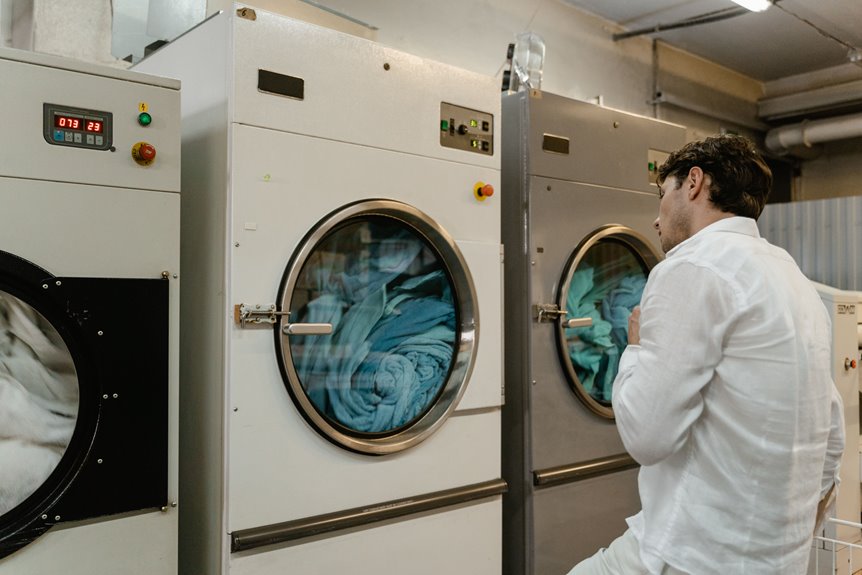
Vinegar cleans a washing machine by cutting through soap scum, mineral deposits, and mildew odors. A simple cycle with distilled white vinegar loosens grime in both top-load and front-load machines. Focus on the drum, gasket, and detergent drawer for the best results. Use the proper vinegar amount and run a hot-water cycle to maximize cleaning power. Regular vinegar cleaning keeps the washer smelling fresh and helps it run more efficiently.
Gather Your Cleaning Supplies
Before you start, gather everything you need so the job feels easy, not messy. You’ll feel more in control once you set out your vinegar, a clean cup, microfiber towels, and rubber gloves.
Keep a small bucket nearby too, because it helps you stay organized and saves extra trips. Provided you’ve got a soft brush, place that with the rest of your supplies so it’s ready whenever you need it.
Next, check that your towels are dry and your gloves fit well, since comfort matters whenever you’re doing this kind of work. Whenever everything sits in one spot, you can move through the task with less stress and more confidence.
That simple setup helps you feel like you’ve got this.
Run the Vinegar Cleaning Cycle
Set the washer to a hot water cycle, then pour about two cups of white vinegar directly into the drum. Close the door and let the cycle run all the way through.
The warm water helps the vinegar loosen odor, soap film, and concealed grime, so you get a fresher machine without much effort. While it works, you can relax appreciating you’re doing smart seasonal maintenance for your home.
Should your washer have extra rinse cycles, use one after the vinegar wash to clear away any leftover smell. That small step keeps the drum ready for your next load and makes the whole process feel easy.
You’re not just cleaning an appliance; you’re caring for a space that helps your household run smoothly.
Clean a Top-Load Washer
Top-load washers need a little different care, so start lifting the lid and checking the tub and agitator for any visible lint, soap buildup, or stuck-on grime. Whenever you spot messes, wipe them with a soft cloth and a little vinegar.
Next, pour vinegar into the tub and run a deep cleaning cycle with hot water. This helps loosen concealed residue and freshen the machine.
After that, pause to scrub the rim, dispenser, and controls, since these spots collect sneaky buildup too.
In case your washer has filter maintenance needs, clean that filter now so water can move freely. Then close the lid and let the washer finish.
You’re making space for cleaner loads, and that feels pretty great, doesn’t it?
Clean a Front-Load Washer
For a front-load washer, start through wiping the door gasket, since trapped moisture and lint can lead to that musty smell nobody wants.
Then run a vinegar cycle through the drum to help loosen grime, and don’t forget the detergent dispenser, where sticky buildup loves to hide.
With these steps, you’ll keep the washer fresher and make each load feel a little easier.
Door Gasket Care
Even a clean front-load washer can hide grime in the door gasket, so this small ring of rubber needs your attention.
Start with a quick gasket inspection and pull back each fold to check for lint, hair, and trapped water.
Then wipe the area with a cloth dipped in vinegar and warm water, making sure you reach the seams where mildew likes to settle.
Dry the gasket fully so it stays fresh and snug.
Should the rubber feel stiff, use a tiny amount of seal lubrication made for appliances, then wipe away any extra.
You’re not just cleaning a part; you’re helping your washer feel cared for and ready for the next load.
A few calm minutes here can keep your laundry space feeling welcoming.
Drum Vinegar Cycle
Now that the door gasket is clean, turn your attention to the drum and give your front-load washer a simple vinegar cycle. You’re almost there, and this step helps your machine feel fresh again.
Pour two cups of white vinegar into the empty drum, then close the door. Set the washer to a hot cycle and let it run without clothes or detergent. The heat helps loosen leftover residue, while the vinegar works on odors and buildup.
Once the cycle ends, leave the door open so the inside can dry. Should you notice a mild vinegar scent, don’t worry. It fades fast. This easy routine keeps your washer ready for the next load and helps you feel good about caring for your home.
Detergent Dispenser Cleaning
Slide out the detergent dispenser drawer and give it the same careful attention as the rest of your washer. You’re not alone provided this little tray gets ignored; it hides soap buildup fast.
Rinse it under warm water, then use an old toothbrush to scrub each corner and slot. Should you spot dispenser mold, soak the drawer in equal parts vinegar and warm water for 10 minutes.
Wipe the housing inside the washer too, because grime likes to stay with the group. Keep moving gently, and check the back of the drawer for sticky residue.
Once everything looks clean, dry the parts fully before you slide them back in. That small step helps your front-load washer stay fresh, so laundry day feels easier and a lot less gross.
Clean the Drum, Dispensers, and Gasket
Start next wiping away the grime that conceals inside the drum, because this is where odors, soap film, and leftover lint like to settle in. Dampen a cloth with vinegar and warm water, then wipe the drum, dispensers, and rubber gasket with care. You’re not just cleaning a machine, you’re caring for the place your laundry lives. For stubborn spots, use a soft brush and a little baking soda paste.
- Wipe the drum in circles.
- Lift the dispenser tray and scrub corners.
- Pull back the gasket and clear obscured residue.
- Should you spot rust removal needs or paint restoration marks, treat them gently with a safe cleaner.
Finish by drying each surface well, so your washer stays fresh and ready for the next load.
Remove Odors and Mildew
Vinegar helps cut through stubborn washer odors, so it can leave your machine smelling fresh again without much effort.
Whenever you use it regularly, you also help slow mildew growth in damp spots like the gasket and drum.
For the best results, keep the door open after washes so moisture can escape and mildew doesn’t get a chance to settle in.
Vinegar Deodorizing Power
Bad smells can cling to your washer longer than you’d expect, but a simple vinegar wash can help clear them out fast. You don’t need fancy products when vinegar potency works on trapped funk and odor neutralization.
Whenever you run a hot cycle with vinegar, the smell starts fading, and your laundry space feels fresher again.
- Pour vinegar into the drum.
- Run a hot, empty cycle.
- Wipe the door and seal.
- Let the washer air out.
This easy step helps you feel back in control, and it fits right into your cleaning routine. Should your machine have been holding onto stale notes, you’ll notice the change quickly.
A fresh washer makes every load feel cleaner, and that little reset can make home care feel a lot more doable.
Mildew Prevention Tips
To keep mildew from settling in, the real trick is to stop moisture from hanging around after each wash. You can do that by leaving the lid or door open so air circulation can dry the drum, gasket, and soap tray. Wipe away puddles, because even a few drops can feed that musty smell you hate.
For extra humidity control, run a fan or dehumidifier in a damp laundry room, especially after hot cycles. You should also pull out wet clothes right away, since forgotten laundry turns into a mildew party fast. Then, check rubber seals and the detergent drawer for concealed water. Should you clean those spots often, you’ll help your washer stay fresh, and your whole laundry routine will feel a lot less gross.
Clean Your Washing Machine Monthly
Once a month, give your washing machine a quick vinegar clean so it stays fresh and keeps doing its job well. You’re not just wiping away gunk, you’re protecting the crew that helps your clothes come out clean.
For steady monthly maintenance, pour vinegar into the drum, run a hot cycle, and let the machine breathe after.
- Check the drum and door seal.
- Wipe away lint and residue.
- Clean the detergent drawer.
- Schedule filter replacement as necessary.
This simple routine helps you stay ahead of smells and buildup before they turn into a bigger chore. Whenever you treat your washer like part of your home team, it rewards you with fresher loads and less hassle. Keep the habit going, and the machine will feel ready whenever you are.
Never Mix Vinegar With Bleach
Vinegar can help clean your washing machine, but it should never meet bleach, even through accident. Whenever those two touch, you can trigger harsh vinegar reactions that release dangerous fumes.
Should you be cleaning a load area or a dispenser, rinse it well before you add anything else. That simple step keeps you safe and calm.
You don’t need to guess or worry, because many bleach alternatives work better for a vinegar wash anyway. Try plain hot water, a soft cloth, or a washer-safe cleaner should you need extra help.
Also, keep your cleaning supplies separate and labeled so nobody in your home gets mixed up. A little care goes a long way, and you deserve a laundry space that feels safe, easy, and welcoming.
Keep Your Washer Cleaner Longer
A clean washer can stay fresh longer whenever you build a few simple habits into your laundry routine. You don’t need a big overhaul, just steady regular maintenance that feels easy to keep up with. Start with these small moves:
- Leave the door open after each load so moisture can escape.
- Wipe the drum and gasket so soap scum doesn’t settle in.
- Use the right amount of detergent to slow grime.
- Skip too much fabric softener buildup by choosing less or cleaning the dispenser often.
Once you stay on top of these steps, your washer smells better and works better, too.
You’re not just cleaning a machine. You’re caring for a space that helps your whole home feel calmer, fresher, and more together.
Frequently Asked Questions
Can I Use Apple Cider Vinegar Instead of White Vinegar?
Yes, you can, but white vinegar works better. Apple cider vinegar leaves a stronger scent impact, so if you prefer a neutral smell, choose wisely — there is truth in “if it ain’t broke, don’t fix it.”
How Much Vinegar Should I Pour Into the Washer?
Pour about 2 cups of white vinegar into your washer; that is the usual amount guideline. Run a hot cycle timing for a full clean, and you will feel right at home with a fresher machine.
Is Vinegar Safe for High-Efficiency Washing Machines?
Yes, you can use vinegar in many HE washers, but check your model’s manual for HE safe concerns and seal compatibility. You’ll keep your machine in the group of well cared for appliances.
Can I Clean a Washing Machine With Vinegar and Baking Soda?
Yes, you can, but don’t mix them together, they cancel out like rival teammates. You’ll get natural bleaching from baking soda and odor neutralizing from vinegar, helping your washer feel fresh and part of the crew.
How Long Should Vinegar Sit in the Machine Before Rinsing?
Let vinegar sit about 30 to 60 minutes, then run a rinse cycle. You’ll feel right at home keeping your machine fresh, and you do not need to let it sit longer for routine cleaning.