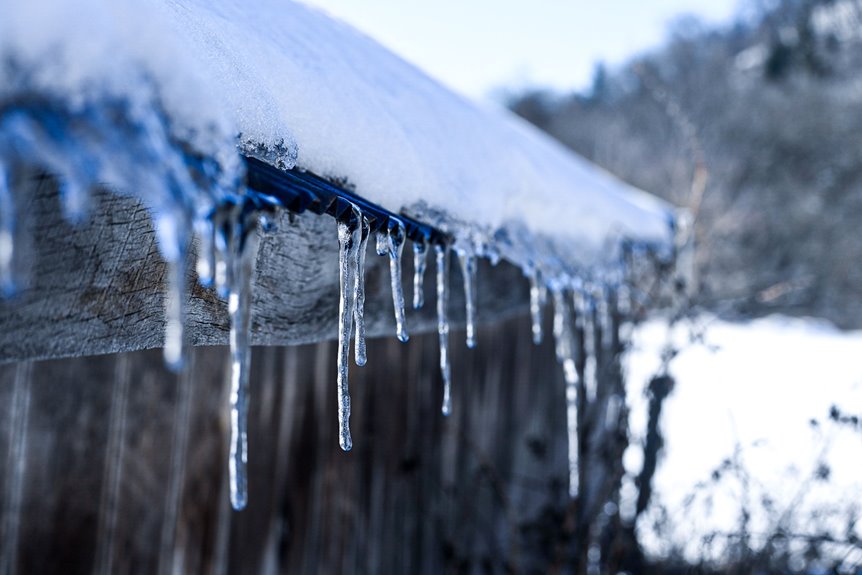
Ice dams form when warm attic air melts snow on the upper roof, and that water refreezes at the colder eaves. Meltwater then pools behind the ice ridge and can seep under shingles. That trapped water often leads to leaks, damaged roofing, and ruined insulation. Heat leaks, inadequate insulation, and persistent snow cover increase the risk. Fixing attic ventilation and sealing heat leakage spots prevents most ice dam problems.
How Ice Dams Form on Roofs
Whenever warm air escapes into your attic and heats the roof deck, snow on top starts to melt even though the weather outside still feels cold. That meltwater slides down toward the colder roof edge, where it refreezes.
Over time, this frozen ridge grows into an ice dam. You can consider it as a snowmelt traffic jam on your roof. As the ridge thickens, more water backs up behind it and soaks the shingles.
Good attic ventilation helps keep the roof colder and slows this cycle. Your roofing materials also matter, because some surfaces hold heat longer and let melting happen faster.
Whenever you grasp this pattern, you can spot how a small warm spot turns into a stubborn winter problem.
Roof Heat Loss and Attic Air Leaks
Heat can escape through leaky attic hatches, thin insulation, gaps around lights, and unsealed vents, and that lost warmth starts the problem.
You mightn’t notice these air leaks right away, but they can warm the underside of your roof and make snow melt too soon. Then the meltwater refreezes at the cold edge, which sets up the ice dam that gives you so much trouble.
Heat Loss Sources
Start by looking at where your home could be losing warmth, because even a small leak can help set the stage for ice dams.
Warm air rising into the attic can escape through weak insulation, and that steady heat melts snow above the roof deck.
If the roof stays warmer than the outside air, water runs down and refreezes at the edge.
You also want to watch attic ventilation, since poor airflow can trap heat and keep the roof surface uneven.
Thermal bridging can add to the problem whenever wood or metal parts carry heat through your insulation.
These heat loss sources often work together, so a few small fixes can make your home feel more secure, cozy, and ready for winter’s messiest moods.
Attic Air Leak Paths
Attic air leaks can quietly chew through your roof’s warmth, and they often hide in plain sight. You can help your home by checking the attic air leak paths initially. Warm indoor air rises through gaps around attic ventilation, hatches, and light fixtures penetrations, then escapes into the attic. That heat loss nudges snow on the roof above those spots to melt faster.
To feel more in control, seal cracks with caulk or foam, and add weatherstripping where it fits. Also, keep insulation snug so air can’t slip through open edges. Once you block these leaks, you support a tighter, more comfortable home. It’s a small fix, but it can make your whole house feel like it’s finally on the same team.
Warm Roof Surface Effects
Whenever those attic leaks stay open, your roof surface can warm up in places it should keep cold. That extra heat melts snow unevenly, and then refreezing starts the ice dam cycle. You can envision it like a cozy room sending warmth where it doesn’t belong. Solar gain can add more heat during sunny hours, and thermal bridging can pull indoor heat into cold roof spots. As soon as your roof stays warmer than the edge, meltwater runs down and freezes at the eaves.
- Seal gaps around lights, hatches, and ducts.
- Add insulation where heat slips through.
- Balance attic airflow so the roof stays cooler.
Once you tighten these weak spots, you help your home feel more protected and your roof act like a team player.
How Poor Insulation Traps Warm Air
Poor insulation lets warm indoor air drift into places it shouldn’t, and that is a big part of why ice dams form on roofs. Whenever you feel comfortable inside, concealed heat can still rise into the attic and warm the roof deck. That uneven warmth creates trouble for your home and your peace of mind.
| What you notice | What it means |
|---|---|
| Cold rooms | Heat is escaping upward |
| Drafty ceilings | Air leaks are open |
| Uneven attic warmth | Insulation is thin |
| Higher bills | Energy is slipping away |
| Musty corners | Moist air lingers |
With better air sealing and attic ventilation, you help keep warm air where it belongs. Good insulation works like a caring team around you, so your home stays steadier, safer, and easier to love.
Snow Melt and Refreezing at the Eaves
Once your roof stays warm, it melts the snow above it, and that water starts moving toward the eaves.
At the colder edge, the meltwater freezes again, and you can get a growing ice ridge.
That ridge traps even more water behind it, which makes the problem worse.
Warm Roof Melting
A warm roof can quietly start an ice dam through melting snow from the surface above the attic, even on a cold day. You might feel frustrated whenever your home works against you, but the process is simple. Heat from your inhabited space rises, and solar gain can add more warmth to the roof deck. That extra heat melts snow, and the water moves downward until it reaches a colder edge.
- In case attic ventilation is weak, warm air lingers longer.
- In case roof temperatures stay uneven, melting speeds up near the top.
- In case the edge stays chilly, water can freeze there and build a ridge.
Upon noticing this pattern, you can act promptly and protect your space with confidence.
Cold Eave Refreezing
Along the cold eaves, melted snow often hits a surface that’s much colder than the roof above, and that sharp drop can freeze the water fast.
You might notice this at the edge of your roof whenever warmth from inside keeps the upper snowpack thawing, but the eaves stay chilly. Then the meltwater runs down, meets the frozen drip edge, and locks up again.
Over time, this repeats in cold gutters and along the roof line, so you start to feel stuck with a stubborn icy edge.
That refreezing can trap more water behind it, which makes the problem grow quietly.
If you spot this pattern promptly, you can protect your home and keep your place feeling safe, steady, and cared for.
Ice Ridge Formation
At the eaves, snowmelt can slow down and freeze again, building a hard ice ridge that seems to grow a little more each cold night. You might notice this whenever warm air escapes your attic and melts snow above, then the water runs to the colder edge and locks in place. That’s how an ice ridge starts, and it can feel unfair when your roof seems to work against you.
- Melted water reaches the overhang initially.
- Cold shingles turn that water into a stubborn ice ridge.
- A snow cornice can trap more melt behind it.
Because this ridge blocks drainage, each new thaw adds pressure. You’re not alone provided this looks worrying. Small changes in roof temperature can make a big difference here.
Why Roof Slope and Sun Exposure Matter
As snow lands on a roof, the slope and the sun often determine how fast it melts, where the water runs, and whether that water freezes again at the edge.
Whenever your roof has a steep slope angle, melted water usually moves off faster, so less sits near the eaves. On a flatter roof, water lingers, and that gives ice more time to build.
Solar orientation matters too. Suppose one side gets more sun, it warms sooner, so snow melts unevenly and feeds the colder edge.
You might notice this most on roofs that look healthy but still trap runoff in one place. Thus, whenever slope and sunlight work together, they can turn a simple thaw into the start of an ice dam, even in a house that feels cozy below.
Weather Conditions That Lead to Ice Dams
Should a cold spell follow a mild one, your roof can turn into a trouble spot fast. You’re not alone in that worry, and the weather often teams up against you. Whenever warm days melt snow, then a hard freeze hits, runoff refreezes at the edge. That’s whenever ice dams start to grow.
- Polar vortex blasts can lock in deep cold after thawing.
- Lake effect snow can stack extra snow on your roof, which later melts and freezes.
- Fast temperature swings let meltwater move, then trap it in place.
Windy storms can also push snow into uneven drifts, so some roof areas melt faster than others. With these patterns, your home can feel like it’s fighting the season.
Gutter Problems That Make Ice Dams Worse
Your gutters can quietly turn a winter nuisance into a much bigger headache.
Whenever gutter clogging traps leaves, twigs, and grit, melting snow has nowhere to go. It backs up, refreezes, and pushes icy water under shingles at the roof edge. That extra weight can strain the gutter line, too.
Should your downspout freezing block drainage, water stays trapped longer and builds a thicker лед? Nope. More ice forms, and the problem spreads fast.
You might notice sagging sections, overflow at corners, or hard ice ridges hanging from the eaves.
Whenever you keep gutters clear and moving, you help your roof shed water the way it should. That small step gives your home a better chance to stay dry, steady, and winter ready.
Signs Your Roof May Be Prone to Ice Dams
A few clear warning signs can tell you that your roof is more likely to form ice dams as cold weather rolls in. You might notice uneven snow melt, chilly upstairs rooms, or water stains near ceilings and walls. These clues often mean heat is escaping and warming the roof deck.
- Look for shingle deterioration, such as curling, cracking, or missing edges.
- Check your attic for damp insulation and poor soffit ventilation.
- Watch for icicles along eaves, since they often signal trapped heat.
When these signs show up together, your home could be sending you a friendly heads-up. You’re not alone in handling it, and catching the problem sooner helps you protect your roof, your comfort, and your peace of mind before winter gets stubborn.
Frequently Asked Questions
How Can I Safely Remove an Ice Dam Myself?
You can safely chip away only the reachable edge, use a roof rake, and melt channels with calcium chloride socks never rock salt. Improve roof ventilation and gutter heating, and call a pro when the ice looks monstrous.
Are Ice Dams Covered by Homeowners Insurance?
Yes, you’re often covered provided ice dams damage your roof, but your policy might include insurance exclusions and deductible disputes. You’ll have better protection once you review coverage, document damage, and file promptly.
Can Ice Dams Cause Interior Ceiling Damage?
Yes, ice dams can cause interior ceiling damage. You will often see stains, peeling paint, and sagging drywall as meltwater leaks inside. Better attic ventilation and roof insulation help protect your home and keep your family comfortable.
What Tools Help Prevent Future Ice Dams?
You’ll prevent future ice dams with roof ventilation tools, attic insulation, and a roof rake, like when your neighbor cleared eaves and improved airflow. You’ll feel confident, and your home is in the safe, prepared group.
When Should I Call a Roofing Professional?
Call a roofing professional if leaks, repeated ice dams, or visible damage appear. A roofing inspection can pinpoint trouble quickly, and improved attic ventilation helps protect your home and keep your community safe.