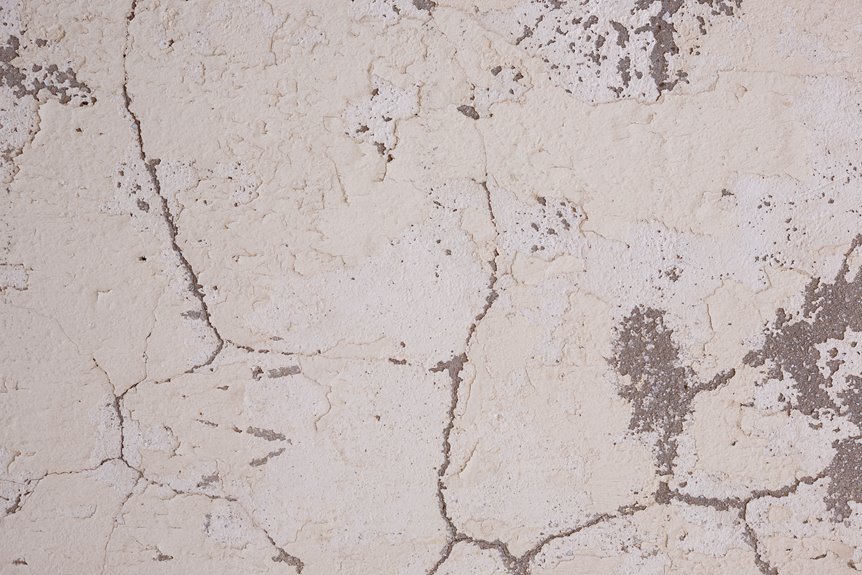
About 60% of ceiling cracks come from normal house movement as structures settle over time. Common causes include foundation settling, humidity swings, poor drywall installation, and concealed water damage. Each cause leaves distinct signs like widening gaps, stains, or sagging areas. Spotting stains or soft drywall points to moisture issues, while hairline splits near joints suggest settling or installation flaws. Identifying the source guides the right fix and prevents small cracks from turning into major repairs.
Common Causes of Ceiling Cracks
Ceiling cracks often start small, but they can point to bigger changes happening above your head. You could notice them after structural vibrations from heavy traffic, doors slamming, or nearby construction shake the ceiling.
Heat and cold can also play a part, because thermal cycling makes building materials expand and contract over time. When that movement repeats, the surface might split along weak spots, tape lines, or joints.
Sometimes moisture adds stress too, especially if a leak softens the material and leaves it more likely to crack. In case you see a crack, don’t panic. You’re not alone, and many homes show these signs. The key is to watch how it changes, so you can understand what your ceiling is telling you.
Normal Settlement and House Movement
Your ceiling could crack once your house settles naturally, and that movement is often part of normal aging.
You might also notice small changes as seasons shift, since heat, cold, and moisture can make materials expand and contract.
Even minor framing movement can leave thin lines above you, but these cracks are often more annoying than alarming.
Foundation Settling Naturally
Even although a house is built well, it still moves a little as the years pass, and that normal settling can lead to small ceiling cracks.
You’re not alone when you notice them; many homes go through soil compaction and gradual subsidence as the ground tightens under the foundation.
This slow change can shift framing just enough to stress drywall seams and tape.
Usually, the cracks stay thin and clean, which tells you the movement is minor, not scary.
You can often spot them near corners, joints, or where walls meet the ceiling.
Should the crack stays narrow and doesn’t spread fast, your home is likely adjusting in a normal way, like a shoe breaking in, just with less style and more dust.
Seasonal Expansion Shifts
As seasons change, your house can expand in warm weather and contract whenever temperatures drop, and that small back-and-forth movement can show up as fine ceiling cracks. You could notice them after a hot summer, a cold snap, or a stretch of rain. This kind of thermal cycling is normal, and it doesn’t mean your home is falling apart. Often, the ceiling joints simply react to the stress.
Good attic ventilation helps steady moisture and temperature, so your rooms stay calmer through the year. Once your home settles into each season, tiny lines can appear, then stay quiet for months. You’re not alone should you spot them; many homeowners see the same thing. Keep an eye on them, and trust that many are just part of everyday house movement.
Minor Framing Movement
Whenever a house settles, the frame can shift a little, and that small movement can show up as thin ceiling cracks. You’re not alone when you notice them, because minor settling happens in many homes. As the structure relaxes, framing shrinkage can pull joints apart just enough to leave hairline lines.
| Sign | What you notice | What it means |
|---|---|---|
| Hairline crack | Thin, straight line | Normal movement |
| Nail pop | Small bump nearby | Framing shifted |
| New crack | Appears after seasons change | Minor settling |
| Stable crack | Stays the same | Often low concern |
You can watch the crack over time and stay calm. Should it widen, you might need a pro. Usually, though, your home is just adjusting, and that’s part of residing in a real house, not a broken one.
Humidity and Seasonal Ceiling Shifts
As humidity rises and falls through the seasons, your ceiling can move just enough to crack. You’re not imagining it, and you’re not alone. Whenever seasonal humidity changes, building materials swell and shrink, and that small shift can stress tape joints and paint lines.
In case your home also has weak attic ventilation, warm air can build up, then cool fast, which adds more movement overhead. You might notice thin cracks near seams, corners, or light fixtures. Those lines often look worse after dry winter air or muggy summer weeks.
A little care helps you stay ahead of them. Check indoor humidity, keep vents clear, and watch for repeat cracks in the same spots. That pattern tells you the ceiling is reacting to the weather around you.
Water Damage Behind the Ceiling
Whenever you spot ceiling cracks, check for concealed leak signs like peeling paint, soft spots, or a musty smell.
Water can leave a stain before it spreads, and the ceiling might start to sag as the damage grows.
In case you catch these clues sooner, you can act fast and keep a small leak from turning into a bigger headache.
Hidden Leak Signs
A concealed leak can quietly leave clues long before you see a drip. You could notice a musty smell, soft air near the ceiling, or a faint cool spot after showers or rain. These small shifts often point to a slow drip above your head, and they can make damp insulation hide in the attic space.
You might also hear light ticking, feel unexpected humidity, or spot peeling paint around vents and corners. Trust those hints, because your home is trying to tell you something. Whenever you check pronto, you protect your space, your routine, and the people who live with you. A quick look in the attic can help you catch trouble before it spreads and stress grows.
Stain And Sagging
Water stains and a sagging ceiling usually mean moisture has been sitting behind the surface for a while. You could notice yellow rings, soft spots, or paint that bubbles. Those are clear stain causes, and they often point to a roof leak, plumbing drip, or condensation above you.
In case the drywall feels heavy, your ceiling could be pulling away from the framing. That can spread fast, so act promptly. Check the area above the stain, then call a pro should you see swelling or fresh drips.
For sag prevention, keep gutters clear, watch attic humidity, and fix leaks quickly. You deserve a home that feels safe, so don’t ignore these signs, even though the spot looks small.
Poor Drywall Installation and Finishing
Poor drywall installation and finishing can quietly set the stage for ceiling cracks, even in a brand-new room. Whenever you see uneven taping or joint misalignment, the seams don’t bond well, and small gaps can open as the surface dries.
You might notice hairline cracks initially, then longer lines near corners or across joints. In case the installer used too much mud, too little mud, or rushed sanding, the ceiling can look smooth at the outset but fail later.
You don’t need to panic, though. Careful patching, correct tape placement, and even finishing help the surface move together instead of splitting apart. Once you know these weak spots, you can spot trouble sooner and feel more confident asking for fixes that last.
Foundation Problems Causing Ceiling Cracks
Whenever the framing looks fine but cracks keep showing up, the problem could run deeper than the drywall. You might be seeing your home react to soil movement below.
Should the ground swell, sink, or shift, it can bend the structure above it and open lines in the ceiling. Foundation heave can push walls upward, while settling can pull them apart.
Even small changes can travel through joists and seams, so the crack you see upstairs could start below your feet. Substructure failures can also let movement return after past support work, which leaves the house out of sync.
That feels unsettling, but you’re not alone. Many homes face this, and careful attention to the foundation helps protect the space you share.
When Ceiling Cracks Need Repair
Even a small ceiling crack can deserve a closer look, because some cracks stay harmless while others point to a bigger problem. You can often wait on hairline lines that stay dry, straight, and unchanged. But you should check repair urgency should the crack widen, dip, leak, or appear after a storm, roof issue, or foundation shift. In those cases, repair timing matters, and acting soon can save you stress later.
Should you notice sagging drywall, paint peeling, or new cracks near doors and windows, don’t brush them off. Trust your gut, too. Were something to feel off, it probably is. A quick inspection can help you feel less alone with the problem and give you a clear next step before small damage turns into a bigger repair.
Frequently Asked Questions
Can Ceiling Cracks Indicate a Fire Hazard?
Yes, they can. You may suppose it’s harmless, but cracks can hide thermal hotspots or wiring issues. Check smoke detectors, keep your household safe, and you will protect your home and everyone who belongs there.
How Do I Document Ceiling Cracks for Insurance Claims?
Take clear photos, record dates, and keep a photographic timeline. You will want repair estimates too. Save receipts, email your insurer promptly, and organize everything so you feel confident and supported.
Are Ceiling Cracks Covered by a Home Warranty?
Usually you’ll find ceiling cracks are covered only if your warranty includes structural repairs. Many plans exclude claims for wear, settlement, or preexisting damage. Check your policy, then file promptly and stay informed.
Should I Move Furniture Before Inspecting Ceiling Cracks?
Yes, move furniture prior to your inspection; you’ll protect belongings and give yourself room to spot cracks. About 70% of homeowners miss damage whenever clutter blocks view, so clear the area and feel confident you belong.
Can Ceiling Cracks Affect Indoor Air Quality?
Yes, they can. You might notice mold growth if moisture gets in, and cracks can allow particulate matter to enter. You will feel more secure once you seal them promptly and keep your home’s air cleaner.