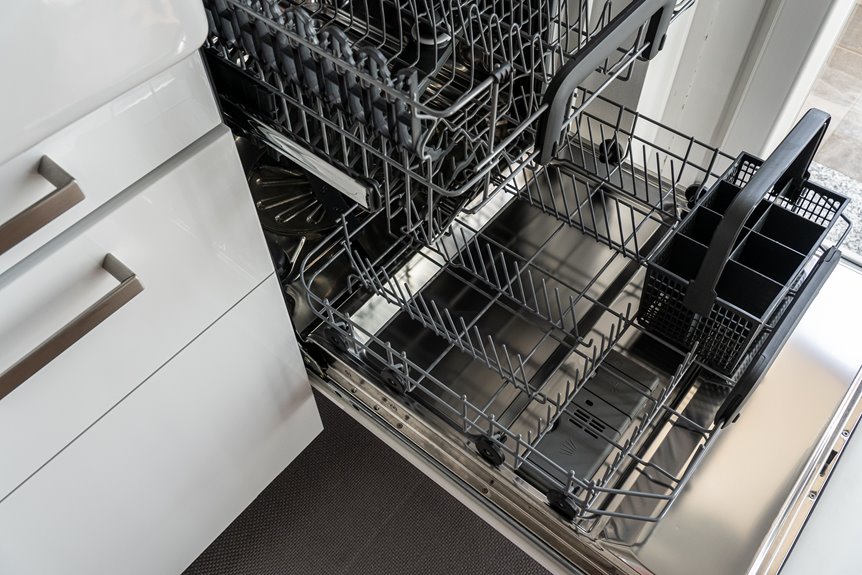
A stinky dishwasher usually comes from trapped food particles, grease buildup, or standing water in unseen spots. Common trouble zones include the filter, drain, spray arms, and door seals where residue accumulates. Warm, damp conditions accelerate bacterial and mold growth that produce foul odors. Even minor clogs reduce drainage and leave dishes less fresh. Identifying the source makes cleaning and odor removal straightforward.
Common Causes of Dishwasher Smells
Should your dishwasher has started to smell, you’re not alone, and the positive news is that the cause is usually something simple hiding inside the machine. You might notice a musty odor when the door opens, and that often points to trapped moisture, a dirty filter, or grime around seals and spray arms.
Hard water can also leave mineral film that holds onto smells. If you use low-quality soap, residue could build up and make the problem worse.
Enzyme detergents can help decompose leftover grease, while lemon sachets can leave a fresher scent between washes. You belong to a group of people who just need a few smart checks, and once you spot the source, the smell usually fades fast.
Food Particles Inside the Dishwasher
Food particles can hide in your dishwasher and start a bad smell before you notice.
Bits of trapped debris often sit in corners, on the door seal, or at the bottom of the tub, and they can keep breaking down over time.
In case the filter holds onto residue, the smell can get even stronger, but fortunately this problem usually has a simple fix.
Trapped Food Debris
Whenever bits of pasta, rice, or greens slip past the filter, they can settle inside your dishwasher and start to smell fast. You could notice food odors after a cycle, especially provided trapped utensils block spray arms and let scraps hide in corners. In that case, the leftover bits sit warm and damp, which gives germs a cozy place to grow.
To keep your kitchen feeling fresh, check the bottom rack, door edges, and utensil basket after each load. Wipe away stray crumbs before they dry on. Then rinse plates well enough to remove loose debris, but you don’t need to scrub them spotless. A quick sweep with a damp cloth can help you stay ahead of smells and make every wash feel cleaner for everyone at home.
Clogged Filter Residue
A dirty filter can sneak up on you, and it often turns a clean-looking dishwasher into a sneaky source of bad smells. Whenever food particles sit in the filter, they decompose and cling to the dishwasher gasket, so the odor spreads fast.
You might notice a sour or rotten scent after a cycle, and that usually means the filter needs attention. Pull it out, rinse it well, and scrub away the residue with warm water and mild soap.
Should buildup keep coming back, check for a needed filter replacement, because a worn filter can trap grime instead of moving it out. You belong in a kitchen that feels fresh, not one that greets you with yesterday’s dinner. Regular care keeps the whole machine happier.
Clean the Filter and Drain
Start through checking the filter and drain, because this is often where the bad smell hides. You can fix a lot with a calm, simple routine that feels doable.
Initially, slide out the filter and rinse it under warm water. Then clear the drain area of food bits and grime. In case you notice a worn seal, replace gasket before the odor spreads.
While you’re there, check that rinse aid is flowing well, since it helps water move away cleanly.
Use this quick list:
- Remove the filter and scrub it gently.
- Flush the drain opening with warm water.
- Wipe the parts dry before you put them back.
When you keep these spots clean, your dishwasher starts feeling fresh again, and you do, too.
Mold and Mildew in the Tub
Should the tub still smell musty after you clean the filter and drain, mildew could be clinging to the walls, door, or rubber seals. You can feel better appreciating this is common, and you can fix it with steady care.
Check the dark corners, bottom edges, and gasket folds, because these are mold hotspots where damp air lingers. Wipe those spots with a soft cloth and a gentle cleaner, then dry the tub well after each cycle.
Leave the door open a little so fresh air can move through. That simple habit helps with mildew prevention and keeps the space from turning stale.
In the event you notice spots again, clean them right away. You’re not fighting this alone, and a clean tub can bring back that fresh, welcoming feel.
Grease and Soap Scum Buildup
Grease can cling to your dishwasher parts and leave a stubborn film that traps odors and makes everything feel less fresh.
Soap scum can build up in thin layers on the tub, racks, and seals, and that sticky coating can feed the smell even more.
Should spray arms get clogged with both grease and scum, water won’t reach every spot, so smells can stick around longer than you’d like.
Grease Residue Accumulation
Even though your dishwasher looks clean, grease residue can still cling to concealed spots and cause that sour, stale smell you notice as you open the door. You’re not alone, and this happens to lots of busy kitchens. Tiny grease pockets and oil residues settle along the door edge, spray arms, and filter area, where water can’t always reach.
- Wipe away soft buildup after heavy loads.
- Run a hot cycle with an empty dishwasher.
- Check out-of-sight corners where residue gathers.
When you stay on top of these spots, you help your dishwasher feel fresher and more welcoming for everyone at home. A quick cleanup also keeps bad odors from settling in, so your kitchen can stay the kind of place people enjoy gathering in.
Soap Scum Layers
Soap scum can quietly build up inside your dishwasher and leave behind a cloudy film that traps odors and makes the whole machine feel less fresh.
Whenever you use too much detergent or hard water leaves mineral deposits, the mix sticks to walls, racks, and the door seal.
You might notice a stale smell that lingers after each cycle, and that can make cleanup feel annoying.
To help, wipe away residue often, use the right amount of soap, and add rinse aid so water sheets off better.
This keeps suds from drying into grime and helps your dishes come out cleaner.
With steady care, you can feel confident opening the door and appreciating your dishwasher’s a cleaner part of your kitchen.
Clogged Spray Arms
Whenever greasy residue and soap scum collect on your dishwasher’s spray arms, the tiny holes can clog and block the water stream you need for a truly clean load.
That buildup can leave damp, sour spots behind, and it might make you feel like the whole kitchen crew missed the memo.
To help you fit right back into a fresh-smelling routine, check the arms often:
- Remove loose bits with a soft brush.
- Rinse away grease with warm water and mild soap.
- Spin the arms to spot spray blockage or arm misalignment.
If water can’t reach every corner, food stays behind and odors linger.
Standing Water and Clogged Spray Arms
Whenever standing water lingers at the bottom of your dishwasher, it often points to a clog or a spray arm problem that needs attention.
You could notice a sour smell because trapped water sits with leftover food bits and spreads that musty odor fast.
Check the drain area initially, then look at the spray arms for a spray arm blockage that keeps water moving poorly.
In case the holes are packed with rice, soap, or tiny seeds, your dishes won’t get the strong rinse they need.
You can usually feel less worried once you clear the buildup and let the machine drain fully.
As soon as water flows away like it should, your dishwasher feels fresh again, and you feel more at ease using it.
How to Prevent Dishwasher Odors
Now that you’ve cleared out standing water and fixed any spray arm trouble, you can help keep those bad dishwasher smells from coming back.
Whenever you stay on top of regular maintenance, your kitchen feels fresher, and your whole home feels a little more cared for.
Try this:
- Rinse food off dishes before loading.
- Clean the filter and door seal each week.
- Run a hot cycle with vinegar or a dishwasher cleaner.
After each wash, leave the door cracked so moisture can escape.
Also, check for concealed crumbs in the bottom corners, because they love to cause trouble.
Provided you like a nicer scent, skip heavy sprays and use scent diffusers nearby instead.
They won’t fix grime, but they can make the space feel welcoming while you keep everything clean.
Frequently Asked Questions
Can a Bad Dishwasher Smell Mean a Plumbing Issue?
Yes, it can. You may have mold buildup or a vent blockage, and both can signal a plumbing issue. You are not alone; check the drain, hose, and air gap, then call a plumber.
Why Does My Dishwasher Smell Like Rotten Eggs?
You’re smelling rotten eggs because sulfur bacteria can thrive in trapped food or stagnant water, releasing hydrogen sulfide like a concealed swamp. Clean filters, run hot cycles, and you will bring your dishwasher back into the family.
Is It Safe to Run a Smelly Dishwasher?
Usually yes, you can run it, but you should clean it initially. You will reduce mold growth, improve air circulation, and keep your kitchen feeling fresh together. If the smell persists, inspect drains and seals.
How Often Should Dishwasher Seals Be Replaced?
You should replace your dishwasher seals every 5 to 7 years, or sooner if they crack or leak. Regular gasket maintenance enhances seal longevity, and you will keep your kitchen feeling fresh, trusted, and cared for.
Can Dishwasher Detergent Cause Unpleasant Odors?
Yes. Detergent can cause odors. If you use too much or choose a poor product, you can trap scent and cause residue buildup. You are not alone; switch products, clean filters, and your dishwasher can smell fresh again.