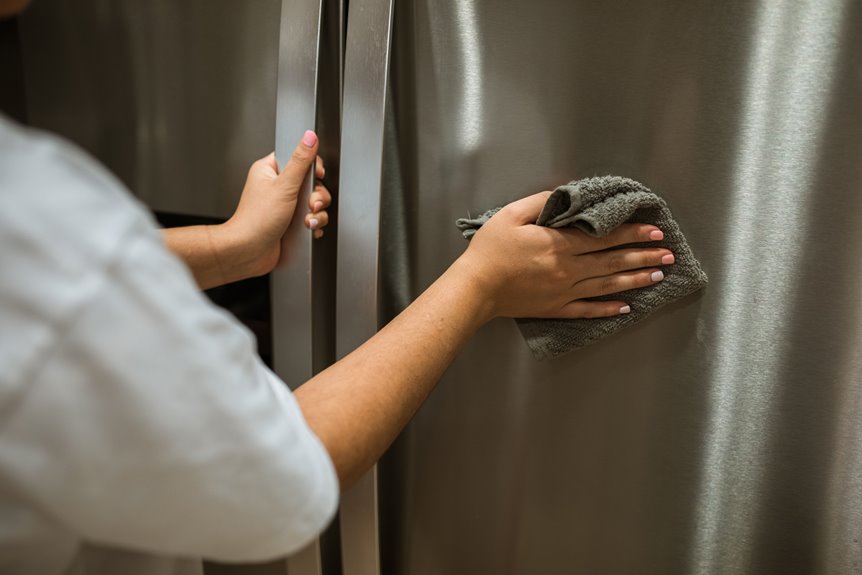
Water spots on stainless steel are solvable with a few simple steps. Start by washing the surface with warm, soapy water and a microfiber cloth, always wiping along the grain to avoid streaks. For stubborn mineral deposits, white vinegar or a paste of baking soda and water gently lifts residue without scratching. Rinse thoroughly and dry with a clean cloth to prevent new spots. Finish by polishing along the grain for a streak-free, mirror-like shine.
Why Water Spots Form on Stainless Steel
Even though stainless steel looks tough and sleek, water spots can still show up fast whenever droplets dry on the surface. You’re not imagining it. Those marks often form whenever tiny minerals in tap water stay behind after the water evaporates.
This mineral deposition leaves pale rings or cloudy patches that catch your eye. In some cases, moisture also lingers around salts and cleaners, which can speed up electrochemical corrosion and make the finish look dull. That doesn’t mean your stainless steel is failing; it just means the surface met water and minerals at the wrong moment.
Whenever you understand why the spots appear, you can feel less frustrated and more in control. Your kitchen, sink, or appliance can look cared for again, and you’re not alone in fighting these stubborn little dots.
What You’ll Need to Clean Stainless Steel
Before you start wiping, gather a few simple supplies so the job feels easy instead of frustrating. You’ll want microfiber cloths because they lift marks without scratching the finish. Keep a bowl of warm water nearby, plus a mild dish soap for a gentle wash.
Should the spots feel stubborn, have white vinegar ready in a small spray bottle. Wear protective gloves should your skin get dry or sensitive, especially during longer cleaning sessions. You might also like a soft sponge for the initial pass and a dry towel for the finish.
With these basics, you’ll feel prepared, calm, and in control. That small setup helps you work neatly and makes your stainless steel look cared for, not attacked by a kitchen science experiment.
Remove Water Spots From Stainless Steel
You can lift most water spots with a soft cloth, warm water, and a little patience, which helps protect the steel’s finish.
In case the marks stay put, a small amount of vinegar can loosen them without harsh scrubbing or damage.
Once the spots are gone, you can make cleanup easier next time owing to drying the surface right away and wiping spills as soon as they happen.
Gentle Cleaning Methods
Start with the gentlest method initially, because stainless steel can look spotless and still react badly to harsh scrubbing. You can protect the finish by wiping with a soft microfiber cloth and warm water. Should the marks stay, add a drop of mild dish soap. Gently rub with the grain, then dry right away so new rings don’t form. These eco friendly alternatives fit daily maintenance and help you keep that clean, polished feeling without much effort.
| Method | Result |
|---|---|
| Soft cloth | Lifts light film |
| Warm water | Loosens spots |
| Mild soap | Cuts grease |
| Grain wipe | Protects sheen |
| Dry cloth | Prevents streaks |
You’ll feel more at home with this easy routine, and your steel will thank you quietly.
Vinegar Spot Removal
Provided that warm water and mild soap still leave those pale rings behind, vinegar can give your stainless steel a stronger, safer clean without much fuss. You can trust white vinegar as a natural disinfectant that also works as an eco friendly homemade cleaner. Initially, dampen a soft cloth with equal parts vinegar and water. Then wipe the spot in the direction of the grain, so you feel like you’re caring for the finish, not fighting it.
- Let the vinegar sit for a minute.
- Wipe again with a clean, damp cloth.
- Dry the surface right away with a soft towel.
This simple method helps you join a small group of people who keep steel bright without harsh chemicals, and it leaves your kitchen looking calm, cared for, and ready for company.
Preventing Future Water Spots
To keep those stubborn water spots from coming back, a few small habits can make a big difference. You’ll feel more in control whenever you dry stainless steel right after rinsing, since lingering droplets often leave marks. Use a soft microfiber cloth, and wipe with the grain so the finish stays smooth and your kitchen looks cared for.
| Habit | Why it helps |
|---|---|
| Dry after use | Stops mineral spots prematurely |
| Wipe with the grain | Protects the shine |
| Plan seasonal maintenance | Catches buildup before it spreads |
| Try water softening | Reduces hard-water marks |
If your water is hard, water softening can make cleaning easier for the whole home. And during seasonal maintenance, check faucets, sinks, and appliances, so your stainless steel stays bright and you feel proud every day.
Use Vinegar for Stubborn Spots
For stubborn water spots, mix vinegar with equal parts water so the solution is strong enough to cut through buildup but still gentle on stainless steel.
Spray or apply it to the spots, then let it sit for a minute or two so it can loosen the marks.
After that, wipe with a soft cloth in the direction of the grain to lift the spots without leaving new streaks.
Vinegar Dilution Ratio
A simple vinegar mix can save you should stubborn water spots refuse to budge. You don’t need a harsh cleaner to feel proud of your steel again.
Start with a 1:1 vinegar and water ratio, then adjust with small ratio experiments should the marks stay put. A stronger mix can help, but keep odor control in mind, so open a window and work in a steady, calm space.
- Mix equal parts white vinegar and warm water.
- Dampen a soft cloth, not the steel directly.
- Should spots linger, try a 2:1 vinegar blend.
This approach lets you stay in charge without overdoing it. You’re not fixing a problem alone; you’re giving your kitchen a fresh, cared-for look.
Apply And Wait
Once you’ve mixed your vinegar solution, let it sit on the stubborn spots long enough to do the hard part for you. You’re not fighting those cloudy marks alone, and that’s a relief.
| Spot type | What to do |
|---|---|
| Fresh rings | Moisten the area lightly |
| Stuck-on haze | Let the solution rest |
| Dry buildup | Give it more timed waiting |
This quiet pause helps the vinegar loosen mineral buildup while you stay patient and in control. In case the marks are still visible, apply a little more solution and allow evaporation to work before you move on. That waiting time matters because rushing can make you miss the spot’s edges.
You’ve got this, and your stainless steel is already on its way back to looking cared for.
Wipe In Grain
Now that the vinegar has had time to loosen the spots, use a soft microfiber cloth and wipe along the stainless steel grain, not across it. This directional technique helps you match the finish and keep the surface looking calm and cared for.
- Start at one end and move in long, even strokes.
- Use light pressure, because texture awareness matters more than force.
- Should a mark stay behind, dampen the cloth with a little vinegar and try again.
As you work, you’re not just cleaning, you’re restoring that smooth look your kitchen deserves. Keep your motion steady, and let the cloth do the work.
That way, you’ll fit right in with a finish that looks polished, clean, and easy to love.
Remove Tough Stains With Baking Soda
Baking soda can lift those stubborn water spots whenever a simple wipe just won’t do the trick. Mix a little baking soda with water until it forms a thick paste, then dab it onto the stain. You’ll get a gentle natural abrasion that helps break up the buildup without scratching the steel.
Let it sit for a minute, then rub lightly with a soft cloth. Should the spot still clings, add a bit more paste and keep your touch easy. Skip harsh products like oven cleaner, which can damage the finish and make things worse.
Instead, rinse the area with clean water and dry it right away. That small step helps you keep your stainless steel looking cared for, bright, and right at home in your space.
Follow the Grain When Cleaning Stainless Steel
Following the grain makes a bigger difference than you could envision, especially while you wish to keep stainless steel smooth and streak free.
Whenever you clean with directional brushing, you match the steel’s texture and help the surface look like it belongs in your home, not just your kitchen.
Start with a soft cloth, then move in the same line as the grain.
- Wipe in long, even strokes.
- Keep your cloth lightly damp, not wet.
- Repeat with gentle texture matching to lift spots.
This simple habit helps you fit right in with a cleaner, calmer space.
In case you wipe across the grain, you might leave marks that stand out.
Polish Stainless Steel Without Scratching
A gentle polish can bring back stainless steel’s clean shine without leaving fresh scratches behind.
You can start with a soft microfiber cloth and a small amount of stainless steel cleaner or mild soap.
Work in the grain with light pressure, so you don’t drag grit across the surface.
Should spots still show, try microfiber polishing in short, steady strokes until the metal looks even again.
You don’t need to scrub hard; that usually makes things worse.
For extra care, choose a cleaner made for stainless steel and trial it on a small spot initially.
In case you want more protection later, ceramic coatings can help the finish stay smooth.
With a calm touch, you can make your appliance look cared for and right at home.
Prevent Water Spots From Coming Back
To keep water spots from sneaking back, dry the stainless steel every time it gets wet, because standing droplets are what leave those cloudy marks behind.
You’re not fighting a stain alone; you’re building a simple habit that helps your space stay polished and calm. Use these steps:
- Wipe with a soft microfiber cloth right after rinsing.
- Add preventive coatings to busy spots, like sinks and appliances.
- Use humidity control in damp rooms so moisture doesn’t settle.
When you do this often, you join the crowd of people who keep stainless steel looking cared for, not tired. A quick touch after each splash takes less time than fixing spots later, and it keeps your surfaces looking like they belong in your home.
What to Avoid When Cleaning Stainless Steel
Now that you’ve got a handle on keeping water off stainless steel, it helps to know that the wrong cleaner can undo your hard work fast. You want your steel to look calm and cared for, not streaky and dull.
Avoid abrasives like steel wool, gritty pads, or harsh powders, because they scratch the finish and make spots cling harder. You should also skip bleach and any cleaner that risks Chlorine exposure, since chlorine can stain or pit the surface. Even strong ammonia mixes can leave your kitchen feeling less polished than you hoped.
Instead, choose soft cloths and gentle soap. Then wipe with the grain so you protect the shine. Provided you remain careful here, you’ll keep your stainless steel looking like it belongs in the best part of your home.
Frequently Asked Questions
How Do I Test if My Stainless Steel Has a Protective Coating?
Check it with a touch exam: if water beads like it is auditioning for VIP status, you likely have a coating. Then try a solvent wipe; if the sheen changes, you are in the protected steel club.
Can Hard Water Permanently Damage Stainless Steel Surfaces?
Yes, hard water can damage your stainless steel over time through mineral etching and corrosion mechanisms. You will protect your surfaces better when you wipe them dry, stay consistent, and keep your space looking cared for.
How Often Should Stainless Steel Be Deep Cleaned?
You should deep clean stainless steel every few months, or more often based on usage frequency. For seasonal maintenance, clean it any time you notice buildup so you will keep your space looking cared for and welcoming.
Do Stainless Steel Appliances Need Special Cleaning Products?
No, you don’t need special products—your stainless steel won’t audition for royalty. You can use natural cleaners, or choose commercial polishes, and you’ll keep your appliances looking like they belong in your home.
Will Cleaning Methods Differ for Brushed Versus Polished Finishes?
Yes, you’ll clean them a bit differently. Brushed finishes show more finish sensitivity, so follow the grain direction gently. Polished surfaces tolerate softer wiping. Either way, you’re keeping your stainless looking like it belongs.