Water rings on wood tables are fixable with simple, nonabrasive steps. Start by checking the table’s finish to pick a safe method. Gentle heat, a soft cloth, or a mild paste often lifts surface rings. Deeper stains require light sanding and refinishing for a lasting result. Follow step-by-step care to restore the table’s appearance without harsh chemicals.
How to Remove Water Rings From Wood Tables
In case you catch a water ring soon, you can often lift it out without much stress or damage.
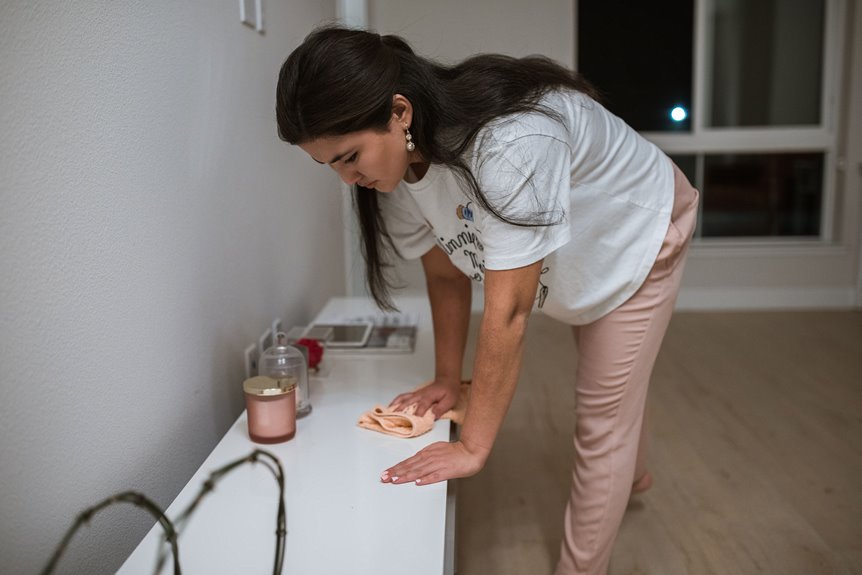
Initially, wipe the table dry with a soft cloth so you’re starting clean. Then place a clean cotton cloth over the spot and press it with a warm iron for a few seconds. Check often, because gentle heat can help the trapped moisture escape.
Should the mark linger, rub in a tiny bit of white toothpaste or baking soda paste, then wipe it away. For stubborn wood stains, repeat the step lightly instead of scrubbing hard.
After that, add a little furniture polish or wax to protect the surface.
Using coasters and moisture barriers later can help you keep your table looking like it belongs in your favorite room.
What Causes Water Rings on Wood Tables?
Even though you catch a ring initially and clean it up, it helps to know why that pale mark showed up in the first place.
You’re usually seeing water damage that slipped through the surface and changed the wood below.
Whenever moisture sits too long, it can cause wood swelling, so the spot looks cloudy or raised.
In case the liquid had drinks, tap water, or a damp mug, mineral deposits might stay behind after the moisture fades.
Over time, finish deterioration lets more liquid reach the wood, and the ring becomes easier to notice.
You’re not coping with a sign that your table is ruined; you’re seeing a common reaction to moisture.
Once you understand that, you can feel less stressed and address the next step with confidence.
Check the Finish Before You Start
Before you try any cleaner, check what finish your table has, because the right fix depends on it. Examine a small concealed spot initially so you don’t make a good table worse accidentally.
Then look closely for scratches, dull patches, or cloudy spots, since that damage tells you how gently you need to work.
Identify Finish Type
Take a close look at the finish on your wood table, because the wrong fix can make a small water ring turn into a bigger headache. You need finish identification before you try anything else, so you can match your care to the table’s surface. Provided it looks glossy, soft, or a bit worn, that clue matters. A hard film finish could shrug off light marks, while a waxed or oiled surface requires a gentler touch. Do a quick surface sampling check with a damp cloth and watch how the wood reacts.
- Bright sheen like glass
- Soft glow under lamp light
- Thin cloudy ring near the edge
- Smooth feel with no grain drag
- Dull, natural look with warm color
Test Hidden Spot
Since wood finishes can react in very different ways, you’ll want to try out a concealed spot initially so you don’t gamble with the whole table. Pick an area under the leaf, at the back edge, or inside a leg joint. Clean it lightly, then apply your chosen cleaner or polish. Watch the finish for a few minutes. Provided the sheen stays steady, you’re on the right track. Should the color shift, pause and choose a gentler option. This quick color trial step helps you check finish compatibility without stress.
| Assessment area | What you learn |
|---|---|
| Under edge | Safe starting point |
| Back leg | Finish reaction |
| Secluded corner | Color and sheen |
When you trial initially, you protect your table and feel more confident.
Note Surface Damage
Now that you’ve checked a secret spot, look closely at the table’s visible surface for any signs of damage before you do anything else. You’re looking for clues, not perfection, so take a calm breath and scan in good light.
Should the water ring feel rough, the finish might’ve worn thin. Should you see dull patches, tiny scratches, or cloudy spots, make a note of them before cleaning. That helps you choose the safest fix and keeps you from making the mark worse.
- A soft halo around the stain
- Dull sheen where light no longer glows
- Raised grain that changes the surface texture
- Tiny scratches from past wiping
- Small areas of finish abrasion near the ring
When you spot these details, you can protect the table with more confidence, and that feels good.
Use a Hair Dryer for White Rings
A hair dryer often works well on white water rings because gentle heat can help pull trapped moisture up and out of the wood finish. Set it on low or medium, then keep it moving about 6 inches from the spot. This kind of heat styling is about control, not speed, so you protect the table while you work. Check the ring every 30 seconds and stop as soon as it fades.
Should the wood feel warm, give it a break so your moisture management stays smart and safe. You’re not alone here; many tables need a little patience after a spill. Should the mark lightens, wipe the area with a soft cloth and let the surface cool before you use the table again.
Try the Iron and Cloth Method
With a clean cloth and a steady hand, you can often lift a stubborn white ring with a little gentle heat and pressure. Place the cloth protection over the ring, then touch a warm iron to it for a few seconds at a time. You’re not trying to rush it. You’re helping trapped moisture move out, much like a soft steam technique that works with the wood instead of against it.
- A cotton cloth lies flat across the pale circle
- A warm iron glides lightly, not pressing hard
- Faint warmth spreads through the tabletop
- The ring slowly fades like morning fog
- Your table starts looking like part of the room again
Check often, and stop as soon as the mark lightens. Should you stay patient, you’ll feel more confident handling the next small blemish.
Remove Water Rings With Mayonnaise
Under a soft dab of kitchen care, mayonnaise could help lift a light water ring from wood through feeding the finish and loosening trapped moisture.
You spread a thin layer over the mark, then let it sit for a few hours so the mayo chemistry can do its gentle work.
Because this is one of the simplest oil based remedies, you might try it without turning your table into a project.
Afterward, you wipe the area with a soft cloth and check the grain with a calm eye.
Should the ring fade, you’re on the right track.
Should it be still there, you could repeat the treatment once more, giving the wood a little more time and care.
Use Baking Soda for Stubborn Marks
For stubborn water rings that won’t budge, baking soda can help you gently work at the finish without being too rough. Mix a baking soda paste with a little water, then spread a thin layer over the ring. Should the mark feel deeper, a baking soda poultice can sit on top and draw out more moisture while you wait.
- A soft white patch on dark wood
- Your fingertip gliding over a faint halo
- A quiet kitchen table ready for dinner again
- A damp cloth beside a small bowl
- A patient fix that feels like your own home team
Let it rest briefly, then wipe it clean with a soft cloth. Start light, check often, and stop once the ring fades.
Apply Toothpaste to Light Stains
For light water rings, you can try plain white toothpaste because it’s gentle and easy to control.
Put a small dab on a soft cloth, then buff the ring lightly in a slow, circular motion until it starts to fade.
After that, wipe the spot clean with a damp cloth and dry it right away so the wood stays safe and polished.
Choose Plain White Paste
Choose a plain white paste whenever you’re handling a light water ring, because this gentle fix can lift the mark without scaring the finish. You want a plain paste, not gel, so the white paste stays soft and steady on the spot.
If your table feels like part of home, this quick step helps you protect it with care.
- Dab a tiny bit on a clean cloth.
- Place it on the pale ring.
- Work in a small circle.
- Keep the touch light and calm.
- Wipe away any extra paste.
As you go, image the ring fading like fog on a bright morning. You’re not fighting the wood; you’re giving it a little support. That simple choice can make you feel assured, and your table can look like it belongs right back at the center of the room.
Gently Buff the Ring
Provided that the pale ring is still hanging around, a little toothpaste can help nudge it out without making a fuss. Put a pea-sized dab on a soft cloth, then use microfiber polishing to keep the finish safe.
Work in a gentle circular motion, and let the paste do the quiet heavy lifting. You don’t need to press hard; light pressure is enough for a fresh, shallow mark. Should the spot start to fade, keep going for a few more passes and stay patient.
This small fix fits right into your table-care routine, so you can feel confident instead of frustrated. Once the stain looks softer, pause and check your progress under good light. That way, you’ll know whether the ring has eased away enough for the next step.
Wipe Clean And Dry
Next, wipe the toothpaste away with a clean, barely damp cloth so it doesn’t sit on the wood any longer than needed.
You can use microfiber cloths here because they lift residue without scratching the finish, and that helps you feel calm and in control.
Keep your strokes light and steady.
- Imagine the white paste fading from the ring.
- Envision a soft cloth moving in small circles.
- Visualize the wood surface looking less cloudy.
- Picture a fresh towel nearby for rapid drying.
- Visualize your table getting back its warm shine.
After that, pat the area dry with another soft cloth and let the air finish the job.
This simple step keeps moisture from settling in and gives you a cleaner result.
If the spot still looks faint, you’re right on track, and a second gentle pass can help.
Fix Dark Water Stains on Wood
In case a dark water stain has sunk into your wood table, don’t panic, because this kind of mark can look worse than it really is. You’re not alone, and you can often lift it with simple care. To begin, check the spot for wood discoloration and any finish incompatibility before you touch it.
| Fix | Use |
|---|---|
| Soft cloth | Wipe gently |
| Hair dryer | Warm the stain |
| White toothpaste | Rub lightly |
| Baking soda paste | Lift dark marks |
| Mineral oil | Blend the look |
Start with the mildest step, then move up only when necessary. You’ll protect the table and keep the repair neat. With a little patience, your table can look like part of the home you love again.
Protect Wood Tables From Future Rings
You can stop new rings before they start through using coasters every time you place a drink on your wood table.
A light coat of table wax adds a protective layer, and it helps spills bead up instead of soaking in.
Should a spill happen, wipe it up right away so moisture doesn’t get a chance to leave a mark.
Use Coasters Always
Always use coasters on wood tables, because that small habit can save you from a lot of frustration later.
Whenever you keep a coaster close, you show coaster etiquette that helps everyone feel welcome at the table.
Choose coaster materials that fit your space, like cork, felt, ceramic, or wood.
- Set one beside each glass before guests arrive
- Place it under cold drinks and hot mugs
- Match colors so the table feels pulled together
- Keep extras in a small basket nearby
- Replace worn coasters before they look tired
With that easy routine, you protect your table and make shared meals feel cared for.
Your home stays warm, and your guests feel like they belong.
Apply Table Wax
A thin coat of table wax can give your wood table a quiet layer of defense, and that small step can save you from a lot of worry later.
You can start with a clean, dry surface, then spread the wax in a light, even film. Keep the layer thickness small, because too much wax can look cloudy and feel sticky. After it sets, use soft cloths for wax buffing in gentle circles. This helps the finish shine and feel smooth under your hands.
Whenever you protect the table this way, you help it resist everyday marks and keep its warm look that makes your room feel inviting.
Should you share meals, game nights, or homework time there, this simple care helps everyone enjoy the table with confidence.
Wipe Spills Quickly
Quick action makes a big difference should a spill hit a wood table. You can protect the finish through using prompt cleanup and watching spill timing closely. Grab a soft cloth and blot, don’t rub.
- A glass tips, and a cool ring starts to spread.
- A coffee splash sits like a dark coin.
- A wet napkin leaves a pale halo.
- A sauce drip hides near the edge.
- A child’s cup shivers beside the placemat.
When you wipe spills quickly, you keep moisture from slipping into the grain. That means your table stays warm, welcoming, and ready for everyday meals with your people. Keep a dry towel nearby, and make it easy for everyone at home to help. A fast wipe takes seconds, but it can save you from a stubborn mark later.
When to Call a Furniture Restorer
Once the water ring has sat for days, feels rough, or won’t fade after gentle cleaning, it may be time to call a furniture restorer.
You deserve to protect the piece without guessing, especially provided the table has family history or a finish you really care about. A restorer can check for concealed damage, match the wood tone, and stop a stain from spreading deeper.
Should the table be older, an antique appraisal can help you know its value before you try anything stronger.
You should also reach out should you need photos and details for insurance claims after a leak or spill.
Securing expert help can feel like a relief, and it keeps you from turning a small ring into a bigger story.
Recommended Products for Water Ring Removal
The right product can lift a water ring off your table without adding stress to the day.
You’ve got a few trusted choices, and each one fits a different kind of mark. Start with a wood polish that uses natural oils, because it can feed dry finish and soften cloudy spots. Should the ring linger, try a gentle furniture cleaner made for finished wood. Then keep commercial restorers nearby for deeper haze on older tables.
- A soft microfiber cloth beside the lamp
- A small bottle of lemon-free polish
- A creamy restorer that glides on
- A clean sponge for careful touch-ups
- A warm, well-lit table surface
With the right pick, you can feel like you’re giving your table a quiet rescue, not a risky repair.
Frequently Asked Questions
Can Water Rings Damage Antique Wood Finishes Permanently?
Yes, water rings can permanently damage antique varnish, and if moisture penetrates deeply you might face structural damage. You are not alone. Quick care helps protect your table’s finish and its lasting beauty.
How Long Should I Leave Mayonnaise on the Stain?
Leave mayonnaise on the stain for about 30 minutes, then wipe it off. You’re helping the pale ring soften like morning fog lifting, so your table can join the rest of your home’s warm glow.
Is Mineral Oil Safe for All Wood Table Finishes?
No, you shouldn’t assume mineral oil is safe for all finishes. You’ll want to check for food grade mineral oil and possible synthetic sealer interactions, because some coatings resist it while others absorb it and darken.
Will These Methods Work on Painted or Laminate Tables?
No, not usually. On painted surfaces and laminate counters you’ll want gentler care than for wood. Stay on the safe side by trying any cleaner on a small hidden area first, then wipe with mild soap and water.
How Soon Should I Treat a Fresh Water Ring?
Treat it immediately; fresh rings often lift easier before moisture settles. You will protect your table and feel confident. For prevention tips, use coasters, wipe spills fast, and avoid leaving damp items on wood.