Rust can start on bathroom fixtures even while the metal remains strong. Tiny scratches and trapped moisture let rust take hold quickly. You can stop it before it spreads by checking the finish and choosing the right cleaner. Use distilled white vinegar for light surface rust, baking soda paste for gentle abrasion, or a nonabrasive metal polish for delicate finishes. This approach removes rust safely and preserves fixture appearance.
How to Remove Rust From Bathroom Fixtures
Rust can creep up fast on bathroom fixtures, but you can usually tackle it without much stress. Start by wiping the fixture clean so you can see the rust clearly.
Then rub the spot with a small amount of metal polish using a soft cloth. Work in gentle circles, and let the polish do the heavy lifting.
Should the stain stay, repeat the process with calm pressure. You’re not fighting the whole bathroom, just one stubborn mark at a time.
After the rust lifts, rinse the area well and dry it fully. This step matters because moisture invites rust back.
Finally, add a thin protective coating to the cleaned surface. That extra layer helps you protect the finish, keep the fixture shining, and feel proud of the space you care for.
Gather Vinegar, Baking Soda, and Soft Scrub Tools
Before you start scrubbing, gather a few simple supplies so the job feels easier and more controlled. You’ll want white vinegar, baking soda, and a soft scrub tool, plus protective gloves for comfort. A natural bristle brush helps you reach tight corners without scratching the finish. Keep a small bowl nearby so you can mix a paste whenever needed.
| Supply | Why you need it |
|---|---|
| Vinegar | Loosens rust gently |
| Baking soda | Makes a mild paste |
| Natural bristle brush | Lifts grime safely |
| Protective gloves | Keep your hands comfortable |
Set everything within reach before you begin. That way, you can move calmly from one step to the next and feel like you’ve got this. The right tools make the process smoother for you.
What Causes Rust on Bathroom Fixtures?
Humidity, hard water, and worn finishes often team up to cause rust on bathroom fixtures, and that’s why even a clean sink or towel bar can start showing orange spots.
You might notice it more after showers, because poor ventilation lets moisture hang around and settle on metal. Whenever hard water dries, it leaves minerals behind, and those tiny deposits can weaken protective coatings. Then small scratches, chips, or faded plating give rust a place to grow.
Should you share a busy bathroom, daily splashes and damp towels can speed things up, too. It can feel annoying, but you’re not alone. Once you know the causes, you can spot trouble sooner and keep your fixtures looking like they belong in your space.
Remove Rust From Bathroom Fixtures With Vinegar
Provided those orange spots are starting to make your sink, faucet, or towel bar look tired, vinegar can help lift the mess without much fuss.
You’re not alone here, and a simple soak can bring back that clean look you miss.
Dip a cloth in white vinegar, press it on the rusty area, and let the natural acid work for 10 to 15 minutes.
Then wipe gently with a soft pad.
For small spots, you can also wrap the part and hold it in place.
- Check the finish initially
- Dry the fixture after cleaning
- Repeat for light rust only
Afterward, rinse well and dry the metal so new marks don’t settle in.
Assuming the shine still feels dull, a little metal polishing can help the fixture look cared for and welcoming again.
Remove Rust From Bathroom Fixtures With Baking Soda
You can make a simple baking soda paste through mixing it with a little water until it’s thick enough to stick to the rust.
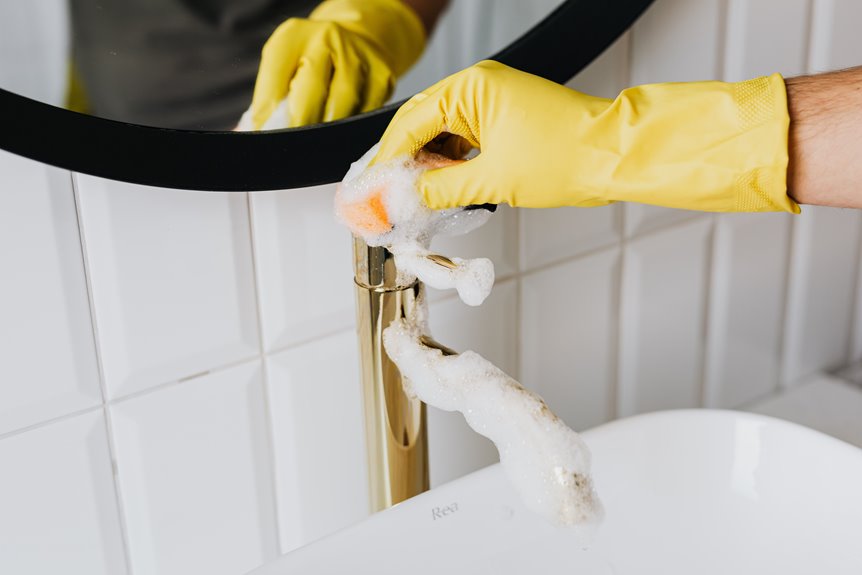
Spread it on the rusty spot, then scrub gently with a soft brush or cloth so you don’t scratch the fixture.
After that, rinse the area well and wipe it dry so the rust doesn’t get a chance to return.
Baking Soda Paste
Baking soda paste gives you a gentle way to lift rust without scratching your bathroom fixtures. You can mix a homemade paste with baking soda and a little water, then spread it on the spot. This simple step feels good because you’re choosing care over harshness. Many people like this method because it fits well with nonabrasive alternatives, especially whenever you want your sink or faucet to keep its shine.
- Use a soft cloth to dab the paste on.
- Let the paste rest so it can work.
- Wipe the area clean and check the stain.
If rust stays behind, you can repeat the process and stay patient. You’re not alone in wanting a cleaner, calmer bathroom that still feels polished and welcoming.
Scrub And Rinse
Gently scrub the treated spot with a soft cloth or sponge, and let the baking soda do the heavy lifting while you guide it along. You’re not fighting the rust alone here, so keep a calm pace and work in small circles.
| Step | What you do | How it feels |
|---|---|---|
| 1 | Lift loose rust | Relief |
| 2 | Wipe with warm water | Fresh start |
| 3 | Check the finish | Quiet satisfaction |
After scrubbing, rinse the fixture well with clean water. In case any gritty paste stays behind, it can dull the shine and invite more buildup. Dry the area right away with a soft towel. This matters even more whenever your water hardness is high, since minerals can leave marks fast. Keep your cleaning frequency steady, and you’ll feel like your bathroom belongs to a home that’s cared for.
Remove Rust From Chrome, Brass, and Steel Fixtures
Rust doesn’t have to win the fight on your bathroom fixtures. For chrome, brass, and steel, you can treat each surface with care and still get real results.
On chrome, rub a little white vinegar on the spot, then wipe gently with a soft cloth.
On brass, use a paste of lemon juice and baking soda, and let it lift the stain.
On steel, try a mild scrub with a damp sponge and dry it right away.
Should a spot keeps coming back, ponder electroplating restoration for plated pieces, or a sacrificial anode in nearby systems.
- Trial one small area initially
- Use soft tools to protect shine
- Work slowly so you reflect in control
Prevent Rust From Returning
Once you’ve cleaned the spot, the real win is keeping it from creeping back, and that starts with drying every fixture after each use so water doesn’t sit long enough to leave marks. You can make this easier by keeping a soft towel near the sink and giving handles, spouts, and trim a quick wipe.
Then, clean with a mild soap mix each week so grime doesn’t trap moisture. Should a fixture’s finish look worn, apply sealant to help block air and water from reaching the metal.
Also, control humidity by running the fan during showers and cracking a window whenever you can. Small habits matter, and they help your bathroom feel cared for, calm, and ready for the next person who walks in.
Know When to Replace a Rusted Fixture
Even after a good cleaning, some rust spots keep coming back because the metal underneath has already been damaged. You can keep scrubbing, but once rust eats past the surface, the fixture might need a replace timeline instead of more repairs. Watch for flaking metal, leaks, loose handles, or stains that spread fast. These signs often mean the structural integrity is slipping, and that’s when replacement protects your home and your peace of mind.
- Check whether the rust feels soft or pitted.
- Compare repair cost with a new fixture.
- Replace sooner provided water keeps seeping out.
Should you’re unsure, ask a trusted plumber to inspect it. They can help you decide whether one more fix makes sense or whether it’s time to welcome a sturdier fixture into your bathroom.
Frequently Asked Questions
Can Rust Stains Damage Bathroom Grout Permanently?
Yes, rust stains can permanently discolor your grout and, if you ignore them, they can cause structural weakening; like a small crack growing unseen, you will want to act fast, protect your space, and keep it yours.
Is Rust on Fixtures a Health Concern?
Usually, no, but you should keep an eye on it. You will not get rust bacteria, yet corrosion can cause metal leaching. You belong in a safer space, so clean fixtures and replace badly damaged parts.
How Long Should Vinegar Stay on Rust?
You should let vinegar stay on rust for about 15 to 30 minutes, depending on the stain. This acid dwell time and soaking duration help you loosen rust gently, and you’ll feel confident tackling it with your crew.
Will Hard Water Make Rust Return Faster?
Yes. Hard water can make rust return faster. Mineral buildup traps moisture, and surface pitting provides places for rust to start. If you do not dry the fixture well, a shiny finish can quickly develop rust.
Can I Use Lemon Juice Instead of Vinegar?
Yes, you can use lemon juice instead of vinegar; both are natural acids, and lemon is a handy citrus alternative. You will feel right at home trying it, especially for light rust on bathroom fixtures.