Quartz countertops are simple to maintain and resist everyday stains. Routine spills and greasy spots rarely harm the surface. Use a soft cloth, warm water, and gentle soap for most cleaning needs. Avoid harsh cleaners and abrasive pads to protect the finish. A few common mistakes can cause real damage, so care matters.
How to Clean Quartz Countertops Daily
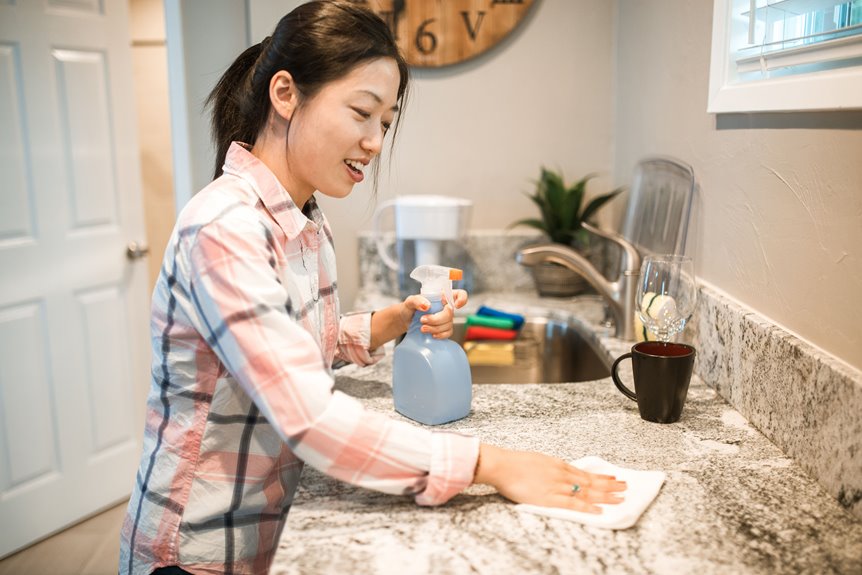
Every day, a quick wipe keeps your quartz countertops looking bright and cared for without much effort. With daily wiping, you stop crumbs and spills from settling in, so your kitchen stays neat and welcoming. Use a soft cloth, warm water, and a gentle touch, then move across the surface in smooth circles.
For morning maintenance, check the edges, sink area, and spots near the stove, because these areas collect the most mess. Should you see a sticky spot, wipe it right away before it gets stubborn. This simple habit fits into your routine fast, and it helps your counters feel like part of your home, not extra work. You’ll enjoy that fresh, put-together look every day, and your space will thank you too.
What Products Are Safe for Quartz?
You can keep your quartz looking fresh by choosing pH-neutral cleaners, since they clean well without stressing the surface.
A little diluted dish soap also works great for everyday messes, and it’s gentle enough for regular use.
Should you need extra protection, use a quartz-safe disinfectant so you can sanitize the countertop without risking damage.
pH-Neutral Cleaners
Choosing the right cleaner can feel tricky, but quartz makes the choice simpler than many people believe. pH-neutral cleaners are the safest everyday option because they clean without stripping the seal, dulling the surface, or leaving behind harsh residues.
You can trust pH balanced solutions and gentle neutral sprays to handle fingerprints, light smudges, and daily dust while keeping your countertop looking fresh. Once you pick a product, check that it says pH-neutral and avoid anything that sounds strong or abrasive.
A soft microfiber cloth helps the cleaner spread evenly, so you get a smooth finish without extra effort. As you pick the right bottle nearby, you’ll feel confident caring for your space, and your quartz will keep its clean, polished look.
Diluted Dish Soap
Diluting dish soap gives you one of the safest and easiest ways to clean quartz without adding stress to your routine. Whenever you want a simple clean, a little soap goes a long way, and the right soap dilution keeps your surface bright without leaving heavy residue.
- Mix a few drops with warm water.
- Dip a soft cloth into the gentle suds.
- Wipe the countertop with light, even strokes.
- Rinse with clean water and dry with a microfiber cloth.
You don’t need harsh strength to feel on top of your space. This easy method fits right into your day and helps your kitchen stay fresh, cared for, and welcoming.
Should you be part of the quartz-care crowd, this is your everyday win.
Quartz-Safe Disinfectants
Not every disinfectant plays nice with quartz, so it helps to pick the right one with a little care. You can use gentle, quartz-safe sprays made for stone, or a mix of water and a little rubbing alcohol. These options kill germs without dulling the surface. After that, check this quick guide:
| Product | Safe? | Note |
|---|---|---|
| pH-neutral stone spray | Yes | Best for daily use |
| Rubbing alcohol mix | Yes | Great for quick disinfection |
| Diluted bleach | No | Too harsh for quartz |
| Antibacterial wipes | Sometimes | Use only assuming bleach-free |
| Ultraviolet sanitizers | Yes | Good extra step |
How to Remove Stains From Quartz Countertops
A fresh stain on your quartz countertop can feel annoying fast, but the positive thing is that most marks come off with the right gentle touch.
Start with stain prevention by wiping spills quickly, so they don’t settle in. For color matching, try any cleaner on a concealed spot initially, because you want your surface to stay even and familiar.
- Mix warm water with a little dish soap.
- Wet a soft cloth and press it on the stain.
- For dried spots, use a plastic scraper gently.
- Rinse the area, then dry it with a clean towel.
If the stain lingers, repeat with patience.
You’re not battling the countertop; you’re helping it look like home again.
How to Clean Quartz Countertops Without Streaks
Quartz countertops can look cloudy fast should you clean them the wrong way, so start with a soft cloth, warm water, and a small amount of mild dish soap. Wipe in one direction, then dry right away with a clean microfiber cloth so no water marks stay behind. In case your surface has a matte finish, gentle pressure helps it keep its calm, even look. For a quick refresh, use a streak proof spray made for stone, then buff lightly until the shine feels smooth, not shiny-fussy. | Step | What You Do | Result |
| — | — | — |
|---|---|---|
| 1 | Wet cloth | Soft lift |
| 2 | Wipe surface | Even clean |
| 3 | Dry fast | No streaks |
| 4 | Buff lightly | Smooth glow |
| 5 | Check edges | Polished feel |
How to Tackle Grease on Quartz Countertops
Upon fresh grease landing on your quartz countertop, you can usually lift it fast with a soft cloth and a little warm, soapy water.
Provided the grease has set in, you’ll need a gentle cleaner that can break it down without harming the surface. With the right approach, you can handle those slick spots prior to them turning into a stubborn mess.
Removing Fresh Grease
Spilled grease doesn’t have to ruin your day, and it doesn’t need to set in while you panic. You can handle it fast and keep your quartz looking like part of the home you care about.
- Blot the spot with a dry paper towel, don’t rub.
- Dampen a soft cloth with warm water and a drop of dish soap.
- Wipe the area gently to lift fresh fingerprints and drips from hot pans.
- Rinse the cloth, then wipe again so no soapy film stays behind.
If the grease feels slippery, just repeat the gentle wipe. You’re not fighting the counter, you’re helping it stay clean. A calm touch works best here, and your kitchen stays ready for the next meal.
Breaking Down Stubborn Grease
Now it’s time to loosen the grease that’s really hung on.
You can start assuming warming a damp cloth with mild water, not hot enough to stress the surface, then press it on the spot for a minute.
That little bit of heat solvent helps soften the film, so your cleaner can do its job.
Next, apply a quartz safe degreaser or an enzymatic cleaner and let it sit for a few minutes.
Then wipe in small circles with a soft cloth, and give stubborn edges a second pass.
Should the patch still clings, repeat the soak instead of scrubbing hard.
You’re not alone here, and this fix usually works.
Finish upon rinsing with clean water and drying well, so the countertop feels fresh again.
What Not to Use on Quartz Countertops?
Even though quartz is tough, it can still get damaged via the wrong cleaners and tools. You want your counters to stay in the family of beautiful, so skip these hazards:
- Vinegar solutions, which can dull the finish over time.
- Abrasive pads, because they scratch and scuff the surface fast.
- Bleach or ammonia, since harsh chemicals might weaken the resin.
- Razor blades or scrapers, which can leave marks you’ll notice every day.
Instead, choose gentle products and soft cloths, and you’ll protect the look your kitchen already shares with you.
Whenever you avoid these troublemakers, you give your quartz the care it deserves without extra stress. That small habit keeps cleanup simple and helps your space feel welcoming and polished.
How to Keep Quartz Countertops Looking New
Keeping quartz countertops looking new starts with the little things you do every day, and those habits add up fast. Wipe spills soon, use a soft cloth, and keep hot pans on trivets so the surface stays calm and polished. Your kitchen can still feel welcoming and easy.
| Daily care | Why it helps | Quick tip |
|---|---|---|
| Wipe gently | Prevents dull spots | Use mild soap |
| Shield from heat | Protects finish | Grab a trivet |
| Block sunlight | Supports UV protection | Close blinds |
You can also ask about seasonal sealing should your slab needs extra care, though many quartz tops need less than stone. Whenever you stay consistent, you help your counters keep that fresh, shared-home look everyone loves.
Frequently Asked Questions
Can Quartz Countertops Be Cleaned With Vinegar?
No, vinegar can be too harsh, like a tiny countertop villain. You’ll protect your quartz by skipping acidic cleaners and choosing gentle natural alternatives, so your kitchen stays polished, welcoming, and proudly yours.
How Often Should Quartz Countertops Be Professionally Resealed?
You usually don’t need professional sealing for quartz countertops since they are nonporous; check warranty considerations before scheduling service. If your installer recommends it, follow their timeline, often every few years for added peace of mind.
Do Quartz Countertops Need Special Care Around Sinks?
Yes, you should give quartz countertops special care around sinks. You should check sink seals, wipe up faucet splatter, and dry edges often so your space stays beautiful, protected, and welcoming for everyone.
Can Hot Pans Damage Quartz Countertops?
Yes. Hot pans can damage quartz countertops. About 70% of surface problems come from heat exposure. You’ll protect your space from thermal shock and cosmetic discoloration by using trivets, so your kitchen stays welcoming and beautiful.
Are Quartz Countertops Safe for Food Preparation?
Yes, you can prep food on quartz countertops confidently. You’ll appreciate their food safety, bacterial resistance, and non toxic finishes. Still, use cutting boards to protect surfaces and keep your kitchen feeling welcoming and cared for.