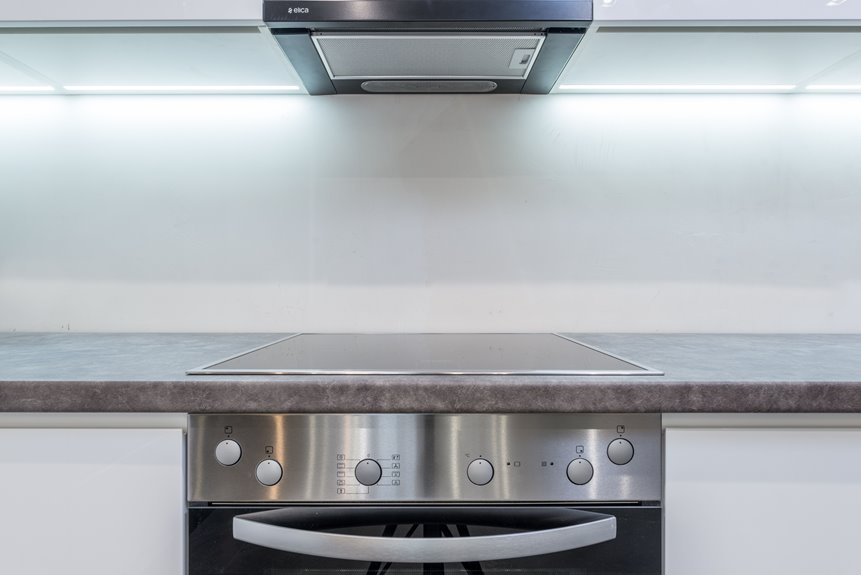
Cleaning a glass cooktop without scratching it is simple with the right tools and technique. Use soft microfiber cloths, warm water, and a drop of mild dish soap to wipe spills while the surface is cool. Gently lift stuck-on spots using a plastic scraper held at a low angle to protect the glass. For tough marks, apply a dedicated ceramic cooktop cleaner sparingly and buff with a soft cloth. Regular, gentle care prevents buildup and keeps the surface looking smooth and shiny.
What You Need Before You Start
Before you touch the cooktop, gather a few gentle tools so you can clean with confidence instead of guessing. You’ll want a soft microfiber cloth, a nonabrasive scraper, mild dish soap, warm water, and a clean towel.
Keep baking soda nearby for stuck spots, but use it lightly. Should you prefer extra protection, wear safety goggles and protective gloves, especially whenever you’re handling dried spills.
These items help you feel prepared, not stressed, and that matters whenever you want your kitchen to stay calm and cared for. Place everything within easy reach before you begin, so you don’t have to rush or stretch across the surface.
With the right setup, you protect the glass and make the whole job feel easier.
Clean Your Glass Cooktop Daily
Now that your soft cloth, mild soap, and scraper are ready, keep your glass cooktop looking good through giving it a quick clean each day. You’ll build a simple habit that makes the whole kitchen feel cared for.
After cooking, wait until the surface feels cool, then do daily wipe downs to lift crumbs, light grease, and splash marks before they settle in. Should you notice a small spill, handle it with spot cleaning right away so it doesn’t harden and become harder to remove.
This little routine saves you time later, and it helps your cooktop stay smooth and welcoming. Whenever you clean it often, you protect its shine and make every meal prep feel a bit easier.
Choose Safe Tools for the Job
You can protect your glass cooktop by choosing tools that stay gentle on the surface, even while stuck-on messes challenge your patience.
A soft cloth works best for everyday wiping because it lifts residue without leaving tiny marks behind. For tougher spots, use a non-scratch scraper made for glass so you can remove buildup without turning cleanup into a headache.
Soft Cloth Choices
A soft cloth can make all the difference whenever you clean a glass cooktop, because the wrong fabric can leave tiny scratches that turn a smooth surface into a streaky headache.
You want something gentle, so reach for microfiber towels or soft bamboo napkins that glide across the glass without dragging grit around.
Keep a few clean cloths nearby, because a fresh one helps you feel in control and keeps the job simple.
Dampen the cloth with warm water or a mild cleaner, then wipe in small circles with light pressure.
Should one side start to look dirty, flip it fast.
That way, you protect the finish and make your cooktop look cared for.
With the right cloth, you’ll feel like you’ve got this, every occasion.
Non-Scratch Scrapers
Should burnt-on spills refuse to budge, a non-scratch scraper can save the day without putting your glass cooktop at risk.
You can reach for one with a smooth blade and a comfortable grip, then work gently so you stay in control.
Many people like ceramic safe spatulas for light lifting, but a scraper gives you more help whenever sugar or sauce hardens fast.
Hold the tool at a shallow angle and use angling techniques that slide under the mess rather than digging in.
That small shift keeps the surface safer and your cleanup calmer.
You’re not battling the cooktop; you’re guiding the mess away.
With steady pressure, short strokes, and a little patience, you’ll join the crowd that keeps glass looking clear, clean, and cared for.
Choose a Cleaner That Won’t Damage Glass
Because glass cooktops can scratch so easily, the cleaner you choose matters just as much as the cloth in your hand. Pick a formula made for glass or ceramic surfaces, and skip anything with natural abrasives that can haze the finish. You want gentle power, not grit.
A soft cream or spray helps lift everyday marks while keeping the surface clear and smooth. Should a product leave chemical residues, your cooktop can look cloudy and feel tacky, so choose one that wipes clean with ease.
Whenever you shop, read the label for safe use on glass. That small step helps you protect your stove, and it makes cleanup feel less stressful. With the right cleaner, you’re not just caring for your kitchen, you’re keeping your space ready for the next meal.
Remove Grease Without Scratching
Whenever grease shows up on your glass cooktop, use a nonabrasive degreaser so you can break it down without harming the surface. Spray it on, then wipe with a soft cloth in smooth, gentle strokes to keep grit from making tiny scratches.
In case a sticky spot stays put, lift it slowly with light pressure instead of scrubbing hard, since a calm touch works better than a rough one.
Choose Nonabrasive Degreaser
Choose a nonabrasive degreaser that can lift sticky grease without putting tiny scratches on your glass cooktop. You deserve a cleaner surface that still looks cared for, so reach for an eco friendly degreaser made for glass. A citrus based solvent can dissolve cooked on oil fast, and it leaves you with less effort and fewer worries.
Check the label for words like safe on glass and non scratch. Then trial a small spot initially, just to keep your routine calm and confident. Whenever you pick the right cleaner, you protect the shine and keep your kitchen feeling welcoming. That way, you can tackle messes with ease and feel proud every time you walk by your cooktop.
Wipe With Soft Cloth
A soft cloth does the real work now, and it helps your cooktop stay glossy instead of scuffed. You’re part of the group that keeps cleanup calm, and that starts with a gentle wipe. Use microfiber towels or cotton muslin, since both glide across the glass without fuss. Fold the cloth, then sweep in small circles so grease lifts instead of smearing. Keep your hand light, because pressure only invites trouble. Should one side gets damp, switch to a clean section and keep going.
- Wipe the center initially.
- Move toward the edges.
- Flip to a fresh panel.
- Finish with a dry pass.
That simple rhythm makes your kitchen feel cared for, and it helps everyone in the home see a cooktop that shines with less effort.
Lift Stubborn Grease Gently
Now tackle the greasy spots with a light touch, because stubborn buildup needs patience, not pressure.
You can soften the mess with a cloth warmed through gentle steam, then press it on the spot for a minute. That small pause helps the grease loosen without forcing it.
Next, use paper towel cushioning under your fingertips whenever you wipe, so you keep the edge smooth and safe. Move in short circles, and let the cloth do the work.
Should the grease still clings, repeat the warm press rather than scrubbing. You’re protecting the glass, and you’re also saving yourself from that annoying streak chase.
A calm routine like this keeps your cooktop looking cared for, and it helps you feel right at home in your kitchen.
Tackle Burnt-On Food Safely
Once burnt-on food clings to your glass cooktop, don’t scrape at it in a panic, because that usually makes the mess worse and can leave tiny scratches behind. Instead, let the surface cool fully so you avoid thermal shock, then soften the spot with a damp cloth and a little dish soap. You’re not alone here; this happens to everyone.
- Lay a warm, wet towel over the food for a few minutes.
- Lift the loose edges with a plastic scraper at a low angle.
- Wipe again with a soft pad, never with metal.
- Check the label on any cleaner for chemical risk before you use it.
With patience, you protect the glass and keep your cooktop looking cared for, not defeated.
Remove Stubborn Stains and Streaks
In case you still see stubborn spots, gently lift the burnt-on residue with a soft scraper or a paste made for glass surfaces.
Then wipe away any streaky film with a clean microfiber cloth so the cooktop starts looking clear again.
Finally, give it a light polish for a smooth shine that makes the whole surface look cared for.
Lift Burnt-On Residue
For those stubborn burnt-on spots, start alongside softening the mess so you’re not fighting your cooktop with too much force. You want to join the same calm routine your neighbors trust: let steam cleaning or chemical loosening do the heavy work initially, then lift gently.
- Lay a warm, damp cloth over the spot for a few minutes.
- Use a plastic scraper at a low angle, and keep your touch light.
- Wipe the loosened residue with a soft microfiber cloth.
- Repeat only where needed, so you protect the shine.
If you stay patient, you’ll feel more in control, and your cooktop won’t feel like a battle zone. Once the residue gives up, you’re ready for the next step without rough scrubbing or stress.
Remove Streaky Film
Stubborn film can make your glass cooktop look cloudy, even after you’ve already lifted the burnt-on residue, so don’t worry provided the shine still seems concealed. To handle streak removal, mix a drop of dish soap with warm water, then wipe the surface with a soft microfiber cloth. Assuming film causes from hard water or soap buildup stay behind, use a clean damp cloth to lift them gently. Try these steps:
| Step | Action |
|---|---|
| 1 | Dampen cloth |
| 2 | Wipe in circles |
| 3 | Rinse cloth |
| 4 | Dry fully |
| 5 | Check streaks |
You’re not behind, and your cooktop doesn’t need rough scrubbing. Once the surface feels smooth again, you’ll know the streaky layer is gone.
Polish Final Shine
Now that the cloudy film is gone, you can polish the cooktop so it looks clear and bright again. Use a soft cloth and a tiny amount of cleaner, then work in small circles. This keeps you in control and helps the surface feel calm and cared for.
For stubborn marks, try a paste made with gentle buffing compounds, but use only what the label allows. Then switch to microfibre polishing to lift the last streaks without leaving lint behind.
- Wipe one corner at a time.
- Check for dull spots in the light.
- Reapply a light touch where stains linger.
- Finish with a dry cloth for a smooth shine.
You’ve got this, and your cooktop can look like it belongs in a kitchen you’re proud of.
Avoid Scratches on Your Cooktop
Whenever you want to keep your glass cooktop looking clear and smooth, the biggest rule is simple: protect the surface before you start scrubbing.
You belong to the group that treats it gently, and that care pays off.
Use a soft cloth, a plastic scraper, and a mild cleaner, not anything rough.
Check for tiny bits of food beforehand, because they can drag across the top and leave marks.
Should your cooktop has surface coatings, follow the maker’s advice so you don’t wear them down.
You can also place protective mats nearby once you set pans down, which helps stop stray grit from acting like sandpaper.
Move slowly, wipe in one direction, and keep pressure light.
That way, you keep the shine and spare yourself that awful sinking feeling.
Lift White Marks and Mineral Spots
White marks and mineral spots can make your glass cooktop look dull, but you can lift them without stressing the surface.
Try this simple routine:
- Dampen a soft microfiber cloth with warm water and a little vinegar.
- Press it on the white haze for a few minutes so the mineral buildup loosens.
- Wipe gently in small circles, keeping your touch light and steady.
- Dry the area with another clean cloth so no spots stay behind.
You’re not fighting the cooktop; you’re giving it the care it deserves.
In case the marks still hang on, repeat the process once more instead of scrubbing harder. That calm approach helps you keep your kitchen looking neat, welcoming, and ready for the next meal together.
Prevent Damage With Regular Maintenance
Regular care can save your glass cooktop from small problems that turn into stubborn ones later. You belong to a group of careful cooks whenever you wipe the surface after each use, so crumbs and spills don’t sit there and bake on.
Check the knobs, edges, and burner areas during seasonal inspections, because loose grime can trap heat and invite wear. Use soft cloths and gentle cleaners, and skip heavy scrubbing that can dull the shine.
Once you finish cooking, let the top cool, then place protective covers over nearby tools or pans so nothing drags across it. These simple habits keep your cooktop looking neat, and they also help you feel calm every time you step into the kitchen.
Minimize Existing Scratches
Even with good care, a few fine scratches can still show up, and that can feel frustrating whenever you work hard to keep your cooktop looking clean. You’re not alone, and you can soften their look with a few calm moves. To start, wipe with a soft microfiber cloth, then use a paste made for glass surfaces.
Next, check the maker’s guide, since some tempering techniques and protective coatings require gentle handling.
- Clean around the scratch so grit won’t catch.
- Rub in small circles with a soft pad.
- Buff dry so the light looks smoother.
- Use a cooktop polish only provided it’s safe.
Should marks stay deep, you might need a pro. Still, you can keep the surface tidy and feel good about it.
Frequently Asked Questions
Can I Use Baking Soda on a Glass Cooktop?
Yes, you can use baking soda on a glass cooktop; about 70% of owners do. You will want the paste method, watch abrasive risk, and do a surface trial initially so you feel confident and included.
How Often Should I Deep Clean My Glass Cooktop?
You should deep clean your glass cooktop about once a month, with monthly inspections, and schedule seasonal deep cleaning for built up residue. You’ll keep your kitchen looking cared for, clean, and welcoming.
Is Vinegar Safe for Removing Haze on Glass Cooktops?
Yes, vinegar is usually safe for haze provided you use it lightly; why risk more? You can try vinegar alternatives and follow acid precautions, so you will protect your cooktop and feel confident in your routine.
What Should I Do if Sugar Melts Onto the Cooktop?
You should let it cool completely, then do cooled removal with a razor scraper held low. Avoid scrubbing, and wipe gently with a damp cloth. You will protect your cooktop and keep it looking beautiful.
Can I Use a Razor Blade to Remove Residue?
Yes, you can use a razor blade, but handle it like a tiny sword over a shimmering lake. Use the razor technique carefully, follow safety precautions, and you will fit right in with careful cooktop keepers.