You want a robotic vacuum that fits your floors, your schedule, and the amount of cleanup your home actually sees. Some homes need stronger pickup for pet hair, some need tighter mapping around furniture, and some need a machine that can spend less time in the dock and more time moving. This roundup keeps the focus on real use, not flashy claims, so you can sort out which style makes sense for your space.
The Shortlist At A Glance

Tikom Robot Vacuum and Mop L8000 Plus
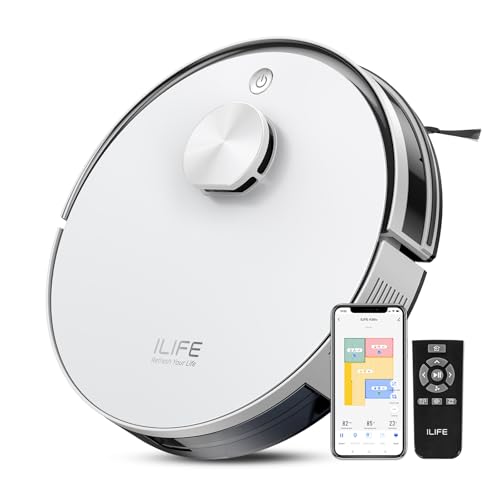
ILIFE V2 Robot Vacuum Cleaner
AIPER Scuba V3 AI Vision Robotic Pool Cleaner
Cordless Robotic Pool Vacuum with Track Drive
WYBOT B1 Cordless Robotic Pool Vacuum
WYBOT B1 Cordless Robotic Pool Vacuum 2026

Airzeen Q20 Ultra Robot Vacuum and Mop

Bagotte Robot Vacuum and Mop Combo

Robot Vacuum and Mop Combo 10,000 Pa
More Details On Our Top Picks
The Tikom L8000 Plus suits homes where pet hair and mixed flooring keep piling up. Its LiDAR mapping, meaning laser-based room scanning, helps the robot build a cleaner route, and the self-emptying base with 90 days of capacity reduces how often you need to think about the dust bin. That long dock window matters most in busy households with more debris than a basic robot can comfortably hold.
The trade-off is size and complexity, since a self-emptying dock takes more floor space than a plain charging stand. Compared with the ILIFE V2 below, this one is built for a much more hands-off routine, while the ILIFE A30s offers more peak suction in a similar home-cleaning lane.
Strong Points
- 6000Pa suction gives you stronger pickup for pet hair, crumbs, and grit on hard floors and low-pile carpet.
- The self-emptying base cuts down on routine bin emptying, which helps in homes that run the robot daily.
- LiDAR navigation supports more orderly room coverage than random-bounce designs.
- Home mapping helps you send it through specific zones instead of cleaning the whole floor every time.
- The dock capacity is useful for larger homes where debris fills quickly.
Minor Gripes
- The base needs a dedicated spot, so small apartments may feel cramped.
- Self-emptying systems bring more parts to keep tidy over time.
- Its feature set makes it a better fit for planned placement than for last-minute moving around.
Feature Snapshot
Who It Suits Best
Pet owners with layered cleaning needs and enough floor space for the dock will get the most from this setup.
Where A Sibling Pick Shines
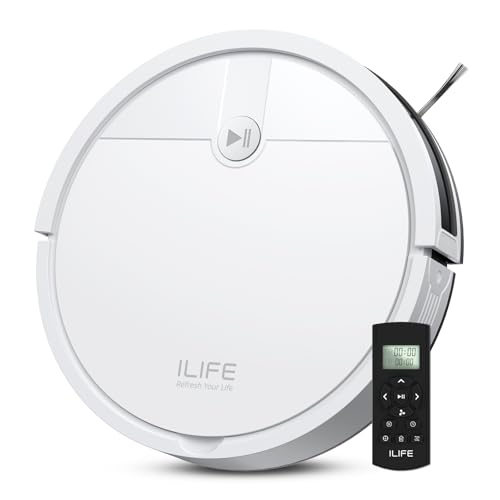
ILIFE V2 Robot Vacuum Cleaner suits smaller homes and simpler hard-floor routines better than the Tikom L8000 Plus.
The ILIFE V2 keeps things simple, and that’s the point. Its slim body can slip under lower furniture, while tangle-free suction is a practical touch for homes that deal with hair around chair legs and baseboards. You may find it most useful in apartments or smaller homes where basic daily cleanup matters more than app-heavy control.
Compared with the Tikom L8000 Plus, this one gives up the self-emptying dock and mapping depth, but it also asks for less space and less setup. The honest read is that it fits easygoing hard-floor upkeep, not deep multi-room automation.
What We Like
- Slim size helps it reach under furniture that taller robots may miss.
- 120 minutes of runtime gives you a decent cleaning window for smaller layouts.
- Self-charging keeps the routine straightforward after a cleaning run.
- Tangle-free suction suits homes that shed hair regularly.
Points To Note
- You get fewer advanced mapping tools than on the LiDAR-based picks here.
- The simpler feature set suits quick upkeep more than zone-by-zone scheduling.
- Hard floors are its friend, while thicker carpets may call for a stronger model like the ILIFE A30s.
Technical Sheet
Who Will Love This
Apartment dwellers and hard-floor households that want a low-fuss robot will get the most from this model.
Swap It Out When
ILIFE A30s Robot Vacuum is the better fit for larger homes that want LiDAR mapping and stronger suction.
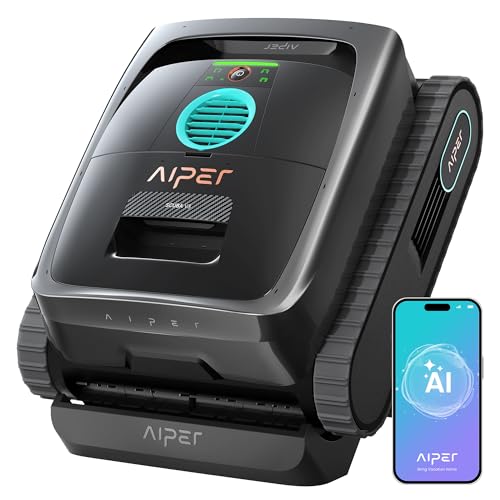
This pool cleaner leans into convenience, starting with cordless operation and a wireless charging dock. Its AI vision approach points to camera-assisted navigation, which helps explain the smarter waterline parking feature and the more guided movement around a pool. For homeowners who want less cord management around the deck, that is a genuine comfort.
It feels more design-forward than the harder-climbing Nepturox model, which makes it a better fit for people who value dock-and-go simplicity over raw traction. The micromesh multi-layer filtration also hints at careful debris capture, though the lighter build may not be the one you want for the roughest pool edges.
Highlights
- Cordless operation keeps deck handling simpler.
- Wireless charging dock supports a tidy storage setup.
- Smart waterline parking makes retrieval feel less awkward.
- Micromesh filtration gives you a layered debris capture approach.
Areas To Watch
- Its lighter build may not suit the roughest pool surfaces.
- Vision-based navigation can feel more style-led than brute-force.
- You’ll want a dry, planned charging spot for the dock.
Core Details
Right Fit For
Pool owners who want a cordless cleaner with a polished dock setup and easier retrieval will appreciate this one.
A Better Fit Elsewhere
Nepturox Cordless Robotic Pool Vacuum suits owners who care more about climb strength and track-driven movement.
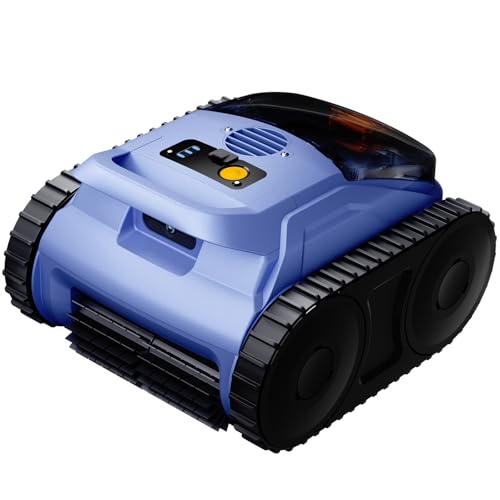
Track drive and dual 180W brushless motors give this pool vacuum a more forceful personality than the AIPER Scuba V3. Brushless motors, meaning motor designs with less internal wear from brushes, usually point to better efficiency and smoother operation over time. That setup makes sense for larger in-ground or above-ground pools where climbing walls and reaching the waterline are part of the job, not an extra.
The 150-minute runtime helps stretch a cleaning session without frequent stops, and the stated pool coverage gives you a sense of scale before you commit. One thing worth considering, though, is that a high-capability cleaner can feel like overkill for a small spa or compact plunge pool.
Upsides
- Track drive gives the cleaner better grip on tricky surfaces.
- Wall and waterline climbing extend its reach beyond the pool floor.
- Dual brushless motors support stronger, steadier movement.
- 150-minute runtime suits longer pool-cleaning sessions.
- The listed pool size range helps you judge fit more easily.
Softer Spots
- The stronger build makes more sense for bigger pools than for compact ones.
- More traction usually means a more involved machine to store and handle.
- Owners with very simple cleaning needs may not use all of its capability.
Feature Rundown
Made For
Pool owners with larger in-ground or above-ground setups that need wall-climbing help will get the most from this model.
Another Choice May Suit
AIPER Scuba V3 AI Vision Robotic Pool Cleaner is the gentler, more dock-friendly option for owners who prefer a lighter-feeling setup.
The A30s moves into stronger territory with 10,000Pa suction and LiDAR mapping, so it feels better prepared for homes that mix carpets, hard floors, and pet hair. No-go zone control matters in real homes, because it lets you keep the robot out of bowls, cables, or play areas instead of constantly resetting it. That makes the model feel less like a gadget and more like part of the cleaning routine.
Compared with the ILIFE V2, this one adds real navigation depth and more punch, but it also asks more from your budget and floor space planning. The app, voice, and remote control options give you several ways to start a run, which is handy in homes where different people may want different control styles.
Reasons To Buy
- 10,000Pa suction gives it strong pickup for embedded dust and pet debris.
- LiDAR mapping helps it clean with more structure around furniture.
- No-go zones help protect areas you’d rather keep untouched.
- 150-minute runtime works well for larger cleaning sessions.
- App, voice, and remote control cover different daily routines.
Room For Improvement
- The wider feature set can take more setup time at the start.
- More navigation tools usually mean more options to learn.
- Homes with very simple layouts may not need this much control.
At A Glance
Best Suited To
Families that want stronger pickup and more control over where the robot travels will get a lot out of this model.
Look Elsewhere When
ILIFE V2 Robot Vacuum Cleaner makes more sense for compact spaces where a slimmer, simpler robot is enough.
The WYBOT B1 focuses on edge work, and the quad-roller brushes explain why. Brushes arranged in groups can help keep contact along pool sides and corners, which matters in pools where debris likes to collect near walls. App control also makes it easier to manage the cleaner from the patio instead of reaching into the water every time.
Compared with the track-drive Nepturox model, this one sounds more specialized for edge pickup than for brute climbing strength. That can be a smart trade if your pool line and perimeter are where cleanup tends to linger, especially in a busy backyard with frequent use.
Bright Spots
- Quad-roller brushes are well suited to side and edge cleaning.
- App control makes routine use feel more convenient.
- It works with both inground and above-ground pool setups.
- High obstacle crossing helps it move over tougher pool surfaces.
Small Caveats
- Edge-focused design may matter less in very simple pools.
- Brush-heavy cleaners usually ask for a little more upkeep after use.
- The more specialized setup may not be the simplest option for casual use.
Details At A Glance
The Right Fit
Pool owners who care most about walls, edges, and app-based control will find this one especially sensible.
Reach For A Different Pick
Nepturox Cordless Robotic Pool Vacuum is the better choice for buyers who want a stronger climbing profile and longer runtime.
This version of the WYBOT B1 leans into edge cleaning with a six-roller brush layout and ultra-edge wording that points to better perimeter coverage. The lighter build can be appealing for pool owners who don’t want a heavy cleaner to haul in and out, and that matters more than it sounds when storage space is tight. In a typical backyard setup, easier handling often matters just as much as raw cleaning muscle.
Compared with the quad-roller B1 above, this model feels aimed at owners who want a slightly different brush setup and a more lightweight feel. That makes it easier to live with day to day, though the practical trade-off is that the most aggressive pool surfaces may still call for the stronger climb-focused Nepturox.
Best Bits
- Six roller brushes support focused perimeter cleaning.
- Lightweight design can make transport and storage less awkward.
- Ultra-edge emphasis suits pools with stubborn side debris.
- It still covers both inground and above-ground settings.
Worth Noting
- Brush-based cleaners need regular rinsing after use.
- Lightweight construction can be a plus, but it may not feel as forceful as the heavier track-drive model.
- Owners with very rough surfaces may still want more traction.
Spec Overview
Who Should Grab It
Owners who want a lighter pool robot with a strong edge-cleaning emphasis will feel at home with this one.
Skip It When
Cordless Robotic Pool Vacuum with Track Drive suits you better if wall climbing and heavier-duty movement matter more than portability.
The Airzeen Q20 Ultra stacks a bagless design on top of self-emptying, which is a useful twist for homes that want less waste-bin handling without relying on a bagged dock. LiDAR navigation and smart mapping help it behave more methodically than simpler bump-and-run robots, and schedule support lets you set a rhythm that matches your week. For pet homes, that combination can cut a lot of small daily chores.
Compared with the Tikom L8000 Plus, this one takes a different route to hands-off maintenance, while keeping the same 6000Pa class of suction. The bagless dock will appeal to people who dislike replacing bags, though it also asks for regular emptying and cleaning so buildup does not linger.
Positives
- Bagless self-emptying keeps ongoing upkeep more flexible.
- LiDAR mapping supports ordered movement across rooms.
- Schedule support makes recurring cleanup easier to set and forget.
- App-based control suits homes where the robot runs on a routine.
- 6000Pa suction gives you dependable pickup for pet hair and crumbs.
Trade Offs
- Bagless maintenance is simpler in one way, but it still needs regular cleaning.
- More features can mean more setup than you need for a tiny apartment.
- The docked design still wants a dedicated parking spot.
Feature Card
Whose Shelf It Belongs On
Homes that want a docked robot with less bag handling and organized mapping will get the most from this pick.
Not Your Match When
ILIFE V2 Robot Vacuum Cleaner suits you better if you want a slimmer, simpler machine for basic floor care.
The Bagotte combo lands in the middle ground in a useful way, pairing 6000Pa suction with LiDAR mapping and auto self-recharging. That makes it appealing for households that want a robot to manage its own return-to-dock routine without pushing into the most complicated feature tier. App, WiFi, remote, and voice control also give you several ways to start a run, which helps in shared households.
Compared with the Airzeen Q20 Ultra, this one sounds less specialized around dock maintenance and more focused on broad ease of control. It’s a sensible fit for carpet, hard floor, and pet hair, though the image and source data leave fewer fancy extras to talk about, which is its own kind of honesty.
What We Like
- LiDAR mapping gives the robot a more deliberate route.
- Automatic self-recharging removes a small but constant chore.
- Multiple control options help different people use the same unit.
- 6000Pa suction fits everyday pickup across mixed flooring.
Points To Note
- The feature mix is useful, but it stays more straightforward than the most advanced picks here.
- Shared controls can be handy, though app setup still takes some attention at the start.
- The listing gives less detail about the extras, so the fit is mostly about core cleaning needs.
Quick Facts
Built With In Mind
Families that want a straightforward mapping robot with broad control options will find this one easy to live with.
Where A Sibling Pick Shines
Airzeen Q20 Ultra Robot Vacuum and Mop is the better choice for households that want bagless self-emptying and schedule support.
This model sits near the top of the list because it combines 10,000Pa suction, dToF and laser navigation, smart mapping, anti-tangle behavior, and a 160-minute runtime. dToF, short for direct time-of-flight sensing, helps the robot judge distance for mapping and movement, which matters in homes with furniture legs, hall transitions, and open floor plans. The 90-day self-emptying window rounds out the package for households that want to think about the vacuum less often.
Compared with the ILIFE A30s, it gives you a longer runtime and a more storage-friendly emptying setup, while still speaking the same language of mapping and pet-hair cleanup. That said, the docked system needs its own space, so this is a stronger match for homes with room to spare than for very tight apartments.
Best Bits
- 10,000Pa suction gives you serious pickup for carpet, pet hair, and daily debris.
- dToF and laser navigation support careful, measured movement.
- Anti-tangle behavior helps with hair-prone homes.
- 160-minute runtime supports longer cleaning runs.
- 90-day self-emptying capacity reduces hands-on upkeep.
Areas To Watch
- The fuller dock setup takes more floor space than simpler robots.
- High feature density can be more than you need for a tiny floor plan.
- More automation also means more parts to keep clean over time.
Core Details
Who It Suits Best
Homes with pets, mixed flooring, and enough room for a docked setup will get the most value from this pick.
A Better Fit Elsewhere
ILIFE V2 Robot Vacuum Cleaner is the easier choice for smaller spaces that need a slimmer and simpler robot.
How To Choose The Right Robotic Vacuums
Match The Robot To Your Floors
Floor type should guide most of the decision. Hard floors usually reward simple brushes, steady suction, and a slim body that can slip under furniture, while carpet calls for stronger pickup and better debris handling. Pet homes benefit from anti-tangle design, since hair wrap can turn a convenient machine into another chore.
That’s why suction alone never tells the whole story. A 6000Pa robot can feel plenty capable on tile and laminate, while a 10,000Pa model makes more sense for thicker rugs or heavy shedding. The right fit depends on the mess you see most days, not the loudest number on the listing.
Navigation Matters More Than Most People Think
Random movement works for very basic cleanup, but LiDAR and dToF bring more order to a home layout. LiDAR, or laser-based mapping, helps the robot read room edges and furniture placement, while dToF adds distance sensing that can support more careful route planning. In a home with narrow hallways or lots of chairs, that structure saves time and reduces missed patches.
Pool cleaners have their own version of this problem. Track drive, edge brushes, and wall-climbing support matter more there than app gimmicks, because pool walls and waterlines are where lesser machines usually fall short. The cleaner should match the shape of the job.
Think About Maintenance Before You Commit
Self-emptying docks are useful, but they also take space and need occasional cleaning. Bagless systems can be easier to live with than bagged ones for some homes, though the dust chamber still needs attention. A simpler robot with a small dock can be easier to place in an apartment, even if it asks a bit more from you each week.
Runtime matters, too. A 120-minute robot suits compact homes, while 150 to 160 minutes helps with larger layouts and more room coverage. For busy households, the best choice is usually the one that fits into the routine without becoming another project.
A Quick Reality Check
Common Shopping Slip Ups
One common mistake is chasing suction numbers without checking the rest of the setup. A powerful motor helps, but poor navigation or the wrong brush design can leave you with uneven results.
Another easy miss is forgetting about dock size and storage. A self-emptying base can be useful, but it can also crowd a hallway or laundry room faster than expected.
Where The Extra Money Goes
Higher-tier models usually pay for better navigation, stronger motors, longer runtime, and more polished dock systems. In robotic vacuums, that often means cleaner mapping, fewer stalls, and less hands-on emptying.
The upgrade makes sense in larger homes, pet homes, and mixed-floor homes that ask a lot from the machine. For a small apartment with light debris, a simpler model may give you the smoother ownership experience.
Frequently Asked Questions
Do robotic vacuums work well on carpets?
They can, especially models with stronger suction and brush layouts suited to carpet fibers. Low- to medium-pile carpet usually gives the easiest results.
What does LiDAR add to a robot vacuum?
LiDAR helps the robot map rooms more accurately using laser sensing. That usually means cleaner routes and fewer missed corners.
Are self-emptying docks worth it?
They help cut down on day-to-day bin handling. The trade-off is more floor space and a dock that needs occasional care.
How long should runtime be?
Compact homes can often live with around two hours of runtime. Larger layouts usually benefit from longer runs, especially when the robot covers several rooms.
What matters most for pet hair?
Strong suction and anti-tangle design matter most. A brush setup that resists hair wrap saves you work later.
Closing Thoughts
Your best choice depends on the mess you clean most often and the space you have to store the machine. The Tikom and Airzeen models suit homes that want more automation, while the ILIFE V2 keeps things lean and simple. Pool owners should look at the WYBOT and Nepturox picks instead of forcing a floor robot to do a water job. Pick the setup that fits your routine, and the vacuum is far more likely to earn its place.