You want a robot that fits your floors, your schedule, and your patience for maintenance. Some homes need strong suction and mop care for mixed messes, while others just need a slim unit that slips under low furniture and keeps hard floors tidy without much fuss.
This roundup focuses on practical fit, not flashy promises. You’ll see clear differences in navigation, self-emptying support, app control, and how each model suits pet hair, carpets, or smaller living spaces.
The Shortlist At A Glance

DREAME L40 Ultra Gen 2 Robot Vacuum and Mop
ILIFE V2 Robot Vacuum Cleaner
uninell UR1 Robot Vacuum and Mop Combo

ZC WAS Robot Vacuum and Mop for Pet Hair

eufy C10 Robot Vacuum

Airzeen Q20 Ultra Robot Vacuum and Mop

Bissell FlexClean FurForce Robot Vac & Mop

Bagotte Robot Vacuum and Mop Combo
Airzeen Q10 Pro Robot Vacuum and Mop

DREAME L60 Ultra Robot Vacuum and Mop
More Details On Our Top Picks
Dreame’s L40 Ultra Gen 2 sits in the fully loaded lane, with a dock that handles emptying and cleaning so you’re not babysitting it after every run. The extendable side brush and mop matter in lived-in rooms, since edge dust and baseboard grime are the usual places cheaper machines leave behind.
The honest read is that this kind of setup suits households with mixed flooring, regular mess, and a real need for less maintenance. Compared with the slimmer ILIFE V2, this is the clear step-up pick for people who want more automation and less daily oversight.
What We Like
- High suction gives it strong pull on daily debris.
- Self-emptying and cleaning dock reduces hands-on upkeep.
- Extendable tools help along walls and into corners.
- Voice and app control add easy routine management.
- White finish keeps the look clean and understated.
Things To Consider
- The full dock takes more room than a basic charging base.
- Extra automation usually means more parts to keep tidy.
- That level of capability can be more than a small apartment needs.
Feature Snapshot
Who It Suits Best
You’ll like this most if your home has busy traffic, multiple floor types, and enough square footage to justify the dock.
A Better Fit Elsewhere
Airzeen Q20 Ultra fits better for you if you want a lower-complexity vacuum and mop with LiDAR navigation and bagless self-emptying.
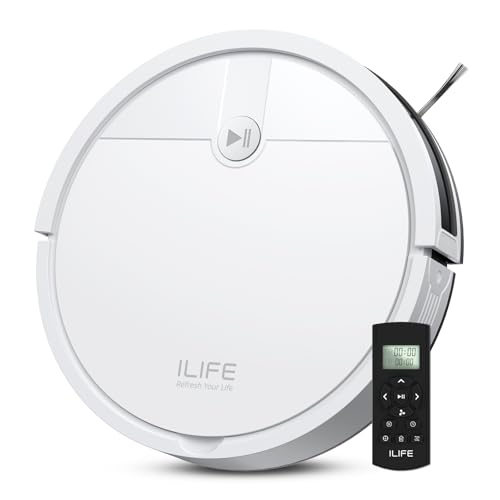
The ILIFE V2 keeps things simple, and that can be exactly the point in a home with mostly hard floors. Its slim body helps it slide under low furniture, while the tangle-free suction design makes pet hair less annoying to manage in day-to-day use.
You’ll feel the appeal most in smaller spaces or secondary rooms where you want routine upkeep without a large dock or a lot of setup. Compared with the Dreame L40 Ultra Gen 2, this is far less elaborate, but that also makes it easier to live with.
Strong Points
- 120-minute runtime supports longer cleaning sessions.
- Slim profile reaches under sofas and cabinets more easily.
- Tangle-resistant suction suits homes with pet hair.
- Self-charging keeps it ready without much attention.
Room For Improvement
- It is tuned more for hard floors than mixed surfaces.
- There is less automation than higher-end picks here.
- You may need to empty and manage it more often than self-emptying models.
Core Details
Who Will Love This
You’ll get the most from this in apartments, condos, or secondary rooms with hard flooring and regular pet hair.
Where A Sibling Pick Shines
ZC WAS Robot Vacuum and Mop for Pet Hair suits you better if you want app and voice control in a similarly slim form.
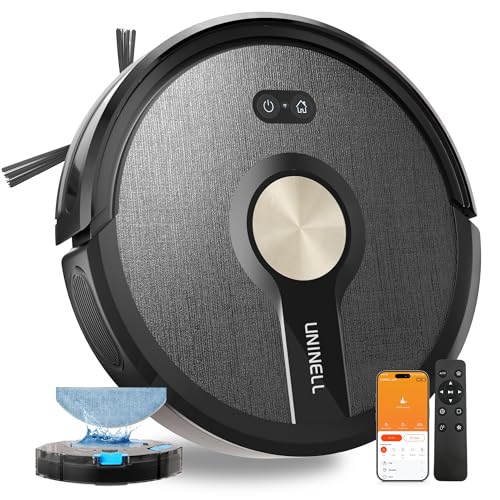
The UR1 lands in a useful middle ground, especially for homes that want both vacuuming and mopping without getting into the biggest, priciest setups. App, remote, and Alexa control give you multiple ways to steer it, which helps in busy homes where different people may want different levels of convenience.
Compared with the ILIFE V2, you get broader control options and wet-dry cleaning, while the runtime gives you more breathing room for larger rooms. The trade-off is that it’s still best thought of as a practical all-rounder rather than a luxury docked system.
Highlights
- Vacuum and mop combo handles two chores in one pass.
- 180-minute runtime suits longer floor plans.
- App, remote, and voice support cover different habits.
- Self-charging keeps routine use straightforward.
Points To Note
- Combo machines usually need more upkeep than vacuum-only models.
- The setup is more involved than a basic hard-floor unit.
- You may prefer a self-emptying dock once dirt volume rises.
Quick Facts
Made For
You’re a good match for this if you want one robot to handle routine vacuuming and light mopping across mixed floors.
Another Choice May Suit
Airzeen Q10 Pro fits better for you if stronger suction and self-emptying matter more than app variety.
That 2.87-inch profile is the first thing that stands out, because low furniture is exactly where many robot vacuums start to lose their appeal. Add Wi-Fi, app, and voice control, and you get a slim machine that still feels modern in daily use rather than stripped down.
You may find it especially useful in pet homes with a lot of sofa clearance and mixed flooring. Compared with the UR1, it puts more emphasis on slim design and obstacle handling than on long runtime or a fuller feature stack.
Bright Spots
- Very low profile helps under furniture and tighter gaps.
- Wi-Fi, app, and voice support keep it flexible.
- 3D obstacle avoidance should help it move more confidently around clutter.
- Self-charging keeps day-to-day upkeep simple.
Small Caveats
- Ultra-slim designs usually trade off dust capacity somewhere.
- Pet homes still need regular brush and bin attention.
- Mixed-floor performance depends on the layout of your rooms.
Feature Rundown
Built With In Mind
You’ll like this most in homes where furniture clearance matters as much as floor coverage.
Swap It Out When
Bissell FlexClean FurForce Robot Vac & Mop fits better for you if filtration and a more premium household brand feel matter more than profile height.
The eufy C10 is the sort of robot that makes sense for daily upkeep, especially in homes where you want less attention between cleanings. Self-emptying support and LiDAR navigation, meaning laser-based room mapping, help it feel more organized than basic bump-and-go models.
Compared with the ZC WAS unit, it adds smart mapping and a more maintenance-friendly dock, which matters in busier homes with repeat traffic. It’s still compact enough to fit into modest spaces, so you don’t need a huge floor plan to justify it.
Upsides
- Self-emptying base cuts down on frequent bin attention.
- LiDAR navigation usually helps with more orderly coverage.
- 2.85-inch body works well around low furniture.
- Edge expansion brush should help near walls and trim.
- Carpet detection adds smarter movement across mixed floors.
Worth Noting
- The dock takes more room than a plain charging stand.
- Pet hair can still need periodic brush cleanup.
- Homes with lots of clutter can slow any mapping robot down.
Details At A Glance
Who Should Grab It
You’ll get the most from this in a home that wants smarter mapping and lower-maintenance emptying without moving into a huge system.
Look Elsewhere When
DREAME L40 Ultra Gen 2 fits better for you if you want a more advanced dock and stronger overall automation.
The Q20 Ultra leans into convenience with a bagless self-emptying setup, which means fewer replacement bags to think about. LiDAR mapping gives it a more deliberate cleaning path, and that matters in homes where carpets, pet hair, and furniture all compete for attention.
Compared with the eufy C10, this one pushes into a more feature-heavy lane while still keeping the bagless angle. The honest read is that it suits you best if you want a fuller toolset without jumping straight to the most elaborate premium machines.
Reasons To Buy
- Bagless self-emptying keeps upkeep straightforward.
- 6000Pa suction gives it solid pull for everyday dirt.
- LiDAR navigation supports more organized cleaning routes.
- Smart mapping helps it remember room layouts more cleanly.
- App and voice control make scheduling easier.
Areas To Watch
- Bagless systems still need routine bin care.
- Feature depth can add a little more setup time.
- Homes with thick carpet may still want a stronger upgrade tier.
Spec Overview
The Right Fit
You’ll appreciate this most in a home that wants modern mapping and a less fiddly emptying setup.
Where Another Pick Fits Better
Airzeen Q10 Pro is the better fit for you if you want stronger suction and a longer 150-minute runtime.
This Bissell brings a more household-focused feel, especially with HEPA filtration, which is a high-efficiency particle filter design used to trap fine debris inside the machine. That matters in pet homes where dust, dander, and general mess can build up fast, and LiDAR helps it stay more orderly while moving through rooms.
Compared with the slimmer ZC WAS and the more feature-heavy Dreame picks, this one sits in a cleaner middle lane with a familiar brand presence. The catch is that its model naming is less straightforward than some rivals, so careful listing checks help.
Best Bits
- HEPA filtration is attractive for finer airborne debris control.
- LiDAR navigation supports more methodical coverage.
- Vacuum and mop design handles routine mixed messes.
- The form factor suits regular home upkeep without feeling oversized.
Honest Caveats
- It does not spell out as many convenience extras as some rivals.
- Brand/model naming may take a second glance to sort out.
- Combo designs still need regular tank and brush attention.
Technical Sheet
Whose Shelf It Belongs On
You’ll like this most if you want a filration-minded robot from a familiar home-care brand and you keep pet hair in the mix.
Not Your Match When
eufy C10 fits better for you if self-emptying and a slimmer body matter more than filtration emphasis.
Bagotte’s combo lands as a straightforward, useful option for homes that want mapping without overcomplicating things. The LiDAR system and self-recharging support keep the routine simple, and 2.4G WiFi plus remote control gives you a few different ways to run it.
Compared with Airzeen’s Q20 Ultra, this one keeps a similar feature direction but feels especially approachable for first-time robot owners. It’s the sort of pick that works best when you want map-based cleaning and don’t need a long list of premium extras.
Positives
- 6000Pa suction gives it respectable cleaning pull.
- LiDAR mapping helps it move with more purpose.
- Self-recharging keeps it easier to live with.
- WiFi, app, Alexa, and remote control offer flexibility.
- Works across hard floors, carpet, and pet hair use cases.
Softer Spots
- The listing details are thinner than some rivals in this roundup.
- Owners usually still need to watch brush and tank care.
- Feature depth is solid, but not especially luxurious.
Feature Card
Right Fit For
You’ll like this most if you want mapping, app control, and a plain-English setup path without a steep learning curve.
Reach For A Different Pick When
DREAME L40 Ultra Gen 2 suits you better if you want a far more advanced dock and stronger automation.
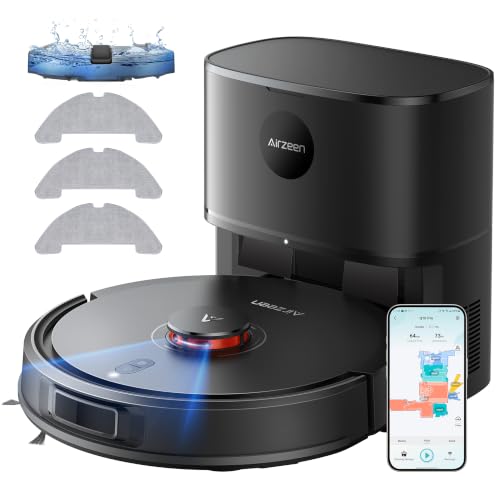
The Q10 Pro feels like the point where you start paying for stronger cleaning headroom and a more capable map-driven setup. Eight-thousand-Pa suction is a meaningful step up on paper, and the 150-minute runtime gives it enough stamina for broader floor plans.
Compared with the Q20 Ultra, this one puts more emphasis on suction and runtime, which is a better mix for carpet and pet hair in larger spaces. You may find it especially appealing when the basic robot tier starts to feel a little underpowered.
Plus Points
- 8000Pa suction gives it stronger pull than midrange entries.
- 150-minute runtime supports longer cleaning coverage.
- Laser navigation helps with more structured room movement.
- Smart mapping should suit repeat cleaning routines.
- Self-emptying keeps the dust bin from becoming a daily chore.
Minor Gripes
- Higher power can bring higher maintenance expectations.
- The more capable setup may feel like overkill in small apartments.
- Self-emptying does not remove all upkeep from the equation.
Core Details
Who It Suits Best
You’ll get the most out of this in a larger home with carpet, pet hair, or enough traffic to justify stronger suction.
Skip It When
ILIFE V2 is the calmer choice for you if you only need a slim, simple robot for hard floors.
The L60 Ultra sits at the most advanced end of this list, and the feature set makes that clear. A detangling brush, AI-enhanced 3D ToF vision, and extendable side brush and mop point to a robot built for more involved homes with lots of obstacles and varied debris.
That 100°C mop self-cleaning function is the detail that signals a more hands-off ownership style, though the full system is still best for households that will actually use all that depth. Compared with the L40 Ultra Gen 2, this one pushes even harder on sensing and cleaning automation, so it suits a more demanding setup.
Best Bits
- 35,000Pa suction gives it serious pull on paper.
- AI-enhanced 3D ToF vision supports smarter object awareness.
- Detangling brush helps limit hair wrap issues.
- Self-cleaning mop care reduces post-run maintenance.
- Extendable side brush and mop help at edges.
Areas To Watch
- The feature stack may be more than casual users need.
- Advanced automation usually asks for more space and planning.
- Extra capability can mean a higher learning curve at first.
Feature Rundown
Built For In Mind
You’ll get the most from this in a larger, busier home where advanced sensing and more hands-off mop care actually get used.
Where Shoppers Go Wrong
Airzeen Q10 Pro is the calmer, more practical choice for you if you want strong suction without stepping all the way into this much automation.
How To Choose The Right Robotic Vacuum Cleaners
Match The Robot To Your Floors
Hard floors are the easiest place to save money, because even simpler robots can keep up with dust, crumbs, and pet hair. Mixed surfaces need more planning, especially once you add carpet detection, stronger suction, or a mop that can stay out of the way on rugs.
Low furniture changes the equation too. A slim body such as the ILIFE V2 or eufy C10 can reach places taller models miss, while a more advanced dock can be worth the space in a larger home.
Think About Maintenance First
Self-emptying sounds convenient because it is, but the dock still needs room and occasional care. Bagless systems reduce consumable parts, while docked systems often reduce how often you handle debris by hand.
Brush design matters as much as suction for homes with long hair or pet fur. Detangling brushes, edge brushes, and mopping parts can save time, though they also mean more pieces to clean now and then.
Navigation Shapes Daily Results
LiDAR navigation, meaning laser-based mapping, usually helps a robot move with better order than a basic random path. That’s useful in homes with chairs, pet bowls, and changing furniture layouts.
Obstacle-aware models suit busier rooms, while simpler units can still work well in open layouts. The right choice depends less on headline power and more on how much structure your home needs.
Things Worth Knowing First
Mistakes Worth Dodging
Don’t focus only on suction numbers and ignore height, dock size, or floor type. A powerful robot that can’t fit under your sofa, or one that needs more upkeep than you want, turns into shelf clutter fast.
It also helps to separate vacuum-only needs from combo cleaning. Mopping is useful, but it adds tank care and more parts to rinse, so it makes sense only for homes that will use it often.
The Upgrade Payoff
Higher-tier models usually cost more because they add docking automation, smarter mapping, stronger object awareness, and better edge coverage. Those parts are most valuable in bigger homes, pet-heavy spaces, and households that want less hands-on work.
For a small apartment with mostly hard floors, a slimmer and simpler robot often makes more sense. For a busy home with carpets and daily debris, paying for a stronger system tends to feel easier over time.
Frequently Asked Questions
What makes a robot vacuum worth it for pet hair?
You want strong suction, a brush that resists tangles, and a path that reaches edges well. A self-emptying dock helps too, because fur fills bins quickly.
Do robot vacuums handle carpets well?
Some do, especially models with carpet detection and stronger suction. Thick pile still pushes many robots harder than hard floors do.
Is LiDAR better than basic navigation?
LiDAR usually maps rooms more consistently, so routes look more organized. That helps in homes with furniture, narrow halls, or repeated daily cleaning.
Do combo vacuum and mop models need more care?
Yes, because you’re managing a dust path and a wet-cleaning path at the same time. Tanks, pads, and brushes add a little upkeep, though the extra function can be worth it.
Are slim robots actually useful?
They are, especially in homes with low sofas, cabinets, and bed frames. Slimmer models often trade off some capacity or automation, so the fit matters.
Closing Thoughts
The right robot vacuum feels less like a gadget and more like a quiet house helper that matches your layout, your floors, and how much maintenance you’re willing to handle. The strongest picks here split neatly by use case: some are built for automation, others for simplicity, and a few land right in the middle. Focus on the features you’ll use every week, not the ones that only sound impressive on the listing. That’s the easiest way to end up with a robot that earns its place.