Robot mowers make sense when your lawn care needs a steady routine, not another weekend chore. You want cleaner edges, less pushing, and a machine that can handle maps, zones, slopes, and ordinary backyard obstacles without turning setup into a headache. This shortlist focuses on wire-free models for different yard sizes, from compact lots to larger properties.
You’ll see clear trade-offs here, too. Some models lean into easier mapping, others lean into stronger slope handling, and a few are better suited to tidy lawns with defined borders. That mix helps you match the machine to your yard instead of guessing from a glossy listing.
The Shortlist At A Glance

Segway Navimow i110N Robot Lawn Mower 1/4 Acre RTK+Vision Robotic Lawnmower
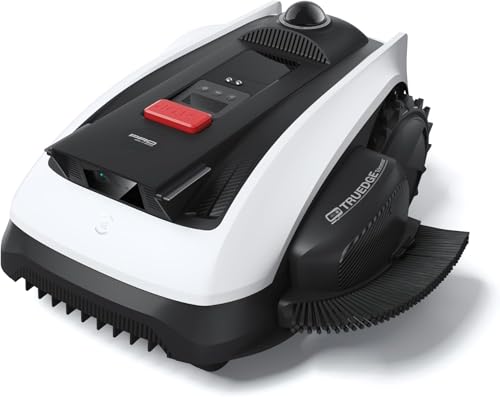
ECOVACS Goat O1000 LiDAR PRO Robot Lawn Mower

ECOVACS Goat A2000 LiDAR PRO Robotic Lawn Mower
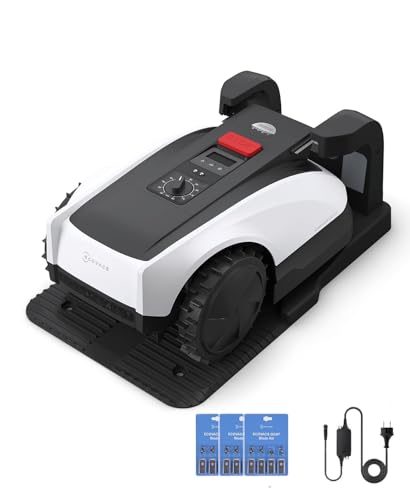
ECOVACS Goat O1000 RTK Care Kit Robotic Lawn Mower
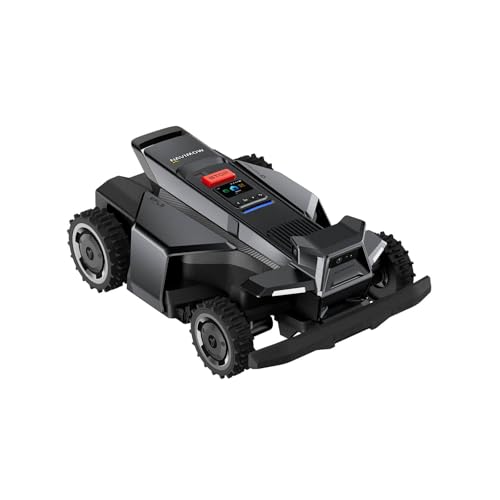
Segway Navimow X430 Robot Lawn Mower Wire Free

Husqvarna Automower 410iQ Robotic Mower

MOVA LiDAX Ultra 1000 Robot Lawn Mower Wire Free

WORX Landroid Vision Cloud Robot Lawn Mower
For a quarter-acre yard, this NAVIMOW model lands in a sensible sweet spot. RTK means real-time kinematic positioning, so the mower relies on satellite-grade positioning instead of a buried boundary wire, while the vision system adds another layer for mapping and obstacle awareness.
The 58 dB(A) noise rating is a nice touch for close-set neighborhoods, and the app-based zone control should suit yards with separate front and back sections. The honest trade-off is that wire-free systems can ask more from the initial setup, so this feels best for organized lawns rather than chaotic overgrowth.
Strong Points
- Wire-free setup avoids trenching a perimeter cable.
- RTK plus vision gives you layered navigation support.
- 58 dB(A) output keeps lawn care less intrusive for nearby patios.
- Multi-zone control helps separate front and rear mowing schedules.
- App control makes routine adjustments easier from your phone.
Areas To Watch
- Initial mapping can take patience on complex yards.
- Dense tree cover may be less friendly to satellite-based positioning.
- Best results usually come from a yard with clear boundaries.
Feature Card
Who It Suits Best
You get the most value here in a tidy, well-defined yard where you want automation without a buried wire.
Where A Sibling Pick Shines
Segway Navimow X430 is the smarter swap for larger, rougher properties with steeper grades and more ground to cover.
This Goat O1000 leans hard into LiDAR, or light detection and ranging, which means it reads distance with laser-based sensing rather than perimeter wire guessing. That makes it appealing for yards where you want precise mapping and cleaner edge behavior without a lot of hardware on the lawn.
Compared with the NAVIMOW i110N, this one puts more emphasis on smart edge mowing and obstacle avoidance than quiet operation. You may find it especially useful in backyards with planters, hardscape borders, or awkward corners that need careful pathing.
What We Like
- LiDAR mapping keeps setup wire-free.
- Smart edge mowing helps trim along borders more cleanly.
- AI obstacle avoidance suits yards with scattered objects.
- App control keeps scheduling and zone edits simple.
Small Caveats
- LiDAR systems can feel fussy in very cluttered spaces.
- Small lawns may not need this much navigation hardware.
- Complex edging still depends on how your yard is laid out.
Quick Facts
Made For
You should be happiest with this in a compact yard where edge control matters as much as the main cut.
A Better Fit Elsewhere
MOVA LiDAX Ultra 1000 makes more sense for shoppers who want denser zone management and a broader feature set in a smaller footprint.
The A2000 steps up the scale with a half-acre capacity, which immediately changes the conversation for larger suburban properties. Dual-LiDAR auto mapping, a built-in TruEdge edge trimmer, and AIVI 3D obstacle avoidance give it a more ambitious spec sheet than the smaller ECOVACS model above.
That extra capability matters most when your lawn has long runs, hard edges, and a few awkward objects sitting in the path. The trade-off is that more features usually mean more setup attention, so it suits someone who wants the machine to do more once the map is dialed in.
Upsides
- Half-acre coverage opens it to larger homes.
- Dual-LiDAR mapping supports better layout awareness.
- TruEdge trimming helps reduce manual touch-up work.
- AIVI 3D sensing adds another obstacle layer.
- App control keeps the system easy to schedule.
Points To Note
- More features can mean a longer first setup.
- Larger yards still benefit from clearly defined borders.
- Edge trimmers add capability, but also another part to maintain.
Technical Sheet
Right Fit For
This suits you best in a larger yard where edge quality and obstacle handling matter as much as raw coverage.
Look Elsewhere When
Segway Navimow i110N makes more sense for smaller yards where simpler navigation and a quieter operating profile matter more.
What separates this kit from the plain O1000 is the extras bundled in, especially the 36 replacement blades. RTK navigation means it uses real-time positioning to stay mapped without a perimeter wire, and the multi-zone setup is useful for lawns split into front, side, and back areas.
The care-kit angle matters more than it sounds. Blade replacements are part of ownership, and having spares on hand can make maintenance less of a chore for busy households, though the mower itself still fits best on compact lawns rather than sprawling acreage.
Best Bits
- RTK navigation avoids buried boundary cable work.
- Multi-zone control helps manage segmented yards.
- Included extra blades add practical maintenance headroom.
- App control keeps daily use straightforward.
Room For Improvement
- The bundle helps, but the mower is still sized for smaller yards.
- Extra blades are useful, though they don’t change mowing performance by themselves.
- RTK setup can be more involved than a basic push-button machine.
Core Details
Who Should Grab It
You get the most from this if you want a compact wire-free mower and appreciate spare blades in the box.
Another Choice May Suit
ECOVACS Goat A2000 is the better fit for anyone who needs more lawn coverage and stronger edge-focused hardware.
This X430 is built for the sort of yard that makes smaller robot mowers sweat. A 1-acre capacity, 4WD traction, and support for 84% slopes give it a very different job profile from the quarter-acre NAVIMOW i110N.
The zero-turn design is also worth a look, because turning in place can help reduce scuffing in tighter grass corridors. The trade-off is that this kind of capability tends to belong on larger properties with terrain that justifies the extra hardware, not on a simple flat lawn.
Reasons To Buy
- 1-acre coverage suits broad properties.
- 4WD traction helps on uneven ground.
- 84% slope handling is useful for steep terrain.
- Zero-turn motion can reduce turf wear during turns.
- Two 180W motors point to stronger drive support.
Honest Caveats
- This is more machine than many small yards need.
- Terrain features matter, so a flat lawn may not justify the extra hardware.
- Stronger capability can come with a larger setup footprint.
Details At A Glance
Built With In Mind
This is the one to consider for large yards with hills, turns, and enough room to use its traction hardware well.
Skip It When
Husqvarna Automower 410iQ fits better for a smaller half-acre lawn where the included reference station feels more proportionate.
The 410iQ comes as a more complete package than most of the wire-free options here because it includes a charging station, RS1 EPOS reference station, and replacement blades. EPOS is a positioning system that leans on a reference station for accurate navigation, and that setup can appeal to owners who want a more structured install.
With 0.5 acre of mowing capacity, it sits in the middle of the pack for yard size. The honest read is that the bundle feels well thought out, though the added components mean you should be comfortable managing a slightly more involved setup than the simplest app-only models.
Bright Spots
- Half-acre capacity fits a broad set of suburban lawns.
- RS1 EPOS reference station supports accurate positioning.
- Charging station is included, which simplifies the package.
- Replacement blades in the box help with upkeep planning.
Softer Spots
- More bundled hardware means more pieces to place correctly.
- The setup feels less casual than a bare-bones mower.
- Very small lawns may not need this much system support.
Spec Overview
Whose Shelf It Belongs On
This suits someone who wants a mid-sized mower with a more complete positioning bundle.
Swap It Out When
WORX Landroid Vision Cloud fits better for a homeowner who wants a simpler vision-led approach on a half-acre yard.
The LiDAX Ultra 1000 packs a dense feature set into a smaller-yard frame. RTK-free 360-degree 3D LiDAR plus AI vision gives it several ways to understand the lawn, and the zero-edge cutting claim matters for owners who dislike trimming along borders afterward.
That breadth of control extends to 150 managed zones and dual maps, which is unusually handy for properties with separate lawn sections or split front-and-back layouts. You may find the 45% slope figure reassuring on mildly hilly ground, though a very steep or rough yard still calls for careful layout planning.
Standout Traits
- RTK-free mapping cuts out one positioning method.
- 360-degree 3D LiDAR adds broad spatial awareness.
- AI vision helps with object recognition.
- Zero-edge cutting reduces border touch-up work.
- 150 managed zones offer unusually flexible lawn control.
Minor Gripes
- So many modes can take time to learn.
- Dual maps help, but setup still rewards a clear lawn plan.
- Smaller yards get the most efficiency from this package.
Feature Rundown
The Right Fit
You should look at this if your yard is compact but complicated, with lots of separate areas to manage.
Reach For A Different Pick When
Segway Navimow X430 is the stronger option for much larger lawns that need tougher slope handling and a broader coverage ceiling.
The WORX Landroid Vision Cloud takes a straightforward path with AI obstacle avoidance and RTK cloud navigation. That combination is useful for homeowners who want a robot mower that can handle routine upkeep without asking them to think too hard about wires or complex border hardware.
With a half-acre capacity and support for 30% slopes, it sits in a practical middle ground between compact models like the O1000 and heavier-duty machines like the X430. The catch is that it doesn’t lean as hard into edge-specific extras, so it suits general lawn care more than finish-work perfection.
Positives
- Wire-free setup keeps installation cleaner.
- RTK cloud navigation supports guided mowing paths.
- AI obstacle avoidance helps around common yard objects.
- Half-acre coverage fits many suburban lawns.
- App control keeps routine use convenient.
Trade Offs
- Edge finishing is less specialized than on trim-focused models.
- 30% slope support is useful, but not as aggressive as the X430.
- More general-purpose than feature-heavy rivals.
Core Details
Who Will Love This
You get strong everyday usefulness here if your lawn is medium-sized and you want a fairly simple path into automation.
Where Shoppers Go Wrong
ECOVACS Goat A2000 is the better fit for anyone who wants stronger edging hardware and more advanced sensing on a larger yard.
How To Choose The Right Robot Mowers
Start With Yard Size And Shape
Your lawn’s acreage matters, but the shape matters almost as much. A quarter-acre yard with narrow passages can be harder for a mower than a cleaner half-acre rectangle, because every turn, border, and side yard asks the navigation system to do a little more work.
Look for explicit coverage ratings and then match them to your actual layout, not the house listing. The Segway Navimow i110N and ECOVACS Goat O1000 suit smaller properties, while the Husqvarna 410iQ and WORX Landroid Vision Cloud make more sense as the lawn grows.
Pick The Navigation Style That Fits Your Yard
Wire-free mapping is the big convenience story in this category, but the method behind it changes the experience. RTK systems lean on positioning signals, LiDAR reads distance with laser sensing, and vision-based systems use cameras to interpret the lawn.
Yards with trees, tight corners, or lots of décor can favor one method over another. A simple open lawn usually keeps setup easier, while a busy yard rewards the more layered sensing found on models like the NAVIMOW X430 and MOVA LiDAX Ultra 1000.
Match Traction And Cutting Control To Terrain
Slopes are where many robot mowers separate quickly. A yard with gentle grades can work with a calmer all-purpose model, but steeper sections ask for traction, drive power, and a chassis meant to stay composed on uneven ground.
That’s where specs like 4WD, slope percentages, and cutting-height ranges become more than numbers. The X430 is the obvious terrain specialist here, while the WORX Landroid Vision Cloud and Husqvarna 410iQ sit in the more everyday middle.
Think About Maintenance Before You Commit
Blade changes, app updates, charging placement, and first-time mapping all shape ownership after the box is opened. Models that include replacement blades, like the ECOVACS Goat O1000 RTK Care Kit and Husqvarna 410iQ, take a little pressure off routine upkeep.
You also want to think about storage and cleaning access. A mower with more add-on hardware can be more capable, but it also asks for more space and a little more organization in the garage or shed.
A Quick Reality Check
Common Shopping Slip Ups
Many shoppers look only at acreage and miss the yard’s layout. A simple coverage number won’t save you from narrow gates, scattered planters, or a steep side slope.
Another common miss is underestimating setup time for wire-free systems. You still need a clear plan for zones, boundaries, and charging space, especially on yards with front and rear sections.
The Upgrade Payoff
Higher-tier models usually spend more on navigation hardware, traction, and cutting precision. That extra cost often buys smoother mapping, stronger slope control, or better edge handling, which matters in complicated yards.
Pay up when your property has hills, many zones, or a layout that frustrates simpler machines. For flatter lawns with cleaner borders, a more restrained model often leaves you with enough capability and less complexity.
Frequently Asked Questions
Do robot mowers work without a perimeter wire?
Yes, the models here are designed for wire-free mapping. They rely on systems like RTK, LiDAR, vision, or a mix of those tools.
Which yard size is most common for these models?
The list covers roughly quarter-acre to one-acre lawns. That gives you a spread from compact suburban spaces to larger, more demanding properties.
Are edge-focused models worth it?
They help most on lawns where borders are visible and frequent. If your yard has lots of hardscape edges, a stronger edge system can reduce hand trimming.
Does a bigger capacity always mean a better mower?
No, larger capacity only helps when your lawn actually needs it. A smaller property can do better with a lighter, simpler model that’s easier to live with.
What matters more, navigation or traction?
Both matter, but different yards stress different systems. Flat lawns lean on navigation, while sloped lawns put traction and drive hardware under the spotlight.
Closing Thoughts
You have plenty of solid directions here, whether your yard is compact, hilly, or split into several zones. The quiet, wire-free NAVIMOW i110N fits tidy suburban lawns, the X430 is built for tougher terrain, and the WORX Landroid Vision Cloud stays comfortably in the middle for everyday use. Focus on your lawn shape first, then choose the navigation and slope support that match it, and the rest gets much easier.