You want an oil-free compressor that fits the job, the space, and the noise level you can live with. Some are tiny enough for tire top-offs and airbrushing, while others are built for nailing, painting, or garage work that needs more tank volume and steadier airflow.
This roundup keeps the focus on practical use, not shiny extras. You’ll see which picks make sense for apartments, home garages, hobby benches, and busy workspaces, so your shortlist stays tied to real ownership needs.
Quick Look At The Shortlist

BULLSEYE PRO Tire Inflator with Pressure Gauge (9475)

6-Gallon Pancake Air Compressor, 175 PSI

DEWALT Air Compressor for Trim (DWFP55130)

Timbertech Airbrush Compressor AS186 3L Tank

Klutch 29-Gallon Air Compressor, 2.5 HP

VEVOR 6.3 Gallon Air Compressor, 2 HP

Makita MAC320Q Quiet Series 3-Gallon
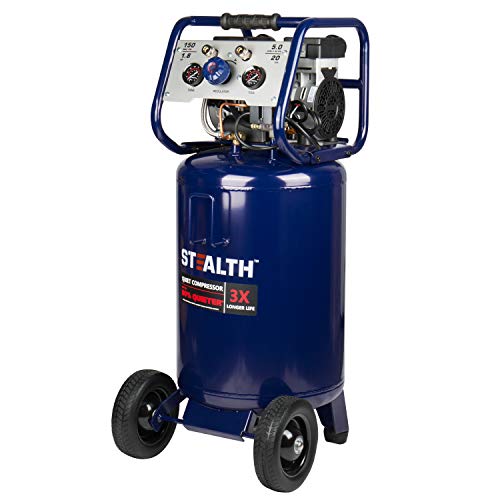
Stealth 20 Gallon Ultra Quiet Air Compressor

VEVOR Air Compressor, 2-Gallon Steel Tank

California Air Tools CAT-4610AC 4.6-Gallon
More Details On Our Top Picks
For daily tire checks, this compact inflator keeps things simple, and the automatic shutoff matters more than it sounds because you can stop hovering over the gauge. USB home recharging and the included cord for vehicular use make it handy for garage shelves or a glove box, though it’s built for inflation jobs rather than broader workshop tasks.
The 150 PSI ceiling gives you useful headroom for cars, bikes, and light gear, which puts it in a very different lane from the bigger tank units later in this list. For commuters and weekend drivers, the honest read is that this is the easiest way to stay prepared without giving up much storage space.
What We Like
- Automatic shutoff helps reduce overfilling during routine tire top-offs.
- USB charging at home adds flexibility between vehicle use and storage.
- Compact size makes it easy to keep in a trunk or garage drawer.
- The 150 PSI ceiling leaves room for car, bike, and other light inflation needs.
Small Caveats
- It focuses on inflation, so you will not use it like a shop compressor.
- The smaller format is convenient, but it also means less versatility than tank-based models.
Feature Snapshot
Who It Suits Best
You should start here for car owners, cyclists, and anyone who wants a compact inflator for occasional household use.
Where A Sibling Pick Shines
DEWALT Air Compressor for Trim (DWFP55130) suits you better for nailers, trim work, or anything that needs a true tank compressor.
A 6-gallon pancake tank gives this one the familiar low, flat footprint many home garages appreciate, and the 175 PSI max adds a bit more headroom than the small inflator above. That combination suits quick nailer jobs, inflation, and general DIY cleanup without asking you to dedicate much floor space.
The included 10-piece accessory kit makes the listing feel more ready-to-use than a bare tool. The trade-off is that a pancake compressor still sits in the light-to-mid duty range, so you’ll want to keep expectations tied to home projects rather than bigger shop routines.
Highlights
- 6-gallon pancake form keeps storage and transport manageable.
- 175 PSI max adds useful pressure headroom for home tasks.
- Accessory kit gives you a broader starting point.
- Works well for common air tool chores around the house.
Worth Noting
- Pancake tanks are portable, but they are not built for long continuous use.
- The compact shape helps mobility, though it offers less reserve than larger vertical tanks.
Core Details
The Right Fit
You fit this pick well if you want a compact compressor for home repair, brad nailing, and routine inflation work.
Look Elsewhere When
Klutch 29-Gallon Air Compressor, 2.5 HP suits heavier garage users who need more tank volume and longer run time between recovery cycles.
Trim work asks for steady output more than flashy extras, and this DEWALT model is aimed squarely at that kind of task. The 200-PSI max gives you a broader pressure ceiling than the previous pancake unit, so you get more breathing room for finish carpentry jobs and repeated tool use.
The quiet-operation design also makes sense in shared spaces, especially for basement workshops or attached garages where noise carries. One thing worth considering is that the strengths here are tuned to trim and finish work, so it feels more focused than all-purpose models.
Positives
- 200 PSI max gives you strong pressure reserve for trim tasks.
- Quiet operation suits indoor workshops and closer quarters.
- Built around finish work, so the setup feels purpose-driven.
- Handy for repeated nailing without constant pressure anxiety.
Areas To Watch
- The trim-first layout makes it less broad than general garage compressors.
- Quiet design helps daily comfort, though size and weight still matter in tight storage areas.
Details At A Glance
Best Suited To
You will get the most from this pick in trim carpentry, light finish work, and home spaces where lower noise matters.
Swap It Out When
Makita MAC320Q Quiet Series 3-Gallon is the better fit for you if you want a smaller, quieter compressor for lighter portable use.
Airbrush work depends on control, and this mini compressor leans into that with a single-piston, oil-free setup and a 3L tank. The regulator manages output pressure, while the moisture trap helps reduce water in the air line, which matters when you’re painting models, cake pieces, or fine detail graphics.
Compared with the trim compressor above, this one is narrower in scope but better matched to delicate finish work. It’s a smart fit for hobby benches, though the smaller tank means you should expect a tool for precision, not broad shop coverage.
Bright Spots
- 3L tank supports steady air for detail-oriented tasks.
- Regulator gives you more control over output pressure.
- Moisture trap helps protect delicate finish work from excess condensation.
- Oil-free design keeps upkeep simpler for hobby spaces.
Softer Spots
- The mini format is built for precision, not larger pneumatic tools.
- Small tank size means you may pause more often during longer sessions.
- Airbrush-focused hardware makes it less versatile than garage compressors.
Technical Sheet
Whose Shelf It Belongs On
This belongs with you if your setup centers on model painting, decorative baking work, tattoo-style graphics, or similar fine-detail projects.
Where Another Pick Suits Better
VEVOR 6.3 Gallon Air Compressor, 2 HP suits you better for general household tasks that need more tank volume and broader utility.
This is the first real garage-scale unit in the list, and the 29-gallon vertical tank makes that clear right away. With 5.1 CFM at 90 PSI, it’s aimed at jobs that need more sustained airflow, which matters for nailers, painting, and longer project sessions where smaller tanks can feel breathless.
The large wheels and maintenance-friendly tank drain help with ownership, especially in a busy garage where moving heavy gear and draining moisture are part of the routine. The trade-off is footprint, so this is less casual than the smaller compressors above, but that’s the point.
Reasons To Buy
- 29-gallon vertical tank gives you plenty of air reserve.
- 5.1 CFM at 90 PSI supports more demanding tool use.
- Large wheels make repositioning easier in a garage.
- Tank drain helps with routine upkeep after use.
- Oil-free design keeps maintenance simpler than oil-lubed units.
Points To Note
- Its size suits garage space better than cramped storage areas.
- Heavy-duty capacity comes with more bulk to manage.
Spec Overview
Built With In Mind
You should look at this compressor for a home garage, workshop, or serious DIY space where size and air reserve matter more than portability.
Reach For A Different Pick When
Stealth 20 Gallon Ultra Quiet Air Compressor suits you better if you want a large tank with a calmer noise profile.
This VEVOR sits in a useful middle ground, with a 6.3-gallon tank and 3.35 CFM at 90 PSI that suit many home tasks without turning into a garage giant. It can handle tire inflation, spray painting, and woodwork nailing, so you get a wider lane than the airbrush unit while staying much easier to place than the 29-gallon Klutch.
The 116 PSI max is lower than several models in this roundup, though that doesn’t erase the appeal for mixed household use. For most standard home setups, the balance of size and output is probably the main attraction.
Standout Traits
- 6.3-gallon tank keeps the footprint manageable.
- 2 HP motor gives you useful mid-range support.
- 3.35 CFM at 90 PSI fits many home jobs.
- Handles several common project types, not just one.
Room For Improvement
- 116 PSI max is lower than some other compressors here.
- It is broad in use, though not as specialized as trim or airbrush picks.
Feature Rundown
Who Should Grab It
You fit this compressor well if you want a mid-size oil-free unit for varied home repair and finishing chores.
Not Your Match When
California Air Tools CAT-4610AC 4.6-Gallon is the better fit if quieter portable movement matters more than broader mid-range output.
Makita’s Quiet Series name tells you the main story: this is built for lower-noise operation in a compact 3-gallon package. The 1-1/2 HP motor keeps it squarely in the light-duty category, which suits trim touch-ups, small inflate-and-go tasks, and indoor spaces where a louder compressor would feel out of place.
Compared with the DEWALT trim unit, this one looks more portable and less geared toward bigger finish-carpentry sessions. That trade-off makes sense for apartment garages, small workshops, and anyone who prefers a calmer hum during short jobs.
Upsides
- Quiet Series design helps keep noise under control.
- 3-gallon tank stays easy to move and store.
- Oil-free build keeps maintenance simpler for you.
- Good fit for short, light-duty tasks around the house.
Minor Gripes
- The smaller tank limits how long you can run heavier tools.
- Light-duty positioning makes it less useful for bigger garage projects.
At A Glance
Perfect Match For
You should look at this model for quiet, light-duty work in a small home shop or shared indoor space.
Another Choice May Suit
Stealth 20 Gallon Ultra Quiet Air Compressor suits you better if you want a much larger tank while still keeping the noise level restrained.
The Stealth brings a 20-gallon tank, 1.8 HP motor, and a 68-decibel noise claim, which makes it feel aimed at garage users who want more air without a racket. Its 5.5 CFM at 40 PSI and 5 CFM at 90 PSI give it a stronger working profile than the smaller portable units above, especially for repeated nailer or shop duties.
That said, it still keeps an oil-free design, so upkeep stays simpler than on oil-lubed machines. The wheel kit helps with movement, but the bigger body means it belongs in a dedicated space rather than a shelf nook.
Best Bits
- 20-gallon tank supports longer project sessions.
- 68-decibel rating makes the noise profile easier to live with.
- 5.5 CFM at 40 PSI and 5 CFM at 90 PSI suit more active use.
- Wheel setup improves mobility around a garage.
Areas To Watch
- Its size asks for real floor space.
- Big capacity is helpful, though it is not as compact as the 3-gallon or 6-gallon units.
Key Specs
The Right Fit
You fit this compressor best in a garage or workshop where quiet operation and larger tank volume both matter.
Skip It When
Makita MAC320Q Quiet Series 3-Gallon is the smarter choice for you if portability matters more than tank size.
This 2-gallon VEVOR stays compact, and the steel tank gives it a sturdier feel than some ultra-light portables. With 2.1 CFM at 90 PSI, 120 PSI max pressure, and an 81-decibel claim, it’s set up for short tasks like tire inflation, small spray work, and occasional auto repair jobs.
The lower tank volume is the main trade-off, though that also keeps it manageable for compact storage. For garages and sheds where space is tight, this is a straightforward, no-nonsense option that does a few jobs without demanding much room.
Standout Traits
- 2-gallon steel tank brings a sturdy, compact build.
- 2.1 CFM at 90 PSI covers light everyday air tasks.
- 120 PSI max suits common inflation needs.
- Small size makes it easier to store and move.
Points To Note
- The smaller tank means shorter run time between refills.
- It is better for brief jobs than sustained tool work.
Core Details
Best Suited To
You should consider this compressor for compact spaces, short repair sessions, and occasional household inflation jobs.
A Better Fit Elsewhere
California Air Tools CAT-4610AC 4.6-Gallon fits you better if you want a larger portable unit with a calmer working profile.
The CAT-4610AC leans into portability with a 4.6-gallon twin-tank aluminum layout, and that aluminum matters because it trims weight compared with heavier steel builds. The 1.0 hp motor keeps it in light-duty territory, which is a good match for trim touch-ups, small shop tasks, and moving between job areas without much fuss.
Compared with the VEVOR 2-gallon unit, this one gives you more storage while staying easy to carry around. The honest read is that it’s a strong fit for people who value mobility and lower noise over big-shop output.
Positives
- Aluminum twin tanks help keep weight down.
- 4.6-gallon capacity gives you more reserve than tiny portables.
- Oil-free build keeps routine upkeep simpler.
- Easy to move between rooms, garages, or small work zones.
Minor Gripes
- Light-duty output means it is not aimed at larger pneumatic jobs.
- The portable design is handy, though not as roomy as garage-scale models.
Feature Card
Who Will Love This
You fit this compressor best if you want a lighter portable unit for small tasks across different parts of the home or workshop.
Where Another Pick Suits Better
Klutch 29-Gallon Air Compressor, 2.5 HP is the better route for you if your work leans toward sustained garage jobs and larger tools.
How To Choose The Right Oil Free Air Compressors
Match Tank Size To The Job
Tank size shapes how long the compressor can keep delivering air before recovery matters. Smaller tanks, like 2 to 6 gallons, suit tire inflation, trim work, and airbrush sessions, while 20 to 29 gallons make more sense for repeated nailing or painting.
Think in terms of work rhythm, not just capacity numbers. A bigger tank feels like extra breathing room, but it also asks for more floor space and storage planning.
Check Air Delivery, Not Just Max PSI
PSI, or pounds per square inch, tells you pressure ceiling. CFM, cubic feet per minute, tells you how much air the compressor can move over time, and that matters more for sustained tool use than a flashy max-pressure figure.
For light inflators and airbrush tools, lower CFM can be fine. For nailers, paint work, and garage use, higher CFM usually matters more than the highest pressure number on the page.
Noise And Placement Matter More Than You Think
Quiet operation helps a lot in shared homes, basements, and attached garages. A lower-noise compressor can make short jobs feel much less intrusive, especially for morning or evening work.
That quieter design often comes with a trade-off, usually in size, price, or capacity balance. You get the smoothest experience by matching sound level to where the unit will sit most often.
Portability And Maintenance Should Stay In The Conversation
Wheels, handles, tank drain placement, and overall shape all affect how pleasant a compressor feels after month three. Oil-free designs cut routine maintenance, which suits casual owners and mobile setups especially well.
Still, oil-free does not erase care needs. You’ll still want to drain moisture, keep the unit clean, and store it where the tank and fittings won’t get knocked around.
Things Worth Knowing First
Common Shopping Slip Ups
Many shoppers focus on PSI alone and miss CFM, which is the number that better reflects real tool support. That mistake can leave you with a compressor that sounds strong on paper but feels strained in use.
Another miss is choosing too little tank for the task. A tiny portable unit works fine for tires and trim touch-ups, but it gets frustrating fast for repeated garage work.
Where The Extra Money Goes
Higher-tier compressors usually pay for larger tanks, quieter operation, stronger airflow, and better mobility hardware. You also tend to see better fit-and-finish details like wheels, drains, regulators, and more stable housings.
That upgrade makes sense for frequent garage use, noisy shared spaces, or projects that run longer than a quick top-off. For occasional inflation, the extra spend often buys more comfort than necessity.
Frequently Asked Questions
What does oil-free mean in a compressor?
Oil-free means the pump is designed to avoid routine oil lubrication. That usually makes upkeep simpler and keeps the unit friendlier for casual home use.
Is a bigger PSI always better?
No, because PSI only tells you the pressure ceiling. For many tools, CFM and tank size matter more than chasing the highest pressure number.
Which size works best for home garages?
For many garages, 6 to 20 gallons hits a comfortable middle ground. Larger tanks are useful for longer sessions, while smaller units stay easier to store.
Are quiet compressors worth it?
They often are in attached garages, basements, and indoor workshops. Lower noise makes short jobs easier to live with, especially around family spaces.
Do oil-free compressors need less care?
They usually reduce routine maintenance, but they still need basic attention. Draining moisture and keeping the unit clean still matter a lot.
Closing Thoughts
You have a wide spread of choices here, from pocket-size inflators to garage-ready tank compressors. The right one depends on how often you work, how much noise you can tolerate, and how much space you can spare. For simple car care, the smaller picks make life easy. For trim, painting, or heavier home projects, the larger tanks justify themselves quickly. Choose the size that fits your routine, and the rest gets simpler.