Picking the right air framing nail gun saves time, reduces fatigue, and helps you keep trim, sheathing, and framing work moving without constant fuss. Some of these picks are built for roof decking and floor work, while others make more sense for lighter carpentry or connector fastening. The right match comes down to nail angle, head style, magazine shape, and how much reach you need on the job. You’ll see clear differences here, not just a pile of similar-looking tools.
The Shortlist At A Glance

Makita AN924 21º Full Round Head Framing Nailer

Metabo HPT Coil Framing Nailer NV90AGS

3PLUS HDA1564SP 15 Gauge Angled Finish Nailer

DOTOOL Pneumatic Brad Nailer 2-in-1
Metabo HPT NR38AK Strip Nailer

MtiolHig Cordless 2-Inch Brad Nailer

Freeman PSSCP Single-Pin Concrete Nailer

3PLUS H2190SP 21 Degree Framing Nailer
PneuTools SN2283H 21 Degree Framing Nailer
More Details On Our Top Picks
The Makita AN924 fits the sort of framing work that asks for steady handling more than flashy extras. A 21-degree layout suits common framing jobs, and the full round head style gives you a straightforward option for structural fastening on site.
That makes it a sensible match for deck framing, wall building, and general carpentry where consistency matters. Compared with the coil-fed Metabo HPT NV90AGS later in this list, this one feels more like a classic framing tool than a high-volume specialist, which is exactly the point for many weekend or pro jobs.
Strong Points
- 21-degree format works with standard framing habits.
- Full round head design suits structural fastening needs.
- Makita’s framing lineup usually appeals to hands-on carpenters who want familiar handling.
- Well matched to wall framing, subfloor work, and deck builds.
Things To Consider
- Round-head nails can take a different strip style than clipped-head setups.
- You’ll want to keep the nose clean after dusty framing sessions.
Feature Snapshot
Who It Suits Best
You’ll get the most from this pick on straightforward framing jobs where a conventional round-head nailer makes sense.
A Better Fit Elsewhere
PneuTools SN2283H 21 Degree Framing Nailer suits you better if you like a rafter hook for easier staging between cuts and climbs.
This coil-fed Metabo HPT leans into faster-paced framing work, especially roof decking and floor or truss jobs. A 15-degree nail setup usually means more capacity in the magazine, which matters when you’re covering a lot of surface before reloading.
The trade-off is a different handling feel than the Makita AN924’s round-head setup, so it suits users who value throughput and long runs. For most crews working on larger builds, that’s a useful compromise rather than a drawback.
Upsides
- Coil-style feed helps reduce reload interruptions.
- Handles 1-3/4 to 3-1/2 inch nails.
- Fits roof decking, floor work, and truss fastening.
- Pneumatic power keeps the tool in familiar jobsite territory.
- Good match for users who cover large framing areas.
Worth Noting
- Coil layout can feel less compact in tight spaces.
- It makes more sense for bigger jobs than detail work.
Technical Sheet
Who Will Love This
You’ll appreciate this one for roof, deck, and floor builds where speed matters more than a small footprint.
Where Another Pick Suits Better
Makita AN924 21º Full Round Head Framing Nailer makes more sense for you if you want a simpler, more traditional framing feel.
Step away from structural framing for a moment, and the 3PLUS HDA1564SP shifts the focus to cleaner finish work. A 15-gauge angled finish nailer fits trim, casing, and other visible carpentry jobs where you want less bulk than a framing gun.
The angled nose helps in corners and tight joints, which is handy in finished rooms or around cabinets. Compared with the heavier framing picks above, this one belongs in the toolbox for detail work, not wall building.
Bright Spots
- 15-gauge format suits visible trim and casing.
- Angled body helps reach awkward corners.
- Better fit for finish carpentry than rough framing tasks.
- Useful for homes, shops, and light renovation work.
Small Caveats
- It’s not the right tool for structural framing.
- You’ll get the best results on cleaner, lighter-duty jobs.
Core Details
Built With In Mind
You’ll find this one most useful for trim carpentry, cabinet work, and room updates that call for a neater fastener.
Another Choice May Suit
DOTOOL Pneumatic Brad Nailer 2-in-1 is a better fit for lighter hobby projects where brad nails and staples both matter.
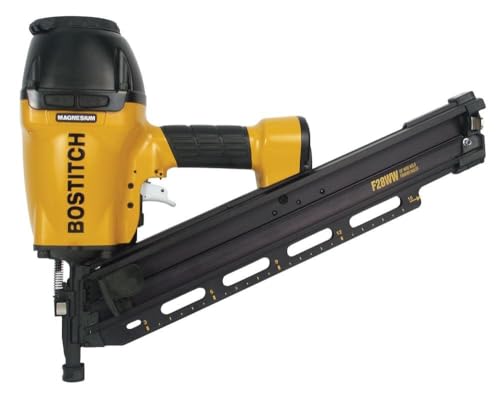
The BOSTITCH F28WW is built around the kind of clipped-head framing many jobsite crews already know well. That clipped-head format can help pack more nails into a magazine, which matters on framing runs where reloads slow things down.
It covers 2-inch to 3-1/2-inch framing nails, so it stays in the same structural lane as the Makita AN924 and the Metabo HPT NV90AGS. The honest read is that this is a workhorse choice for builders who want a familiar pneumatic setup without extra fuss.
Highlights
- Clipped-head format supports efficient magazine loading.
- Works with a broad framing nail range.
- Fits wall framing, subfloor work, and general carpentry.
- Pneumatic design suits established compressor setups.
Areas To Watch
- Clipped-head nail selection may not suit every code preference.
- Best kept clean after dusty framing sessions.
Details At A Glance
The Right Fit
You’ll get the most from this pick on regular framing jobs where clipped-head nails are part of your normal workflow.
Look Elsewhere When
Metabo HPT Coil Framing Nailer NV90AGS makes more sense for longer roof or floor runs where coil feed speed matters more.
Light carpentry work gets a lot easier with a tool that can switch between brad nails and crown staples. That 2-in-1 setup is handy for basic trim, fastening thin material, or handling small workshop tasks without reaching for two separate tools.
The included carrying case and starter fasteners make the setup feel more complete out of the box, which is useful for hobby spaces and DIY corners. Compared with the framing nailers above, this one is for lighter jobs, so the trade-off is clear and fair.
Best Bits
- Accepts both brad nails and crown staples.
- Works well for light carpentry and shop projects.
- Carrying case helps with storage and transport.
- Starter fasteners save a first-trip trip to the hardware aisle.
Room For Improvement
- Not a framing tool, so it belongs in a different job category.
- Best suited to thinner material and lighter fastening work.
Feature Rundown
Whose Shelf It Belongs On
You’ll get the most out of this pick in a home workshop, garage, or small carpentry kit.
Where A Sibling Pick Shines
3PLUS HDA1564SP 15 Gauge Angled Finish Nailer is the better fit for trim work that needs a more purpose-built finish tool.
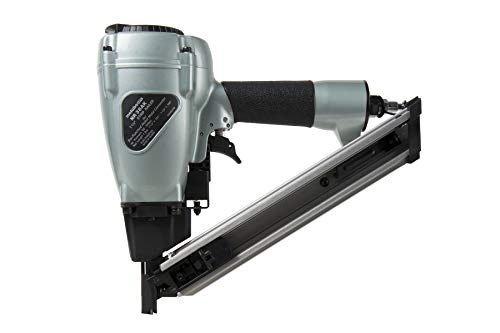
The NR38AK shifts away from general framing and into metal connector fastening, which makes it a very specific kind of jobsite tool. Its 36-degree layout and 38-degree magazine are built around fastening hardware to wood with 1-1/2-inch nails, so it serves a narrower purpose than the framing nailers earlier in the list.
That narrower focus is exactly why some crews like it. On connector-heavy work, a placement nailer can feel like the right tool in the hand rather than a compromise.
Reasons To Buy
- Made for hardware-to-wood fastening.
- 38-degree magazine supports connector use.
- Fits 1-1/2-inch nails for placement work.
- Suited to strap, bracket, and connector tasks.
Points To Note
- It’s specialized, so it won’t replace a general framing gun.
- The narrow task focus makes storage and job matching more important.
Core Details
Perfect Match For
You’ll appreciate this pick most on connector-heavy builds, especially when you spend a lot of time fastening hardware to wood.
Reach For A Different Pick When
BOSTITCH Framing Nailer F28WW suits you better for broader framing work where one tool needs to cover more lumber sizes.
Cordless convenience changes the rhythm of small trim jobs, garage projects, and repair work around the house. This MtiolHig nailer is built around a DeWalt 20V battery platform, but the battery itself is not included, so you’ll want to already own that ecosystem before it makes sense.
At 7.2 pounds, it sits in a portable zone rather than a featherweight one, yet it still frees you from hose management. Compared with the DOTOOL pneumatic 2-in-1, this pick leans into mobility instead of compressor-based simplicity.
Standout Traits
- Cordless layout helps with move-around work.
- Compatible with DeWalt 20V batteries.
- 2-in-1 design covers nails and staples.
- Useful where hoses would slow you down.
Minor Gripes
- Battery is not included.
- Heavier than some small trim tools.
- Best fit depends on your battery lineup.
Spec Overview
Made For
You’ll like this best for portable trim and repair jobs where dragging a hose would be more trouble than it’s worth.
Skip It When
DOTOOL Pneumatic Brad Nailer 2-in-1 makes more sense for you if you already run an air compressor and want a lighter-duty shop tool.
The Freeman PSSCP sits in a different lane from the framing tools, because it’s built for concrete and mixed-material fastening. Its compatibility with Ramset and Hilti single pins makes it especially interesting for crews that already work with those fastening systems.
The included case helps with transport and storage, which matters when the tool only comes out for specific anchoring jobs. Compared with the Metabo HPT NR38AK, this one shifts away from wood hardware and into a much tougher substrate family.
What We Like
- Built for wood, steel, and concrete fastening tasks.
- Compatible with Ramset and Hilti single pins.
- Case makes carry and storage more orderly.
- Useful for anchor-style jobs outside standard framing.
Ongoing Limits
- Highly specialized compared with general framing nailers.
- Best kept for projects that truly need concrete pinning.
Key Specs
Best Suited To
You’ll get the most use from this tool on concrete anchoring jobs and other mixed-material fastening work.
Where Shoppers Go Wrong
3PLUS H2190SP 21 Degree Full Round Head Framing Nailer is a better match for standard house framing, where the job calls for broader nailer versatility.
The 3PLUS H2190SP lands in the same general frame as the Makita AN924, with a 21-degree, full round head format that keeps it aligned with common framing needs. That makes it a practical choice for everyday structure work, especially for you if you want something straightforward rather than overly specialized.
Because it sticks to the basics, it’s easy to place in a general contractor kit or a serious home workshop. The honest trade-off is that it doesn’t try to be a specialty tool, which is exactly why some people will like it.
Positives
- 21-degree framing format fits common nail stock.
- Full round head supports structural fastening use.
- Simple profile keeps the tool easy to slot into a general kit.
- Well matched to basic framing and repair work.
Softer Spots
- It stays focused on standard framing tasks.
- You may want more specialized features for niche jobs.
At A Glance
Who Should Grab It
You’ll fit this pick well if you want a plain, dependable framing nailer for ordinary carpentry and repair jobs.
Not Your Match When
Metabo HPT Coil Framing Nailer NV90AGS is the better fit for larger roof or floor projects where coil-fed speed matters more.
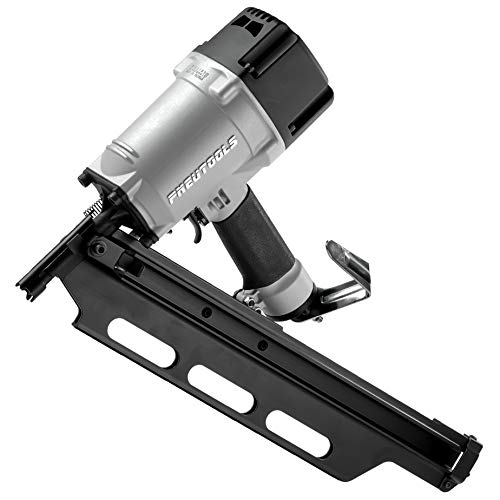
The PneuTools SN2283H adds a rafter hook, which sounds small until you’re moving across ladders, framing plates, or roof lines. That hook gives you a handy way to stage the tool between fasteners, and for many jobsite routines, that little detail keeps the workflow calmer.
It keeps the familiar 21-degree framing format, so it still belongs in the same category as the Makita AN924 and 3PLUS H2190SP. The difference is that storage convenience gets a meaningful bump, and that’s the kind of upgrade that matters more than a flashy spec sheet.
Strong Points
- Rafter hook adds practical jobsite convenience.
- 21-degree layout fits standard framing use.
- Useful for ladder work and roof staging.
- Comfortable choice for repeated pick-up and set-down cycles.
Worth Noting
- The extra hook is useful, but not essential for every framing job.
- Best value shows up most on active job sites.
Quick Facts
The Right Fit
You’ll like this most if your framing days involve ladders, roof work, or repeated tool hanging between steps.
A Better Fit Elsewhere
BOSTITCH Framing Nailer F28WW is the better pick for you if clipped-head nail handling matters more than a rafter hook.
How To Choose The Right Air Framing Nail Guns
Nail Angle And Head Style Shape The Job
Start with the nail angle, because it decides what kind of fastener stack the tool accepts and how it handles in tight spots. A 21-degree framing nailer, like the Makita AN924 or 3PLUS H2190SP, usually lines up with common framing routines, while a 15-degree coil model like the Metabo HPT NV90AGS leans toward higher nail capacity. Head style matters too, since full round head and clipped head designs can affect building-code fit and nail count in the magazine.
The practical trade-off is simple: more capacity can mean fewer reloads, but it can also change the feel of the tool in your hand. For structural framing, that balance matters more than trim-level polish.
Match The Tool To The Material And Fastener Length
Framing nail guns are not interchangeable with finish, brad, or concrete pin tools, even though they all sit in the same general family. The BOSTITCH F28WW and Makita AN924 are aimed at lumber framing, while the Freeman PSSCP is built for concrete and metal pin work, and the 3PLUS HDA1564SP belongs to finish carpentry instead. Nail length range also tells you how much material the tool is really built to handle.
That’s where the spec sheet becomes useful in a real shop. A tool that fits 2-inch to 3-1/2-inch framing nails serves a very different role from a brad nailer that tops out at lighter trim fasteners.
Power Source And Mobility Affect Daily Use
Pneumatic tools stay popular because they’re familiar and dependable in a compressor setup. They do ask for a hose, though, so they make the most sense in a shop, at a fixed jobsite, or anywhere you don’t mind setting up an air line before work starts. Cordless options, like the MtiolHig 2-in-1 nailer, help when movement matters more than compressor simplicity.
That difference shows up fast on ladders, in remodel work, and in garage projects with awkward access. For many people, the right choice is less about raw power and more about how much setup you’re willing to carry.
Small Details Can Make A Long Day Easier
Rafter hooks, carrying cases, and magazine style might sound like small things, but they change how the tool fits into a day of work. A hook on the PneuTools SN2283H helps with staging, while a case on the Freeman PSSCP helps with transport and storage. On busy jobs, those extras can save a few annoying pauses.
Cleaning and maintenance also matter, especially with air-powered tools that see dust, resin, and framing debris. A simple design is usually easier to keep in good shape, while more specialized tools reward cleaner storage and a little more attention.
Things Worth Knowing First
Mistakes Worth Dodging
One common mistake is matching the tool to the wrong job. A finish nailer like the 3PLUS HDA1564SP will not replace a structural framing gun, and a concrete nailer like the Freeman PSSCP serves a very different purpose from a general lumber tool.
Another easy miss is focusing on nail angle alone and ignoring head style or fastener range. Those details decide whether the gun fits your material stack and whether the work actually moves smoothly.
What The Higher Tier Buys
Higher-tier tools usually earn their place through better task focus, more convenient handling, or features that save time across repeated jobs. The PneuTools SN2283H adds a rafter hook, and the Metabo HPT NV90AGS brings a coil-fed setup that suits larger runs.
That extra spend tends to make sense for crews and serious remodel work, where seconds add up and the tool spends all day in rotation. For occasional home framing, a simpler pneumatic option often feels more reasonable.
Frequently Asked Questions
What is the main difference between a framing nailer and a finish nailer?
A framing nailer drives larger fasteners for structural wood work. A finish nailer, like the 3PLUS HDA1564SP, is better suited to trim and visible carpentry.
Do all air framing nail guns need a compressor?
Most of the framing tools in this roundup are pneumatic, so they do need compressed air. Cordless models are a different category and trade hose freedom for battery dependence.
Why does nail angle matter so much?
Nail angle affects magazine shape, fastener compatibility, and how easily the tool reaches into corners. It also helps determine whether the nailer fits the style of work you do most often.
Is a clipped-head framing nailer a good general-purpose choice?
It can be, especially for crews that already use clipped-head nails on standard framing jobs. The BOSTITCH F28WW fits that role well, though some work calls for a full round head instead.
Which pick makes the most sense for lighter home projects?
The DOTOOL Pneumatic Brad Nailer 2-in-1 suits lighter carpentry, small fixes, and shop projects. It is not a framing tool, so it belongs in a different lane from the main air framing nail guns here.
Closing Thoughts
Your best air framing nail gun depends on the work in front of you, not just the brand name on the side. For broad framing, the Makita AN924, BOSTITCH F28WW, and 3PLUS H2190SP keep things simple and familiar. For larger runs, the Metabo HPT NV90AGS brings a more efficient coil setup, while the PneuTools SN2283H adds a handy rafter hook for active jobsite use. Match the tool to your material, your fastener style, and your work pace, and the choice gets a lot easier.