A solid pneumatic setup turns weekend frustration into steady progress, and most of the upgrade happens in the accessories, not the tank. This list rounds up carrying cases, hoses, gauges, chucks, and replacement parts that quietly make every tool in your garage work harder. These picks suit hobbyists, home mechanics, and anyone running a portable inflator through truck tires, bike wheels, or workshop fittings.
The Main Contenders

ZIOZERTT Air Compressor Bag for Milwaukee M18 Inflator 2848-20

Furesn Hybrid Air Compressor Hose 1/4 in x 10 ft

AZUNO Digital Tire Inflator Gauge 255 PSI

AZUNO Digital Tire Inflator with Pressure Gauge 200 PSI
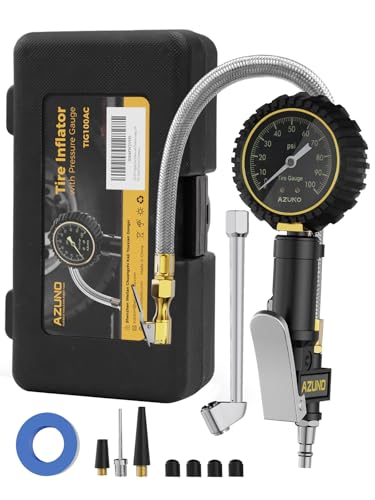
Analog Tire Inflator Gauge 100 PSI with Glow Dial

PORTER-CABLE Air Compressor Replacement Manifold A16181
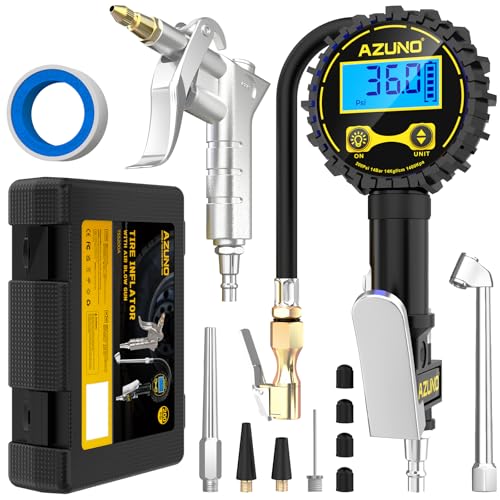
AZUNO 3-in-1 Digital Tire Inflator with Air Blow Gun 200 PSI

WNCGC Brass Air Chuck Pack of 3

WNCGC Closed Locking Air Chuck with Quick Connect 3 Pack
The Strengths Of Each Pick
Anyone who already owns the Milwaukee M18 cordless inflator knows it works great until it gets tossed into a trunk full of soccer balls and jumper cables. This ZIOZERTT case wraps around the inflator, battery, and charger with a tailored 14.5 by 7.5 by 8 inch footprint that keeps everything from rattling loose in transit.
The body uses dense polyester with a shock-absorbing core layer, which matters most when the bag ends up riding around in a service truck or sliding under a workbench. Multiple pockets hold the inflator accessories without burying them.
A Few Highlights
- Padded center panel reduces the chance of cosmetic damage if the bag drops off a tailgate.
- Water-resistant outer shell shrugs off light rain and accidental drink spills.
- External pockets keep the charger and nozzle attachments visible instead of lost at the bottom.
- Carry handle placement suits both left- and right-handed users reaching into a back seat.
Things To Consider
- Only fits the Milwaukee M18 inflator platform, so users of other brands get no use out of it.
- No rigid frame, so the bag flattens under heavy stacked cargo in a trunk.
Who It Suits Best
Milwaukee M18 tool owners who use the inflator for roadside jobs and want a cleaner storage solution than a cardboard box.
Consider Something Else When
Shoppers running a different inflator platform should look at the Furesn hybrid hose for a more universal upgrade instead.
Short hoses get a bad rap, but a 10 foot hybrid line solves a very specific problem: reaching tires and bench tools without dragging 50 feet of rubber across the garage floor. The Furesn hose uses a blended polymer construction with a woven middle layer, giving it the cold-weather flex of rubber without the weight.
The 300 PSI working pressure handles anything a home shop throws at it, and the solid brass fittings stay sealed even after repeated connection cycles. Bend restrictors at both ends keep the hose from folding flat at the most common failure point.
Where It Excels
- Lighter than comparable rubber hoses, which matters when you carry it out to the driveway.
- Resists common shop chemicals and oil splatter thanks to the hybrid jacket.
- Brass male fittings thread onto standard 1/4 inch NPT compressor outlets without adapters.
Trade Offs
- Ten feet feels tight for working on large trucks where you need to walk around the vehicle.
- The yellow and white color shows scuffs and grease marks faster than all-black hoses.
Feature Snapshot
Made For
Garage hobbyists using a portable compressor for tire top-ups and small nail guns who want a hose that coils neatly on a shelf.
Skip It When
You regularly inflate tires on a long-bed truck from a single outlet and would do better with the AZUNO digital inflator gauge for hands-on pressure control.
Most tire gauges cap out well below what heavy-duty tires actually demand, which is where this AZUNO inflator earns its keep. Rated to 255 PSI with a digital readout in 0.1 increments, it reads the kind of pressures used on commercial truck and trailer tires where guessing costs real money.
The steel-braided hose resists the kind of abrasion that destroys rubber lines in fleet environments, and the included case keeps the chuck and couplings from walking off the workbench. One-handed trigger and bleeder operation lets you dial pressure while watching the screen.
What It Does Well
- Pressure ceiling handles nearly every commercial tire setup without maxing out.
- Steel-braided hose tolerates being dragged across concrete shop floors.
- Quick connect coupler swaps between tools faster than threaded chucks.
- 0.1 PSI resolution catches small leaks that coarser gauges miss.
Honest Caveats
- Overkill for sedan owners who never push past 40 PSI on passenger tires.
- Relies on batteries for the digital screen, unlike the AZUNO analog gauge we cover later.
Quick Facts
Right Fit For
Truck and RV owners who need to dial in pressures above what passenger gauges can read.
Look Elsewhere When
A casual sedan owner will find the AZUNO 200 PSI digital inflator gauge a friendlier match for everyday top-ups.
This sits in the sweet spot for most household tire care. The 200 PSI ceiling covers everything from a bicycle to a loaded SUV, and the rubber air chuck locks onto the valve stem without slipping mid-inflation. Owners typically appreciate how the trigger and bleeder buttons sit under one thumb, leaving the other hand free to steady the gauge.
Unlike the heavier 255 PSI sibling we covered above, this version pairs well with a portable 12V inflator for road trips. The portable carrying box keeps everything together in a trunk organizer.
Well-Handled Touches
- Lock-on rubber chuck holds position without constant hand pressure.
- Quick connect fitting matches common portable inflator hoses.
- Stable digital readout makes it easy to watch the number climb.
- Carrying case prevents the chuck from scratching other gear in storage.
Room For Improvement
- Digital screen depends on battery life, so occasional checks are smart.
- Rubber chuck grips well but wears faster than brass under heavy daily shop use.
Who Should Grab It
Daily drivers and SUV owners who want clear digital pressure readings without paying for truck-rated capacity.
A Better Fit Elsewhere
Fleet operators pushing pressures above 200 PSI will find more headroom in the AZUNO 255 PSI gauge reviewed earlier.
There’s a certain peace of mind that comes from a tool that never asks for batteries, and this AZUNO analog gauge delivers exactly that. The mechanical dial reads from 1 to 100 PSI, which covers every passenger car, SUV, motorcycle, and bicycle most households ever own. The 2.6 inch glow-in-the-dark face is genuinely useful at the side of a dark driveway.
It also inflates and deflates from the same body, so you measure, adjust, and confirm without swapping tools. Owners commonly stash it in the included hard case and drop it in a glove box for emergencies.
Everyday Wins
- No batteries means it works after sitting in a cold trunk for months.
- Three-function design combines measurement, inflation, and deflation in one tool.
- Glow dial reads clearly at dusk and inside unlit garages.
- Steel braided hose tolerates regular yard and garage use.
Points To Keep In Mind
- 100 PSI ceiling rules out truck and trailer applications where higher pressures are common.
- Analog reading requires a closer look than a digital readout in bright daylight.
Best Suited To
Multi-vehicle households managing cars, SUVs, bikes, and motorcycles on a single tool that never needs charging.
Reach For A Different Pick When
You tow a trailer or service heavy tires, where the AZUNO 255 PSI gauge handles the higher range better.
When a portable compressor coughs and refuses to build pressure, the manifold is one of the first components to check. The Porter-Cable A16181 replacement is a model-specific repair part, also listed as compatible with Devilbiss setups, that lets you bring a tired compressor back to life without replacing the whole unit.
Manifolds route pressurized air between the pump, tank, regulator, and output ports. A cracked manifold gasket or stripped fitting surface causes slow leaks that bleed down a tank overnight, so swapping the part often restores reliable operation.
What Stands Out
- Direct-fit replacement avoids modifying the compressor housing or plumbing.
- Repair instead of replacement keeps older compressors out of the landfill.
- Useful for both Porter-Cable and Devilbiss branded units sharing the same internal design.
Some Limits To Know
- Highly model-specific, so you need to confirm your compressor matches the A16181 part number.
- Installation requires basic comfort with compressor disassembly and seal replacement.
Whose Shelf It Belongs On
Shops and homeowners maintaining a Porter-Cable or compatible compressor who want to repair rather than replace when pressure drops.
Swap It Out When
You do not own a matching compressor, in which case a hose or gauge upgrade delivers more immediate workshop value.
This AZUNO unit stretches beyond tire work into general shop cleaning. The 200 PSI gauge handles inflation and deflation duties, while the included air blow gun clears dust from workbenches, keyboards, and engine bays when paired with any standard 1/4 inch NPT compressor line.
The LED screen stays readable in low light, and the unit switches between measurement and blow gun modes without needing adapters. For a home garage that runs one compressor for multiple jobs, consolidating tools reduces bench clutter.
Where It Delivers
- Combines gauge and blow gun in a single package, cutting accessory drawer clutter.
- Standard 1/4 inch NPT thread matches common compressor fittings.
- LED screen aids visibility in shaded corners and evening driveway work.
- 200 PSI ceiling suits cars, motorcycles, and most light trucks.
Less-Strong Areas
- Multi-function design means more parts to keep track of than a standalone gauge.
- Blow gun function adds little value for users without a stationary compressor nearby.
Perfect Match For
Garage multitaskers who want one accessory to handle tire checks, airing up, and occasional dust cleanup.
Where A Sibling Pick Shines
If you only need tire pressure work, the simpler AZUNO 100 PSI analog gauge keeps the kit lighter.
A chuck is the small fitting that seals against the valve stem, and it is the part most likely to get lost, dropped, or worn out in a busy shop. Buying a three-pack of WNCGC brass chucks means there are spares waiting when one rolls under the workbench or threads get crossed.
The 1/4 inch female NPT thread fits most inflator pumps and pressure gauges, and the brass body resists corrosion better than plated steel in humid garages. A built-in gasket helps prevent leaks at the valve interface.
Features That Help
- Three-pack pricing undercuts single-unit chucks for stocking a workshop drawer.
- Brass construction tolerates shop moisture better than plated alternatives.
- Internal gasket design reduces air loss during inflation.
- Schrader valve compatibility matches nearly every consumer tire.
Practical Considerations
- Locking sleeve requires holding the chuck in place manually during inflation.
- Plain brass finish shows scuffs and shop grime without frequent wiping.
Built With In Mind
Workshops stocking replacement chucks for inflators, gauges, and portable compressors that see daily use.
Not Your Match When
You want hands-free airing without holding the chuck against the valve, in which case the WNCGC locking chuck pack adds a slide-on sleeve.
Inflating a tire solo gets awkward when one hand holds the chuck and the other works the inflator trigger. The WNCGC locking chuck solves that by sliding onto the valve stem and gripping it until you pull the sleeve back, freeing both hands to manage the gauge or trigger.
The closed flow design shuts off air when the chuck isn’t engaged, which reduces hissing leaks on the workbench. Quick connect fittings speed swaps between inflators, gauges, and hoses in a working shop.
Notable Upsides
- Lock-on sleeve lets you inflate without clamping the chuck in place by hand.
- Closed flow design reduces wasted air between valve engagements.
- Quick connect interface works across multiple shop tools without adapters.
- Three-pack keeps spares available for different stations or vehicles.
Things To Weigh
- Locking mechanism adds bulk that may not fit tight wheel well clearances on some sports cars.
- Brass body still requires occasional cleaning where road grime builds up on the sleeve.
Who Will Love This
Solo tire maintenance enthusiasts who air up motorcycles, trailers, and family vehicles without a helper on hand.
Another Choice May Suit
Casual users airing up passenger tires once a month can save space with the simpler WNCGC three-pack of basic brass chucks.
What To Weigh Before Picking New air compressor tools
Start with the pressure range your tools and tires actually need. Passenger cars rarely exceed 40 PSI, but trailers, trucks, and pneumatic tools push well past 100. A gauge with a 100 PSI ceiling works fine for sedans, while a 200 or 255 PSI unit covers heavier jobs and still reads lower pressures accurately.
Hose length and diameter shape daily use far more than most shoppers expect. A 1/4 inch diameter is standard for inflators and small tools, and shorter 10 foot hoses stay tidy on a bench. Longer runs make sense when you need to walk around a vehicle without dragging the compressor with you.
Fitting compatibility matters more than brand. Look for 1/4 inch NPT threads, quick connect couplers, and Schrader valve compatibility to match what you already own. Mixing fittings means buying adapters that leak or snag.
Storage and protection round out the decision. Hard cases, padded bags, and chuck spares all extend tool life and keep benches organized. Replacing a manifold is cheaper than a whole compressor, but only if the part actually fits your model.
Key Considerations Across These Picks
Pitfalls Shoppers Hit
A common mistake is buying a gauge with too low a ceiling for the tires it will read. Another is choosing hose length based on the compressor location rather than the farthest working point, which leaves you constantly moving the tank around. Many shoppers also overlook thread compatibility and end up with chucks that never quite seal.
Where The Extra Money Goes
Higher tier gauges add precision in 0.1 PSI increments and steel braided hoses that outlast rubber by years. Premium hoses use hybrid jackets that stay flexible in cold weather, and locking chucks replace plain threaded ones for hands-free airing. None of those upgrades matter for light weekend use, but they pay off fast in shops that run tools daily.
Frequently Asked Questions
What PSI do I actually need for car tires? Most passenger tires run between 30 and 40 PSI, so a 100 PSI gauge covers them with room to spare. The extra ceiling matters more for trailers, trucks, and motorcycles with higher recommended pressures.
Are hybrid hoses better than rubber? Hybrid hoses typically weigh less and stay flexible in colder weather, while rubber offers slightly higher temperature tolerance. For garage and driveway use, hybrid construction strikes a useful balance.
Why does my compressor lose pressure overnight? A slow tank leak usually points to a worn manifold gasket, loose fitting, or a check valve issue. The Porter-Cable A16181 manifold covers certain compressor models where the manifold block itself is the failure point.
What is a Schrader valve? Schrader is the standard valve stem design on nearly every consumer car, truck, and motorcycle tire. Most air chucks and gauges in this category are built to fit it without adapters.
Do digital gauges need calibration? Most digital inflator gauges hold accuracy over years of normal use, but owners commonly swap batteries preemptively to avoid a dead screen mid-job. Analog gauges sidestep battery concerns entirely.
Wrap Up
The right accessory upgrades a compressor from a noisy garage curiosity into the most reliable tool on your bench. Match the gauge ceiling to your tires, the hose length to your workspace, and the chucks to your valve types, and the rest of your pneumatic kit starts working harder. Pick the items that fit your actual routine, and the setup pays you back every time you walk into the garage.