A wall-mounted operator changes how a garage feels day to day. You trade the chunky overhead rail for a unit that hangs beside the door, freeing ceiling space for storage racks, a workshop, or simply taller vehicles. The picks below lean toward jackshaft-style systems that mount on the wall, with a few smart-control adapters and gate openers that round out the lineup for wider property needs.
The Main Contenders

COLIBROX 3 Button Wall Mount PBS 3 Control Station

Chamberlain RJO20 Wall Mount Smart Opener
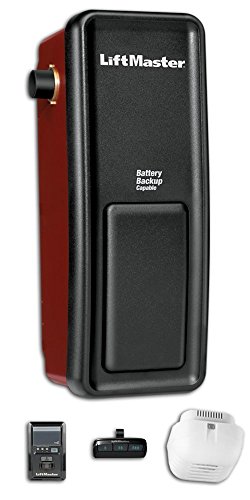
LiftMaster 8500 Wall Mount Garage Opener
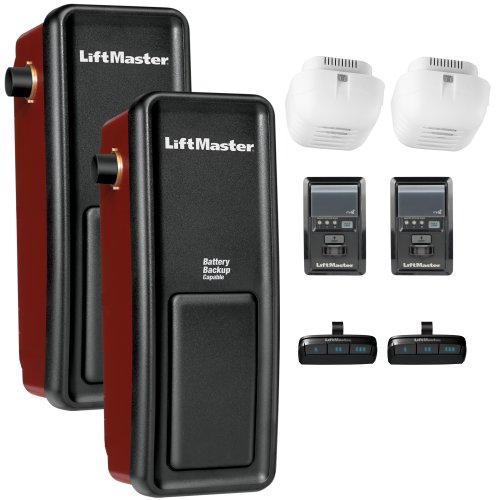
LiftMaster 8500 Side Mount 2-Pack

LiftMaster 98022 Jackshaft WiFi Operator

TOPENS XD852S Solar Dual Swing Gate Opener
TOPENS XD851 Smart Single Swing Gate Opener

TOPENS LC1100 Commercial Sliding Gate Opener
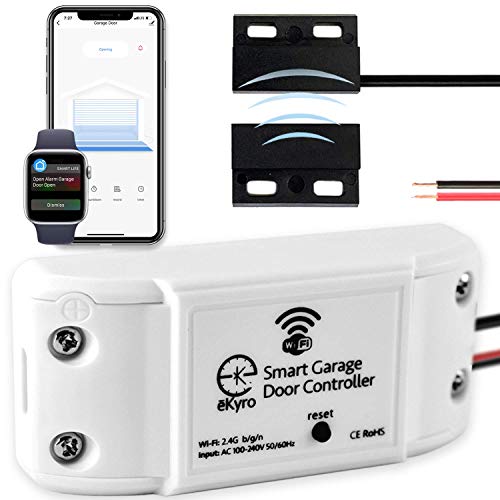
eKyro Universal WiFi Garage Remote Controller
Meet The Standout Selections
The COLIBROX 3 Button Wall Mount PBS 3 Control Station is built for a specific job: giving you a hardwired open, close, and stop button where you’d otherwise rely on a remote. It mounts flush on the wall beside the door, and the three-button layout matches commercial operator conventions, so crews and homeowners with detached workshops tend to feel at home with it quickly.
Compared with the smart jackshaft units below, this is a no-frills companion part rather than a full opener. It assumes you already have a compatible commercial operator wired and ready. If that’s your situation, the straightforward push-button logic makes it easy for anyone in the shop to drive the door without tracking down a clicker.
Strengths Worth Knowing
- Three labeled buttons cover open, close, and stop in one panel, which keeps the door control obvious for visiting family or workers.
- Wall-mounted form factor keeps remotes from getting lost or running low on batteries in busy shops.
- Hardwired design avoids the radio-frequency hiccups that handheld remotes sometimes develop around metal buildings.
- Familiar PBS-3 layout means the swap-in installation tends to feel intuitive for anyone who has used a commercial operator before.
Things To Consider
- This is a control station, not a complete opener system, so it needs an existing compatible operator to be useful.
- No smartphone connectivity, which puts it behind picks like the Chamberlain RJO20 if app control matters to you.
Right Fit For
Owners of commercial shops or detached garages who want a rugged wall button to complement an existing operator system.
Reach For A Different Pick When
You need a full jackshaft opener with built-in WiFi; the LiftMaster 98022 Jackshaft WiFi Operator covers that ground instead.
The Chamberlain RJO20 sits beside the garage door on the wall rather than hanging from the ceiling, which immediately changes the feel of the space. That wall-mount approach is what makes a jackshaft opener different from a traditional chain-drive unit: the motor lives next to the torsion spring, so the ceiling stays open for storage, a car lift, or just cleaner sightlines.
What pushes the RJO20 into smart-home territory is myQ, Chamberlain’s smartphone platform. From the app, you can check the door’s status, open it for a delivery driver, or set custom alerts for when it moves. Paired with the automatic door lock that engages each time the door closes, the system feels more like a security upgrade than a simple convenience add-on.
What Helps Most
- Wall-mount design frees the ceiling, making the garage feel bigger and easier to navigate around tall vehicles.
- Direct-drive motor runs quietly, which is a noticeable relief if a bedroom sits above the garage.
- myQ smartphone control lets you open or close the door from anywhere with a cell signal.
Trade Offs
- Requires a properly measured backset, cross bore, and door thickness, so compatibility checks should happen before ordering.
- Side-mount installation is more involved than a ceiling rail swap, and a pro install is commonly recommended for first-timers.
Feature Snapshot
Who Should Grab It
Homeowners with attached garages who want quiet operation, smartphone alerts, and an automatic lock all in one package.
Skip It When
Your door is incompatible with jackshaft installation; the LiftMaster 8500 Wall Mount Garage Opener gives you a comparable wall-mount layout without the smart features.
The LiftMaster 8500 launched the wall-mount category for many homeowners, and it remains a reference point in the lineup. The 24V DC motor (a low-voltage direct-current design rather than the higher-voltage AC units common in older openers) drives the door directly off the torsion bar, eliminating the overhead rail and the chain rattle that comes with it.
For attached garages, especially where a living space shares the wall, the smooth start-and-stop behavior and low vibration are the headline features. Unlike the Chamberlain RJO20 above, this older platform does not include built-in WiFi, so smart-home users tend to pair it with an external adapter.
Positive Points
- 24V DC motor delivers very quiet operation with smooth start and stop transitions.
- Wall-mount form factor clears the ceiling for storage racks, ceiling fans, or taller vehicles.
- Auto-force monitoring adjusts power based on temperature and track conditions, which helps in seasonal climates.
- Direct-from-LiftMaster OEM build tends to be a safe long-term ownership choice for matching replacement parts.
Points To Note
- No native smartphone control, so adding WiFi typically requires a separate myQ retrofit accessory.
- Will not work with roll-up doors, Wayne Dalton Torquemaster systems, or low-clearance headroom tracks, so measure twice before committing.
Made For
Attached-garage owners who value quiet performance over smart features and are willing to add a separate smart adapter later.
A Better Fit Elsewhere
You want built-in WiFi from day one; the LiftMaster 98022 Jackshaft WiFi Operator packs the same quiet motor with native connectivity.
The LiftMaster 8500 Side Mount 2-Pack is essentially two jackshaft operators sold together, aimed at garages with two separate doors. If you have a two-bay setup where each bay needs its own motor, buying the pair avoids mismatched hardware and gives you identical remotes and accessories on both sides.
Side-mount installation has the same space-saving appeal as the single 8500 above, but with the Security+ 2.0 rolling-code encryption standard and myQ compatibility already baked in. The catch is fitment: this unit does not work on roll-up doors, low-clearance tracks, or Wayne Dalton Torquemaster systems, and you need roughly 8 inches of side-to-side clearance plus 3 inches between the shaft and ceiling.
What Stands Out
- Two-operator bundle simplifies purchasing for two-door garages and keeps both sides consistent.
- Side-mount layout frees the ceiling entirely, which suits low-headroom or RV-height garages especially well.
- Security+ 2.0 encryption and myQ compatibility bring modern safety and remote access into a wall-mount chassis.
Honest Caveats
- Strict clearance requirements: about 8 inches left-to-right and 3 inches shaft-to-ceiling are mandatory for fitment.
- Compatibility is on you to verify before ordering, and the manufacturer flags compatibility as the purchaser’s responsibility.
- Not suitable for roll-up doors or Torquemaster tracks, so always cross-check your existing door system first.
Quick Facts
Perfect Match For
Two-bay homeowners with the right side-clearance who want consistent wall-mount hardware across both doors.
Look Elsewhere When
You only need a single opener; the single LiftMaster 98022 Jackshaft WiFi Operator is a more focused match.
The LiftMaster 98022 replaces the older 8500W and consolidates everything into one chassis. The P3 motor (a professional-grade three-phase-style construction used in LiftMaster premium lines) pairs with built-in WiFi, so you skip the retrofit step that earlier LiftMaster owners had to plan for. For shoppers who want jackshaft efficiency without giving up smartphone control, this is the most refined option in the brand’s lineup.
It’s important to note that the 98022 keeps the same wall-mount limitations as its predecessor: roll-up doors, Wayne Dalton Torquemaster systems, and low-headroom tracks remain off-limits. If your garage meets the fitment rules, the package is hard to beat for a quiet, app-ready upgrade.
The Practical Payoff
- Built-in WiFi eliminates the separate myQ adapter that older LiftMaster jackshafts required.
- P3 motor construction targets long-term durability under frequent daily cycling.
- Wall-mount design frees the ceiling for storage or a workshop setup.
- Security+ 2.0 rolling-code encryption protects against remote code-capture attempts.
Some Limits To Know
- Incompatible with roll-up doors, Wayne Dalton Torquemaster, and low-headroom track systems.
- Premium positioning makes it pricier than the bare-bones 8500, so the smart features need to matter to you.
Best Suited To
Security-minded homeowners with compatible sectional doors who want WiFi control without extra adapters.
Consider Something Else When
You have a two-door garage and want matching hardware; the LiftMaster 8500 Side Mount 2-Pack delivers the wall-mount layout in pairs.
The TOPENS XD852S shifts the conversation from garage doors to driveway gates, and that’s a deliberate choice for shoppers with long rural driveways. Dual swing gates need two actuators (one per leaf) working in sync, and this model covers both leaves from a single kit while drawing power from a solar panel. For properties without easy AC wiring at the gate, that solar option removes a major installation headache.
Smart integration comes through the TOPENS app, which handles open, close, and scheduled access. Voice compatibility with major assistants rounds out a kit that feels modern despite the off-grid-friendly power setup.
What Makes Sense
- Solar-powered operation avoids trenching AC power out to a remote gate.
- Two-leaves-included kit handles dual swing gates without buying a second actuator.
- App control and voice compatibility keep the unit feeling current with smart-home trends.
- Scheduled and recurring access options help with regular visitors like gardeners or dog walkers.
Where It May Fall Short
- Solar performance depends on panel placement and regional sunlight, so shade-heavy properties may want a hardwired backup.
- Dual swing geometry demands plumb and level posts, so installation time tends to exceed a single-leaf setup.
Whose Shelf It Belongs On
Property owners with dual-leaf swing gates and limited AC power access who want app-driven control without running new electrical.
Swap It Out When
Your gate is a single leaf; the TOPENS XD851 Smart Single Swing Gate Opener is purpose-built for that geometry.
The TOPENS XD851 is the single-leaf sibling to the XD852S above, trading the second actuator for a simpler mechanical package. For a residential driveway with one swinging gate, this is the more proportional match, and the smart features stay intact: app control, voice assistant integration, and one-time or recurring access schedules all carry over.
Drag-to-position control in the app is a small but useful detail, letting you open the gate partway instead of fully when a friend is walking out. For households that treat the gate as a daily-use doorway rather than a security barrier, that level of control makes a noticeable difference.
What Pays Off
- Single-leaf design keeps the install simpler and the hardware more proportional to common driveways.
- Voice compatibility through major assistants gives you hands-free control from the car.
- Partial-position drag control in the app lets pedestrians pass without fully swinging the gate.
- Recurring access schedules suit dog walkers, cleaners, and other regular arrivals.
What To Weigh
- Limited to a single leaf, so dual-swing properties will need the larger XD852S instead.
- App reliability depends on your home WiFi reaching the gate, so range extenders are common in longer driveways.
Who Will Love This
Homeowners with a single-leaf residential gate who want app and voice control without overpaying for dual-leaf hardware.
Where Another Pick Suits Better
You run a heavy-duty commercial sliding gate; the TOPENS LC1100 Commercial Sliding Gate Opener handles that load instead.
The TOPENS LC1100 moves from swing gates to sliding gates, and the spec sheet reflects that shift. A 3/4 HP 550W AC motor (a high-torque alternating-current motor designed for sustained heavy loads) drives gates up to 2800 pounds and 45 feet long, which puts it squarely in commercial territory. If your property has a heavy steel or wood sliding gate, residential operators tend to feel underpowered after a season of use.
Safety features include an obstruction sensor that triggers a buzzer if the gate hits resistance twice in a row, plus rolling-code remotes that resist code-grabbing. For farms, warehouses, and long estate driveways, this is the right size of hardware for the job.
A Strong Showing
- 3/4 HP motor handles sliding gates up to 2800 pounds without bogging down.
- Chain-drive construction suits long, heavy gates that other drive types struggle to move.
- Obstruction alert buzzer helps catch problems before the gate or motor sustains damage.
- Rolling-code remotes reduce the chance of someone cloning your opener signal.
Practical Considerations
- Chain drive is louder than belt or direct-drive alternatives, which matters in noise-sensitive neighborhoods.
- Chain tension and lubrication are recurring maintenance items that homeowners occasionally overlook.
- Commercial size means it’s overkill for typical residential driveways.
Built With In Mind
Commercial properties, farms, and estates with long or heavy sliding gates that need reliable daily cycling.
Not Your Match When
You have a lightweight residential swing gate; the TOPENS XD851 Smart Single Swing Gate Opener is a more proportionate fit.
The eKyro Universal WiFi Remote Controller is a retrofit adapter rather than a full opener, and that’s exactly the point. If you already own a working chain-drive or belt-drive garage door opener and just want smartphone and voice control, this little box wires into your existing system and connects it to your WiFi network. For most people with a healthy opener already mounted, that is a much smaller investment than replacing the entire motor.
Compatibility is wide, though an additional adapter may be needed for some legacy openers, so checking the compatibility chart before ordering pays off. Once installed, the door-left-open alerts and integration with major voice assistants make the upgrade feel meaningful rather than cosmetic.
What It Does Well
- Retrofit approach costs less than replacing a working opener just to gain WiFi control.
- Voice assistant compatibility covers the major smart-home ecosystems from one device.
- Door-left-open alerts help you catch the times the kids forget to close up at night.
- Universal compatibility works across most major opener brands with minimal wiring.
Details To Watch
- Some legacy openers need an extra adapter for full compatibility, which adds a small extra step.
- WiFi signal strength at the garage affects reliability, so dead spots may require a small network extender.
Feature Card
Who It Suits Best
Owners of older but functional openers who want smart features without the cost of a full replacement.
Where A Sibling Pick Shines
Your existing opener is failing or too noisy; the Chamberlain RJO20 Wall Mount Smart Opener is a full replacement with quiet operation.
Picking The Right Wall Mount For Your Garage
Choosing a wall-mounted system starts with measuring your door and your space. Measure the door’s backset (the distance from the door’s edge to the center of the cross bore), cross bore, and thickness, and confirm at least 8 inches of side clearance plus 3 inches between the torsion shaft and ceiling. These numbers filter out half the catalog immediately.
Drive type matters more than most shoppers expect. Direct-drive and 24V DC systems run quieter and last longer under heavy daily use, while chain drives cost less but tend to rattle in attached garages. If a living space shares the wall, lean toward quieter drive systems even at a higher cost.
Smart features split into two camps. Built-in WiFi on newer jackshafts like the LiftMaster 98022 or Chamberlain RJO20 keeps everything in one box. Retrofit adapters like the eKyro give older openers the same app control without a full replacement. Both paths work; the right one depends on whether your existing opener has life left in it.
Key Considerations Across These Picks
Where Shoppers Go Wrong
The most common slip is assuming any wall-mount opener fits any garage. Roll-up doors, Wayne Dalton Torquemaster systems, and low-headroom tracks all sit on incompatibility lists across the LiftMaster and Chamberlain lines. A two-minute measurement of your door type and side clearance prevents a frustrating return.
The second mistake is chasing smart features without checking WiFi coverage. Smartphone control depends on a stable signal at the opener, and garages at the back of a long driveway frequently need a small extender to keep the connection reliable.
Where The Extra Money Goes
Higher-tier jackshaft models bundle quieter motors, built-in WiFi, and automatic locking into one chassis. The price difference reflects three real upgrades: 24V DC or P3 motor construction for smoother operation, myQ or native WiFi to skip adapter purchases, and a heavier internal lock mechanism that bolts the door each cycle.
The premium tier pays off most in attached garages with living spaces above. The smoother, quieter motor and integrated lock turn a noisy, rattly door into one that disappears into the background. For detached garages used occasionally, the value gap shrinks and a basic unit covers the same job.
Frequently Asked Questions
Will a wall-mount opener work with a roll-up door?
Most jackshaft openers in this category do not support roll-up doors, Wayne Dalton Torquemaster systems, or low-headroom tracks. Confirm your door type and headroom measurements before ordering, or contact the manufacturer directly.
Do I need a professional to install a wall-mount opener?
Side-mount installation involves working near the torsion spring, which is under high tension. Many homeowners hire a pro for the first install and handle routine maintenance themselves afterward.
Can I add smartphone control to an older opener?
Yes. Retrofit adapters like the eKyro Universal WiFi Remote Controller add app and voice control to most existing openers without replacing the motor.
How loud is a wall-mount opener compared to a chain drive?
Wall-mount jackshafts with direct-drive or 24V DC motors tend to run noticeably quieter than traditional chain-drive units, especially in attached garages.
What’s the difference between a jackshaft and a side-mount opener?
The terms describe the same wall-mounted category. Both refer to the motor mounting beside the torsion bar rather than hanging from a ceiling rail.
The Takeaway
A wall-mount opener is one of those upgrades you stop noticing within a week, in the best way. Quieter operation, a clearer ceiling, and smartphone alerts become part of the routine rather than a feature to brag about. Match the opener to your door type first, then layer in the smart features that genuinely fit how you use the space. The right pick is the one that disappears into daily life and stays out of your way.