If your house still runs on a single house key shared between three people, the daily fumble gets old fast. The right connected deadbolt trades that key for a fingerprint, a code, or a tap from your phone, which matters most in busy households juggling kids, dog-walkers, and grocery hauls. Today’s picks lean heavily on a wireless mesh protocol called Zigbee (a low-power radio standard that lets smart home devices talk directly to a central hub without eating batteries), and the lineup below covers the strongest options across ecosystems and budgets.
The Picks In Brief

eufy Security Familock E32 Fingerprint Keyless Entry Door Lock
Lockly Secure Pro Zeno Wi-Fi Deadbolt Smart Lock

Anyfirm WiFi Smart Lock with Fingerprint & Keypad

Aqara UWB Smart Lock U400 Apple Home Key Fingerprint Deadbolt
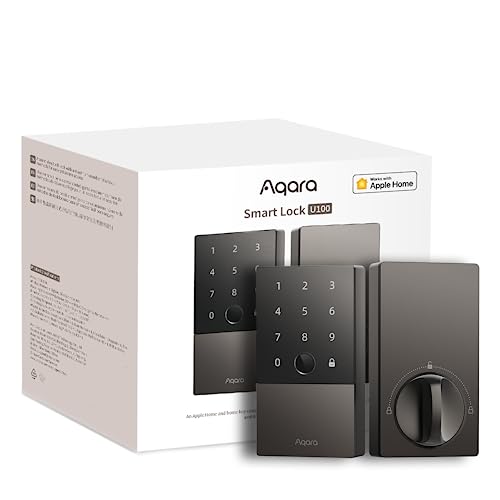
Aqara Smart Lock U100 Apple Home Key Fingerprint Deadbolt

Aqara Smart Lock with Handle U300 Apple Home Key Lever
What Each Pick Brings To The Table
The Familock E32 is built for the household that bounces between an iPhone, an Android tablet, and an Alexa speaker in the kitchen. Where the Lockly below leans iOS-first, this eufy plays nicely across the major platforms, including Apple Home, Google Home, Alexa, and SmartThings, which makes it a strong anchor for a mixed-device home. Its fingerprint reader sits where your index finger naturally lands, so the unlock motion becomes muscle memory fast.
For most front doors on a standard 2-3/8″ or 2-3/4″ bore (the round hole drilled through a door face for the lock cylinder), installation is straightforward with basic tools. The lock’s wide platform support is the headline, but everyday reliability is what keeps it relevant past the honeymoon phase.
What Stands Out
- Cross-platform support covers Apple Home, Google Home, Alexa, and SmartThings from one lock
- Fingerprint reader placed for natural one-handed use when arms are full
- Eight AA cells (the standard AA battery, sold everywhere) deliver roughly eight months of use, cutting yearly battery swaps to once or twice
- Auto-lock behavior reduces the “did I shut the door?” loop common in busy families
Trade Offs To Consider
- Performance leans on a healthy local network, so weak mesh coverage can slow response
- Firmware updates need occasional manual nudging, which some owners prefer to automate
At A Glance
Right Fit For
Multi-platform households who split iPhone, Android, and Alexa devices across family members.
Consider Something Else When
You want a more hands-off, tap-to-enter workflow, in which case the Aqara UWB Smart Lock U400 is a closer match.
The Zeno trades patience for speed. Its 3D fingerprint sensor, trained by onboard AI, claims roughly two-tenths of a second per read, which translates into real use as: the lock fires before your finger leaves the pad. Compared to the eufy above, the Lockly leans deeper into Apple Home with full Home Key support, so a quick iPhone tap stands in for a code entirely.
Six entry methods run side by side here, including a backup key, which is worth keeping in a wallet for power outages or firmware hiccups. The honest read is that this lock shines most in a household doing ten or more unlocks a day, where shaving a second per entry starts to add up.
A Favorable Mix
- AI-tuned fingerprint sensor reads in roughly 0.2 seconds, even for kids and older relatives
- Six entry paths cover fingerprint, code, app, voice, tap, and backup metal key
- On-device fingerprint storage keeps biometric data off the cloud
- Apple Home Key support for tap-to-enter with iPhone or Apple Watch
Worth Bearing In Mind
- Slightly thicker interior housing, which may feel bulky on slim doors
- Setup relies on a working Wi-Fi signal near the door for initial pairing
Who It Suits Best
Busy families with frequent re-entry, where fast fingerprint reads save real time across the day.
Not Your Match When
You prefer a true hands-free approach unlock, where the Aqara UWB Smart Lock U400 brings a clearer solution.
Anyfirm’s lock removes the asterisk that hangs over most smart locks. There’s no separate hub to buy, no bridge to plug in, just built-in Wi-Fi that talks to your router and your phone. For first-timers standing in a hardware aisle wondering what a hub even does, that single omission is a gift.
Temporary guest codes close the most common gap: the dog-walker who comes Tuesday and Thursday, the in-law visiting for a weekend. You can hand out a code that expires on its own, which beats hiding a spare key under a planter.
Notable Upsides
- Built-in Wi-Fi cuts out the hub purchase entirely
- Scheduled, recurring, or one-time codes cover dog-walkers, guests, and cleaners
- Auto-lock behavior for households that forget to turn the deadbolt
- Voice control via Alexa fits a hands-full grocery routine
Honest Caveats
- Wi-Fi dependence means the lock goes quiet if the router drops during an outage
- App polish trails the bigger brands, so patience helps during initial pairing
Made For
First-time smart lock shoppers who want a hub-free install and straightforward guest access.
Look Elsewhere When
You live deep in the Apple ecosystem and want tap-to-enter, where the Aqara Smart Lock U100 delivers that workflow.
The U400 takes aim at a different chore: juggling a toddler, a backpack, and a wet umbrella while fishing for keys. Its UWB radio, short for Ultra-Wideband, is a precise proximity sensor that detects your approach, direction, and intent, so the lock disengages as you arrive, hands still full. That’s a real upgrade over tapping a screen or fishing out a phone.
Compare that to the Lockly above, which leans on deliberate fingerprint reads or Home Key taps. The Aqara plays a longer game, letting presence do the work. For Apple households, full Home Key support sits alongside that approach unlock, and you can still fall back on the keypad.
Strong Points
- UWB approach unlock recognizes you within a defined zone, freeing your hands for groceries and gear
- Apple Home Key integration for tap-to-enter alongside the hands-free path
- Fingerprint reader as a reliable backup if UWB misreads
- Direction-aware sensing helps avoid accidental unlocks when passing by
Factors To Consider
- Full feature use depends on an Apple Home hub, which adds a hidden cost for non-Apple households
- UWB performance varies with phone placement, and a back pocket can occasionally weaken reads
Feature Snapshot
Best Suited To
Apple-centric households wanting a hands-free arrival that fires before you reach the deadbolt.
A Better Fit Elsewhere
You prefer a more traditional keypad and fingerprint workflow, where the Aqara Smart Lock U100 is a sensible step down.
The U100 is the workhorse of Aqara’s lineup, refined through several firmware cycles and widely adopted in HomeKit setups. Where the Anyfirm above is friendlier to first-timers, the U100 is the deeper dive: faster fingerprint reads, tighter Apple integration, and a body built to live on a front door for years. For Apple-first households, this is the gold-standard step before jumping to the U400.
One genuine catch is the hub requirement. Sharing Home Keys with family needs an Apple Home hub on the network, which is an extra piece to plug in. Once it’s running, the workflow is smooth: tap your iPhone or watch, even when the battery is drained, and the door opens.
Positive Takeaways
- Apple Home Key works even when your iPhone or Apple Watch is out of battery
- Mature firmware with steady improvements since launch
- Fingerprint, app, keypad, NFC, and key backup for true redundancy
- Works with Aqara’s wider sensor lineup for full-home automation scenes
Small Caveats
- Full Home Key sharing requires an Apple Home hub, raising the entry cost for casual users
- Interior side is taller than average, which can crowd narrow door frames
Whose Shelf It Belongs On
Apple households deep in HomeKit who want Home Key plus fingerprint reliability in a proven package.
Reach For A Different Pick When
You want hands-free approach unlock instead of tap-to-enter, in which case the Aqara UWB Smart Lock U400 is the next move up.
The U300 breaks the deadbolt mold. It’s a lever-style smart lock built around an integrated handle, which means it slots into doors that don’t take a traditional deadbolt. Think home offices, interior garage entries, or side doors with single-bore hardware. For doors where you wanted smart access without a chunky deadbolt, this fills the gap.
Compared to the U100 above, the U300 trades the deadbolt cylinder for a lever-driven latch, which is fundamentally different hardware. That’s the right call for the right door, but a wrong call for a primary front entry. Pick the door before you pick the lock.
The Good Stuff
- Integrated lever handle fits interior and side-entry doors that can’t accept a deadbolt
- Apple Home Key tap-to-enter with iPhone or Apple Watch
- High-resolution sensor for fast and accurate fingerprint reads
- Siri voice control for hands-free unlocking when your hands are occupied
Points To Note
- Apple Home Key features require a Thread-enabled Apple hub, so plan for that add-on
- Latch design is less secure than a full deadbolt, so it’s not the right pick for a front entry
Who Should Grab It
Homeowners outfitting interior doors, side entries, or offices where lever hardware makes more sense than a deadbolt.
Swap It Out When
You need a primary front-door deadbolt, where the Aqara Smart Lock U100 is the stronger match.
Factors Worth Weighing Before Choosing zigbee smart locks
Hub or no hub changes the entire cost picture. Models with built-in Wi-Fi, like the Anyfirm in this list, save you the bridge purchase, while Zigbee-native locks benefit from a mesh network (a setup where each device relays signals to its neighbors, extending range and reliability throughout the home) when paired with a compatible hub.
Entry methods matter more than the spec sheet suggests. Fingerprint reads are great until you wear gloves, codes work until your kids share them with friends, and tap-to-enter depends on a charged phone. The most resilient setups stack at least three: a biometric, a code, and a backup key.
Door type dictates lock type. Deadbolts fit standard exterior doors with a separate bore, while lever locks like the U300 serve interior or side-entry doors. Measure your bore and backset (the distance from the door edge to the center of the bore, typically 2-3/8″ or 2-3/4″) before ordering.
Ecosystem lock-in is the hidden cost. A lock that only plays with one platform becomes frustrating when you swap phones, while cross-platform locks like the eufy age better. Battery life varies wildly between Wi-Fi-direct and hub-based locks, with hub models typically lasting longer thanks to lower-power radio links.
Smart Considerations Across This Shortlist
Where Shoppers Go Wrong
The most common slip-up is buying a lock before checking the door. Measure your bore, your backset, and your door thickness first. A second mistake is assuming every smart lock needs a hub. Built-in Wi-Fi models skip that step entirely, which can save both money and a support call to figure out what a hub even does.
What The Higher Tier Buys
Premium locks like the Aqara U400 earn their price with UWB hands-free unlock and tighter Apple Home Key polish. The case for spending up is strongest in households doing many daily entries, where shaving a second per unlock and avoiding screen fumbling actually adds up across a year of use.
Frequently Asked Questions
Do zigbee smart locks need a hub to work? Not always. Zigbee-native locks benefit from a hub for mesh reliability, but models with built-in Wi-Fi work directly with your router.
How long do batteries last in a smart deadbolt? Battery life varies by radio type and traffic, but most runs on standard AA cells (common household batteries) lasting several months under typical use.
Can smart locks work during a power outage? Battery-powered locks keep working during an outage, though Wi-Fi-dependent models lose remote app access until your router returns.
Are smart locks safe for a front door? Most modern deadbolt-style smart locks match the physical security of a standard deadbolt, with the addition of encrypted digital access.
Can multiple people use one smart lock? Yes. Fingerprint profiles, codes, and app access can all be shared across family members and trusted guests.
Bottom Line
The best zigbee smart locks for your home come down to your platform, your door, and your daily routine. Cross-platform shoppers get the most flexibility from the eufy Familock E32, while Apple households chasing tap-to-enter will feel at home with the Aqara U100 or U400. Match the lock to the door, and the rest falls into place.