A burst supply line behind a washing machine or a slow slab leak under the kitchen can do thousands of dollars of damage before you notice. Smart water valves sit on the main supply line, talk to leak sensors placed at risk spots, and shut things off the moment something looks wrong. The picks below cover whole-home shutoff systems, expandable leak detection kits, outdoor hose timers, and one accessory that solves a real installation headache.
A Closer Look At The Lineup
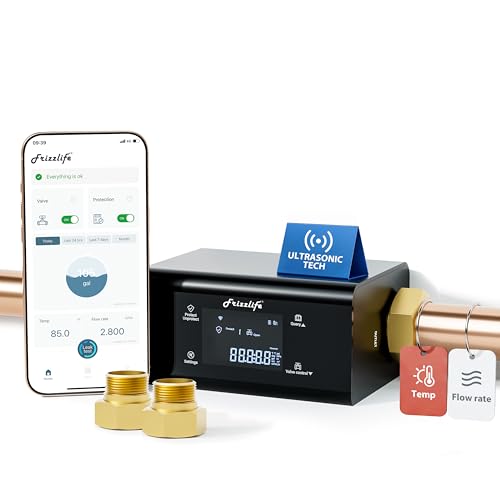
Frizzlife LP365 Smart Water Monitor and Automatic Shutoff Valve 3/4″ and 1″

YoLink DIY Automatic Water Leak Detection and Shut-Off Starter Kit

Frizzlife LPG365-P Smart Water Automatic Shutoff Valve with 3 Leak Sensors

Frizzlife Power Cord 25ft for LP365 and LPG365 Series

RAINPOINT Programmable Sprinkler Timer for Garden Hose (Metal)

RAINPOINT Programmable Watering Timer for Garden Hose (Plastic)
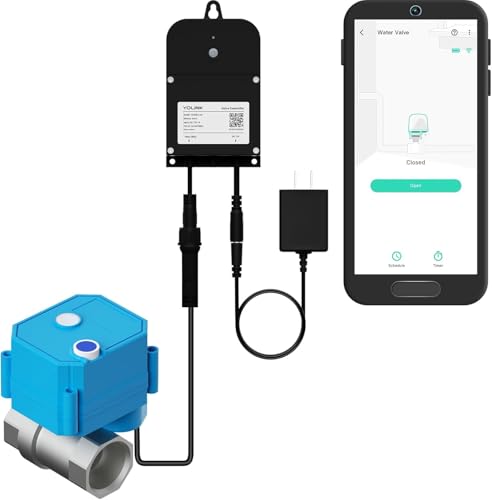
YoLink Wireless Smart Valve Control Kit 3/4″ Stainless Steel Motorized Valve

RAINPOINT WiFi Water Timer with App and Voice Control

Frizzlife LP365 Smart Water Monitor and Automatic Shutoff 1.25″ and 1″
More On The Choices That Made The List
The Frizzlife LP365 is the kind of whole-home shutoff that fits a wide range of households, particularly first-time shoppers who want a clean app experience without juggling extra hubs. It mounts on the main supply line and uses ultrasonic sensing to register flow down to 0.01 GPM, which is sensitive enough to catch a running toilet or a pinhole pipe before it becomes a disaster.
Wi-Fi connectivity feeds flow and temperature data straight to the companion app, and you can close the valve remotely from anywhere with a signal. For most owners, the appeal is the daily and monthly usage breakdowns that highlight wasteful habits and surprise spikes. Depending on pipe diameter at the main, you may find the install slightly tighter in older homes with crowded shutoff boxes.
What It Does Well
- Ultrasonic flow sensing catches micro-leaks that mechanical meters often miss.
- Wi-Fi app control means no separate hub on the shelf.
- 24/7 usage reports reveal patterns and unexplained consumption.
- Compatible with 3/4″ and 1″ supply lines for typical residential installs.
- NSF/ANSI 61 and 372 certification for drinking water safety.
Things To Consider
- No bundled leak sensors, so whole-home coverage requires extra accessories.
- Power outlet proximity matters at install time, since the standard cord is shorter than the optional 25-foot version.
- Wi-Fi reliability is the lifeline, so a router reboot can briefly knock out remote access.
Key Specs
Who It Suits Best
Homeowners with standard residential supply lines who want app-based monitoring and a clean, hub-free install.
Where Another Pick Suits Better
Pick the Frizzlife LPG365-P instead if you already know you want bundled leak sensors in high-risk spots like the laundry room.
Where the Frizzlife LP365 lives at the main line, the YoLink starter kit arrives as a complete package: hub, valve controller, EVO operator, and three leak sensors in one box. That makes it a friendly entry point for anyone who would rather not piece a system together piece by piece. The sensors can be placed under sinks, behind the water heater, or near the washing machine before the controller is even wired in.
Once installed, the system uses LoRa (long-range, low-power radio) to relay signals between devices, which means the sensors and valve keep talking even when the home internet drops. For most apartments and small homes, that redundancy is the main draw. You may find the EVO operator’s mechanical fit requires checking existing valve compatibility before purchase.
The Good Stuff
- All-in-one box covers hub, valve controller, and three sensors.
- Device-to-device communication works without internet.
- Expandable with additional YoLink sensors for tight or hidden spaces.
- LoRa range handles larger homes and outbuildings reliably.
Worth Noting
- The included hub takes up a spare outlet and shelf space.
- EVO operator must be matched to your existing ball valve dimensions.
- Sensor batteries need periodic replacement, though owners report long life between swaps.
Made For
First-time smart-valve shoppers who want a complete kit and the option to expand coverage room by room.
Look Elsewhere When
Choose the Frizzlife LP365 if you would rather skip the hub and rely on Wi-Fi only for a more streamlined main-line solution.
The Frizzlife LPG365-P takes the LP365 foundation and stacks on three wireless leak sensors, creating a true two-layer defense. The main valve still tracks whole-home flow, while the sensors patrol the spots where leaks actually start, like under the dishwasher or next to the water heater. The result feels less like a gadget and more like a layered system.
Pressure and flow monitoring both feed the app, so unusual pressure drops that hint at a slab leak show up alongside flow anomalies. Compared to the LP365 above, this version trades simplicity for coverage. Depending on the size of your home, three sensors may be a starting point that grows with time.
The Helpful Details
- Dual detection layers catch both flow anomalies and spot leaks.
- Pressure and flow tracking exposes hidden issues like slab leaks.
- Three bundled sensors cover laundry, kitchen, and water heater from day one.
- App-based control with daily and monthly water reports.
Points To Note
- Higher cost than the sensor-free LP365 option.
- Sensor placement takes planning to avoid false alerts in damp areas.
- Same Wi-Fi dependency as the LP365 for remote app access.
At A Glance
Right Fit For
Multi-bath homes and households that want spot sensors near the most likely leak zones without buying them separately.
Skip It When
Pick the YoLink starter kit if you prefer LoRa-based device-to-device communication over Wi-Fi dependency.
Not every review here is a complete system, and that is intentional. The Frizzlife 25-foot power cord solves one specific, frustrating problem: the main shutoff valve lives in a basement corner, crawlspace, or outdoor box, and the closest outlet is too far for the standard cable. A longer cord turns a “where do I plug this in” install into a clean, finished job.
It is built for the LP365 and LPG365 series, so compatibility is not a guessing game. For most owners, this is a small accessory that prevents the much larger headache of rewiring a new outlet near the main line. Depending on the layout, the extra slack also makes future maintenance easier to handle.
Standout Benefits
- 25-foot reach handles installs where outlets sit far from the main.
- Direct fit for Frizzlife LP365 and LPG365 models.
- Removes the need for an electrician in many homes.
Trade Offs
- Only works with Frizzlife LP365 and LPG365 units.
- Extra cable length needs tidy routing to avoid a tripping or snagging hazard.
Best Suited To
Anyone installing a Frizzlife valve in a basement, crawlspace, or detached outdoor box where the standard cord falls short.
Consider Something Else When
Pick the YoLink Wireless Smart Valve Control Kit if battery-backed operation matters more than a wired install.
Switching from indoor leak protection to outdoor watering, the RAINPOINT metal hose timer brings solid garden-side control. The 360-degree brass inlet is the headline here, since brass resists corrosion far better than plastic alternatives that crack after a few seasons in the sun. Built-in filtration helps keep debris out of the valve seat, which is a real-world ownership bonus.
The LCD screen lays out watering time, frequency, and power at a glance, so the programming curve stays shallow. A rain delay function skips cycles when weather is already doing the watering. For most backyards, this is a comfortable mid-tier pick that balances durability and cost without leaning fully into smart connectivity.
What Earns Its Place
- Brass inlet and metal threading for long outdoor life.
- Built-in filter protects the valve from sediment and debris.
- Large LCD screen simplifies programming without a phone.
- Rain delay prevents overwatering during wet stretches.
Honest Caveats
- No app or voice control, so schedules are set on-device only.
- Heavier brass body adds slight weight to the hose bib.
Whose Shelf It Belongs On
Homeowners with established garden beds or lawns who want a durable hose tap timer without relying on Wi-Fi.
Another Choice May Suit
Pick the RAINPOINT WiFi Water Timer if you want app-based schedules and weather-aware automation for the same outlet.
The plastic-bodied RAINPOINT timer shares the same large LCD and friendly programming as its metal sibling, but trades the brass inlet for a lighter, lower-cost build. For a patio container garden or a small lawn that does not face year-round weather punishment, the swap makes practical sense.
It still handles rain delay and manual watering, so the core feature set stays intact. Compared to the metal version above, the lighter shell is easier to move between spigots during the season. You may find the plastic inlet needs an extra wrap of plumber’s tape to stay drip-free in some installs.
Benefits That Matter
- Lower cost entry into automated hose watering.
- Lightweight plastic body is easy to swap between faucets.
- Same readable LCD as the higher-tier RAINPOINT model.
- Manual override for quick hand-watering sessions.
Points To Keep In Mind
- Plastic inlet and outlet wear faster than brass in harsh sun.
- No app connectivity for remote schedule changes.
Perfect Match For
Renters and casual gardeners who want simple, dial-based watering without permanent installation.
Reach For A Different Pick When
Choose the metal RAINPOINT timer if your spigot gets full sun and heavy use through the season.
The YoLink stainless steel kit brings serious hardware to the table, starting with an NSF-certified stainless valve body that is rated for potable drinking water. That certification alone makes it stand out for households that want every component on the supply line to meet drinking-water safety standards.
Power comes from a 12V adapter, with four AA batteries offering up to two years of backup, so the system keeps functioning through short outages. LoRa long-range radio and D2D offline control mean paired leak sensors can still trigger a shutoff when the home internet is down. For most homes, the steel body is overkill until a humid basement or older plumbing pushes corrosion into the picture.
Well-Handled Touches
- NSF-certified stainless steel valve body for potable water safety.
- Battery backup keeps the valve working through power outages.
- D2D offline control works without internet or cloud service.
- LoRa long range handles large properties and detached spaces.
Things That May Matter
- Stainless body costs more than plastic alternatives.
- Requires the YoLink hub for app-based control.
- Battery backup means occasional AA swaps depending on use.
Feature Snapshot
Who Should Grab It
Homes with older plumbing, humid basements, or anyone who prioritizes certified materials on the main supply line.
Swap It Out When
Pick the Frizzlife LP365 if NSF-rated steel is not a must and you want a hub-free Wi-Fi setup instead.
The RAINPOINT WiFi Water Timer takes the brand’s outdoor valve and adds the connected features that gardeners actually use. The app handles scheduling from anywhere, voice control integrates with common smart assistants, and weather-based rain delay pulls local forecasts to skip cycles on wet days. Brass construction on both inlet and outlet means the body holds up outdoors.
The 2.4GHz Wi-Fi requirement is worth noting, since dual-band routers sometimes need a quick setup adjustment. Compared to the dial-only RAINPOINT models earlier, this version trades simplicity for genuine automation. For most connected households, the trade-off feels like the point.
The Practical Payoff
- App and voice control remove trips to the spigot for schedule changes.
- Weather-based rain delay prevents overwatering on rainy days.
- Brass inlet and outlet for outdoor durability.
- Manual override for hand-watering when needed.
Some Limits To Know
- Requires 2.4GHz Wi-Fi, not compatible with 5GHz-only networks.
- App setup may take a few extra minutes for dual-band router owners.
Built With In Mind
Smart home enthusiasts who already run a connected ecosystem and want their irrigation in the same app.
Not Your Match When
Pick the metal RAINPOINT timer if you prefer a non-connected, dial-based setup that just works at the spigot.
The 1.25″ version of the Frizzlife LP365 exists because not every home runs on a 3/4″ supply. Older properties and some larger residences step up to a wider main, and this model ships with a 1.25″ pipe adapter alongside the standard 1″ fitting. The same ultrasonic sensing, Wi-Fi app, and NSF certifications apply.
Flow and temperature monitoring still feed the app in real time, and shutoff is automatic when a leak pattern is detected. For most owners of newer construction, the standard LP365 is enough. This larger-diameter version fills the gap for the homes that would otherwise be left out.
Where It Delivers
- 1.25″ adapter included for older or larger-diameter supply lines.
- Same 0.01 GPM ultrasonic sensitivity as the standard LP365.
- Wi-Fi app and 24/7 alerts keep you connected to flow events.
- NSF/ANSI 61 and 372 certifications for potable water lines.
Worth Bearing In Mind
- Higher cost than the standard 3/4″ and 1″ version.
- Bigger valve body needs more clearance at the main shutoff location.
Quick Facts
The Right Fit
Owners of older homes or larger properties with 1.25″ main supply lines who want the same Frizzlife feature set at a wider pipe size.
Where A Sibling Pick Shines
Pick the standard Frizzlife LP365 if your main supply is 3/4″ or 1″ and you do not need the larger adapter.
Picking The Right Smart Water Valve For Your Home
Main-Line Shutoff vs. Spot Sensors
The first real decision is whether you want protection at the main supply line, at individual leak zones, or both. Main-line valves like the Frizzlife LP365 cut water to the entire house in one move, while spot sensors under sinks catch problems before the main even notices. The strongest systems use both, since each layer catches different failure modes.
Connectivity And Reliability
Wi-Fi-only systems are easier to install but depend on a healthy router and an active internet connection. LoRa-based systems like YoLink keep talking between devices even when the internet drops, which is a quiet but meaningful difference during a storm. For most households, the deciding factor is whether you already own a smart home hub or want a hub-free install.
Pipe Size And Material
A whole-home shutoff is only useful if it physically fits the supply line. Newer homes typically run 3/4″ or 1″ mains, while older properties may need 1.25″ adapters. Stainless steel bodies resist corrosion in humid basements, while brass inlets on outdoor timers stand up better to weather than plastic alternatives.
Coverage Scope
A single shutoff valve is not the same as a full system. Bundled kits like the YoLink starter set or the Frizzlife LPG365-P arrive ready to cover multiple rooms, while bare valves expect you to add sensors later. Matching kit size to home size keeps the budget honest and avoids paying for parts you will not use.
What Most Shoppers Miss Before Buying
Pitfalls Shoppers Hit
The most common misstep is buying a main-line valve without checking pipe diameter at the actual shutoff location. A second mistake is underestimating how many leak sensors a home really needs, since one under the kitchen sink rarely protects the laundry room or water heater. Finally, plenty of shoppers forget to confirm that a 2.4GHz Wi-Fi band is available, which knocks out several otherwise appealing app-based products on day one.
Where The Extra Money Goes
Stepping up to a higher-tier model usually buys three things: a metal valve body instead of plastic, bundled leak sensors rather than none, and battery or LoRa backup that keeps protection running through outages. For homes with older plumbing, a humid basement, or multiple risk zones, the upgrade typically pays for itself the first time a small leak gets caught early. For apartments or newer builds with simple layouts, a basic valve plus a few spot sensors often does the job.
Frequently Asked Questions
Do smart water valves need a separate hub?
Some do, and some do not. Frizzlife’s LP365 line talks directly to your home Wi-Fi, while YoLink systems use a small hub that coordinates the sensors and valve. The trade-off is convenience versus redundancy, since hub-based kits keep working through internet outages.
Can a smart valve really stop a burst pipe?
Yes, when paired with leak sensors or ultrasonic flow sensing that detects the unusual flow rate of a burst line. The valve closes within seconds of detection, which is the difference between a mop and a renovation.
Will a smart valve work on any home plumbing?
Most fit standard residential supply lines, but the pipe diameter matters. Newer homes typically use 3/4″ or 1″ mains, while older properties may need a 1.25″ adapter. Checking your main shutoff size before ordering avoids an install-day surprise.
Are outdoor hose timers considered smart water valves?
They sit in the same product family, since both control water flow automatically. The difference is scope: outdoor timers manage scheduled irrigation, while indoor shutoff valves respond to leak events and protect the home from water damage.
How often do leak sensors need new batteries?
Most leak sensors use standard coin-cell or AA batteries that last a year or more under normal conditions. The companion app typically alerts you when a sensor’s battery gets low, so replacements are planned rather than reactive.
Closing Remarks
The right pick depends less on brand and more on your home’s plumbing, layout, and tolerance for complexity. A simple Wi-Fi valve covers most single-family homes, while older properties and risk-heavy layouts benefit from a layered system with spot sensors and offline backup. Match the kit to the home, and the rest falls into place.