Durable Air Compressors matter most when you need steady pressure, repeat use, and fewer surprises in the garage or on the road. You might be topping off truck tires before dawn, running nailers in a shop, or keeping a small household setup ready for chores. The right pick depends on tank size, airflow, noise level, and how portable you need the unit to be. This roundup keeps those trade-offs clear so you can match the compressor to your routine.
The Shortlist At A Glance

ALL-TOP Air Compressor Kit, Dual Cylinder 12V Portable Inflator

DEWALT Air Compressor, 225-PSI Max, D55146

Craftsman Air Tools 2 Gallon Portable Air Compressor CMXECXA0200243

Craftsman Air Compressor 20 Gallon Oil-Free CMXECXA0232043

Craftsman 10-Gallon Air Compressor CMXECXA0201041

CRAFTSMAN Portable 12V Tire Inflator with Digital Gauge

Quiet Oil-Free Air Compressor 68 dB 5 Gallon

VEVOR 13-Gallon Air Compressor 2HP 125 PSI
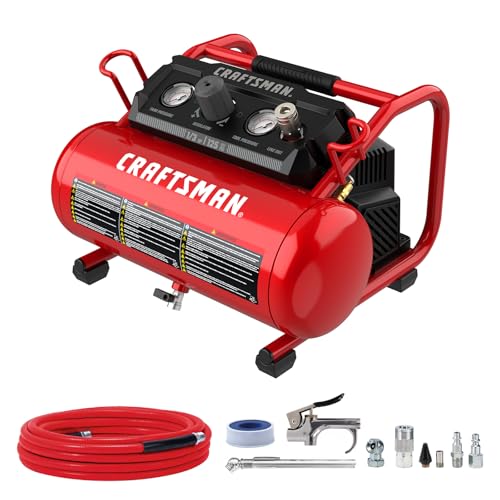
CRAFTSMAN Air Compressor 2 Gallon with Accessory Kit
JACO 4X4 TrailPro Heavy Duty Portable Air Compressor
More Details On Our Top Picks
Off-road setups ask for fast tire recovery, and this ALL-TOP kit leans hard into that job. The dual-cylinder layout matters because it helps move more air than a basic single-pump inflator, which suits truck tires, 4×4 use, and RV trips where you value speed over tiny size. It is the sort of pick that feels at home in a cargo area, not a kitchen drawer.
The trade-off is plain, this kind of output usually comes with more bulk and more setup than a handheld inflator. For weekend trail rigs or overland kits, that’s a fair exchange, and the 12V design keeps it tied to vehicle power rather than wall outlets. Compared with the smaller CRAFTSMAN portable inflators below, this one is built for bigger tire work first.
Strong Points
- Dual cylinders help it suit larger tires and repeated fill-ups.
- 12V operation keeps it practical for trail use and roadside top-offs.
- 150 PSI ceiling gives you a wide pressure window for vehicle tires.
- Works well for trucks, RVs, and 4×4 storage kits.
Things To Consider
- It takes more space than a small glove-box style inflator.
- Vehicle-powered use means you stay tied to a 12V source.
- Cleanup and cable storage matter more on muddy or dusty trips.
Feature Snapshot
Whose Shelf It Belongs On
Weekend overlanders, truck owners, and RV travelers get the most from this format.
Where A Sibling Pick Shines
CRAFTSMAN Portable 12V Tire Inflator with Digital Gauge suits drivers who want a smaller, easier-to-stow option for ordinary top-offs.
High-pressure storage is the draw here, and the 225-PSI ceiling gives you more room before the tank needs recovery. That matters on mobile jobs where you bounce between tools, tires, and cleanup tasks, especially when you want a hand-carry unit with wheels instead of a fixed shop compressor. It feels like a serious transportable tool rather than a casual garage accessory.
The 4-1/2-gallon tank keeps the body compact enough to move, but it also means you are balancing portability against reserve capacity. For a one-car garage or a contractor’s van, that balance makes sense, although a bigger tank like the 20-gallon CRAFTSMAN below still suits longer tool runs better. The honest read is that this DEWALT makes more sense for pressure than for long uninterrupted output.
What We Like
- 225 PSI maximum gives you strong stored-air headroom.
- Wheels help with moving it around a jobsite or garage.
- Hand-carry format keeps the footprint practical for transport.
- Useful for drivers and contractors who need portable pressure.
Points To Note
- Small tank size means you give up longer run time.
- Wheels help with transport, but stair carrying still takes effort.
- Compact portability can leave less room for accessory storage.
Technical Sheet
Made For
You get the best fit here in mobile repair work, small garages, and frequent carry-in carry-out use.
Where Another Pick Suits Better
Craftsman 10-Gallon Air Compressor CMXECXA0201041 suits shop users who want a steadier air reserve for spraying and pneumatic tools.
Small tanks have a place, and this 2-gallon CRAFTSMAN model keeps that story simple. Its oil-free pump lowers day-to-day upkeep, which helps in a garage where you want less mess around a bench or shelf. For topping off tires, light brad-nailing, and other short jobs, the hot-dog shape is easy to tuck away.
Compared with the DEWALT above, you give up pressure headroom and carry less reserve air, so the upside is mainly convenience. That trade-off works well for apartment garages, hobby setups, and first-time compressor users who do not need a large machine. You may find the smaller footprint more useful than raw output in a tight workspace.
Positives
- 2-gallon tank keeps storage simple in tight spaces.
- Oil-free construction reduces routine maintenance demands.
- 125 PSI max suits common light-duty inflation jobs.
- Hot-dog profile slides neatly along a shelf or wall.
Minor Gripes
- Smaller reserve air means longer jobs feel slower.
- Light-duty capacity is a step behind bigger workshop units.
Core Details
Best Suited To
Apartment garages, hobby benches, and light inflating tasks fit this size best.
Swap It Out When
CRAFTSMAN Air Compressor 20 Gallon Oil-Free CMXECXA0232043 serves you better for longer pneumatic tool sessions and larger shop jobs.
Big-tank compressors earn their keep by giving tools a steadier cushion of air, and this 20-gallon CRAFTSMAN fits that role clearly. The two quick couplers matter because they let more than one line stay connected, which is handy in a busy garage or small shop. For sanding, inflating, or running pneumatic tools in sequence, that extra reserve feels practical instead of flashy.
The trade-off is size, plain and simple. It takes more room and more effort to move than the smaller 2-gallon and 4-1/2-gallon picks, so this one belongs where it can stay put more often than not. For most home workshops, that’s fine, and the oil-free design keeps maintenance simpler than older oil-lubed machines.
Highlights
- 20-gallon tank supports longer work sessions.
- Two quick couplers make shared use easier.
- 175 PSI max gives you solid pressure reserve.
- Oil-free design cuts down routine upkeep.
- Good fit for garages that handle mixed tasks.
Softer Spots
- Bigger footprint asks for committed floor space.
- Not as easy to move as smaller portable units.
- Best suited to spaces where it can stay set up.
Feature Rundown
The Right Fit
Garage users and weekend woodworkers who want a larger reserve without overcomplicating upkeep fit this model well.
A Better Fit Elsewhere
DEWALT Air Compressor D55146 suits you better for a more mobile setup that still carries serious pressure.
This 10-gallon CRAFTSMAN sits in a useful middle zone for home shops. The listed airflow figures, 4.0 CFM at 90 PSI and 5.0 CFM at 40 PSI, tell you it can support more than casual inflation, which matters for spraying and many pneumatic tools. The wheels help too, because a mid-size compressor only works well in real life when you can roll it without wrestling it.
Compared with the 20-gallon CRAFTSMAN, it gives up reserve capacity, but it also asks less of your floor space. That makes it a smart match for garages where you need one compressor to cover tires, finish work, and general maintenance without becoming a permanent fixture. In most workshops, that balance is the reason it earns a look.
Bright Spots
- 10-gallon tank strikes a workable middle ground.
- CFM figures support spray and pneumatic tasks.
- Wheels make movement easier around the shop.
- Oil-free pump keeps routine care simpler.
Room For Improvement
- Mid-size capacity still falls short of a large shop tank.
- Heavier than a small portable inflator.
- Not the most compact option for very tight storage.
Details At A Glance
Who Will Love This
Home garage users and hobby woodworkers get the best match here.
Look Elsewhere When
VEVOR 13-Gallon Air Compressor suits you better when you want a little more tank size and a quieter operating profile.
This is the most travel-friendly pick in the lineup. The digital gauge helps you read pressure directly, and the auto shut-off feature matters because it keeps you from babysitting the fill process at every stop. Add the LED light and 12V DC plug, and you get a road tool that fits trunk storage and late-evening tire checks without much fuss.
The limitation is obvious: you are buying convenience, not workshop scale. It handles car tires, bikes, and sports gear well, but it cannot replace a tank compressor for longer tool runs. Compared with the ALL-TOP and JACO off-road picks, this one feels lighter and simpler for everyday drivers.
Reasons To Buy
- Digital gauge makes pressure reading straightforward.
- Auto shut-off reduces overfill guesswork.
- LED light helps during roadside or driveway use.
- 12V plug keeps it tied to the car.
- Compact size is easy to store in a vehicle.
Areas To Watch
- Built for inflation, not for power tools.
- Vehicle plug use means it stays tied to one power source.
Quick Facts
Built With In Mind
Commuters, cyclists, and road-trip drivers get the most use from this inflator.
Where Shoppers Go Wrong
Craftsman Air Compressor 2 Gallon CMXECXA0200243 is the better match when you need a compact tank for occasional shop tasks, not just inflation.
Noise matters more than many people expect, especially in attached garages or shared workspaces. At 68 dB, this Limodot model aims for a calmer presence while still offering a 5-gallon tank and 2.8 CFM at 90 PSI, which supports woodworking, nailing, and car inflation without feeling tiny. The included air hose kit also helps you get started with fewer extra parts to source.
Compared with the louder, larger shop-style options, this one leans toward comfort and everyday usability. The steel tank should suit regular garage life, though any steel-bodied compressor still benefits from sensible draining and dry storage. For a home shop that shares walls, the lower-noise angle is a real advantage.
Upsides
- 68 dB output helps soften the workshop sound level.
- 5-gallon tank gives you useful everyday reserve.
- 2.8 CFM at 90 PSI covers common tool needs.
- Air hose kit adds immediate setup convenience.
Worth Noting
- Quieter operation usually comes with moderate airflow rather than extreme output.
- Steel tank care still matters for long-term storage.
- Not the smallest unit in the roundup.
Spec Overview
Whose Shelf It Belongs On
Woodworkers, garage tinkerers, and home users who care about noise fit this unit well.
Another Choice May Suit
VEVOR 13-Gallon Air Compressor is the better route for you when airflow and larger reserve matter more than sound control.
This VEVOR model splits the difference between quiet operation and useful output. The 13-gallon tank, 2HP motor, and 4.6 SCFM at 90 PSI give you more room for tire inflation, woodworking, auto repair, and spray painting than the smaller 5-gallon Limodot above. The oil-free tank also makes routine care easier, which matters in a garage that sees regular use.
The 66dB rating adds another layer of appeal, especially in home shops where constant noise gets old fast. The limit is physical size, because a 13-gallon compressor still asks for floor space and a stable parking spot. For a mixed-use workshop, that extra capacity feels earned.
Best Bits
- 13-gallon tank suits broader workshop use.
- 2HP motor supports a fuller workload.
- 4.6 SCFM at 90 PSI helps with several tool types.
- 66dB operation keeps sound more controlled.
- Oil-free tank simplifies routine upkeep.
Small Caveats
- Larger size takes more floor room than compact models.
- Better suited to semi-permanent placement than constant carrying.
Core Details
The Right Fit
You get the best match here for mixed home-shop work that needs both capacity and a calmer sound profile.
Skip It When
Craftsman Air Compressor 2 Gallon CMXECXA0200243 suits you better for ultra-compact storage and very light chores.
This compact CRAFTSMAN keeps the formula simple, a 2-gallon tank, 1/3 HP motor, and oil-free operation wrapped into a light-weight body. The accessory kit adds practical convenience, because small compressors feel better when the basic attachments are already part of the package. For tire topping, light cleanup, and quick inflation jobs, it stays easy to live with.
It sits very close to the earlier 2-gallon CRAFTSMAN, but the included 10-piece accessory set gives this version a more ready-to-use feel. That helps for casual home users who do not want to piece together fittings right away. The trade-off is still the same, short-duty tasks work best here, not extended tool sessions.
Strong Points
- 2-gallon tank keeps storage straightforward.
- Oil-free setup lowers routine maintenance demands.
- Accessory kit adds handy starter convenience.
- Light-weight build helps with carrying and repositioning.
Areas To Watch
- Small tank means you should expect short run cycles.
- Accessory kit helps, but it does not change the core capacity.
Feature Card
Perfect Match For
Casual garage users and first-time compressor setups fit this package well.
Where A Sibling Pick Shines
Craftsman 10-Gallon Air Compressor CMXECXA0201041 serves you better once you need a more capable shop compressor with real airflow reserve.
Trail use changes the priorities, and this JACO kit is built around that reality. The 3.5 CFM output at 12V and 33A gives you a more serious off-road inflator than a basic roadside pump, which matters after airing down on dirt, sand, or rocky routes. It feels purpose-built rather than all-purpose, and that focus is part of its appeal.
Compared with the ALL-TOP kit, this JACO option trims the feature set but keeps the off-road mission intact. That makes it a strong fit for drivers who value a straightforward inflator kit and want to keep vehicle recovery gear lean. For daily commuting, the simpler CRAFTSMAN inflator above may be easier to live with.
Plus Points
- 3.5 CFM output supports off-road tire recovery work.
- 12V, 33A setup fits vehicle-based inflation needs.
- Compact kit format helps keep trail storage tidy.
- Focused design makes it easy to assign one job.
Honest Caveats
- Trail focus means it is less versatile than a workshop compressor.
- Vehicle-powered use keeps it tied to a 12V source.
- Best for tire work, not for powered shop tools.
Spec Overview
Built With In Mind
Off-road drivers and trail rigs get the clearest benefit from this layout.
Reach For A Different Pick When
DEWALT Air Compressor D55146 suits you better for a more general mobile compressor that balances transport and pressure reserve.
How To Choose The Right Durable Air Compressors
Match Tank Size To Your Work
Tank size shapes how long you can keep a tool running before pressure recovery kicks in. Small 2-gallon units suit tires, brad nails, and quick household fixes, while 10-gallon and 20-gallon tanks handle longer garage sessions with less waiting. For regular workshop use, a larger tank often feels calmer because the compressor cycles less often.
You also want to think about where the machine will live. A compact hot-dog tank slides into a shelf slot more easily, while a steel 20-gallon unit usually needs a committed corner. That trade-off is simple: smaller storage, less reserve; larger storage, more breathing room.
Look Closely At Airflow And Pressure
CFM, or cubic feet per minute, tells you how much air a compressor can move at a given pressure. Higher CFM matters for spray work and repeated pneumatic tool use, while PSI, or pounds per square inch, tells you how much pressure the tank can hold. You want both numbers to fit the job instead of chasing the biggest figure on the page.
Roadside inflators can do fine with modest airflow, but a shop setup benefits from stronger CFM and a tank that recovers quickly. The difference shows up in real life as less waiting between bursts and fewer interruptions during longer projects. That is why a 12V tire inflator and a 20-gallon garage unit belong in different conversations.
Consider Noise, Mobility, And Maintenance
Noise matters more than many people expect, especially in attached garages or shared spaces. Models around 66dB to 68dB stay easier on the ears than louder shop machines, and oil-free pumps usually simplify upkeep because you are not managing oil checks. The trade-off is that quieter units and oil-free designs may lean toward moderate output rather than huge reserve.
Mobility matters too. Wheels help with moving a compressor around a garage, while 12V inflators stay useful for road trips and trail rigs because they plug into the vehicle. For you, the right mix depends on whether the compressor spends most of its life rolling between work zones or riding in a cargo area.
Before You Click Amazon
Wrong Turns To Avoid
Many shoppers focus on PSI alone and miss airflow, tank size, and portability. That leads to a compressor that sounds powerful on paper but feels slow on actual jobs. A small inflator can be great for tires yet frustrating for tools, so the use case needs to come first.
Another common miss is storage planning. A 20-gallon unit can be excellent value for a shop, but it becomes a headache in a narrow garage or crowded shed. The smartest move is to match the machine to the space you already have, not the space you wish you had.
What The Higher Tier Buys
Higher-tier compressors usually cost more because of tank size, motor strength, airflow, and quieter operation. You also tend to get better mobility features, sturdier construction, or more task flexibility, which matters for frequent shop use. That extra money makes sense when the compressor will run often enough to justify the added capacity.
For occasional tire inflation, a compact 12V unit is often enough. For home shops, off-road rigs, or repeated pneumatic work, the upgrade pays off in fewer pauses and less compromise. The question is not whether the bigger machine sounds better, it’s whether your routine will really use it.
Frequently Asked Questions
What size air compressor works for home use?
A 2-gallon model handles light inflation and small tasks well. A 10-gallon or 20-gallon unit suits more regular garage work.
Is oil-free better for everyday maintenance?
Oil-free pumps usually simplify routine care because you skip oil checks. That convenience can matter a lot in a busy garage.
What does CFM mean on an air compressor?
CFM means cubic feet per minute, which shows how much air the compressor can move. Higher CFM usually helps with tools that need steady airflow.
Do 12V inflators replace tank compressors?
They do a solid job for tires and portable use. They do not replace a tank compressor for longer tool sessions.
Why does noise level matter so much?
Lower noise makes a compressor easier to live with in attached garages or shared spaces. That can improve day-to-day comfort without changing the tool’s core job.
Final Thoughts
You have plenty of good paths here, but the right Durable Air Compressors choice comes down to the work you do most often. For trail rigs, the ALL-TOP and JACO picks make sense; for garage and shop work, the DEWALT, CRAFTSMAN, Limodot, and VEVOR models bring more lasting versatility. Smaller 2-gallon units stay useful for light tasks, while the larger tanks earn their keep where air reserve matters. Match the machine to your space and your routine, and the right one usually stands out fast.