Jobsite air compressors earn their keep when you need steady pressure for trim nailing, tire inflation, painting, or a roadside fix that can’t wait. The right pick depends on more than tank size, because portability, recovery speed, noise, and hose management all change how smoothly your day goes. You’ll see compact cordless inflators, vertical shop units, and heavier compressors that suit a garage or build site.
This roundup focuses on practical fit, so you can match the machine to your workspace instead of overbuying or coming up short. Some options travel easily in a truck bed, while others make more sense beside a bench, miter saw station, or paint area. The trade-off is simple: more output usually means more size and weight.
Quick Look At The Shortlist

NOCO Air AL5 Cordless Tire Inflator

DEWALT Air Compressor for Trim DWFP55130

Makita DMP181ZX 18V LXT High-Pressure Inflator
ONEAND 1 GAL. 120 PSI Portable 18V Compressor

Klutch 29-Gallon Air Compressor 2.5 HP 175 PSI

Klutch 20-Gallon Air Compressor 2 HP 175 PSI

VEVOR 6.3 Gallon Air Compressor 2 HP 116 PSI

ALL-TOP Air Compressor Kit Dual Cylinder 12V Inflator

AIRZILLA Premium Steel Retractable Air Hose Reel
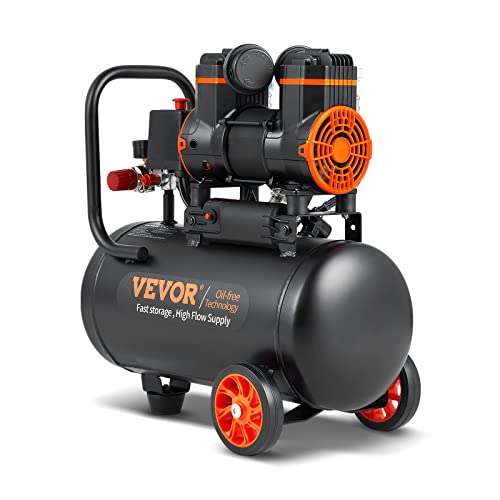
VEVOR 4.8 Gallon Air Compressor 1.2HP 116 PSI
More Details On Our Top Picks
Roadside inflation gets a lot easier with a cordless unit that stays small enough for a trunk or cab. The AL5 stands out for its digital gauge, auto-shutoff, and USB-C charging, so topping off a tire feels less like a chore and more like a quick stop. For daily commuters and weekend drivers, that convenience matters more than raw size.
The real trade-off is scope, because this is built for tires up to 31 inches rather than shop-wide tool work. You’ll like it most when you need clean, portable pressure control without hauling a tank and hose around. It pairs naturally with the heavier shop compressors later in this list, which cover a much broader set of tasks.
Strong Points
- Cordless format keeps the setup simple in a driveway, parking lot, or roadside shoulder.
- Digital gauge gives you a clear pressure read, which helps avoid guesswork on quick fills.
- Auto-shutoff reduces the chance of overshooting target pressure during routine top-offs.
- USB-C charging fits modern charging habits and makes it easier to keep in a vehicle.
- Compact size stores easily, which helps when trunk space already feels tight.
Things To Consider
- It’s a tire tool, not a full jobsite compressor for nailers or spray guns.
- Large truck tires push beyond its comfort zone, so fit matters here.
- Battery-dependent use means you’ll want to keep it charged before long trips.
Feature Snapshot
Who It Suits Best
Drivers who want a compact, cordless tire inflator for commuting, road trips, and small vehicle upkeep will get the most from this pick.
Where Another Pick Suits Better
Klutch 20-Gallon Air Compressor fits better for garage tool use, since it handles a much wider set of air-powered tasks than the NOCO Air AL5.
Trim carpentry asks for steady pressure more than flashy specs, and this DEWALT unit leans into that kind of work. The 200-PSI max gives you room for trim nailing and other finish tasks, while the quiet operation helps in occupied homes or shared jobspaces. That quieter footprint separates it from louder shop-oriented compressors like the Klutch 29-gallon unit.
For finish crews and serious DIY remodelers, the appeal is straightforward: enough pressure for trim work without making the whole room feel like a construction site. The compromise is that this model is built around a narrower use pattern than a full-size shop tank. That makes it a strong specialist, not a general-purpose all-rounder.
What We Like
- High max pressure suits finish tools and other trim-focused jobs.
- Quiet-running design is easier on ears during indoor work.
- Portable format makes it less awkward to move between rooms or floors.
- Useful for clean trim installs where consistent pressure matters.
Points To Note
- It serves a narrower role than larger shop compressors.
- Finish work is its lane, so heavy tool duty belongs elsewhere.
- Owners will still want a tidy hose setup for interior jobs.
Core Details
Who Will Love This
Finish carpenters, remodelers, and careful home improvers who work with trim tools in lived-in spaces will appreciate this compressor most.
Another Choice May Suit
Klutch 29-Gallon Air Compressor suits you better for heavier garage use, especially when you want more tank capacity and broader task coverage.
Makita’s cordless inflator makes the most sense for tool-system owners who already live inside the 18V LXT line. Because it’s tool only, you’re buying into the platform rather than a one-box solution, which keeps it light but also means you need the right batteries on hand. That’s a fair trade for crews and homeowners who already share packs across drills and saws.
Compared with the NOCO AL5, this one leans more toward platform convenience than all-in-one roadside simplicity. It fits well in a truck, garage shelf, or tool bag, and the smaller footprint is handy in tight storage spaces. The honest read is that it rewards existing Makita users the most.
Highlights
- Cordless design keeps it useful away from wall power.
- Tool-only format stays lean for users already on the LXT platform.
- Easy to store beside drills, impact drivers, and other cordless gear.
- Useful for tires and other high-pressure topping-off tasks.
Room For Improvement
- You need compatible batteries and charger support from the start.
- It does not replace a full shop compressor for air tools.
- Owners without Makita packs face extra setup before the first use.
Technical Sheet
Right Fit For
Makita tool owners who want a compact inflator for tires and quick pressure checks will get the cleanest fit here.
Look Elsewhere When
NOCO Air AL5 suits you better for a simpler standalone tire inflator, especially when you want USB-C charging without joining a battery platform.
The ONEAND lands in a useful middle ground: small enough to move around, yet still a true compressor rather than a pocket inflator. Its horizontal 1-gallon layout helps it sit low in a garage or trailer, and the 120 PSI max gives you enough headroom for light fastening jobs. For quick brad nailing or inflation chores, that compact setup can be just right.
Compared with the Makita inflator, this is closer to a small workshop tool than a travel accessory. The trade-off is obvious, though, because a 1-gallon tank won’t keep up with larger air demand for long stretches. It suits homeowners who want a simple, space-saving compressor for occasional projects.
Best Bits
- Low-profile tank shape stores neatly against a wall or under a bench.
- Portable 18V setup is easier to move than larger corded tanks.
- 120 PSI max supports light pneumatic tasks.
- Good fit for smaller spaces where every inch counts.
Softer Spots
- The 1-gallon tank limits how long it can sustain demand.
- It works best for lighter work rather than long tool sessions.
- Smaller units usually ask for more frequent refills.
Details At A Glance
Whose Shelf It Belongs On
Homeowners handling small fastening jobs and occasional inflation in a tight garage will get the best fit from this compressor.
Swap It Out When
VEVOR 6.3 Gallon Air Compressor fits better for you when you want a broader range of light shop chores and a larger tank to lean on.
Once you move into a 29-gallon tank, you’re looking at a different rhythm of work. This Klutch model brings 175 PSI, 5.1 CFM at 90 PSI, and an oil-free vertical design, so it’s built for bigger home-shop sessions where nailing and painting are part of the same day. Large wheels make movement less awkward, which matters once a tank gets this size.
Compared with the smaller ONEAND and VEVOR units, this compressor is much better suited to longer bench sessions and more frequent air use. The maintenance-friendly tank drain is a practical touch, because storage and upkeep are easier when water management doesn’t become a project of its own. For serious garage work, it sits in a very useful spot.
Upsides
- Large tank helps smooth out bursts of air demand.
- 175 PSI max gives useful overhead for tool use.
- 5.1 CFM at 90 PSI supports a broader range of shop tasks.
- Oil-free setup cuts one layer of routine upkeep.
- Large wheels make repositioning less of a strain.
Areas To Watch
- Bigger footprint asks for real floor space.
- It’s more compressor than casual household inflator.
- Vertical storage helps, but the unit still takes planning.
Spec Overview
Made For
Home-shop users, weekend renovators, and woodworkers who need a larger, more capable compressor for repeated tasks will appreciate this one most.
Where A Sibling Pick Shines
Klutch 20-Gallon Air Compressor fits better for you if you want a little less bulk while still staying in the same general shop-compressor lane.
This Klutch keeps the same serious 175 PSI ceiling as the larger 29-gallon model, but the 20-gallon tank trims some bulk from the equation. That makes it easier to place in a home garage while still giving you 4.2 SCFM at 90 PSI and a 75% duty cycle, which suits regular tool use better than sporadic tire filling. The vertical, oil-free design helps on maintenance too.
For most garage setups, this is the sweet spot between size and output. You get enough muscle for shop air tools without giving up too much floor space, and the easy-access tank drain is a small detail that pays off over time. It feels more versatile than the compact VEVOR units, but less imposing than the 29-gallon Klutch.
Bright Spots
- 20-gallon capacity gives you room without going oversized.
- 75% duty cycle supports regular shop rhythm.
- 4.2 SCFM at 90 PSI helps it keep pace with common air tools.
- Large wheels make it easier to roll around a garage.
- Oil-free construction keeps routine upkeep simpler.
Minor Gripes
- Still large enough to deserve a dedicated corner.
- Not the smallest option in this roundup.
- Users with light inflation needs may not need this much tank.
Feature Rundown
Best Suited To
You’ll like this compressor most if you want a dependable garage unit for routine air tools, inflation, and general shop chores.
Skip It When
Klutch 29-Gallon Air Compressor makes more sense when your work leans heavier and you want the larger tank reserve to match.
The VEVOR 6.3-gallon compressor aims at lighter shop chores rather than heavy-duty daily production, and that’s exactly where it makes sense. With 2 HP, 3.35 CFM at 90 PSI, and a 116 PSI ceiling, it covers auto repair basics, tire inflation, spray painting, and woodwork nailing without taking over the garage. That mix gives you more flexibility than a tiny inflator, while staying easier to place than a bigger tank.
For hobby spaces and small garages, the size is a big part of the appeal. You may find it especially comfortable for mixed use, where a single compressor handles several modest tasks without asking for a massive footprint. Compared with the Klutch units, it gives up some capacity, but the smaller format will suit tighter spaces better.
Reasons To Buy
- Moderate tank size fits well in compact garages.
- Useful across inflation, nailing, and light painting tasks.
- Oil-free design keeps ownership simpler.
- Good middle ground for casual multi-use setups.
Small Caveats
- It won’t feel as roomy as the larger Klutch units.
- 116 PSI ceiling sits below the higher-pressure picks.
- Best suited to light and moderate jobs, not long air-tool sessions.
Core Details
The Right Fit
DIYers with a small garage who want one compressor for inflation, nailing, and modest paint work will get solid value from this pick.
Where A Sibling Pick Shines
Klutch 20-Gallon Air Compressor suits you better when you want more tank reserve and a stronger setup for repeated shop use.
This ALL-TOP kit is built for off-road tires, truck use, and RV travel, so it belongs in the vehicle kit world more than the garage shelf. The dual-cylinder design and 12.35 ft³/min flow rate point to quicker tire support than a compact single-purpose inflator, while the 150 PSI ceiling gives you room for larger tires. That makes it especially useful for overlanding setups where roadside readiness matters.
Compared with the NOCO AL5, this pick is less pocketable but far better suited to bigger vehicles and tougher inflation jobs. In a truck bed or cargo area, the added heft feels justified, because you’re buying capability rather than convenience alone. The practical upside is plain: one kit covers more ground on rough trips.
Positives
- Dual-cylinder design supports stronger airflow for larger tires.
- 12V operation suits vehicle-based use.
- 150 PSI max helps with truck, 4×4, and RV inflation needs.
- Handy for travel kits where a wall outlet is not available.
Honest Caveats
- It fits vehicle travel better than indoor shop work.
- More specialized than a general garage compressor.
- Vehicle users still need room for storage and cable routing.
Feature Card
Built With In Mind
Off-road drivers, RV owners, and truck campers who want a tougher vehicle compressor will get the most from this kit.
Reach For A Different Pick When
NOCO Air AL5 suits you better for small car tires and simple commuting use, since it’s lighter and more convenient for everyday storage.
Not every jobsite air setup starts with the compressor itself, because a good hose reel can shape how usable the whole system feels. AIRZILLA’s steel frame, dual-arm design, 3/8-inch by 65-foot hybrid polymer hose, and auto-rewind setup all point toward cleaner workflow and less hose clutter on the floor. That matters in busy garages where a trailing hose becomes its own hassle.
Compared with the compressor picks, this one improves organization rather than air production. The quick air coupler makes hookup easier, and the durable double-sided frame sounds like a smart choice for mounted shop use. The trade-off is simple, though: you’re solving hose management, not generating air pressure.
Best Bits
- Retractable design helps keep the shop floor tidier.
- 65-foot hose reach gives useful working distance.
- Steel construction and dual-arm layout suggest solid mounting support.
- Quick coupler speeds up tool changes.
Worth Noting
- It’s an accessory, so you still need a compressor behind it.
- Mounted installation takes planning and wall space.
- Best suited to shops that use air tools often enough to value organization.
Quick Facts
Who Should Grab It
Garage owners and shop users who already have a compressor and want a cleaner hose setup will appreciate this hose reel most.
A Better Fit Elsewhere
Klutch 20-Gallon Air Compressor makes more sense for you if your priority is the air source itself rather than hose organization.
Smaller garages often need a compressor that stays manageable, and this VEVOR model leans into that need with a 4.8-gallon tank and 70 dB quiet operation. It keeps the footprint friendly while still supporting auto repair, tire inflation, spray painting, and woodwork nailing, which gives it a useful range for general home-shop tasks. For many spaces, that quieter behavior is a bigger win than raw tank size.
Compared with the 6.3-gallon VEVOR, this one gives up some reserve air, but the lower-noise profile can matter more in attached garages or shared work areas. The oil-free tank keeps maintenance simpler, and the 116 PSI ceiling is enough for modest work. It feels like a sensible choice for people who want a calmer compressor without leaving the shop lane.
Positives
- 70 dB operation suits more enclosed or shared work areas.
- Compact tank is easier to place in smaller garages.
- Works across several common home-shop tasks.
- Oil-free build keeps routine care lighter.
Room For Improvement
- The smaller tank reserves less air than the larger VEVOR model.
- It is better for lighter use than extended tool runs.
- Noise is lower, but the compressor still needs sensible placement.
Spec Overview
Perfect Match For
You’ll like this compressor most if you need a compact, quieter option for an attached garage or smaller workshop.
Where The 6.3-Gallon VEVOR Fits Better
VEVOR 6.3 Gallon Air Compressor is the better choice when you want more air reserve for mixed light-shop work.
How To Choose The Right Jobsite Air Compressors
Match Tank Size To Your Work Rhythm
Tank size tells you how much air sits ready before the motor has to refill. Smaller tanks, like the 1-gallon ONEAND and 4.8-gallon VEVOR, suit brief tasks such as tire inflation and light fastening, while 20-gallon and 29-gallon units are better for longer bench sessions. Bigger tanks feel steadier because they reduce the stop-start feeling that comes with repeated pressure drops.
That extra reserve does carry a penalty, since larger tanks take more floor space and usually weigh more. For a garage that doubles as storage, a vertical 20-gallon or 29-gallon cabinet-style layout can be easier to live with than a wider horizontal tank. The right size is the one that fits the way you work, not the one that sounds impressive on paper.
Look Closely At Pressure And Airflow
PSI means pounds per square inch, which is the pressure the compressor can deliver, while CFM, cubic feet per minute, describes how much air it can move. Higher PSI helps with finish tools and tire inflation, but CFM matters more for tools that run continuously or in quick bursts. That’s why the DEWALT trim compressor and the Klutch shop models solve different problems even though both are air machines.
You’ll get a better match by pairing the tool with the job, not just chasing the biggest number. Trim nailers, spray work, and general shop tools each place different demands on the tank and motor. For most home shops, a moderate CFM rating with enough tank volume feels more practical than a giant pressure ceiling you rarely use.
Think About Portability And Placement
Cordless inflators such as the NOCO Air AL5 and Makita DMP181ZX shine in trucks, parking lots, and jobsite runs where outlets are inconvenient. Full-size compressors are more capable, but they usually need a garage corner, wall outlet, or a planned path for the hose. In a cramped shed or attached garage, that placement question matters almost as much as raw power.
Large wheels, retractable hose reels, and vertical tanks all make ownership smoother in daily use. A steel hose reel like the AIRZILLA can tidy the whole setup, while portable vehicle compressors keep things simple on the road. The best fit is the one that you’ll actually want to move, store, and use again tomorrow.
Balance Noise, Maintenance, And Daily Friction
Quiet operation matters more than many shoppers expect, especially in shared spaces or evening work. The 70 dB VEVOR and the DEWALT trim compressor are easier to live with than louder, heavier shop units, and oil-free designs remove one layer of upkeep. That said, quieter compressors often trade some output or capacity for that comfort.
Maintenance details also matter in real ownership, especially tank drains, hose handling, and how often the unit needs to cycle. A tank drain that’s easy to reach can save you from awkward cleanup later, and an auto-rewind reel can keep the shop floor clearer. Those are small features, but they shape how pleasant the tool feels day after day.
What To Weigh Before You Click
Mistakes Worth Dodging
It’s easy to choose too much compressor for a small garage or too little compressor for trim work. The safest route is to match the machine to the task list, since a tire inflator, a finish compressor, and a spray-capable shop unit are solving different problems. The VEVOR 4.8-gallon model and the Klutch 29-gallon unit sit far apart for a reason.
Another common miss is ignoring power source and storage space. A cordless inflator needs charging habits, while a corded tank needs room to sit and roll. Measure the space first, then match the tool to it.
The Upgrade Payoff
Higher-tier compressors cost more because they bring larger tanks, steadier airflow, better build materials, or quieter operation. You’re paying for less waiting, fewer interruptions, and better support for repeated tool use. That matters most in garages where the compressor gets regular weekly duty instead of occasional tire duty.
The upgrade starts to make sense once your projects stack up, especially for nailing, painting, or back-to-back air tool use. A hose reel or a larger vertical compressor can also save time by keeping the workspace organized. The extra spend should buy convenience and capability, not just a bigger label.
Frequently Asked Questions
What size compressor works for trim nailing?
A trim-focused unit with higher pressure, like the DEWALT DWFP55130, fits that job well. You want steady pressure and a setup that stays manageable indoors.
Do cordless inflators replace shop compressors?
No, cordless inflators are for tires and quick pressure checks. They don’t replace a tank compressor for nailers, paint work, or repeated tool use.
Is a vertical compressor better in a garage?
Often, yes, because vertical tanks usually save floor space. That makes them easier to place beside shelves or workbenches.
What does CFM matter for?
CFM shows how much air a compressor can supply over time. It becomes especially important for tools that need steady airflow instead of short bursts.
Should you choose quiet operation over higher output?
Quiet operation helps a lot in attached garages and indoor spaces. Higher output helps more when your tool list is longer or your work sessions run deeper.
Closing Thoughts
You can narrow this category fast once you decide whether you need road-ready inflation, finish work support, or a real garage compressor. The NOCO and Makita picks suit portable pressure checks, while the Klutch models step into serious shop territory with more tank and airflow. For smaller spaces, the VEVOR units keep things manageable, and the AIRZILLA reel adds order to a busy setup. Match the machine to your space, your tools, and how often you actually reach for compressed air.