Garage air compressors earn their keep in very different ways, from topping off tires before a commute to running nailers, spray gear, and air tools in a packed shop. The right pick depends on tank size, pressure, airflow, noise, and how much space you can spare next to the toolbox. You’ll see compact cordless inflators, upright tank units, and even a few adjacent picks that matter for garage air management.
The Shortlist At A Glance


DEWALT Trim Air Compressor DWFP55130

Stark USA 3.5HP 10 Gallons Air Compressor Tank

18000BTU Mini Split Air Conditioner Heat Pump

Klutch 29-Gallon Air Compressor

Klutch 20-Gallon Air Compressor


ZAFRO Smart Inverter Portable Air Conditioner

AIRZILLA Premium Steel Retractable Air Hose Reel
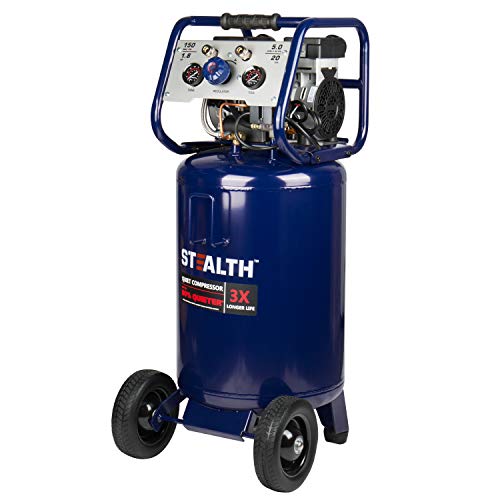
Stealth 20 Gallon Ultra Quiet Air Compressor
More Details On Our Top Picks
Daily tire maintenance gets easier here, because the NOCO Air AL5 stays cordless and keeps the setup light. The digital gauge and auto-shutoff help you top off a car, SUV, or bike without babysitting the screen, and the USB-C charging fits modern grab-and-go routines.
The trade-off is simple, it’s built for inflation rather than shop work, so it won’t replace a tank compressor. For commuters, family vehicles, and anyone who hates dragging out a bulky unit for a small job, that restraint makes sense.
Strong Points
- Cordless design keeps it easy to store in a trunk or garage drawer.
- Digital gauge gives you a clear readout during routine tire checks.
- Auto-shutoff reduces the chance of overfilling once the target PSI is reached.
- USB-C charging makes the power routine feel current and tidy.
Things To Consider
- It handles inflation tasks, not air-tool duty.
- You’ll still want a charged battery before a roadside stop.
Feature Card
Who It Suits Best
You’re in the right zone here if you want a compact inflator for commuting, household tire checks, and quick garage jobs.
A Better Fit Elsewhere
Klutch 20-Gallon Air Compressor suits you better for repeated air-tool use or shop tasks that need a tanked setup.
This DEWALT model leans into trim work, where a compact footprint and quieter operation matter more than brute tank size. The 200-PSI max gives you a strong pressure ceiling, and that makes it a neat fit for finish carpentry in a home garage or small workshop.
The honest read is that it’s not the pick for long-running, high-demand air tools. Still, for nailers, trim installation, and jobs where noise can get old fast, it feels like a sensible step up from a tiny inflator such as the NOCO.
What We Like
- Quiet operation suits garages where noise travels indoors.
- 200-PSI max gives you extra pressure headroom for trim tasks.
- Compact styling helps it tuck away more easily than larger tank units.
- Well matched to finish work, which often values steadier bursts over long runtime.
Worth Noting
- It is more specialized than the larger Klutch models below.
- Heavier continuous air demand can push it outside its comfort zone.
- Quiet designs still need clear space and basic maintenance around the intake path.
Details At A Glance
Who Should Grab It
You’re the right fit for this one if your garage work is mostly trim, nailers, and other finish tasks.
Swap It Out When
Stealth 20 Gallon Ultra Quiet Air Compressor suits you better for a garage that needs more tank volume and broader tool coverage.
This Stark USA unit lands in the useful middle ground, with a 10-gallon tank that gives you more breathing room than a tiny inflator and less bulk than the bigger Klutch machines. The horizontal layout suits garages that can spare floor width more easily than height, and adjustable pressure helps you match common home tasks.
In a DIY garage, that balance is often the whole point. You get enough reserve for home projects, light nailing, and practical air use without moving into the heavier shop-machine zone.
Highlights
- 10-gallon capacity offers a helpful middle step for home garage jobs.
- Horizontal form fits low shelving or open floor space well.
- Adjustable pressure gives you more control across different tasks.
- Quiet-leaning operation is easier to live with near the house.
Areas To Watch
- It still sits below the larger Klutch tanks for reserve air.
- Horizontal storage can feel wider in tighter garages.
Core Details
The Right Fit
You’ll like this best for home projects, light garage work, and a setup that feels more versatile than a compact inflator.
Another Choice May Suit
Klutch 29-Gallon Air Compressor suits you better for longer nailing sessions and paint work that benefits from more storage.
This one steps outside a standard compressor role and speaks more to garage comfort in hot weather. The 18,000 BTU capacity, 19 SEER2 rating, and inverter compressor setup point toward a more serious cooling install for larger spaces, including garages that feel like ovens in summer.
The trade-off is obvious, it’s a fixed cooling system, not a portable air tool machine. For a garage that doubles as a workshop, studio, or hobby space, the included installation kit and pre-charged condenser make the setup story more complete than a basic portable unit.
Reasons To Buy
- Cooling coverage stretches up to 1250 square feet.
- Inverter compressor design helps the system modulate output more smoothly.
- Pre-charged condenser reduces some of the install friction.
- Included installation kit is useful for a garage buildout.
Small Caveats
- It needs a 230V setup, so compatibility matters.
- This is a room cooling system, not a shop compressor.
- Installation planning matters more here than with the portable picks.
Spec Overview
Built With In Mind
You’re in the right lane for a large garage, workshop, or bonus space that needs more than a fan and a window unit.
Where A Sibling Pick Shines
ZAFRO Smart Inverter Portable Air Conditioner suits you better for flexible room cooling without a fixed garage install.
For garage work that asks more from a compressor, the Klutch 29-gallon format gives you a much stronger reserve than the smaller picks above. The vertical tank helps save floor space, while the oil-free build reduces one layer of routine upkeep you’d otherwise need to track.
That mix fits nailing, painting, and general shop use without feeling oversized for a normal home bay. Large wheels help the unit move more easily, and the tank drain is a practical touch that matters more than most spec sheets admit.
Upsides
- 29-gallon storage gives you more buffer for repeated air use.
- Vertical shape is easier to place in a crowded garage.
- Oil-free design keeps maintenance simpler than oil-lubed units.
- Large wheels improve day-to-day repositioning around the shop.
- Useful for nailing and painting, two common garage tasks.
Points To Note
- It takes up more overall presence than the 10-gallon Stark USA unit.
- Garage drainage and tank upkeep still deserve attention.
- The size feels more committed than a casual inflator setup.
Technical Sheet
Who Will Love This
This belongs in a garage where you want real storage capacity for repeated tool work and a vertical footprint that stays manageable.
Look Elsewhere When
Klutch 20-Gallon Air Compressor makes more sense for you if you want a slightly smaller footprint with a similar garage-first feel.
The Klutch 20-gallon model trims the footprint a bit while keeping the vertical tank style that works so well in garages. A 75% duty cycle is a helpful sign for longer stretches of use, because duty cycle means how much time a compressor can run in a set period before it needs a break.
That makes this one a smart middle ground for shop air tools, small projects, and homeowners who want more capability than a compact unit without jumping straight to the bigger 29-gallon frame. The honest read is that it sits in a very practical spot.
Bright Spots
- 20 gallons is a comfortable size for mixed garage use.
- Vertical layout helps it stay less intrusive on the floor.
- 75% duty cycle supports longer job sessions with fewer pauses.
- Easy-access drain is useful for routine tank care.
Room For Improvement
- It delivers less reserve than the Klutch 29-gallon option.
- Air-demanding tools still benefit from some patience between cycles.
Feature Rundown
Best Suited To
You’re the right fit here for a garage that mixes light shop work, tire service, and occasional air-tool use.
Reach For A Different Pick When
Stealth 20 Gallon Ultra Quiet Air Compressor is the stronger match for you if quiet operation matters more than a plain utility build.
The VEVOR 6.3-gallon compressor keeps things modest in size, which helps in a cramped garage where every square foot matters. With 2 HP, 116 PSI max pressure, and 3.35 CFM at 90 PSI, it lands in the light-duty zone for inflation, spray painting, auto repair odds and ends, and woodwork nailing.
Compared with the bigger Klutch tanks, this one asks less of your floor space and less from your wallet-minded plan. That said, the smaller tank means you’ll feel its limits sooner on longer-running tools, so it works best as a compact utility unit.
Best Bits
- 6.3-gallon tank keeps the footprint relatively small.
- Useful pressure range for common garage inflation tasks.
- Oil-free tank design simplifies routine care.
- Versatile enough for a spread of light projects.
Minor Gripes
- It is the least reserved tanked compressor in this group.
- Longer jobs can cycle more often than with larger Klutch models.
- Noise expectations still matter in a close-in garage.
Feature Snapshot
Whose Shelf It Belongs On
This is a fit for compact garages, hobby corners, and occasional use more than constant air-tool duty.
Skip It When
Klutch 29-Gallon Air Compressor makes more sense if you need a larger reservoir for repeated work sessions.
The ZAFRO unit is about portable cooling, not compressed air, and that matters because some garages need temperature control more than another tank on the floor. Dual-hose design, smart inverter behavior, app control, and remote operation make it a flexible choice for workshops that also serve as hangout or project spaces.
It’s not the same kind of tool as the compressor picks above, but it fills a real garage comfort need. The low-noise claim is especially relevant for attached garages, where you may want less sound carrying through the house.
Strong Points
- Dual-hose setup supports a more considered cooling approach.
- App and remote controls make day-to-day use easier.
- Drainage-free cooling reduces one maintenance task you’d rather skip.
- Quiet operation suits garages used near living areas.
Softer Spots
- It is a cooling appliance, not an air compressor.
- Portable AC units still need venting and setup planning.
- Space and hose routing matter a lot in smaller garages.
Core Details
Who Should Grab It
This fits you best if your garage needs cooler air, flexible placement, and app-based control.
Another Choice May Suit
Nexaro 18000BTU Mini Split Air Conditioner Heat Pump suits you better for a fixed large-space install.
Hose management rarely gets attention until a line drapes across the floor and gets in the way. AIRZILLA solves that with a steel reel, a dual-arm support layout, and 65 feet of 3/8-inch hybrid polymer hose, which is a flexible hose blend meant to balance movement and durability.
For garage users who already own a compressor, this is the kind of accessory that makes the whole setup feel cleaner and less tangled. The quick coupler helps keep the workflow moving, though wall mounting does ask for a little planning up front.
Positives
- Retractable spool helps keep hose clutter under control.
- Steel frame gives it a more solid workshop feel.
- 65-foot hose reaches around a garage more easily.
- Hybrid polymer hose aims for a useful blend of flexibility and toughness.
Areas To Watch
- Installation matters, since this is a mounted reel.
- It improves hose handling, but it does not produce air on its own.
Details At A Glance
Made For
This is a smart garage add-on for anyone who already has a compressor and wants tidier hose storage.
Where Shoppers Go Wrong
Stealth 20 Gallon Ultra Quiet Air Compressor is the better first stop if you still need the air source itself.
Stealth leans into a quieter garage experience without giving up the tank size many home projects need. The 20-gallon reservoir, 150-PSI peak pressure, and 5.5 CFM at 40 PSI / 5 CFM at 90 PSI give you a clearer path for tools that need steadier air than a small inflator can offer.
The 68-decibel rating is the detail that stands out most in a busy home setting, because lower noise matters when the garage sits close to bedrooms or a living room. It’s not the tiniest unit here, but for a workhorse that tries to stay less intrusive, it hits a useful balance.
What We Like
- Quiet operation helps preserve sanity in attached garages.
- 20-gallon tank gives you a workable reserve for shop tasks.
- Oil-free build reduces routine maintenance demands.
- Wheels make it easier to shift around a garage bay.
- Good output numbers suit a range of common air tools.
Room For Improvement
- It still occupies real floor space, even with wheels.
- Big jobs can expose the difference between this and the 29-gallon Klutch.
Quick Facts
Best Suited To
You’re in a good place with this model if you want garage-ready capacity and less noise than many standard compressors.
Skip It When
NOCO Air AL5 Cordless Tire Inflator fits you better for compact storage and simple tire upkeep.
How To Choose The Right Garage Air Compressors
Start With The Work You Actually Do
Garage compressors are easiest to sort out once you match them to the job list in your own space. Tire inflation, trim nailing, painting, and air-tool work each ask for different pressure, tank reserve, and noise tolerance.
A cordless inflator like the NOCO Air AL5 makes sense for quick vehicle upkeep, while a tanked unit such as the Klutch 29-Gallon model suits repeated shop use. That difference matters more than brand names or flashy extras.
Tank Size And Air Delivery Matter Together
Tank size tells you how much stored air you have, while airflow figures such as CFM, or cubic feet per minute, show how quickly the compressor can keep up. Bigger numbers usually help with longer-running tools, but they also bring more size and weight.
The Stark USA 10-gallon unit shows the middle path, while the Stealth 20-gallon compressor leans toward steadier shop work. For short bursts, small tanks feel fine, but for sanding, nailing, or painting, reserve starts to matter fast.
Noise And Placement Can Change The Whole Experience
Quiet operation matters more than many garage shoppers expect, especially in attached homes or shared spaces. The DEWALT trim compressor and the Stealth 20-gallon unit show how a calmer sound profile can make regular use less tiring.
Placement matters too, because vertical tanks save floor space and retractable hose gear helps keep walkways clear. AIRZILLA’s reel is a good reminder that the compressor is only part of the setup, and tidy storage often makes the whole bay easier to use.
Choose Accessories And Power Fit First
Voltage, hose reach, and install needs can shape the final choice as much as compressor power. The Nexaro mini split asks for a 230V setup, while the ZAFRO portable AC offers a different path for garage cooling without a fixed mount.
For air tools, a reliable coupler, easy tank drain, and wheels can save time every week. Those details do not sound glamorous, but they’re the part you notice after the box is long gone.
A Quick Reality Check Before You Decide
Common Shopping Slip Ups
It’s easy to pick too little compressor for the work you really do. A small inflator can be perfect for tires, but it will feel out of place once you start running nailers or spray gear.
Another mistake is ignoring size and placement. A vertical tank can save space, while a hose reel like AIRZILLA’s can keep the floor safer and less cluttered.
When Paying More Pays Off
Higher-tier compressors often cost more because they offer stronger airflow, larger tanks, quieter operation, or better control over long sessions. The Stealth and Klutch models show where that extra money usually goes, namely reserve air and easier garage use.
You feel the difference most in busy shops, attached garages, and any space where the tool stays out for more than a quick top-off. The upgrade matters less for occasional tire checks, where a compact unit already does the job.
Frequently Asked Questions
What size compressor works for a home garage?
A 20-gallon or 29-gallon tank covers a lot of common garage use without moving into oversized territory. Smaller inflators still make sense for tire care and emergency top-offs.
Is a quiet compressor worth it?
Quiet operation matters most in attached garages and shared walls, because sound carries farther than you expect. The comfort gain shows up every time you use the tool.
What does CFM mean?
CFM stands for cubic feet per minute, which is a measure of airflow. Higher airflow helps compressors keep up with air tools that need steady supply.
Do oil-free compressors need less upkeep?
Oil-free designs usually simplify routine care because you do not manage oil changes. You still need basic cleaning, drainage, and storage attention.
Can a portable air conditioner replace a compressor?
No, those are different machines with different jobs. Portable AC units handle cooling, while compressors power inflation and air tools.
Final Thoughts
Your best garage setup depends on the way you actually work, not on the biggest tank or the loudest power claims. A compact inflator, a quiet 20-gallon unit, or a fuller shop compressor each solves a different problem, and the right match makes the garage feel calmer and more useful. Start with your main task, then choose the size and noise level that fit your space. That’s usually the cleanest path to a tool you’ll be glad to keep around.