Choosing an air compressor for nail guns is really about matching airflow, tank size, and noise to the way you work. A trim carpenter needs a different setup than someone framing a small shed, and a quiet basement compressor matters a lot more in a townhouse than in a detached garage.
This roundup focuses on practical fit, from cordless brad nailers to larger tank compressors that can keep up with longer sessions. You’ll see where a compact unit makes sense, where a bigger tank earns its keep, and where the trade-offs start to show.
The Shortlist At A Glance

DEWALT Air Compressor for Trim 200-PSI Max

CRAFTSMAN V20 Brad Nailer 18GA Cordless
ONEAND 1 GAL. 120 PSI Portable 18V Horizontal Air Compressor

Klutch 29-Gallon Air Compressor 2.5 HP 175 PSI

DOTOOL Pneumatic Brad Nailer 18 Gauge 2-in-1
Pneumatic Brad Nailer 18 Gauge 2-in-1

VEVOR Air Compressor 1 Gallon Steel Tank
VEVOR 4.8 Gallon Air Compressor 1.2HP 116PSI

VEVOR Air Compressor 2 Gallon Steel Tank

DEWALT Air Compressor 225-PSI Max 4-1/2 Gallon
Trim work usually asks for steady pressure, not brute force, and this DEWALT setup leans into that. The 200-PSI max gives you more headroom than a tiny pancake unit, which matters during longer finish sessions or when you’re moving from baseboards to casing without stopping much.
The quiet-operation angle also matters in a home garage or basement workshop, where a loud compressor can take over the whole space. Compared with the smaller portable picks below, this one feels aimed at you if finish carpentry is a regular part of the week, not just a once-a-season project.
Strong Points
- Higher max pressure gives you more working room for trim and finish tasks.
- Quieter operation makes early-morning or indoor work feel less disruptive.
- The portable format keeps it practical for a garage, basement, or job box.
- Useful headroom helps the tool stay comfortable during longer nail runs.
Room For Improvement
- It is tuned for finish work, so heavy framing jobs are not its lane.
- Portability helps, but it still takes up real storage space.
- The quieter profile usually comes with a more modest airflow experience than larger shop units.
Core Details
Who It Suits Best
Finish carpenters, home remodelers, and careful DIYers who want more pressure reserve than a basic hobby unit.
A Better Fit Elsewhere
Klutch 29-Gallon Air Compressor suits you better for longer, higher-volume garage work and multi-tool use.
Hose-free brad nailing changes the feel of a small project fast, and this CRAFTSMAN model is built around that convenience. Its cordless motor is rated to drive up to 420 nails per charge, which makes it a neat fit for punch-list work, furniture repair, and trim touch-ups around the house.
The trade-off is simple, you give up the endless runtime of a pneumatic gun in exchange for easy movement and less setup. Compared with the compressor-based picks, this is the cleaner choice for quick jobs where dragging out hose, fittings, and a tank would feel like too much.
What We Like
- Cordless format cuts the cord-and-hose setup entirely.
- 420-nail capacity per charge supports a solid stretch of small projects.
- Lightweight job flow works well for overhead trim and tight corners.
- Great for quick fixes where speed matters more than long runtime.
Things To Consider
- It is a bare tool, so you still need a battery platform.
- Heavy continuous fastening belongs more to a compressor and pneumatic nailer.
- Battery care matters, especially for occasional users who let tools sit between projects.
Feature Snapshot
Who Will Love This
DIYers who want a brad nailer for small, mobile jobs and already have a compatible battery setup.
Skip It When
DEWALT Air Compressor for Trim 200-PSI Max is the smarter path for you if your fastening comes from an air hose and you want a wider pneumatic setup.
A 1-gallon tank keeps this Ryobi-branded portable compressor on the compact side, and that matters more than the nameplate at first glance. The 120 PSI ceiling and 0.5 CFM at 90 PSI point to short bursts, so this is better for quick brad work, inflation, and light maintenance than for long tool runs.
You’ll appreciate the smaller footprint in a cramped garage, a truck bed, or a shelf near the workbench. Compared with the DEWALT trim compressor, this one gives you less overhead, but it also asks for less storage and feels easier to carry from place to place.
Highlights
- Small 1-gallon tank keeps the footprint easy to manage.
- Portable horizontal shape suits job-site transport and quick storage.
- Useful for light fastening, inflation, and short-duty work.
- Lower-size design is easier to tuck away in a tight garage.
Worth Noting
- 0.5 CFM at 90 PSI is modest, so longer nail runs will feel limited.
- The small tank suits bursts, not repeated high-demand use.
- You’ll likely want to plan maintenance and drainage around compact access points.
Details At A Glance
Best Suited To
Weekend fixers and mobile users who value compact storage over sustained output.
Look Elsewhere When
Klutch 29-Gallon Air Compressor fits you better for longer tool sessions where tank reserve matters more than portability.
This Klutch unit shifts the conversation from compact convenience to sustained shop use. The 29-gallon vertical tank, 5.1 CFM at 90 PSI, and 175 PSI ceiling give you the kind of reserve that makes longer nailing sessions, painting, and mixed garage tasks feel less stop-and-start.
The oil-free setup lowers routine upkeep, and the large wheels help a tall compressor move more naturally than a fixed shop unit. Compared with the smaller DEWALT and VEVOR picks, this one suits you better when portability still matters but output is doing the heavy lifting.
Upsides
- 29-gallon tank supports longer work before pressure recovery becomes a concern.
- 5.1 CFM at 90 PSI is well matched to more demanding air tools.
- Oil-free design removes one regular maintenance task from the routine.
- Large wheels make a bigger compressor easier to reposition in a shop.
- Vertical frame saves floor space for a tank this size.
Small Caveats
- Its size is a real commitment, so small sheds and crowded garages may feel tight.
- Vertical storage helps, yet the unit still needs a clear parking spot.
- Tank drainage matters on any larger compressor, so access to the drain valve is worth checking.
Spec Overview
Whose Shelf It Belongs On
Home shop owners and semi-regular remodelers who want one compressor to cover nailing, painting, and broader garage use.
Reach For A Different Pick When
VEVOR 4.8 Gallon Air Compressor suits you better for a smaller, quieter setup that still handles light nailing and inflation.
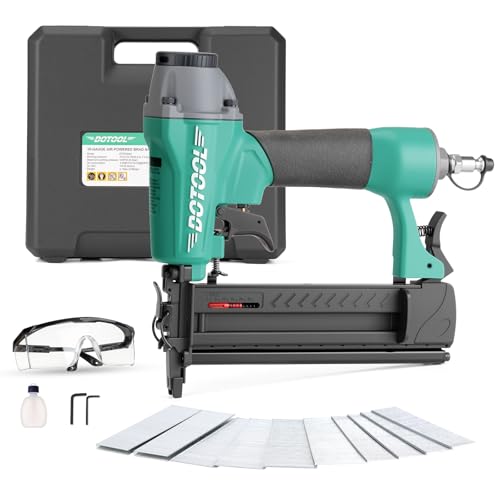
This DOTOOL option stands out because it does two jobs with one body, taking both 18-gauge brad nails and 1-5/8-inch crown staples. That kind of versatility is handy in a garage project or small woodworking shop where you want fewer tools sitting on the bench.
The included case and 1,000 nails help you get organized from the start, which is nice for someone who wants a practical setup rather than a bare box. Compared with the cordless CRAFTSMAN, this one ties you back to air, but it gives you broader fastening types once the compressor is already in play.
Best Bits
- Dual-function design handles both brads and crown staples.
- 18-gauge format suits light trim, craft work, and woodworking details.
- Carrying case keeps storage cleaner and transport simpler.
- Starter fastener supply helps you begin without extra parts hunting.
Areas To Watch
- It still needs an air compressor, hose, and fittings to do anything.
- Dual-purpose tools can feel like a compromise for very frequent, specialized use.
- Keeping the nose area clean matters, especially with staple and nail switching.
Feature Card
The Right Fit
DIY woodworkers and trim hobbyists who want one pneumatic tool for two common fastening jobs.
Another Choice May Suit
CRAFTSMAN V20 Brad Nailer 18GA Cordless fits you better when hose-free movement matters more than dual fastener support.
The shape of this Dotool nailer is very similar to the pick above, but the product page frames it as a straightforward pneumatic workhorse for carpentry and DIY. You still get the same brad-and-staple flexibility, so it makes sense for trim repair, cabinet touch-ups, and small workshop jobs.
Because it is another air-powered tool, the compressor and hose setup still define the experience. That means it pairs nicely with a unit like the DEWALT trim compressor, while the cordless CRAFTSMAN stays the easier route for fully mobile fastening.
Positives
- Two-in-one fastening keeps the tool useful across more project types.
- 18-gauge brads suit light finish work without feeling oversized.
- Supplied case helps with storage and transport between jobs.
- Starter nails are handy for getting started on small repairs.
Points To Note
- Like any pneumatic nailer, it depends on a compressor and hose.
- Tool switching between nails and staples may feel slower than a dedicated tool for one task.
- Routine cleaning around the magazine and nose area helps keep operation smoother.
At A Glance
Built With In Mind
Entry-level carpentry, hobby repairs, and trim work where you want a pneumatic tool without extra fuss.
Swap It Out When
VEVOR 4.8 Gallon Air Compressor is the better companion for you if you need the air source as quiet as practical in a small workshop.
A 1-gallon steel tank keeps this VEVOR compressor compact, but the steel construction gives it a more solid feel than a thin plastic shell would. The 78dB noise rating also makes it easier to live with in a garage or basement, especially for short nailing or inflation tasks.
The 1.5 CFM at 90 PSI figure tells you where it sits: useful for light work, not a long production day. Compared with the DEWALT trim compressor, this one feels more like a quiet helper for occasional shop duty, while the Klutch is built for a much busier pace.
Bright Spots
- Steel tank construction gives the compressor a sturdy, practical feel.
- 1-gallon size stays easy to move and store.
- 78dB noise level is easier to live with in shared spaces.
- Oil-free design keeps routine maintenance simpler.
- Good fit for light nailing, tire inflation, and small household jobs.
Softer Spots
- The small tank limits how long you can stay in a heavy nailing rhythm.
- 1.5 CFM at 90 PSI is fine for light duty, but it will not feel roomy.
- Like most compact compressors, drainage and storage access matter in tight spots.
Technical Sheet
Who Should Grab It
You want a compact compressor for light nailing, inflation, and general garage upkeep.
Where A Sibling Pick Shines
VEVOR 4.8 Gallon Air Compressor suits you better when you want a little more tank reserve without jumping to a huge shop unit.
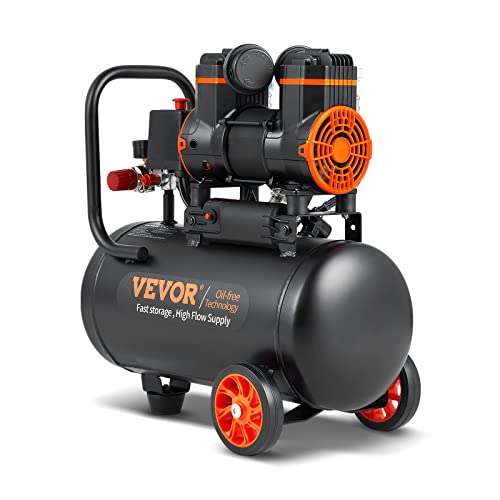
This 4.8-gallon VEVOR lands in a nice middle zone, bigger than the 1-gallon option but still easier to live with than the Klutch shop tank. The 70 dB noise rating is a real plus for home use, and the 2.2 CFM at 90 PSI gives you a more comfortable buffer for light nailing and spray work.
The oil-free design keeps upkeep straightforward, which suits a garage compressor that may sit between weekend projects. You may find the 116 PSI ceiling enough for everyday shop tasks, while the smaller VEVOR above feels more portable and the DEWALT trim unit still wins on focused finish-job fit.
Reasons To Buy
- 4.8-gallon tank offers a practical middle ground for home shops.
- 70 dB rating keeps the machine easier to tolerate nearby.
- 2.2 CFM at 90 PSI supports a steadier pace than tiny units.
- Oil-free setup keeps routine care simpler.
- Good balance for nailing, inflation, and light spray tasks.
Minor Gripes
- It still takes more storage room than a true compact compressor.
- 116 PSI is useful, but it leaves less top-end headroom than the 120 PSI and 175 PSI models in this list.
- Larger tanks usually ask for a bit more attention when draining and moving them around.
Feature Rundown
Made For
Home workshop users who want a quieter compressor with enough reserve for light nailing and upkeep tasks.
Consider Something Else When
Klutch 29-Gallon Air Compressor fits you better for longer sessions and more demanding air-tool work.
The 2-gallon steel tank puts this VEVOR between the tiniest portable compressors and the more shop-oriented mid-size options. Its 2.1 CFM at 90 PSI and 120 PSI max suggest a useful middle lane for brad nailing, small inflation jobs, and general garage maintenance.
At 81dB, it is not the quietest unit in this list, but it still sits in a range that many home users can manage. Compared with the 1-gallon VEVOR, you gain more air reserve, and compared with the Klutch, you give up a lot of extended-work stamina.
Standout Traits
- 2-gallon steel tank gives you more reserve than a tiny portable unit.
- 120 PSI max supports a broader set of light air-tool tasks.
- 2.1 CFM at 90 PSI offers a practical middle-ground output level.
- Oil-free design keeps day-to-day upkeep simpler.
- Works well for home garages that need one compressor for several chores.
Areas To Watch
- 81dB is workable, but it is not the quietest machine here.
- It still sits well below the higher-capacity shop units for long sessions.
- Steel tank weight and drainage access matter more as size moves up.
Quick Facts
Right Fit For
You want a middle-size compressor for home use without jumping into a bulky workshop machine.
Where A Sibling Pick Shines
VEVOR 4.8 Gallon Air Compressor is the better fit for you if quieter operation matters more than maximum portability.
Among the portable compressors in this roundup, this DEWALT stands out for pressure headroom and mobility together. The 225-PSI maximum and 4-1/2-gallon tank make it easier to keep a steady pace for trim nailing, finish work, and other jobs that benefit from extra reserve.
The hand-carry format with wheels is a smart touch for a machine this capable, especially in a garage where you still need to move around furniture, ladders, or stored gear. Compared with the smaller DEWALT trim compressor, this one suits heavier use, though it still stays far more movable than the Klutch shop tank.
Positives
- 225-PSI max gives you generous pressure headroom.
- 4-1/2-gallon tank offers a strong balance of reserve and portability.
- Wheels help a more capable compressor move more easily.
- Well matched to trim, finish, and other air-tool tasks that stretch longer than a tiny tank can handle.
- Useful middle point for someone who wants power without a full stationary setup.
Honest Caveats
- It is still a sizeable portable unit, so storage space matters.
- Higher pressure does not remove the need to drain and maintain the tank regularly.
- For very quiet home use, the smaller VEVOR compressors may feel easier to live with.
Core Details
Built With In Mind
Trim carpenters and serious home remodelers who want a portable compressor with more pressure reserve than most small units.
A Better Fit Elsewhere
Klutch 29-Gallon Air Compressor suits you better for longer workshop sessions where tank capacity matters more than portability.
How To Choose The Right Air Compressor For Nail Guns
Match The Compressor To The Nailer’s Pace
The first number to pay attention to is airflow, usually shown as CFM, which stands for cubic feet per minute. That figure tells you how much air the compressor can deliver over time, and it matters because a brad nailer can sip air while a busier tool setup drains the tank faster.
For trim work and light finish nailing, modest output is often enough. For longer sessions, a compressor with more reserve keeps the tool from feeling starved between shots, which is why the Klutch and larger DEWALT unit suit heavier use better than the compact 1-gallon options.
Tank Size Changes The Feel More Than You’d Expect
Tank size doesn’t just affect runtime, it changes how often the motor kicks back on. A small tank is easy to carry and store, but it can feel rushed during continuous work, while a larger tank smooths out the rhythm in a workshop or garage.
That trade-off is plain in this list. The 1-gallon VEVOR and Ryobi-style portable units fit quick jobs, while the 29-gallon Klutch feels like a different class entirely for longer nailing, painting, and mixed air-tool use.
Noise, Portability, And Placement Matter At Home
For basement shops, shared garages, and townhouse projects, noise can matter almost as much as pressure. A quieter compressor makes it easier to work without turning the whole house into a workshop soundtrack, and that’s where the VEVOR 70 dB and 78 dB models earn attention.
Portability matters too, but in a practical way. Wheels, vertical tanks, and smaller footprints help more than flashy extras, especially once you need to store the unit beside lumber, cords, and toolboxes.
Know The Difference Between Air Source And Fastening Tool
An air compressor supplies compressed air, while a pneumatic nailer uses that air to drive fasteners. That distinction sounds obvious, yet many small projects need both pieces to work smoothly, and a mismatch shows up fast when the compressor cannot keep pace.
Cordless brad nailers remove the hose entirely, which is handy for quick trim repairs or furniture touch-ups. Pneumatic nailers still make sense for anyone who already owns an air setup, because they keep the tool lighter and the runtime tied to the compressor instead of a battery pack.
What To Weigh Before You Click Through
Wrong Turns To Avoid
A common mistake is buying by tank size alone. A bigger tank helps, but airflow and intended use matter just as much, and a large tank with weak output can still feel sluggish on a busy nailer.
Another easy miss is ignoring space and storage. A 29-gallon vertical compressor sounds useful until you have to park it in a tight garage corner beside bikes and bins.
The Upgrade Payoff
Higher-tier compressors usually cost more because they bring better airflow, larger tanks, and more usable pressure reserve. That extra capacity shows up as less waiting, smoother recovery, and more comfort during repeated fastening.
The upgrade makes sense for remodelers, woodworkers, and anyone running several air tools from the same machine. For occasional trim fixes or small weekend tasks, a compact model often keeps the setup simpler and easier to live with.
Frequently Asked Questions
What size air compressor works best for brad nailers?
A compact compressor with enough CFM for short bursts usually covers brad nailing well. Bigger tanks help when you want longer stretches between recovery cycles.
Is a cordless brad nailer better than a pneumatic one?
Cordless models are easier to carry and faster to set up. Pneumatic versions usually make more sense for longer sessions and for anyone who already has an air compressor.
How much noise matters in a home workshop?
Quite a bit, especially in a garage attached to living space or a basement shop. Lower noise levels can make long sessions feel much less tiring.
Do you need a large tank for nail guns?
Not always, because light finish work can run fine on smaller tanks. Larger tanks become more helpful when you want fewer pauses and more consistent recovery.
What makes one compressor better for trim than another?
Pressure reserve, airflow, and noise level all play a part. Trim work usually benefits from a compressor that feels steady, manageable, and not overly loud.
Final Verdict
The right air compressor for nail guns depends on how often you work and how much room you have to store the machine. For trim work, the DEWALT models bring strong pressure reserve, while the smaller VEVOR compressors keep things simpler for light home use. The Klutch makes the most sense for bigger garage projects, and the CRAFTSMAN cordless nailer is a smart escape from hoses altogether. Match the tool to your pace, not the other way around, and you’ll end up with a setup that feels easy to live with.