Small apartments ask more from a robot vacuum than bigger homes do. You need a slim body, enough suction for crumbs and pet hair, and a layout that won’t get stuck under low furniture every other day. This roundup focuses on compact picks that make sense for tight floor plans, mixed floors, and busy routines.
You’ll also see where each model gives you convenience, and where the trade-offs show up in real rooms. That makes it easier to match the machine to your place, not just to a spec sheet.
Quick Shortlist For Tight Floor Plans
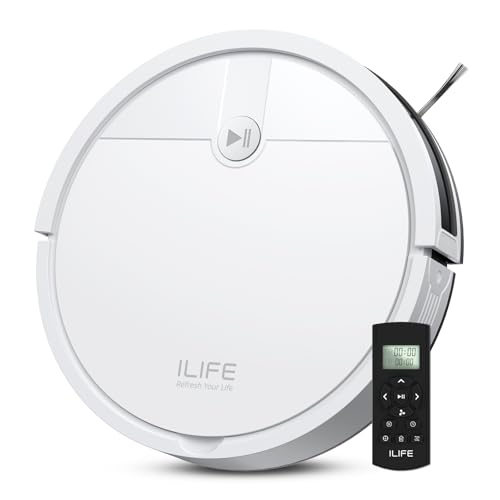
ILIFE V2 Robot Vacuum Cleaner, Tangle-Free Suction, Slim, Self-Charging

iRobot Roomba i4 Self-Emptying Vacuum Cleaning Robot
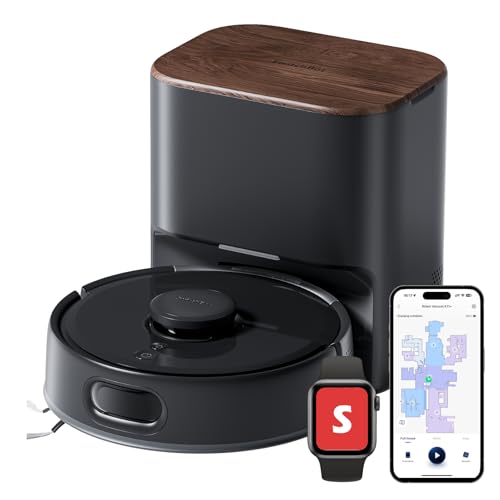
SwitchBot K11+ Robot Vacuum Mop with Matter, 6000Pa Suction, Hands-Free Self-Emptying
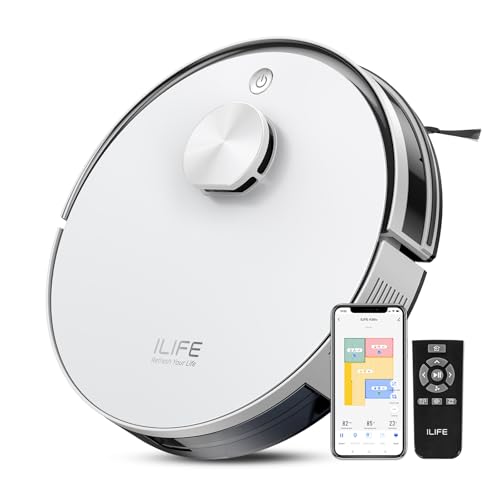
ILIFE A30s Robot Vacuum, 10000Pa Max Suction, LiDAR Navigation

Robot Vacuum and Mop for Pet Hair, 2-in-1 Robot Vacuum Cleaner, 2.87” Slim Design

iRobot Roomba i1 Vacuum Cleaning Robot

Robot Vacuum and Mop Combo, 90-Day Self-Emptying, 10,000 Pa Suction, dToF and Laser Navigation
MANVN Robot Vacuum and Mop Combo for Pet Hair, 2.87” Ultra-Slim, Self-Charging
More Details On Our Top Picks
For a small apartment with hard floors, the ILIFE V2 keeps the focus on the basics that matter most. Its slim build slides under low furniture more easily than bulkier robots, and the tangle-free suction setup makes sense in homes where pet hair collects fast.
The honest trade-off is that this kind of straightforward bot suits simple layouts better than maze-like floor plans. You get a self-charging robot with a long runtime claim of 120 minutes, which helps in compact spaces, though you still get the most out of it with clear floors and light daily messes.
Strong Points
- Slim shape helps it reach beneath couches and bed frames.
- Tangle-resistant suction is a practical fit for pet hair.
- Self-charging keeps daily upkeep simple in a small home.
- The 120-minute runtime gives you room for longer cleaning cycles.
Things To Consider
- Basic navigation works best in straightforward room layouts.
- You may need to clear cords and clutter often.
- Pet-hair homes still benefit from regular dustbin attention.
Feature Snapshot
Who It Suits Best
Apartment dwellers with mostly hard floors and light pet hair will get the most from this one.
A Better Fit Elsewhere
ILIFE A30s Robot Vacuum, 10000Pa Max Suction, LiDAR Navigation suits you better when you want mapping and stronger control over room-by-room cleaning.
The Roomba i4 stands out for one reason that matters in a studio or one-bedroom, it aims to cut down on the day-to-day dustbin chore. Self-emptying means the robot can offload debris into a base, so your maintenance rhythm can feel lighter than with a standard single-bin design.
Because this is a renewed listing, the value question depends on how comfortable you are with a refurbished route. That trade-off can make sense for compact homes that need hands-off cleanup, but you’ll want to be comfortable with the condition details on the product page before you commit.
Positives
- Self-emptying support reduces how often you handle debris.
- The Roomba format suits routine floor care in smaller homes.
- Renewed pricing can make a higher-tier design easier to consider.
- Good fit for people who want less daily bin cleanup.
Minor Gripes
- Renewed condition may not suit everyone’s comfort level.
- The base takes more room than a simple dock.
- Routine filter and brush care still matters over time.
Core Details
Who Will Love This
You’ll get the most from this pick in a small place where minimizing daily maintenance matters more than having the smallest dock footprint.
Swap It Out When
SwitchBot K11+ Robot Vacuum Mop with Matter fits better for tech-heavy homes that want a lower-profile robot with broader smart-home support.
SwitchBot goes after the small-apartment brief from a different angle than the ILIFE V2, with stronger tech and a more connected feature set. The 3.6-inch ultra-slim body helps in tight spaces, while Matter support, a smart-home standard that helps devices work across ecosystems, makes it easier to slot into a broader setup.
The 6000Pa suction claim, where Pa means pascals and refers to suction force, should matter most in homes that pick up crumbs, dust, and pet hair every day. You also get LDS navigation, which uses laser-based room sensing, and that tends to help the robot move in a more deliberate pattern than random bump-and-go models.
What We Like
- Ultra-slim profile helps it fit under low furniture.
- Matter support makes it easier to use across smart-home systems.
- Self-emptying support cuts down on bin handling.
- LDS navigation is useful in tight, furniture-heavy layouts.
- Vacuum and mop combo helps with mixed floor messes.
Areas To Watch
- Docking gear adds more footprint than a basic charger.
- Mopping convenience still means you’ll manage pads and tank care.
- Tech depth can feel like overkill in very simple spaces.
Feature Rundown
Built With In Mind
This suits apartment owners who want a compact robot with more connected controls and a smarter path through the room.
Look Elsewhere When
ILIFE V2 Robot Vacuum Cleaner, Tangle-Free Suction fits you better when your main goal is a simpler, lower-commitment vacuum for plain hard-floor cleaning.
After the SwitchBot K11+, the ILIFE A30s feels like the stronger map-and-manage option for a small place that still has a few zones to handle separately. LiDAR, which stands for light detection and ranging, helps the robot build a room map, and no-go zone control gives you a way to keep it away from pet bowls, cable nests, or fragile corners.
The 10000Pa suction claim is the headline, and that level matters most in homes where dust, carpet edges, and pet hair show up in the same week. The 150-minute runtime also gives you room to clean a compact apartment in fewer interruptions, though the more advanced setup may feel like more than you need in a single open studio.
Bright Spots
- LiDAR mapping helps it stay more intentional in tight layouts.
- No-go zone control is useful around cords and pet bowls.
- 10000Pa suction is a strong fit for mixed debris.
- Long runtime helps with full-apartment cleanup passes.
- App, voice, and remote control give you control options.
Worth Noting
- Advanced features can be more than some small homes need.
- Mapping works best after a clear first run through the space.
- App-driven setup asks for a little more attention up front.
Technical Sheet
Perfect Match For
This fits compact homes with mixed flooring and a few areas you’d rather keep out of reach.
Where A Sibling Pick Shines
ILIFE V2 Robot Vacuum Cleaner, Tangle-Free Suction is the easier-going option for a simpler hard-floor setup with less mapping overhead.
This ZC WAS combo leans hard into a low-profile design, and that matters in apartments with tight chair legs, short sofas, and low shelves. At 2.87 inches tall, it has a better shot at reaching under furniture that blocks taller robots, and the 2-in-1 layout gives you vacuuming and mopping in one pass.
The trade-off is that a slimmer robot often asks you to stay on top of maintenance a little more closely. Wi-Fi, app, and voice control make it easier to start a clean from the couch, and the 3D obstacle avoidance is helpful in cluttered rooms, though you’ll still want to keep floor space tidy for smooth movement.
Upsides
- Very low height helps with narrow furniture clearance.
- Vacuum and mop pairing suits everyday apartment messes.
- Wi-Fi, app, and voice control add convenience.
- 3D obstacle avoidance helps in rooms with scattered items.
Softer Spots
- Low-profile builds can still need frequent bin care.
- Mopping means extra upkeep for pads or water handling.
- Cluttered floors can reduce how smoothly it moves.
Details At A Glance
Right Fit For
You’ll like this most in a small apartment with low furniture and a mix of hard floors and carpet.
Reach For A Different Pick When
SwitchBot K11+ Robot Vacuum Mop with Matter makes more sense for shoppers who want stronger smart-home compatibility and a more connected feature set.
Compared with the more feature-loaded picks above, the Roomba i1 keeps things straightforward, which can be a relief in a small apartment that just needs regular floor help. There’s less to think about here, and that often suits a one-bedroom where you want a cleaner floor without juggling a lot of modes or extras.
That simplicity is the point, though it also means you should expect a more basic experience than with the ILIFE A30s or the SwitchBot K11+. For everyday maintenance in a modest space, that trade-off can feel sensible, especially in homes where the robot’s main job is staying on top of crumbs and dust between bigger cleanups.
Best Bits
- Straightforward design is easy to live with.
- Fits routine cleaning in compact apartments.
- Less feature clutter can make daily use calmer.
Room For Improvement
- The simpler feature set leaves less room for fine control.
- You may want a more advanced pick for mapped cleaning.
- Basic robot upkeep still takes a little attention.
Core Details
Made For
This suits apartment dwellers who want a plain, dependable vacuum robot without a lot of setup fuss.
A Better Fit Elsewhere
ILIFE A30s Robot Vacuum, 10000Pa Max Suction fits better for anyone who wants mapping, stronger suction, and more control over where the robot goes.
The WSUANE combo is the kind of pick that makes sense once a small apartment starts to feel a little less simple, with carpet edges, pet hair, and mixed surfaces all in play. dToF, or direct time of flight, is a sensing method that helps measure distance, and paired with laser navigation and smart mapping, it gives the robot a more guided route through the home.
Its 90-day self-emptying claim is the big convenience play, while the 160-minute runtime gives it enough endurance for longer cleaning jobs. That said, the stronger setup and bigger dock are a better match for apartments with enough open floor space to justify the extra hardware, not tiny rooms where every inch counts.
Reasons To Buy
- Strong suction suits pet hair and daily grit.
- Long runtime helps with larger small-space layouts.
- Smart mapping and laser navigation support better route planning.
- Self-emptying support lowers frequent bin handling.
Small Caveats
- The dock system takes more room than a basic charger.
- Advanced features may feel excessive in a very simple studio.
- More moving parts usually mean more care over time.
Feature Card
Whose Shelf It Belongs On
This fits small homes that have a bit more floor area, more pet hair, and a stronger need for automation.
Another Choice May Suit
ILIFE V2 Robot Vacuum Cleaner, Tangle-Free Suction suits you better for a simpler hard-floor setup where you want less hardware around the apartment.
MANVN closes the list with a familiar small-space formula, a slim body, app control, and a vacuum-mop combo that can keep a compact floor plan from feeling cluttered with gear. At 2.87 inches high, it has the same low-clearance appeal as the ZC WAS model, though its self-charging design keeps the routine simple for everyday apartment use.
The 3D obstacle avoidance feature matters most in homes with chair legs, pet toys, and the usual apartment scatter. For shoppers who want a low-profile machine without moving into the more complex, dock-heavy tier, this lands in a practical middle ground.
Positives
- Very slim profile reaches under plenty of furniture.
- Vacuum and mop combo helps with mixed day-to-day mess.
- App and voice control add easy starting options.
- Self-charging keeps the dock routine uncomplicated.
Honest Caveats
- Low-height robots still need clear floor space to move well.
- Mop function adds cleaning tasks after each run.
- You may want a mapping model for more structured rooms.
Spec Overview
The Right Fit
This works well for compact homes where low furniture and mixed floor types are part of daily life.
Where Shoppers Go Wrong
SwitchBot K11+ Robot Vacuum Mop with Matter is the better match for anyone who wants more connected features and stronger smart-home support.
How To Choose The Right Robotic Vacuum For Small Apartments
Size And Clearance Come First
Small apartments punish bulky machines. A robot that is too tall can miss the underside of sofas, media stands, and radiators, so height matters as much as suction in a tight layout. The 2.87-inch MANVN and ZC WAS models show why slim builds get attention, because low furniture is common in compact homes.
Clearance also affects the dock. Self-emptying systems are convenient, but they need more floor space than a basic charging base, so a studio with one open wall may handle them better than a narrow galley layout. That trade-off is worth accepting only when you want less bin handling.
Mapping, Navigation, And Control Matter More Than Flash
LiDAR, which stands for light detection and ranging, gives a robot a more deliberate path through rooms. In a small apartment with chairs, cable runs, and a few cramped corners, that usually feels better than random movement. The ILIFE A30s and WSUANE models make a stronger case for this kind of control.
App control, voice control, and room mapping can be helpful, but they also add setup steps. You get more precision, though the honest read is that a very simple floor plan may not need all of it. A basic model such as the ILIFE V2 can be enough when your space is mostly open and easy to clean.
Suction And Floor Mix Shape The Real Outcome
Suction matters, but the right number depends on your surfaces. Hard floors with crumbs and pet hair may be fine with a simpler robot, while low-pile carpet and heavier debris benefit from stronger pickup and more guided navigation. That’s why the ILIFE A30s and WSUANE sit higher for mixed homes.
A mop function can help in apartments with kitchen splashes or tracked dust, yet it adds maintenance. You’ll manage pads or water systems after use, so the convenience only pays off when you actually want that extra step handled by the machine. For mostly dry cleaning, a vacuum-only option can stay easier to live with.
Maintenance Should Match Your Routine
Robot vacuums work best when the upkeep fits your habits. A self-emptying base, like the ones on the Roomba i4, SwitchBot K11+, and WSUANE, reduces daily bin care, but it also adds a larger base that needs its own spot. In a small apartment, that matters.
Brush care, filter cleaning, and floor decluttering still come with the territory. Pet hair, cord tangles, and scattered shoes are common trouble points in compact homes, so the easiest robot to live with is often the one that matches how tidy your rooms already stay.
What To Weigh Before You Buy
Common Shopping Slip Ups
Shoppers often focus on suction alone and ignore height, which is a mistake in small apartments. A strong motor does little good if the robot can’t reach under the furniture where dust gathers.
Another common miss is underestimating the dock. Self-emptying bases are helpful, but they claim space that might already be tight near a doorway or outlet.
What The Higher Tier Buys
Higher-priced models usually pay for mapping, smarter navigation, and more automation. You’re also more likely to get features like self-emptying, app control, and better obstacle sensing, which can matter in homes with pets or mixed flooring.
That upgrade makes sense when your apartment has enough furniture, clutter, or carpet to justify it. In a simple studio with hard floors, a basic vacuum robot can feel like a cleaner fit.
Frequently Asked Questions
What size robot vacuum works best in a small apartment?
A slim model around low furniture clearance works best because it can reach more of the floor you actually use. Low-profile designs also feel easier to store and live with in tight rooms.
Is self-emptying worth it in a small space?
It’s worth it when you want less daily bin care and have room for the dock. In very tight layouts, a standard charging base can be the easier choice.
Do mop combos make sense for apartments?
They do when you have hard floors and want help with light kitchen messes or everyday dust. The extra upkeep only makes sense when you’re comfortable handling mop pads or water care.
Is LiDAR better than basic navigation?
LiDAR usually handles compact, furniture-filled rooms more deliberately because it builds a map. Basic navigation can still work fine in simpler, more open layouts.
What should you prioritize before suction numbers?
Height, navigation, and dock size come first for most small apartments. Suction matters, but only after the robot can actually reach the places you want cleaned.