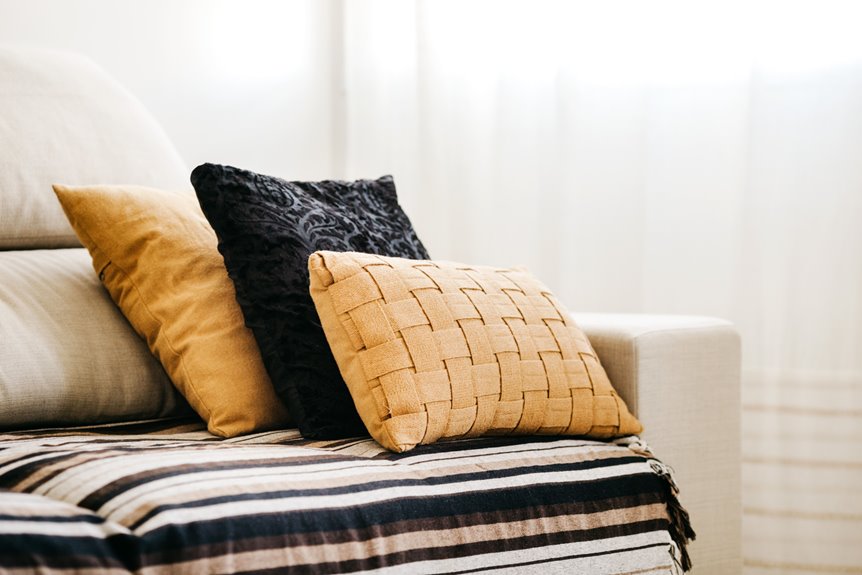
Cleaning couch cushions at home is simple with the right approach tailored to fabric and stain type. Start by checking the care label to follow manufacturer guidance. Vacuum seams and crevices to remove loose dirt before it becomes embedded. Test any cleaner on a concealed spot, then treat stains using methods suited to the material. Finish by drying cushions thoroughly so they stay fresh and undamaged.
Check the Care Label First
Before you touch the fabric or mix any cleaner, take a close look at the care label on your couch cushions. That small tag tells you how to protect the fabric and avoid mistakes that can leave you feeling stuck with a ruined cushion.
Initially, read manufacturer instructions for the exact cleaning code. An “S” means use solvent only, while a “W” allows water based care. Should you see “WS” or “X,” pause and follow the tag closely.
Next, check inconspicuously on a concealed spot so you can check for fading, shrinking, or water rings without anyone noticing. This quick step helps you stay confident and keeps your couch looking like part of your home, not a warning sign.
Gather the Right Cleaning Supplies
Now that you’ve checked the care label, pull together everything you’ll need so the cleaning job feels calm, not chaotic.
You’re not doing this alone, and your supplies can make the whole process feel easier. Grab a soft microfiber cloth, a gentle brush, a bowl, mild soap, and clean towels.
In case your cushions need microfiber methods, keep a spray bottle ready with water and a light cleaning mix.
For leather techniques, use a leather-safe cleaner and a dry cloth, since too much moisture can leave marks.
A white sponge can help with small spots, too. Keep everything close so you can move with confidence rather than stopping mid-task to hunt for supplies.
That little bit of prep helps you feel in control, and your couch will thank you.
Vacuum Thoroughly Before Cleaning
A quick vacuuming session can make a huge difference, and it often saves you from extra scrubbing later. You’ll feel more in control once you start with clean, open fabric instead of dust and crumbs. Use deep suction to lift loose dirt from every cushion surface, then slow down along seams and folds.
A crevice attachment helps you reach tight corners where little bits like to hide. Flip each cushion and vacuum both sides so you don’t miss anything. Should your cushions have buttons or stitched details, move the tool gently around them.
Take your time here, because a thorough pass now makes the rest of the job easier. Your couch will already look fresher, and you’ll be ready for the next step with confidence.
Spot Clean Stains Safely
Spot cleaning is the best way to handle those surprise marks that vacuuming can’t catch.
Initially, do stain identification so you know what you’re facing, whether it’s food, mud, or a mystery smudge. Then blot with a clean cloth, and don’t rub, because that can push the mess deeper.
Mix a small amount of mild soap with water, or use the cleaner your cushion tag allows. Before you treat the spot, try fabric sampling on a concealed area so you can avoid color loss or texture damage.
Work from the outside of the stain inward, and use just enough liquid to lift it.
Afterward, blot dry with a fresh towel and let air do the rest. Soon, your cushion will look cared for again.
Wash Removable Cushion Covers
Initially, check the care label on each removable cover so you know exactly how to wash it without causing damage.
Then choose a gentle wash cycle with cold water, since that helps protect the fabric and keeps the fit looking neat.
Should the label say to skip the machine, you’ll save yourself a headache and a shrunken cover, which is never a fun surprise.
Check Care Labels
Before you wash any removable cushion cover, take a close look at the care label, because that small tag can save you from a big laundry headache. You’re not guessing here. You’re reading the home-care code your couch gives you, and that keeps you in the club of careful cleaners.
| Label detail | What it tells you |
|---|---|
| Material codes | Fabric type and limits |
| Manufacturer tags | Brand-specific guidance |
| Care symbols | Safe cleaning method |
| Fiber blend | How the cover could react |
| Special notes | Extra warnings or steps |
If the label says dry clean only, don’t improvise. Should it allow water, follow the listed instructions exactly. Whenever you match the label to the fabric, you protect the fit, color, and texture your room already loves.
Gentle Wash Cycle
Set your washer to a gentle cycle so the cushion covers can move through the wash without getting beaten up.
Should your covers be machine washable, zip them closed first and turn them inside out. That small step helps protect seams and keeps the fabric looking tidy.
Next, use cold water and a mild detergent. A delicate cycle gives your covers a softer ride, which matters whenever you want them clean without extra wear.
Wash only similar fabrics together so they don’t snag or stretch each other. In case the load feels crowded, split it up.
You’re doing the right thing through moving slowly here. After the wash, take the covers out right away and reshape them with your hands before drying.
Clean Non-Removable Cushion Fabric
Once your couch cushions can’t be removed, you can still tackle stains with a gentle spot-cleaning mix and a soft cloth.
Blot the mark instead of rubbing it, so you don’t push it deeper into the fabric.
Then let the fabric dry slowly with good airflow, because careful drying helps protect the cushion and keeps it feeling fresh.
Spot Cleaning Stains
Spot cleaning a couch cushion can feel a little nerve-wracking, but it’s usually easier than it looks.
Initially, blot the stain with a clean white cloth so you don’t spread it.
Then mix a small amount of mild soap with cool water and dab the spot lightly.
Work from the outside in, and keep your touches gentle to protect the weave.
Should you be managing ink removal, examine a tiny concealed area beforehand, then use a little rubbing alcohol on a cotton swab.
For fabric pilling, lift fuzz with a fabric shaver instead of rubbing hard.
As you go, stay patient and check your progress often.
Small, careful moves help your cushion look cared for, and you’ll feel right at home doing it.
Gentle Fabric Drying
After you finish cleaning, drying the cushion the right way matters just as much as the wash itself. Start by pressing a clean towel onto the fabric to lift extra moisture. Then let it rest in open air so air drying can work gently and evenly.
Keep the cushion in a bright, breezy spot, but out of direct sun, which can fade color and stiffen fibers. Should you need speed, use a fan nearby, not heat. For thicker covers, flip them now and then so both sides dry well.
In the event the care tag allows, you can use a low heat setting for a short finish, but keep checking often. You’re not just drying fabric, you’re protecting the cozy place your home leans on.
Remove Odors Naturally
You can usually lift stubborn couch odors with a few simple, natural tricks that won’t leave your cushions smelling like a chemical factory.
Initially, sprinkle baking soda over the fabric and let it sit for a few hours so it can pull out trapped smells. Then vacuum it up slowly, making sure you reach seams and creases.
In case you want a lighter scent, mix a few drops of essential oils with water in a spray bottle, then mist the cushion lightly. Use lavender for calm or lemon for a fresher feel.
You can also place the cushions near an open window so fresh air can help.
For deeper smells, repeat the baking soda step the next day.
Little by little, your couch can feel clean, welcoming, and ready for your family again.
Dry Cushions Without Damage
Once the odors are gone, the next step is to dry your couch cushions the right way so they keep their shape and stay fresh. Start by pressing clean towels on both sides to lift extra moisture.
Then set the cushions upright in a room with good airflow, and fan them gently provided you can. This air drying method helps the filling dry evenly, so you won’t trap damp spots that feel musty later.
In the event that you place them near a window, keep them out of direct sun to avoid sun fading on the fabric. Flip and turn each cushion every few hours, and check the seams for concealed wetness. Take your time here; your couch will thank you with a cozy, ready-to-use feel.
Prevent Future Stains and Odors
Keeping your cushions dry was a big step, and now you can help them stay cleaner for longer with a few smart habits. You don’t need a perfect home, just steady care that fits your life.
- Use fabric protectors after cleaning so spills bead up instead of sinking in.
- Keep preventative sprays nearby for quick treatment before guests arrive or after messy meals.
- Rotate cushions and vacuum seams weekly so dust and crumbs don’t settle in and turn stale.
If you share your couch with kids, pets, or friends, these small steps help everyone feel comfortable and welcome. Wipe spills right away, and let fresh air move through the room.
That simple rhythm keeps odors down and helps your cushions keep looking like they belong in a well-loved home.
Frequently Asked Questions
How Often Should Couch Cushions Be Cleaned?
You should clean couch cushions every 3 to 6 months; after all, who wants a musty lounge? Rotate fabrics monthly for stain prevention, and you will keep your space inviting, cozy, and welcoming for everyone.
Can Steam Cleaning Damage Couch Cushions?
Yes, steam cleaning can damage couch cushions if you ignore steam risks and fabric compatibility. You will protect your cushions once you check labels initially, test a concealed spot, and choose gentler cleaning methods as needed.
Are Homemade Cleaners Safe for All Upholstery Fabrics?
No, homemade cleaners are not safe for all upholstery fabrics; they can be risky for your sofa’s fabric. Test cleaners on an inconspicuous spot first because fabric dyes can bleed. Use gentle, fabric-specific formulas to keep your cushions in good condition.
How Do I Clean Pet Hair From Couch Cushions?
You’ll lift pet hair fast with a lint roller initially, then swipe cushions with a damp rubber glove. You’ll gather stubborn fur into clumps, vacuum them away, and enjoy cleaner, cozier seating together.
When Should Cushion Foam Be Replaced?
You should replace cushion foam every five to ten years, or sooner if you notice loss of comfort, sagging, or lumps. You deserve a cozy, supportive seat again.