Low water pressure often comes from restrictions or faults in the plumbing system. Common causes include clogged aerators, worn valves, corroded pipes, a failing pressure regulator, or problems with the main supply line. Sediment buildup and mineral deposits can block fixtures and reduce flow. Leaks and partially closed valves cut pressure throughout the house. Identifying the source—fixture, internal piping, regulator, or main line—makes the proper repair clear and quicker.
What Low Water Pressure Looks Like
Low water pressure can sneak up on you, and it often shows up in small but frustrating ways. You could notice the shower sputtering instead of flowing smoothly, or the stream from your sink feels weak whenever you just want a normal wash. A garden hose can act the same way, giving you a thin trickle that barely reaches the plants.
These signs often make simple jobs take longer, which can leave you feeling annoyed in your own space. You might also see water take forever to fill a bucket or rinse soap off your hands. Even then, the flow can change from one fixture to another. That shift helps you spot what feels off without guessing. As soon as you notice these patterns, you’re already one step closer to grasping the problem.
Check Whether the Problem Is Whole-House
Provided every faucet and fixture in your home feels weak, it’s time to check whether the problem is happening all over the house. When you notice that pattern, you can stop guessing and look for a whole house issue. First, turn on a sink, shower, and outdoor spigot one at a time. Then compare the flow.
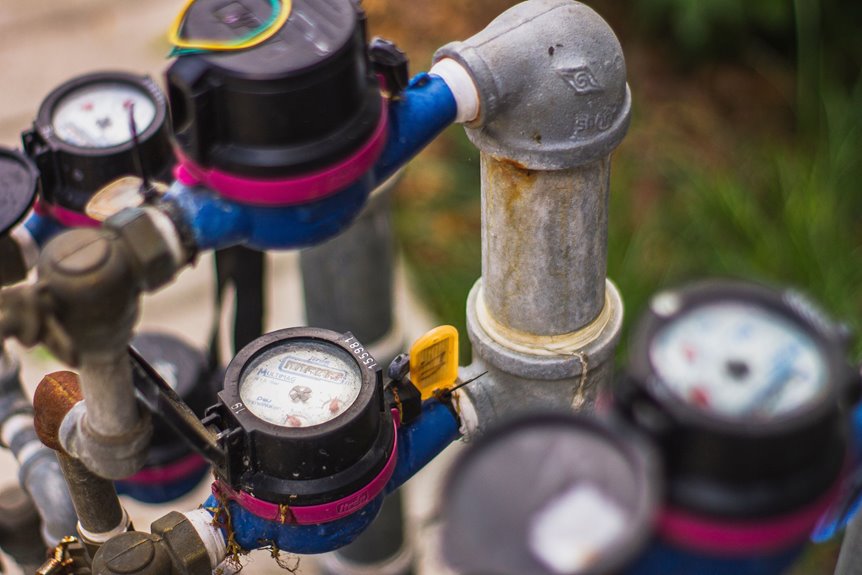
Next, check your meter reading with no water running, then again while someone opens a tap. If the numbers barely change, the pressure loss may be outside your home’s main use points.
Also, ask neighbors if they’re seeing the same thing. That quick check helps you feel less alone and more in control.
- Assess several fixtures.
- Watch the meter reading.
- Ask nearby neighbors.
- Observe when pressure feels weakest.
Why Clogged Pipes Cause Low Water Pressure
Clogged pipes can quietly choke off your water flow, and that’s why a sink or shower could start acting tired even while the rest of the house seems fine.
Once mineral buildup narrows the inside of your lines, water has less room to move, so pressure drops at the faucet. Pipe corrosion can roughen the pipe walls and catch debris, making the blockage worse. Root intrusion can also squeeze into outdoor lines and slow the flow before it reaches your home.
You might notice a weak stream, a sputtering shower, or one room that feels left out. Should you’ve ever wished your water would just show up on time, you’re not alone.
Fortunately these clogs usually build slowly, so you often get warning signs before they turn into a bigger headache.
How Hidden Leaks Lower Water Pressure
Even although you can’t see a drop of water anywhere, a concealed leak can still steal pressure from your home. You might feel stuck with weak showers, but you’re not alone, and the fix often starts with spotting the loss.
- Watch for damp spots on walls or ceilings.
- Listen for silent pipework hissing behind floors.
- Check your meter provided no taps run.
- Look outside for underground seepage near wet soil.
A small crack can waste water before you notice it. As the leak grows, less flow reaches your faucets, so sinks and showers feel thin. Should you catch it sooner, you protect your home, save water, and keep your household running with more comfort.
What a Faulty Pressure Regulator Does
A faulty pressure regulator can make your water pressure drop suddenly, and you might notice weak showers, slow faucets, or a steady change from one fixture to the next.
Whenever the regulator valve starts to fail, it can’t keep the pressure balanced, so water could rush in one moment and trickle the next.
That uneven water flow can feel frustrating, but it also gives you a clear clue that the regulator needs attention.
Pressure Dropping Symptoms
In case your pressure regulator begins to fail, you could notice the change in small but frustrating ways before the problem grows. Your home can feel off balance, and that can be unsettling for everyone who lives there. Watch for these signs:
- Water flow feels weak in more than one faucet.
- Showers start with sudden drops that surprise you.
- Sinks and tubs show intermittent sputtering when you open the tap.
- Nearby fixtures lose pressure at the same time.
These clues often show up together because the regulator can’t keep water moving evenly. You might still get water, but it won’t feel steady or reliable.
That uneven pressure can make daily routines harder, especially when your household counts on smooth, shared use.
Regulator Valve Failure
As the pressure regulator valve starts to fail, it can throw your whole plumbing system off balance in a way that feels hard to ignore. You might notice weaker flow at sinks and showers, and that can make everyday tasks feel oddly frustrating.
A faulty regulator often stays stuck or drifts out of range, so your home never gets the steady pressure it needs. Once that happens, pressure relief mightn’t work the way it should, which puts extra strain on pipes and fixtures.
You’re not stuck with that stress, though. With timely valve maintenance, you can catch wear sooner and keep your system calmer. Should you’ve been feeling let down by your water, this is one place to check initially.
Uneven Water Flow
Uneven water flow often gives you the initial real clue that your pressure regulator isn’t doing its job.
- You could feel strong water at one sink and weak flow at another, which points to uneven distribution through your home.
- Whenever the regulator sticks, it can cause pressure fluctuation, so your shower could start fine and then fade fast.
- Faucets can sputter, and appliances might fill at different speeds, making daily chores feel off-balance.
- You may also notice a noisy pipe or a sudden surge after a lull.
These changes can leave you frustrated, but you’re not alone. A faulty regulator often creates this uneven pattern, and it can make your home feel less reliable.
Should the flow keep shifting, the problem likely sits in that valve.
Check the Main Shutoff Valve
Initially, find your main shutoff valve, since it can sit near the water meter, where the pipe enters your home, or in the basement.
Then turn it fully open, because even a partly closed valve can choke your water flow and make pressure feel weak.
Provided the handle moves easily and still isn’t open all the way, adjust it now so you can rule out a simple fix.
Locate Shutoff Valve
Start with the main shutoff valve because it can quietly cause a lot of trouble whenever water pressure drops. You’re looking for the spot where water originally enters your home, so check the basement, crawl space, garage, or an outside wall.
Then use these steps:
- Follow the main pipe from the meter.
- Look for valve orientation, since the handle should point along the pipe.
- Read accessible labeling on tags or nearby reminders.
- Mark the spot so your household can find it fast.
If you share the same home with others, this small check helps everyone feel prepared and calm. A clearly found valve makes the next step easier, and it keeps you from guessing whenever pressure feels off.
Ensure Valve Is Open
With the main shutoff valve in view, check that it’s fully open before you look anywhere else. Should the water valve sits near half-closed, it can choke pressure throughout your home. Turn it counterclockwise until it stops, then pause and watch the gate indicator or handle alignment. That small sign can tell you whether the valve is truly open or just pretending. In case the handle feels stiff, don’t force it hard; gentle flow tuning works better and helps you stay in control.
| Check | What you see | What it means |
|---|---|---|
| Handle | Parallel to pipe | Open |
| Handle | Crosswise | Closed |
| Indicator | Full turn reached | Ready |
When pressure stays weak, you’ve done the initial safe step, and your home crew can move forward together.
How Mineral Buildup Reduces Water Pressure
Mineral buildup can quietly choke your water lines and leave you questioning where the pressure went.
Whenever hard water leaves behind mineral scaling, it narrows the pipe’s inside space, so less water can flow through at once. That’s why a shower could feel weak even though everything seems fine.
- Scale coats the pipe walls and slows flow.
- Small openings trap more deposits over time.
- Fixtures clog, making pressure drop at sinks and tubs.
- Pipe corrosion can worsen the problem through roughening surfaces and catching more buildup.
You’re not stuck with this mess.
Suppose you notice spotty flow, white crust, or sputtering taps, you’re likely seeing buildup at work. A plumber can clear the lines, and you can feel like your home’s water is finally back on your side.
When City Water Supply Is the Problem
Sometimes the problem isn’t in your home at all. You could notice weak flow after your city lowers pressure during repairs or heavy demand. A damaged water main can also slow service across your neighborhood, and you might feel it in showers, sinks, and hose lines at once.
In case you hear about supply contamination, crews might shut valves or flush lines to protect everyone, which can drop pressure for a while. That doesn’t mean you did anything wrong. Stay in touch with your utility and ask whether neighbors are seeing the same thing. Once the issue comes from the city, you’re part of a bigger system, and that can feel frustrating. Still, clear updates help you plan, stay calm, and wait for service to improve.
Why One Faucet Has Low Pressure
When just one faucet has low pressure, you can usually trace the problem to that fixture rather than your whole home.
A clogged faucet aerator often slows the flow, but a localized pipe blockage or a faulty faucet cartridge can also cause the same frustrating drop.
Fortunately, these issues are usually fixable once you check the faucet step by step.
Clogged Faucet Aerator
A clogged faucet aerator is often the reason one sink has weak water pressure while the rest of your home works just fine. You can fix it with a quick check, and you don’t need to feel stuck with that sad little trickle.
- Unscrew the aerator from the faucet tip.
- Rinse out grit, mineral bits, and sand.
- Try aerator cleaning with vinegar in case buildup stays.
- Look at the flow restrictor and clear any debris.
Then screw it back on and examine the stream. Should water still feel slow, you’ve ruled out the easiest fix and can keep looking with confidence. This small repair helps you feel in control again, and that matters whenever you just want your kitchen or bath to work like it should.
Localized Pipe Blockage
Whenever one faucet still runs weak after you’ve cleaned the aerator, the problem could be hiding in the pipe that feeds that fixture.
You might’ve a localized blockage from mineral buildup, rust, or debris caught inside a short section of line. Pipe corrosion can narrow the opening over time, so only that faucet feels slow while the rest of your home stays normal.
Start by checking nearby shutoff valves to be sure they’re fully open. Then listen for odd sounds and watch for discolored water, since both can point to trouble inside that branch.
If the pressure stays low, you might need a plumber to inspect and clear the line. You’re not contending with a whole-house issue here, and that can be a relief.
Faulty Faucet Cartridge
Now turn to the faucet itself, because the cartridge inside it can be the real troublemaker.
Whenever one tap feels weak, you’re not imagining it. The cartridge might clog, wear down, or stick, and that can choke the flow fast. You can check a few clear signs:
- The handle feels stiff or loose.
- Water dribbles even whenever you open it wide.
- You see worn seals around the cartridge.
- Faulty springs keep the parts from moving right.
If you swap the cartridge, you typically bring back smooth pressure and save your nerves too.
This is a small fix, but it can make your kitchen or bath feel normal again. You deserve that easy, steady stream, not a sad trickle every morning.
How Old Plumbing Restricts Water Flow
As pipes age, they often narrow inside from rust, mineral buildup, and wear, and that slow choke point can make your water feel weak at the tap.
You might notice it more while you shower, wash dishes, or fill a bucket.
Older homes often have aging joints that leak pressure before water reaches you.
In case your house still has lead pipes, the problem can run deeper, because those lines can corrode and restrict flow over time.
You’re not imagining it whenever every faucet seems a little tired.
Fortunately, old plumbing usually sends clear clues, like uneven pressure or noisy lines, so you can spot trouble sooner and feel more at home again.
Quick Fixes for Low Water Pressure
Provided that your pipes are already tired and narrowed through age, a few simple fixes can still help you get better flow fast. You can start by making small moves that fit right into your day and help your home feel normal again.
- Clean faucet aerators to clear grit that slows water.
- Turn valves fully open under sinks and near the meter.
- Replace kinked supply lines so water can move without strain.
- Should you hear water hammer or pipe vibration, ease the shock with softer faucet use and check loose straps.
Next, trial several fixtures. In case only one tap feels weak, you’ve likely found the trouble spot.
Assuming every room feels off, these quick steps can still give your household a calmer, steadier stream without much hassle.
When to Call a Plumber
Should the low pressure keep showing up after you’ve cleaned aerators and checked valves, it’s a good sign that the problem runs deeper than a quick home fix.
You don’t have to guess alone. Call a plumber whenever every faucet still feels weak, whenever one side of the house drops off, or whenever you hear banging, leaks, or rust-colored water.
Those signs can point to concealed pipe damage, a failing pressure regulator, or trouble with the main line. A licensed pro can examine flow, follow plumbing codes, and protect your home from bigger repairs.
They can also tell you provided service warranties cover part of the work, which can save stress and money. Getting help promptly keeps your house running smoothly and helps you feel back on solid ground.
Frequently Asked Questions
Can Low Water Pressure Damage Appliances Over Time?
Yes, low pressure can damage appliances over time by gradually wearing them down. You may experience increased pipe corrosion and added strain on appliances, which can shorten lifespans, reduce performance, and make your home feel less secure.
Does Low Water Pressure Affect Water Heater Performance?
Yes. Low water pressure can make your water heater work harder, reducing flow and efficiency. You will notice less comfort, and sediment buildup can strain the heat exchanger, shorten its life, and disrupt your home’s warm water supply.
Can Water Filters Reduce Pressure in the Whole House?
Yes, they can provided you have a clogged whole house filter or undersized unit. You will notice flow restriction, so keep up with filter maintenance and you will help your home’s water stay strong and welcoming.
Is Low Water Pressure Worse at Certain Times of Day?
Yes, you’ll often notice it during peak hours, whenever supply fluctuations hit hardest. You are not alone; many homes feel weaker flow then. Should pressure improve overnight, your shared neighborhood supply is likely the cause.
Can Water Pressure Problems Come From the Well Pump?
Yes, your well pump can cause pressure problems, and so can your pressure switch. If your submersible pump struggles and your flow rate drops, you will notice it. You are not alone; these issues often occur together.