A furnace is a heating system that converts fuel or electricity into warm air, then pushes that air through a network of ducts into every room of your home. Gas and oil models burn fuel inside a sealed combustion chamber, electric models glow hot coils, and in every case a blower fan moves the resulting heat through the house before exhaust gases exit through a flue or exhaust vent.
Once you can picture that sequence, the names on the side of the cabinet finally make sense.
This beginner-friendly guide walks curious homeowners through each stage of furnace operation, from the thermostat signal and combustion or electric heating to blower-driven airflow and exhaust venting, so the parts list finally clicks into place.
The Core Job Every Furnace Is Built to Do
At its simplest, a furnace does one job: it turns stored energy into moving hot air. Fuel-based models burn natural gas, propane, or heating oil to create hot combustion gases, while electric models run current through resistance coils until they glow. A blower fan then carries that heat away from the source and into the rooms where you live.
Forced-air furnaces dominate North American homes because they pair so cleanly with central air conditioning. The same blower, ducts, and filter that move heat in winter can move cool air in summer, which is why builders choose them in roughly 60 million U.S. residences, according to U.S. Energy Information Administration housing data. The trade-off is moving air feels drafty to some people, but the versatility keeps forced-air heating the default.
Every furnace, regardless of fuel, runs through the same five stages:
- Signal: the thermostat detects a temperature drop and asks for heat.
- Heat generation: fuel ignites or electric coils energize.
- Heat transfer: that energy warms a metal surface or a stream of air.
- Distribution: a blower pushes heated air through ductwork and out of supply vents.
- Exhaust handling: combustion byproducts leave through a flue or vent pipe.
Those five stages are the skeleton. The next sections put real components on each bone.
The Parts That Make Up a Typical Furnace
Walk up to the metal cabinet in your basement, closet, or attic and the inside is a small factory. Each part has one job, and the order below is the order air and fuel encounter them.
Thermostat and Control Board
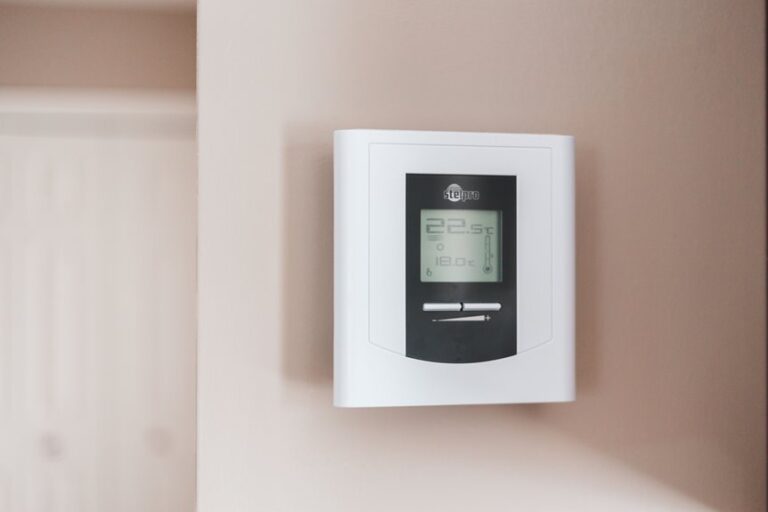
A 24-volt low-voltage circuit usually runs from the wall-mounted thermostat back to the furnace control board, the part most homeowners never see. When room temperature falls below the setpoint, the thermostat closes that circuit. The control board reads the signal like a tiny switchboard and sequences the rest of the parts in the right order.
Major brands such as Carrier, Trane, and Lennox all use this same low-voltage handshake, which is why universal thermostats can replace most wall units.
Gas Valve, Burners, and Heat Exchanger
Inside the gas furnace, the control board sends a signal that opens the gas valve, sending fuel to the burner assembly where it ignites within a sealed metal chamber called the heat exchanger. Combustion gases roar to 1,000°F or hotter inside that chamber, but the air in your home never touches them directly. Heat soaks through the steel walls instead, and the products of combustion stay sealed away from the air you breathe.
Cracked heat exchangers rank as a leading cause of carbon monoxide leaks in residential heating systems, which is why annual inspections matter.
Blower Motor and Ductwork
As soon as the heat exchanger reaches operating temperature, the blower motor kicks on and pulls room air across the exchanger’s hot outer surface. That air warms up, then rides through the supply ductwork and out of the floor, wall, or ceiling registers in each room. Return ducts pull cool air back to the furnace, the filter strips out dust, and the cycle keeps running until the thermostat is satisfied.
Flue, Vents, and the Limit Switch
Exhaust gases leave the heat exchanger through an inducer motor, which acts like a small exhaust fan, and exit the home through a metal flue or PVC vent pipe. A limit switch sits near the heat exchanger and shuts the burners off if the cabinet overheats, a safety net that prevents warped parts and house fires. When someone mentions a “limit switch trip” on a service ticket, that’s the part doing its job.
Those parts only matter once you watch them move together during a real call for heat.
| Part | What it does | What you see or hear |
|---|---|---|
| Thermostat | Senses room temperature, signals for heat | Wall control, click or glow |
| Control board | Sequences ignition, blowers, and safeties | Hidden inside cabinet, faint clicks |
| Gas valve | Opens fuel line to burners on command | Quiet hiss of gas when burners light |
| Burners | Mix gas with air, create flame | Blue flame visible through viewport |
| Heat exchanger | Transfers combustion heat to house air | Warm metal cabinet during a run |
| Blower motor | Pushes heated air through ducts | Loud hum from the cabinet |
| Ductwork | Carries air to and from rooms | Metal trunks in basement or attic |
| Flue / vent | Exhausts combustion gases outside | Metal chimney or PVC pipe |
From Thermostat Click to Warm Air: The Heating Cycle
The thermostat just asked for heat, and the next 60 to 90 seconds decide whether the furnace fires up cleanly or trips a safety. Here is the step-by-step sequence, in the exact order parts wake up inside a typical high-efficiency gas furnace.
The 24-Volt Call for Heat
When room temperature drops below the setpoint, the thermostat closes its internal switch on the low-voltage circuit. That signal travels along two thin wires back to the furnace control board. A glowing LED on the board confirms the call has been received, and from there the board takes over the choreography.
The Inducer Pre-Check
Before any gas flows, the inducer motor spins up. Its job is to push exhaust gases out through the heat exchanger and flue, proving the venting path is clear. A pressure switch downstream confirms that suction actually exists, and only then will the board allow the next step. Skip this stage and unburned gas could pool inside the cabinet, which is why every modern furnace performs it.
Ignition and Combustion
Newer systems use a hot surface igniter, a small electric element that glows orange, to light the burners. Older systems keep a pilot light burning continuously, and mid-efficiency models use an intermittent pilot that lights only on demand. Once the burners are lit, the gas valve modulates flow based on whether the furnace is single-stage, two-stage, or fully modulating.
Heat Transfer Across the Exchanger
On the inside of the heat exchanger, flames roll across the metal while room-temperature air sweeps across the outside surface. Steel walls conduct that heat rapidly, and within 30 to 60 seconds the air temperature inside the cabinet climbs past 100°F. The limit switch watches that temperature and will cut the burners if it climbs too high.
Blower Start-Up and Supply
Most furnaces wait for the heat exchanger to reach a target temperature before starting the blower, a delay that prevents blasting cold air into the house. The blower motor then ramps up and pushes warm air through the supply ductwork and out of the registers. You’ll feel that first wave of heat at the nearest vent roughly two to three minutes after the thermostat click.
A shorter run time is a clue that the heat source itself deserves a closer look.
Tip: Cold air for the first 30 to 60 seconds of a call is normal, not a sign of failure. The blower is waiting for the exchanger to heat up so it doesn’t chill the house.
Where the Heat Actually Comes From in Each Furnace Type
Natural gas, propane, oil, and electricity all run the same five stages, but the heat-generation step changes completely. The table below lines them up side by side so the differences and similarities are obvious at a glance.
| Furnace type | Heat source | Exhaust | Typical AFUE | Operating cost (US avg.) |
|---|---|---|---|---|
| Natural gas | Gas burners inside heat exchanger | Metal flue or PVC vent | 80% to 98% | Low to moderate |
| Propane | Same as gas, different fuel | Metal flue or PVC vent | 80% to 98% | Higher than natural gas |
| Heating oil | Oil burner sprays and ignites fuel | Metal flue, hotter exhaust | 80% to 87% | Highest of fuel options |
| Electric | Resistance coils glow red | No combustion, no flue | 95% to 100% | Highest in cold climates |
AFUE, or Annual Fuel Utilization Efficiency, measures how much fuel becomes usable heat versus how much escapes as exhaust. A non-condensing gas furnace from the 1980s might score 60% to 70%, meaning 30 to 40 cents of every fuel dollar went up the chimney.
A modern condensing gas furnace hits 90% to 98% by reclaiming latent heat from water vapor in the exhaust, and that extra efficiency is why high-efficiency condensing models have become the replacement standard for cold-climate homes.
Single-Stage, Two-Stage, and Modulating Gas Valves
Older furnaces run the burners at full blast until the thermostat is satisfied, then shut off. That on-off pattern is called single-stage operation, and it works, but it produces temperature swings, louder airflow, and stronger drafts. Two-stage furnaces drop to a low-fire setting during mild weather and kick into high fire only on the coldest days.
Modulating gas valves can adjust output in tiny increments, often in 1% steps, so the system runs almost continuously at the lowest level needed. Comfort improves noticeably, blower noise drops, and energy use falls roughly 10 to 15% compared with a single-stage unit in the same home.
Warning Signs, Common Failures, and the Parts Behind Them
A strange noise at 2 a.m. or a cold second floor usually traces back to one of five parts. Match the symptom to the suspect and you’ll know whether to grab a screwdriver or pick up the phone.
| Symptom | Likely part | What to do |
|---|---|---|
| Furnace won’t ignite, no flame | Hot surface igniter or flame sensor | Call a tech; igniters are fragile |
| Furnace turns on and off every few minutes (short cycling) | Dirty filter, overheating, or limit switch | Replace filter first, then call a tech |
| Burners light but no warm air at vents | Blower motor or capacitor | Call a tech, motor parts are dangerous |
| Yellow or flickering flame instead of blue | Combustion or gas-mix problem | Shut system down and call a tech |
| Rotten-egg or chemical smell | Possible gas leak | Shut off gas, leave home, call utility |
| High utility bills with no comfort change | Duct leaks, dirty coils, or aging furnace | Schedule a tune-up and duct inspection |
Warning: Carbon monoxide, gas odors, and scorching smells mean stop the system at the thermostat and the gas shutoff, leave the building, and call a licensed HVAC technician. None of those symptoms are safe to diagnose yourself.
A few fixes sit firmly in homeowner territory. Swap the air filter every one to three months, replace thermostat batteries once a year, and keep return vents clear of furniture and rugs. Anything that involves the gas valve, igniter, flame sensor, blower motor, or heat exchanger belongs with a licensed pro. The energy release inside a running furnace is enough to cause serious injury, and combustion components deserve the same respect as a breaker panel.
Catching those failures early is what turns a service ticket into routine maintenance instead.
Keeping the System Running Safely and Efficiently
Most furnace breakdowns are slow-motion failures. Dust loads up on the blower wheel, the filter clogs, the flame sensor carbonizes, and one January night the system refuses to start. A short seasonal rhythm prevents nearly all of that, and the checklist below covers what a homeowner can handle without tools beyond a screwdriver and a step stool.
- Replace the filter every 1 to 3 months, more often if pets or renovations are present.
- Test carbon monoxide detectors monthly and replace batteries twice a year.
- Keep return and supply vents clear of rugs, drapes, and furniture.
- Walk the flue and vent pipe each fall, looking for rust, gaps, or animal nests.
- Schedule a professional tune-up once a year, ideally before the first cold snap.
- Listen for new noises like rattling, squealing, or booming, and log when they happen.
Efficiency ratings translate more directly to monthly bills than most homeowners realize. AFUE tells you what percentage of fuel becomes heat, BTU input tells you how much fuel the unit burns per hour, and CFM tells you how much air the blower moves.
A 96% AFUE gas furnace with a two-stage burner and a variable-speed blower can cut heating costs 20 to 30% compared with a 70% AFUE single-stage unit in the same house, according to U.S. Department of Energy replacement estimates. Those savings compound over a 15-year service life, which is why an upgrade often pays for itself in regions where winters last four months or longer.
What You Should Never Touch
Combustion chambers, gas valves, and the electrical panel around the furnace carry real risk. Even flipping the gas shutoff without relighting the burners correctly can leave air pockets in the line, and a missed step during a relight can flood the house with unburned gas. The same caution applies to the flue. A disconnected vent pipe leaks carbon monoxide into living space, and that gas is odorless in the concentrations that hurt you.
Treat the cabinet as a system that owes you comfort, not a project that owes you a Saturday.
Final Thoughts
Once the parts have names and the cycle has a sequence, your furnace stops being a mystery box. The thermostat asks, the control board answers, the heat exchanger does the heavy lifting, the blower delivers, and the flue cleans up after. Learn those five stages, and the rest of the details fall into place.
FAQ
What are the main parts of a furnace and what does each do?
The main parts are the thermostat, control board, gas valve or heating element, burner or coil, heat exchanger, blower motor, ductwork, and flue. A limit switch and a flame sensor or pressure switch add the safety layer that prevents overheating and gas buildup.
How does a gas furnace ignite and produce heat?
Gas flows through a valve into the burner assembly, mixes with air, and ignites inside a sealed heat exchanger. Combustion heats the steel walls of the exchanger, and a blower pushes household air across those hot walls before sending it through the ductwork.
How does warm air travel from the furnace to the rooms in a house?
A blower motor pulls cool air through return ducts, pushes it across the heat exchanger, and sends the warmed air out through supply ducts and floor or wall registers. Cool air drifts back through returns, and the cycle continues until the thermostat is satisfied.
What role does the thermostat play in operating a furnace?
The thermostat senses room temperature and closes a low-voltage circuit when the air drops below the setpoint. That signal reaches the control board, which sequences ignition, blowers, and safety checks in the correct order.
How does a furnace safely remove combustion gases from the home?
An inducer motor pulls exhaust gases through the heat exchanger and out a metal flue or PVC vent pipe. A pressure switch confirms draft before the gas valve opens, and a limit switch shuts the burners down if temperatures climb too high.
What is the difference between a single-stage, two-stage, and modulating furnace?
Single-stage models run the gas valve either fully on or fully off, two-stage units add a low-fire setting for milder days, and modulating furnaces adjust output in small increments, sometimes as fine as 1% at a time. Higher stages cut temperature swings, lower blower noise, and trim energy use 10 to 15%.