A radiator is a heat exchanger that pulls warmth from hot water or steam circulating through your home and pushes that warmth into the surrounding air. Heated fluid enters the metal casing, conducts heat into the surface, and transfers energy outward through convection and a smaller share of thermal radiation. That quiet unit on the wall is a closed loop in action, with the same droplet reheated again and again.
You’ll learn how a single drop of water travels from the boiler through the pipes and back, why radiators live under windows, and what to check when one room refuses to warm up.
The Basic Principle Behind Every Radiator
Every radiator, whether a slim panel under a bay window or a tall cast-iron column in an old apartment, does the same job in three layers. First, the metal absorbs heat from the water inside it through conduction. Then that warm metal transfers energy to the surrounding air, mostly by setting the air in motion through convection. A smaller share leaves the surface as invisible infrared energy, which is thermal radiation.
That last term is exactly where confusion starts. Roughly 80% of a radiator’s output comes from convection, with the remaining 20% split between radiation and conduction. So the name “radiator” survives mostly because of tradition, not because radiation is the dominant effect.
The Closed Loop at the Heart of the System
Water leaves the boiler hot, travels through a supply pipe, enters the radiator, gives up most of its heat, and returns cooler through a second pipe to be reheated. That return-and-repeat pattern defines a hydronic heating system. The same water can cycle through your home for decades, transferring heat on every lap.
Why the Name Sticks Anyway
Cast-iron radiators of the 19th century radiated a meaningful share of heat from their bulky surfaces. Modern steel and aluminum panels radiate less and convect more, but the label never changed. Recognizing this small mismatch between name and behavior is the first step toward reading your heating system accurately.
That naming quirk becomes clearer once you trace exactly what the water does on its way around the circuit.
Following a Droplet from Boiler to Radiator
Pick a single ounce of water somewhere inside the boiler. It just came off the burner, so it sits near the boiler’s set temperature, often between 140°F and 180°F in a typical hot water radiator. The circulator pump pushes it out through the supply pipe toward whichever zone is calling for heat.
That heated droplet reaches the radiator’s inlet, flows through internal channels such as tubes inside a panel or the core of a column, and starts giving up energy. The metal wall soaks that heat in through conduction, and the panel’s outer face begins to warm within seconds.
How Fins and Panels Multiply the Output
A flat panel on its own loses heat slowly. So manufacturers stack multiple panels, add internal fins, or shape the metal into repeating columns. Each fin dramatically increases the surface area touching the air, and surface area drives convective output. A double-panel radiator with internal fins can deliver nearly twice the BTUs of a single panel of the same size.
The Return Trip
By the time the droplet exits through the radiator’s bottom outlet, it has dropped roughly 10–20°F. It enters the return pipe, flows back toward the boiler, and gets reheated for the next pass. In a two-pipe system, supply and return stay separate so flow direction remains predictable. In a one-pipe system, both legs share a single loop and the water temperature drops more with each radiator it passes.
Knowing where a droplet ends up also explains the oldest placement question in heating design.
Think of the system as a relay race: each radiator passes a slightly cooler baton to the next, until the water returns to the boiler to be warmed up again.
Why Radiators Sit Under Windows
Glass surfaces chill faster than insulated walls, so cold air slides down the pane and pools across the floor. A radiator placed directly beneath that glass intercepts that falling draft and warms the air before it reaches your ankles.
The warmed air rises along the window, mixes across the ceiling, and slowly falls back into the room as cooler air. The result is a soft circulation curtain that keeps temperature even from floor to ceiling.
Practical Placement Logic
- Counter cold downdrafts: The radiator heats the falling air before it spreads across the floor.
- Use exterior walls: Pipes can run through floor joists or skirting boards with minimal disruption.
- Follow building science: Decades of testing back the window-wall pairing, not just tradition.
- Keep clearance: Furniture or heavy curtains placed over a radiator block convection and cut output sharply.
If your home lacks exterior walls or you want a cleaner look, modern fan-assisted units, sometimes called fan convectors, mount almost anywhere and still move a comparable volume of warm air.
Hot Water Versus Steam Systems
Most homes built or retrofitted after the 1950s run on hot water. A combi boiler, or a system boiler with a separate cylinder, heats water and pushes it through the radiators as a liquid. The temperature stays well below boiling, pressure stays moderate, and the system is safe and easy to balance.
Older buildings, particularly in the northeastern US and parts of the UK, sometimes still run on steam. A steam boiler boils water, the vapor rises through the supply pipe, and it condenses back to liquid inside the radiator, releasing its latent heat as it does so. That phase change carries far more energy per pound than cooling hot water alone.
| Feature | Hot Water (Hydronic) | Steam |
|---|---|---|
| Working fluid | Heated liquid water | Water vapor |
| Typical operating temperature | 140°F–180°F | 212°F and above |
| Heat delivery mechanism | Cooling water releases sensible heat | Condensing vapor releases latent heat |
| Vents required | Manual bleed valves for trapped air | Automatic air vents on each radiator |
| Temperature control | Modulating, pairs with TRVs | On/off by venting; slower to adjust |
| Common in | Homes built after 1950 | Older multi-family buildings |
Why Steam Needs an Expansion Tank
Steam systems also include an expansion tank and sometimes a condensate return line. The tank catches excess water as the system heats and accommodates pressure swings. Hot water systems still need an expansion vessel, but the volume is much smaller because the fluid never boils.
How Thermostats and Valves Shape Room Temperature
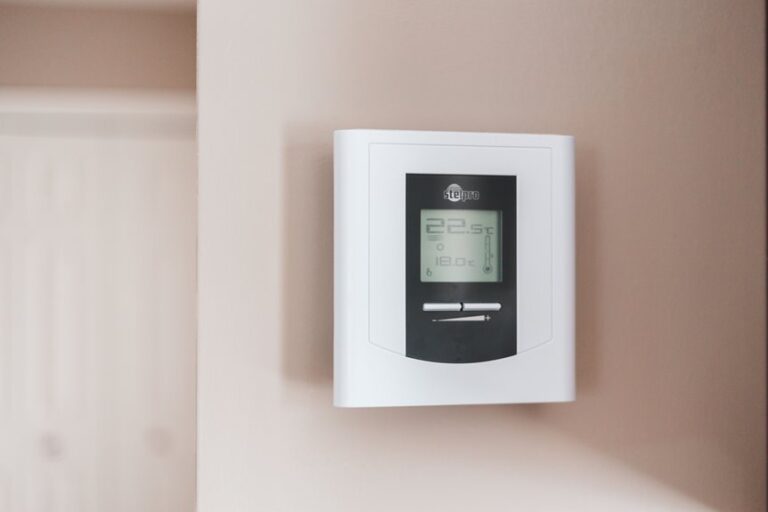
The room thermostat acts as the system’s on-off switch. When the room cools below the setpoint, it signals the boiler to fire. Once the room warms to the target, the boiler cycles off. Smart thermostats add scheduling and remote control on top of that basic loop.
Inside each room, a thermostatic radiator valve (TRV) lets you fine-tune comfort without touching the boiler. A TRV has a wax or liquid-filled sensor that expands as the room warms, closing an internal pin and reducing flow through that radiator.
What TRVs Actually Control
A TRV regulates the volume of hot water entering the radiator, not the boiler’s temperature. Set it lower and the radiator receives less flow, delivering less heat. Set it higher and more flow passes through. This lets you heat a spare bedroom at 60°F while keeping the living room at 70°F, all from a single boiler.
Manual Valves and System Balancing
Older systems often use simple manual valves instead of TRVs. Balancing a manually valved system means partially closing the valves on radiators that heat up too quickly, so hotter rooms don’t hog all the flow. The first and last radiators on a loop often need the most attention because the water entering them sits at very different temperatures.
Even a well-balanced loop can still leave individual rooms too hot or too cold.
Tip: When adding a TRV to one room, leave at least one radiator in the system without local control. That radiator acts as a bypass and keeps water flowing through the boiler even when other rooms are satisfied.
When Radiators Misbehave and What It Means
Uneven heating is almost always a symptom of one of three things: trapped air, sludge buildup, or poor flow balancing. Each has a clear signature you can read by hand.
Cold at the Bottom
When the top of a radiator is hot but the bottom stays cool, water flow is being blocked. The usual suspect is iron oxide and scale sludge that settles in the lower chambers. A chemical flush, or a power flush from a heating engineer, clears the blockage and restores full output.
Cold at the Top
Air trapped inside a radiator often leaves the upper fins ice-cold while the lower section feels comfortably warm. Air rises, water falls, and the air pocket blocks the upper channels. Opening the bleed valve with a radiator key releases the trapped air in a brief hiss, then water follows and the radiator fills evenly.
Some Rooms Heat Faster Than Others
Modern steel and aluminum panels respond to TRV adjustments within minutes. Older cast-iron radiators hold heat longer but also take longer to cool down, which makes room-by-room control sluggish. If you’re upgrading for zoned comfort, faster-response emitters make a noticeable difference.
When to Look Beyond the Radiator
If bleeding and balancing don’t restore performance, the problem may sit upstream. A failing circulator pump, a stuck zone valve, or a boiler that’s cycling too fast can mimic radiator symptoms. Heat output is also governed by the BTU rating stamped on the radiator, often measured under BS EN 442 in European markets. If your home’s heat loss calculation shows you need more BTUs than the radiator can supply, no amount of bleeding will fix the shortfall.
Quick Troubleshooting Reference
- Cold top, warm bottom: Trapped air, bleed the radiator.
- Warm top, cold bottom: Sludge, flush the system.
- One room always cold: TRV set too low or valve stuck, check the pin.
- Whole system slow: Pump failure or air in the boiler loop.
- Radiator cold on both ends: Valve closed or supply issue upstream.
Bottom Line
A radiator is a heat exchanger in a closed loop, not a magic heater. Hot water arrives, conducts into the metal, and convects into the room air, then the same water returns cooler to be reheated. Once you can picture that droplet making its loop, the names stop confusing you, the placement logic makes sense, and a cold room becomes a readable clue instead of a mystery.
FAQ
Do radiators use convection or radiation?
Both, but convection dominates. About 80% of a typical hot water radiator’s heat output moves into the room as warmed circulating air, with the rest leaving as direct infrared radiation and small conduction losses through the brackets.
How is heat distributed through a radiator?
Hot water enters the inlet, conducts heat into the metal panels or columns, and that warm surface heats the surrounding air. The warmed air rises, mixes across the room, and is replaced by cooler air drawn in below, creating a continuous convection current.
Why do some radiators get hot faster than others?
Material and water content matter most. Steel and aluminum panels contain very little water and reach operating temperature within minutes. Cast-iron radiators hold more water and more thermal mass, so they heat up and cool down more slowly.
Why is my radiator cold at the bottom but hot at the top?
Trapped air is the most common cause. Open the bleed valve at the top with a radiator key, let the air hiss out until water appears, then close the valve. Persistent cold spots after bleeding usually point to sludge buildup, which requires a system flush.
Can radiators heat a room without a boiler?
Yes, electric radiators use an internal heating element instead of hot water and plug into a standard circuit. They work on the same convection principle but generate heat on demand rather than relying on a central boiler loop.
How do you balance radiators in a house?
Fully open every thermostatic or manual valve, run the heating, then close the valves slightly on rooms that heat up too quickly. The goal is even temperature across the home without any single radiator hogging all the flow.