Homeowners across the U.S. waste roughly $1,500 a year on heating beliefs that simply aren’t true.S. households hundreds of dollars a year through habits that feel productive but quietly waste fuel, strain equipment, and occasionally create safety hazards. The worst offenders include cranking the thermostat higher to warm a cold house faster, sealing vents in unused rooms, and leaning on space heaters that cost more per BTU than central heat. Sorting folklore from physics takes only a few basic principles about heat movement, thermostat signaling, and duct airflow under pressure.
What follows breaks down the ten most expensive heating beliefs, the engineering behind each failure, and the small set of habits that actually lower utility bills. It serves any homeowner who wants warmer rooms, a smaller bill, and equipment that lasts longer.
Why So Many Heating Habits Are Backed by Folklore, Not Physics
Most heating advice gets passed down through family, neighbors, and social feeds without anyone checking the underlying thermodynamics. A tip that worked in a drafty 1950s bungalow with single-pane windows can fail completely in a modern, tightly sealed home running a heat pump with continuous insulation.
Utility bills have climbed roughly 20 to 30 percent over the past decade according to the U.S. Energy Information Administration, which makes people more susceptible to shortcuts that sound plausible but rarely deliver. Closing vents, cycling a furnace on and off, or leaving a pilot light burning overnight all fall into that bucket.
Three short principles clear up nearly every myth on their own. Heat migrates from warm to cold at a rate set by insulation and air leakage. A thermostat is a switch, not a throttle. Air always tries to escape through the path of least resistance, including closed doors and unsealed framing.
That physical mismatch helps explain why so many of the rules homeowners repeat were never grounded in evidence.
The Biggest Money-Wasting Myths Homeowners Still Believe
Cranking the Thermostat Higher to Heat Faster
Setting the thermostat to 78°F on a 55°F morning does not warm the house any faster than setting it to 68°F. Furnaces and heat pumps deliver heat at a fixed output, so a higher setpoint simply keeps the equipment running after the target temperature is reached. The Department of Energy confirms this behavior for every common heating system on the market.
You end up paying for overshoot, not speed. Some heat pumps actually run less efficiently at extreme setpoints because the compressor struggles to keep up against a wide temperature gap.
Keeping the Heat Constant All Day and Night
Holding the house at one temperature around the clock wastes fuel compared to letting it drift cooler at night. Heat loss slows as the indoor temperature drops because the temperature difference between inside and outside shrinks, so a 10°F setback for eight hours typically cuts heating costs by roughly 10 percent according to ENERGY STAR estimates.
Both the Department of Energy and ASHRAE recommend setbacks as one of the few free, high-impact habits any household can adopt.
Closing Vents in Unused Rooms
Closed supply registers do not redirect warm air where you want it. The furnace blower motor now works against higher static pressure, which can crack heat exchangers in older furnaces and drops overall system efficiency by up to 10 percent according to field studies cited in Carrier and Trane service manuals.
Sealed rooms still leak through door gaps and framing, so the warm air you tried to redirect finds its way back into the supply side through leakage paths the duct system never anticipated.
Space Heaters as a Whole-Home Substitute
A portable electric space heater burns through about 3.5 times more kilowatt-hours per square foot than a central furnace in nearly every whole-room scenario. Electricity at the national average of roughly 17 cents per kilowatt-hour produces about 3,400 BTU per kilowatt, while a gas furnace produces the same heat for a fraction of the cost per BTU.
Space heaters also add a hidden load to the electrical panel. Running a 1,500-watt heater on an older 15-amp circuit can trip breakers or warm undersized wiring, and Consumer Reports has documented dozens of fire incidents tied to aging space heaters left on overnight.
The danger is real, but the physics behind why a closed room overheats while the rest stays cold is even more telling.
The Physics Behind Why the Myths Are Wrong
Thermostats Switch Equipment On and Off
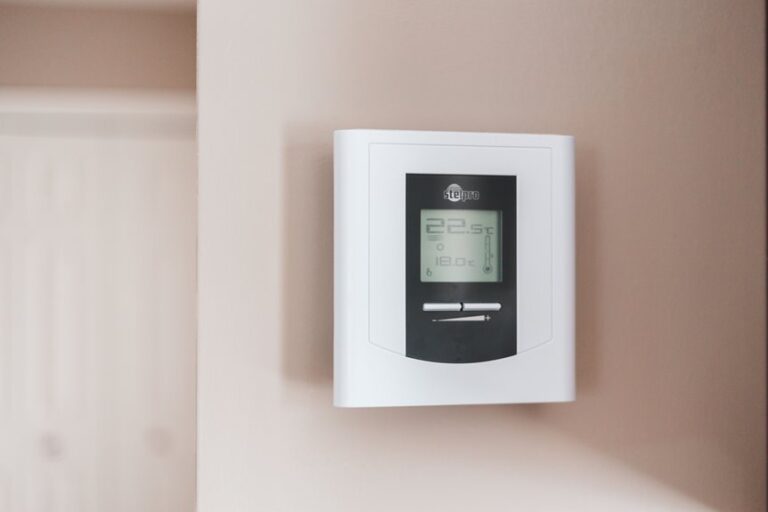
A wall thermostat reads temperature and closes a circuit when the room drops below the setpoint. It does not tell the furnace or heat pump to work harder. Higher setpoints only extend runtime once the desired temperature arrives, which is why 78°F and 68°F produce identical warm-up curves on the same system.
Heat pumps add a wrinkle because many now include variable-speed compressors that ramp up gradually. Even there, raising the setpoint above the room temperature does nothing until the room actually crosses the new threshold.
Heat Loss Follows a Fixed Physics Equation
Heat migrates from warm to cold at a rate determined by insulation R-value, air leakage, and outdoor temperature. The only way to warm a house faster is to add more output capacity, usually by upgrading equipment, not by demanding more from the equipment already installed.
This is why cold-climate homes sometimes need a furnace paired with a heat pump, called a dual-fuel system, instead of a single oversized heat pump. Output capacity, not setpoint ambition, is the real lever.
Ductwork Behaves Like a Pressure System
Forcing air through closed vents raises static pressure inside the duct. The blower has to work harder, drawing more amperage and producing more heat inside the cabinet. That extra load reduces overall efficiency and accelerates wear on the motor.
Lennox and Trane technical bulletins both warn against closing more than 20 percent of supply registers for this reason, and most manufacturers void warranty coverage when closed vents cause heat exchanger failures.
Those warranty-voiding failures show how a one-size-fits-all rule collapses once system type enters the picture.
Myths That Differ by System Type and Climate Zone
Heat Pumps and the “They Don’t Work in Cold Climates” Myth
Cold-climate heat pumps now operate efficiently down to roughly 0°F and can still produce some heat at minus 15°F. Modern variable-speed units from Carrier, Trane, and Lennox use inverter-driven compressors that ramp rather than cycle, so they keep delivering usable heat at temperatures that would have stalled equipment a decade ago.
The “heat pumps fail in the North” myth ignores the roughly two million cold-climate units already operating in Minnesota, Maine, and upstate New York.
Natural Gas Furnaces and Combustion Air
Every gas furnace requires a steady supply of fresh combustion air and a clear exhaust path to vent safely. Running a kitchen or bathroom exhaust fan in a tightly sealed home without makeup air can pull combustion gases back through the heat exchanger, a back-drafting condition that raises indoor carbon monoxide levels.
Carbon monoxide detectors near sleeping areas are not optional in any home with a gas appliance. The CDC links roughly 400 unintentional CO deaths in the U.S. each year to venting and combustion-air problems that proper makeup air and annual inspections would prevent.
Boilers and Radiator Balancing
Boiler owners hear a different version of the same myths. Cranking the boiler temperature rarely fixes uneven heating, while balancing the radiator valves so each room receives proportional flow usually does. Older cast-iron radiator systems were designed for 180°F water, but most modern boilers run cooler and still deliver even heat when balanced correctly.
Pinning the blame on the boiler when the real problem is valve balance wastes fuel and frustrates homeowners for years.
Climate Multiplies Every Dollar Wasted
A habit that wastes 50 dollars a year in Phoenix can waste 400 dollars a year in Minneapolis, simply because the heating season runs longer and the outdoor temperature drops further.
The payback on smart thermostats, attic insulation, and air sealing varies sharply by region. A heat-pump water heater pays back fastest in the Southeast, while dense-pack cellulose insulation pays back fastest in the upper Midwest.
| Myth | Why It Costs More Than Expected | Climate Multiplier (Annual Waste) |
|---|---|---|
| Cranking thermostat higher | No faster heat; pays for overshoot | 2x in heating-dominant climates |
| Closing vents in unused rooms | Raises static pressure, drops efficiency 5 to 10 percent | 3x in cold climates with long heating seasons |
| Constant-temperature strategy | Ignores free savings from nighttime setbacks | 2x in regions with large day-night swings |
| Space heater as primary heat | Electricity costs 3 to 4x more per BTU than gas | 4x in regions with cheap gas and cold winters |
What Actually Lowers Heating Bills, Ranked by Impact
Air Sealing Returns the Most per Dollar
Sealing air leaks around doors, windows, attic penetrations, and rim joists typically pays back in under two years in cold climates. A typical homeowner can DIY weather-stripping and caulk for under 200 dollars and recover that cost within the first heating season on a poorly sealed house.
Professional blower-door testing pinpoints the worst leaks in an afternoon, and the work itself often finishes in a day.
Annual Maintenance Restores Lost Efficiency
A single annual furnace or heat pump tune-up typically restores 5 to 15 percent of lost efficiency, catches cracked heat exchangers early, and adds several years to equipment life. The U.S. Department of Energy tracks efficiency degradation in unmaintained systems at roughly 1 percent per year, which adds up fast over a 15-year lifespan.
Skip the maintenance visit and the system quietly burns extra fuel for the entire heating season.
Filter Replacement Affects Every Month You Run the System
Replacing dirty filters monthly during heavy use keeps airflow at design levels, which directly cuts runtime and fuel consumption. A clogged filter can raise static pressure enough to trigger limit switches inside the furnace, causing short-cycling and freeze-ups in heat pumps.
Filters cost roughly 10 to 20 dollars each and prevent hundreds in wasted fuel.
Smart Thermostats Pay Back Quickly With Real Schedules
Programmable and smart thermostats save 10 to 15 percent on annual heating bills for most households, but only when schedules are actually set and used. Unconfigured smart thermostats sit at the factory default and deliver little savings.
Setting one schedule that drops the temperature 8°F overnight and another that warms the house before you wake up covers 90 percent of the savings opportunity.
Skip the gadgets and seal the air. A 15-dollar tube of caulk around the attic hatch often beats a 250-dollar smart thermostat in the first year.
A Prioritized Action Plan and Safety Checks to Do This Week
Quick Wins You Can Finish in an Afternoon
Flip ceiling fans to clockwise on low so they gently push warm air down from the ceiling without creating a cooling draft at occupant level. Test the thermostat by lowering it 5°F at night for one week and comparing the bill to the previous billing cycle to verify savings in your own home. Replace the filter if it has been more than 90 days since the last change.
These three tasks take less than 30 minutes and address roughly a third of the total savings opportunity in a typical house.
Safety Checks That Take an Hour
Install carbon monoxide detectors near sleeping areas if you have any gas appliance, including a furnace, water heater, fireplace, or stove. Test each detector monthly and replace batteries annually. Never use an oven, stovetop, or unvented combustion heater as a primary heat source because they produce carbon monoxide and moisture that damage the home.
Schedule a maintenance visit if the system has gone more than a year without one. A technician will check the heat exchanger, test the combustion analysis, and confirm that the exhaust draft is correct.
Longer-Term Upgrades Worth Planning For
Add attic insulation to at least R-38 in cold climates and R-30 in mixed climates. Upgrade to a heat pump if the existing furnace is over 15 years old and gas prices remain high. Consider zonal heating controls if the home has multiple stories with significant temperature differences between floors.
Each of these upgrades typically pays back within five to ten years through lower utility bills and reduced maintenance costs.
Bottom Line
The habits that waste the most money on heating are the ones that feel productive but ignore how thermostats, ductwork, and heat loss actually behave. A 5°F setback at night, a fresh filter every month, sealed attic penetrations, and an annual tune-up will deliver more savings than every gadget and space heater combined, often within the same heating season.
FAQ
Does turning the thermostat up higher heat a home faster?
No. Furnaces and heat pumps deliver heat at a fixed output, so a higher setpoint only extends runtime after the target temperature is reached. The room warms at the same rate whether you set the thermostat to 68°F or 78°F.
Are space heaters more efficient than central heating?
Almost never for whole-room use. Electricity costs roughly three to four times more per BTU than natural gas in most regions, so a space heater costs more per hour of warmth and adds load to your electrical panel.
Do you need to service your furnace every year?
Yes. Annual maintenance restores 5 to 15 percent of lost efficiency, catches cracked heat exchangers early, and extends equipment life by several years. The Department of Energy tracks efficiency loss at roughly 1 percent per year in unmaintained systems.
Can you close vents in unused rooms to save energy?
No. Closed supply vents raise duct static pressure, drop overall efficiency by up to 10 percent, and can crack heat exchangers in older furnaces. Most manufacturers warn against closing more than 20 percent of registers.
Is it cheaper to keep the heat on low all day?
No. A setback of 8 to 10°F for eight hours saves roughly 10 percent on annual heating costs because heat loss slows as indoor temperature drops. Holding a constant temperature wastes the free setback opportunity.
Do ceiling fans help in the winter?
Yes, when set to clockwise on low. The fan gently pushes warm air down from the ceiling without creating a cooling draft at occupant level, which can let you lower the thermostat 2 to 3°F without losing comfort.