Wood carving work asks for the right kind of control, whether you’re cleaning up edges, flattening a spoilboard, or tracing detail on a small panel. This roundup focuses on tool shape, bit style, shank size, speed control, and the kind of day-to-day use each pick suits best. You’ll see compact palm routers, CNC-style bits, and a rotary kit, since carving projects don’t all need the same setup.
Quick Shortlist For Carving And Routing Work

Amana Tool Spektra Coated CNC Router Bit Pack AMS-177-K

Amana Tool RC-2255 Spoilboard Bit
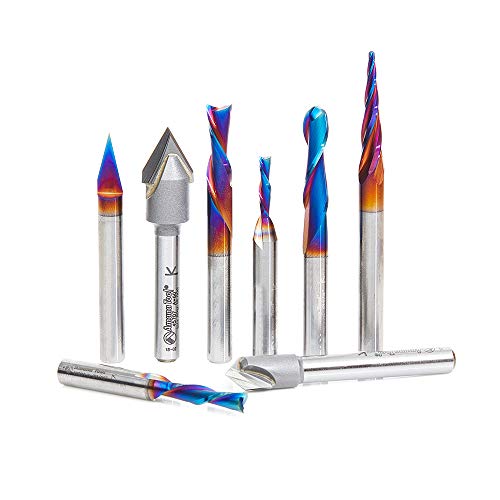
Amana Tool AMS-174 CNC Router Bit Collection

Dremel 4300 Rotary Tool Kit with Flex Shaft

TwoWin Compact Wood Router Tool 800W

TwoWin Compact Palm Wood Router Tool 800W

TWOWIN 6.5 Amp 1.25 HP Palm Trim Router

IDC Woodcraft 1″ Surfacing CNC Router Bit
More Details On Our Top Picks
For wood carvings that need shaped edges more than raw power, this bit pack makes sense. The mix of V-groove, point roundover, and multi-purpose profiles gives you room to move between lettering, edge softening, and small decorative passes without changing categories of tooling.
The 1/4-inch shank keeps it in the lighter router-bit lane, which suits compact handheld routers and many CNC setups. The trade-off is simple, it’s a bit set, not a complete machine, so you already need the right router or CNC platform to get value from it.
Strong Points
- Multiple cutter shapes cover more carving styles.
- Solid carbide construction suits longer shop use.
- Spektra coating can help with smoother cutting behavior.
- Wooden box storage keeps the set organized.
- 1/4-inch shank fits many smaller routers.
Points To Note
- You still need the matching router or CNC machine.
- Bit sets demand careful cleanup after dusty jobs.
- Fine-detail profiles need a steady hand and proper feed pace.
Feature Snapshot
Who It Suits Best
Detail-focused hobbyists and small-shop woodworkers who want shape variety in one cutter set will get the most from it.
A Better Fit Elsewhere
Amana Tool RC-2255 Spoilboard Bit suits shop owners who care more about flattening large panels than carving details.
After the detail-first Amana bit pack, this one shifts hard toward surface prep. A 2-inch diameter spoilboard bit is built for flattening sacrificial boards and broad work surfaces, so it’s a sensible match for CNC owners who want a flatter starting plane before the fine carving begins.
The 1/2-inch shank brings a more substantial connection to heavier routers, which helps in bigger surfacing jobs. The trade-off is easy to see, this is not the gentle choice for tiny decorative cuts, and it makes more sense in a shop that regularly handles sheet goods or larger slabs.
What We Like
- Large cutter size covers wide surfaces efficiently.
- Three-flute design suits steady material removal.
- 1/2-inch shank pairs with sturdier routers.
- Industrial-grade build fits repeated shop use.
Minor Gripes
- It’s aimed at surfacing, not fine carving detail.
- Heavy setups can feel overkill for small home benches.
- Cleaning the head after resinous work takes a little time.
Core Details
Built With In Mind
Shop users who flatten spoilboards, slabs, or large routed panels will get the strongest fit from it.
Where A Sibling Pick Shines
IDC Woodcraft 1″ Surfacing CNC Router Bit makes more sense for smaller surfacing tasks where a lighter cutter feels easier to manage.
This set reads like the safer middle ground in the Amana lineup. Compared with the Spektra-coated pack, it leans more toward general-purpose CNC work, which suits you well when your carving projects shift between edge shaping, groove cutting, and everyday bit changes.
The wooden box keeps the eight-piece assortment easier to live with in a busy bench area. The honest read is that a broad collection like this works best for people who want one organized kit instead of chasing single-purpose cutters one at a time.
Bright Spots
- Eight-piece assortment handles many common cuts.
- General-purpose focus makes it easy to slot into routine work.
- 1/4-inch shank helps with compatibility across smaller routers.
- Wooden box storage keeps bits together.
- Good bridge between hobby use and shop routines.
Things To Consider
- General-purpose bits rarely beat a specialty cutter for one exact task.
- Wood storage looks tidy, yet it still needs a dry place.
Details At A Glance
Whose Shelf It Belongs On
Woodworkers who want a balanced CNC bit set for mixed carving and groove work will appreciate the range.
Look Elsewhere When
Amana Tool RC-2255 is the better match for anyone whose main job is flattening broad surfaces rather than general routing.
The flex shaft changes the feel here, especially for carving work that needs close control and less bulk in your hand. With 64 accessories plus routing, sanding, cutting, engraving, polishing, and drilling support, this kit leans toward makers who like one tool for a lot of small jobs.
Compared with the router-bit packs above, you’re getting a complete rotary tool setup rather than cutters alone. That also means the Dremel 4300 makes more sense for detail carving, touch-up work, and small-shop bench tasks than for large-area routing.
Upsides
- Flex shaft helps with closer, more delicate control.
- Accessory count supports many small tasks around the shop.
- Strong motor suits demanding handheld use.
- Multi-use setup can reduce tool swapping for craft work.
Areas To Watch
- It’s a rotary tool, so it won’t replace a full-size router.
- Lots of accessories can take some sorting and storage discipline.
- The Multi-Vise adds utility, but it also adds bench-space needs.
Feature Rundown
Made For
Small-project makers, model builders, and anyone doing close-in carving work around a bench will get the most from it.
Skip It When
TWOWIN 6.5 Amp 1.25 HP Palm Trim Router is the more suitable direction for someone who wants a dedicated trim router with fixed-base routing in mind.
This TwoWin model leans toward straightforward trim routing for people who want a compact setup without a lot of complexity. The 800W output, 1/4-inch collets, and included 15-piece tungsten carbide bit set make it feel ready for basic edge work, small shaping passes, and light laminate trimming.
Compared with the Dremel, this is more router-like and less rotary-tool-like, so it suits edge treatment better than tiny engraving jobs. The trade-off is that compact routers like this usually reward careful setup and a steady feed, especially in thinner stock.
Positives
- Compact body suits smaller benches and quick setups.
- 800W motor gives enough push for routine trimming.
- 1/4-inch collets keep bit compatibility simple.
- 15-bit set helps you get started faster.
- Good match for light edging and laminate cleanup.
Softer Spots
- Compact routers can feel less forgiving on wider cuts.
- Bit changes and cleaning still need normal shop care.
- The included set is useful, though specialized work may call for extra cutters later.
Key Specs
Right Fit For
Newer hobby woodworkers and budget-minded DIY setups will appreciate the simple footprint and included bits.
A Better Fit Elsewhere
Amana Tool AMS-174 is the smarter direction for someone who wants a more curated CNC bit set with a storage box.
This version keeps the same compact 800W idea, but the wording and bundle lean a little more plainly toward palm-router handling. That makes it useful for trim work around shelves, cabinet edges, and smaller carving accessories where a lighter tool feels easier to guide.
In most garages and hobby benches, that simple form factor is the draw. The honest caveat is that compact routers are happiest with modest jobs, so larger profiles or long production sessions are better handled by a more capable trim router.
Best Bits
- Small palm-router shape helps in tight work areas.
- 800W output is adequate for common light routing.
- 1/4-inch collets keep the setup familiar.
- Included bit set adds immediate utility.
Worth Noting
- Compact design can feel limited on larger profiles.
- Like most small routers, it rewards slow, controlled passes.
At A Glance
Who Should Grab It
Casual woodworkers who want a compact trim router for light carving edges and small benches will find it approachable.
Swap It Out When
TWOWIN 6.5 Amp 1.25 HP Palm Trim Router is the better direction for anyone wanting more control range and a dust hood.
Compared with the 800W TwoWin models, this one pushes a little farther with a 6.5 amp, 1.25 HP setup and six variable speeds. That matters in wood carving work because speed control lets you match the cutter and material more closely, especially around edges where tear-out can show up fast.
The dust hood is a practical detail too, since routing and trimming in a small shop can get messy quickly. The trade-off is that more features also mean a bit more to learn, so this feels better for someone ready to move past the most basic palm-router lane.
Reasons To Buy
- Six variable speeds give more control over different cuts.
- 1.25 HP class helps with more demanding trim work.
- Dust hood helps keep the work zone tidier.
- Fixed-base format suits steadier edge routing.
- Included 15-piece bit set adds practical value.
Room For Improvement
- More control also means more setup decisions.
- Dust hood and bits add parts to store and keep track of.
- Fixed-base tools are less flexible than a full router system for some tasks.
Technical Sheet
Perfect Match For
Intermediate hobbyists and careful trim-router users who want better speed control for edging and carving-adjacent work will appreciate it.
Another Choice May Suit
Dremel 4300 Rotary Tool Kit with Flex Shaft is the better fit for close-in engraving and very small detail work.
This cutter sits in the same surfacing lane as the Amana spoilboard bit, but the 1-inch cutting diameter makes it easier to think of as a smaller-scale flattening tool. That’s useful for CNC users who want to refresh a spoilboard or clean up wood surfaces without jumping to a bulkier head.
The carbide-tipped design points to a shop tool built for repeated cutting, and the 1/4-inch shank keeps compatibility broad. The catch is that a surfacing bit solves a specific problem, so you’ll want something else for detail carving, grooves, or decorative edge profiles.
Best Bits
- 1-inch diameter suits smaller surfacing jobs.
- Carbide tip supports durable cutting behavior.
- 1/4-inch shank works with many compact routers.
- Good option for spoilboard refresh work.
Small Caveats
- It handles flattening, not decorative carving.
- Surface prep bits need careful dust cleanup after use.
- Smaller diameter means slower coverage on larger boards.
Core Details
Made For
CNC owners and shop users who need a manageable surfacing bit for slab flattening or spoilboard maintenance will get the most out of it.
Skip It When
Amana Tool Spektra Coated CNC Router Bit Pack is the better pick for anyone focused on edge shaping, grooves, and decorative detail.
How To Choose The Right router for wood carvings
Match The Tool To The Kind Of Carving
Wood carving covers two very different jobs, detail shaping and broader routing. A rotary kit like the Dremel 4300 works best for fine engraving, while a palm router or CNC bit set makes more sense for edging, grooves, and surface cleanup.
That split matters because the wrong tool feels awkward fast. A small rotary tool can be nimble like a pen, but it won’t replace a surfacing bit on a spoilboard or a fixed-base router on a cabinet edge.
Pay Attention To Shank Size And Bit Style
Shank size is the part that fits into the router collet, the clamping sleeve that holds the bit. A 1/4-inch shank is common in lighter tools and hobby setups, while a 1/2-inch shank supports heavier surfacing work like the Amana RC-2255.
Bit shape matters just as much. V-groove cutters, roundovers, spoilboard bits, and surfacing heads each solve a different problem, so the right match comes down to the cut you make most often.
Look At Control, Not Just Power
More power helps, but control usually decides how clean the result looks. Variable speeds, like the six settings on the TWOWIN 6.5 amp model, let you slow down for tricky edges and step up for tougher passes.
That becomes important in a busy shop or a small garage where dust, vibration, and tight corners make precision harder. A well-sized tool with the right speed range often feels easier than a stronger tool with too little control.
Choose For Your Workspace, Not Just The Project
Bench space, storage, and cleanup all shape the right choice. Wooden boxes help with bit storage, the Dremel’s Multi-Vise helps with bench work, and dust hoods keep the work area more orderly during routing.
For a small home shop, compact routers and organized bit sets usually feel more manageable. For larger CNC or surfacing tasks, heavier cutters and sturdier shanks make the routine smoother, even though the setup asks for more care.
What To Weigh Before You Choose
Hidden Buying Traps
One common slip-up is pairing a detailed carving job with a surfacing bit, or the reverse. A spoilboard cutter like the IDC Woodcraft bit is great for flattening, but it won’t give you the fine control needed for decorative routing.
Another misstep is overlooking router compatibility. A 1/2-inch shank bit needs the right machine, and a compact palm router may feel underpowered for large cutting heads.
What The Higher Tier Buys
Higher-tier tools often pay for stronger motors, better speed control, and more specialized accessories. That’s why the TWOWIN variable-speed router and the Dremel 4300 kit cost more in capability terms, not just in package size.
That upgrade makes sense once you’re carving often, working on tougher stock, or switching between tasks in one session. For occasional edge cleanup, a simpler compact router or a single-purpose bit is usually enough.
Frequently Asked Questions
Can you use a trim router for wood carving?
Yes, a trim router can handle edge shaping, grooves, and some decorative work. It works best for controlled cuts rather than deep sculpting.
What makes a router bit good for carving?
Bit shape and shank size matter most. A V-groove or roundover bit is useful for visible detail, while a 1/4-inch shank keeps setup simple in lighter tools.
Is a rotary tool enough for carving small pieces?
A rotary tool like the Dremel 4300 suits fine-detail carving, engraving, and touch-up work. It feels more precise than a full-size router on tiny parts.
Why do some carving tools use a 1/2-inch shank?
A 1/2-inch shank gives a bit more holding stability for larger cutters. That matters most on surfacing jobs and heavier routing passes.
Should you pick a bit set or a single bit?
A bit set makes sense for mixed projects and learning different cut styles. A single specialty bit works better when you already know the exact job you do most often.