Tackling a project in an older home means opening a panel full of mystery switches, none of which match the labels from the previous owner. A good circuit breaker finder turns that guessing game into a five-minute job, identifying the right breaker with a clear beep and steady indicator. The eight tools below cover weekend DIYers, serious pros, and anyone in between who wants to work safely around live wiring.
A Fast Comparison Of The Options

Fluke 117 Digital Multimeter with Non-Contact Voltage Detection
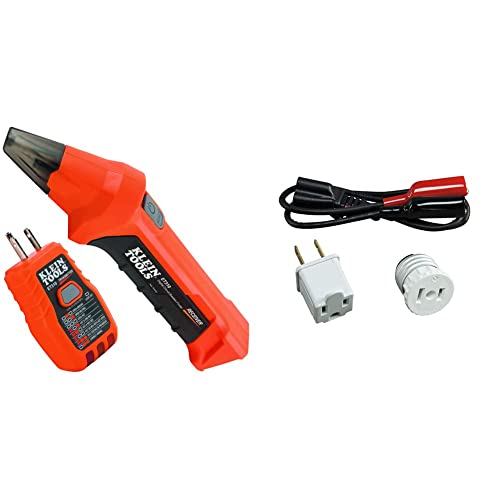
Klein Tools Circuit Breaker Finder and Tester Kit

Klein Tools Circuit Breaker Finder with GFCI Outlet Tester Kit

Fluke 323 True RMS Clamp Meter

Fluke 1AC II VoltAlert Non-Contact Voltage Tester

Zeltor Circuit Breaker Finder with GFCI Outlet Tester
SQECH Circuit Breaker Finder Kit with LCD Screen

SQECH Circuit Breaker Finder Kit for 90-135V
Inside Each Recommended Option
The Fluke 117 isn’t a dedicated breaker finder, and that’s actually why it earns the top slot. Once you’ve located the right breaker with a dedicated unit, you still need to confirm what the circuit is doing: is the outlet actually dead, what’s the voltage under load, is there a phantom reading from a nearby cable. Fluke’s VoltAlert non-contact detection lets you check live wires before touching anything, while AutoVolt (the meter’s automatic AC/DC voltage selection) takes the dial-reading guesswork out of the measurement.
Ghost voltage, the kind of stray reading you get from induced current in long cable runs, is a real nuisance in old walls. The 117’s low input impedance mode loads the circuit just enough to suppress those false readings, which is the difference between a clean diagnosis and chasing a ghost for an hour. The bright white backlit display also holds up in dim basements and tight panels. Compared with the simpler Klein Tools finder below, this is a deeper instrument that trades simplicity for diagnostic range.
Where It Excels
- Non-contact voltage detection adds a quick safety check before you touch a conductor
- Low impedance mode helps reject false readings on long, induced-voltage runs
- True RMS sensing (a method that accurately measures non-sine waveforms from modern electronics and variable-speed motors) gives reliable numbers on modern dimmer-driven and motor loads
- AutoVolt switching saves time when you bounce between AC outlets and DC low-voltage circuits
- Backlit display and rugged Fluke build suit a busy service pouch
Things To Consider
- It cannot trace a breaker from an outlet on its own, so a dedicated finder is still needed for the labeling step
- Battery replacement is more frequent on units used daily, since the backlight draws steady power
- Owners commonly report the rotary dial feeling stiff out of the box until it wears in
Feature Snapshot
Best Suited To
Homeowners and technicians who want one meter that can find the breaker, verify the dead circuit, and measure what’s actually happening on the line.
Skip It When
The Klein Tools Circuit Breaker Finder covers the labeling job alone, and a tighter budget points you toward a dedicated tool instead of a full multimeter.
This is the bare-bones kit most people picture when they think “circuit breaker finder.” You plug the transmitter into the outlet in question, walk to the panel, and sweep the receiver across the breakers until the indicator locks on. It’s a focused tool: no screen, no menus, just a beep and a light. The whole job usually takes a couple of minutes on a 20-circuit residential panel.
The trade-off is range. Without the GFCI tester and bare-wire adapters that ship in the larger Klein kit (covered next), you can only trace live receptacles. The transmitter and receiver pair on 90-120V AC circuits, which covers every standard North American home. The receiver gives both an audible tone and a visual cue, so you can still use it in a noisy mechanical room. For a first-time homeowner who just needs to label a panel, this is the simplest path.
Benefits That Matter
- Two-piece design is intuitive: plug in, sweep, find
- Audible plus visual indicator works in dim or loud spaces
- Auto-shutoff on the receiver saves battery between sessions
Trade Offs
- Cannot trace bare wires or switch legs without adapters from the larger Klein kit
- Limited to standard 90-120V AC receptacles, not low-voltage or DC circuits
Whose Shelf It Belongs On
First-time homeowners and renters who need to label a mystery panel once and probably won’t touch electrical again for a year.
Look Elsewhere When
The Klein Tools Circuit Breaker Finder with GFCI Outlet Tester adds a proper outlet tester and bare-wire adapters, which matters once you start tracing switch legs and outdoor circuits.
The two-piece Klein kit is where the category starts to feel like real electrician gear. You get the same ET310 finder as the standalone model, plus the RT250 GFCI outlet tester and a set of adapters that let you trace bare wires and other exposed conductors, not just finished receptacles. For a remodel, that’s the difference between guessing at a switch loop and knowing exactly which breaker kills it.
The RT250 reads more than pass/fail. Its LCD shows actual voltage, flags wiring faults (open ground, reversed polarity, hot/ground reversed), and times how long a GFCI takes to trip, useful for older GFCI devices that may be near end of life. The auto-hold function freezes the reading on screen, which helps when the outlet is behind a dryer or buried behind a couch. Versus the Zeltor model below, this kit trades some simplicity for a more diagnostic outlet tester.
The Good Stuff
- Adapter kit extends tracing to bare wires, light fixtures, and switch legs
- GFCI tester measures trip time, not just presence, on a clear LCD
- Auto-hold keeps the reading visible when the outlet is awkward to reach
- Wiring-fault detection flags miswired outlets in older homes
Points To Keep In Mind
- More pieces to keep track of in a service pouch or truck
- Adapter leads need occasional inspection since the alligator clips see real wear
Quick Facts
Made For
Tradespeople and serious DIYers who service a mix of finished receptacles, outdoor boxes, and partially wired renovations.
Swap It Out When
You only need to label a finished home, in which case the simpler Klein Tools Circuit Breaker Finder keeps the cost and complexity down.
Clamp meters solve a problem the other tools on this list can’t: measuring current without breaking the circuit. The Fluke 323 clamps around a single conductor and reads AC current up to 400 amps, which covers everything from a 15-amp living room circuit to a 200-amp service feed. Voltage reading on the same unit goes to 600V AC or DC, and resistance and continuity round out the basics. True RMS keeps the numbers honest on the noisy loads found in modern kitchens and shops.
It’s not a breaker finder in the tracing sense, but on a service call, the clamp is what tells you whether the breaker you found is actually loaded the way you think. A circuit that pulls 18 amps on a 15-amp breaker explains a lot of nuisance trips. The slim jaw fits in crowded panels where a bulky clamp can’t close. The soft carrying case is a small but welcome touch for techs hauling a tool bag every day. The catch is that it doesn’t read DC current, so solar and battery work needs a different meter.
Noteworthy Benefits
- Non-contact current reading avoids breaking the circuit
- True RMS sensing handles non-linear loads from modern electronics
- 400A AC current range covers residential services and most light commercial gear
- Tight jaw profile reaches into crowded distribution panels
Worth Noting
- Does not measure DC current, so battery and solar work needs another meter
- No backlight on some runs, which can be limiting in dim panels
Who It Suits Best
Residential and light commercial electricians who need to verify actual load on a circuit, not just identify which breaker controls it.
Reach For A Different Pick When
The job is purely identification, in which case the Klein Tools Circuit Breaker Finder with GFCI Outlet Tester gets you to the right breaker faster.
The Fluke 1AC II is the size of a thick marker and lives in a shirt pocket. Touch the tip to an outlet, wire, or terminal strip, and it glows red with a steady beep the moment it senses AC voltage. There’s nothing to set, no modes to learn, and a continuous self-test that flashes the tip on startup so you know the battery and circuit are healthy before you trust it.
It’s not a breaker finder. It’s the safety check you run before doing anything else. After you’ve shut off a breaker, you wave the 1AC II over the wires you plan to touch; if it lights up, you have the wrong breaker or a back-fed circuit. The 90-1000V AC range covers household outlets and most panel work. The CAT IV safety rating (a category rating that confirms the tool can withstand transient voltage spikes found at the service entrance and outdoor meter bases) is reassuring at the main panel. The pocket clip and silent mode are small touches that make it feel like a real tool, not a gadget.
A Few Highlights
- Tip glows red with a beep the instant AC voltage is sensed
- Continuous self-test confirms working order every time you switch it on
- CAT IV rating supports use at the service entrance
- Audible or silent mode for quiet offices or shared walls
Honest Caveats
- Cannot tell you which breaker feeds an outlet, only whether voltage is present
- Two AAA cells need occasional replacement on heavy use
Right Fit For
Anyone who wants a fast, always-with-you safety check before touching a conductor in the panel, junction box, or outlet.
Consider Something Else When
The job is breaker identification from the outlet side, where the Klein Tools Circuit Breaker Finder is the right tool for tracing the path.
Zeltor’s two-piece kit lands as a budget-friendly alternative to the established names. Plug the transmitter into the outlet, walk to the panel, and the receiver beeps when it lines up with the right breaker. An LCD on the receiver and an audible buzzer give you both visual and sound confirmation, which helps when the panel is in a basement with a dehumidifier running. The advertised anti-interference signal logic is meant to keep the receiver from getting confused by adjacent circuits in a dense panel.
It bundles a GFCI tester in the kit, so you can confirm proper wiring and trip function on kitchen and bath outlets during the same visit. The trade-off shows up in long-term support. Brand-name alternatives tend to have steadier documentation and clearer warranty paths if something fails in the first year. For a one-time panel-labeling project on a tight budget, the Zeltor delivers the core function. For daily professional use, the Klein nameplate is the safer call.
Points In Its Favor
- LCD plus audible buzzer covers both dim and noisy work environments
- Anti-interference signal design aims to reduce false reads in crowded panels
- Includes a GFCI tester for outlet verification in the same session
Room For Improvement
- Documentation and replacement-part access trail the major brands
- Build quality on the receiver plastic feels lighter than name-brand alternatives
Feature Card
Perfect Match For
DIYers on a tight budget who want a dedicated finder plus outlet tester without paying the brand-name premium.
Where Another Pick Suits Better
The SQECH Circuit Breaker Finder Kit with LCD Screen is a closer match for those who want a more visible read-out on the transmitter itself.
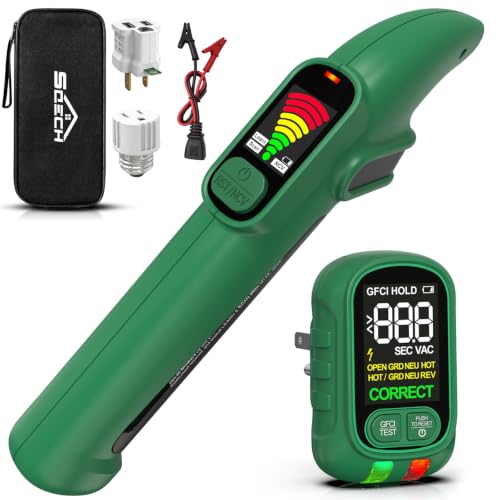
SQECH’s kit adds a screen where most budget finders only have a beep. The receiver shows a signal-strength indicator as you sweep the panel, so you can watch the bars climb as you approach the right breaker. That extra visual layer is genuinely helpful in a 40-circuit panel where the right breaker might be three switches away from where the receiver first chirps.
The transmitter and receiver both work as standalone tools for other electrical tasks, so the kit pulls double duty for owners who don’t want to buy a separate voltage tester. The set also ships with adapters for bare-wire tracing, similar to the larger Klein kit. Build quality is the usual compromise at this price tier. You may find the plastic housing a little lighter than the brand-name competition, and warranty support is thinner. For occasional home use, the trade is fair.
Key Advantages
- LCD signal meter on the receiver guides you to the strongest match
- Dual-purpose transmitter and receiver work as standalone tools
- Adapter set covers bare-wire tracing beyond finished receptacles
Minor Gripes
- Plastic housing feels lighter than major-brand competition
- Documentation is minimal, so first-timers may need to experiment
Who Will Love This
Homeowners tackling a full panel relabeling who want extra visual feedback in a busy breaker box.
A Better Fit Elsewhere
The Zeltor Circuit Breaker Finder with GFCI Outlet Tester is the value pick if the GFCI portion matters more than the LCD readout.
The 90-135V rating is the headline here, which gives the SQECH a touch more headroom than kits capped at 120V. That’s useful in homes where the service runs a little hot, or in detached buildings with long feeder runs that pull the voltage up at the panel. The transmitter and receiver pair through the same high-sensitivity sensor approach, with the receiver sweeping vertically along the breaker array to lock onto the right circuit.
Adapter support ships in the kit, so you can trace bare wires, switch legs, and lighting circuits, not just finished outlets. Like the LCD-equipped sibling above, the build leans light, and the manual is brief, so plan a quick test run in the garage before the real panel. For a one-time project in a home with a slightly elevated service voltage, the wider tolerance is a real benefit over a strict 120V unit.
Useful Strengths
- 90-135V operating range tolerates elevated service voltage
- Adapter kit supports bare-wire and switch-leg tracing
- Receiver and transmitter function independently for other tasks
Soft Spots
- Manual is thin, so allow time for a practice sweep on a known circuit
- Plastic body is functional but not as rugged as name-brand alternatives
Key Product Details
Built With In Mind
Owners of older homes with slightly elevated panel voltage who want a finder that won’t balk at readings above 120V.
Not Your Match When
Standard 120V residential service is all you have, in which case the SQECH Circuit Breaker Finder Kit with LCD Screen saves a few dollars.
What To Weigh Before Buying a Circuit Breaker Finder
Match the Tool to the Job Scope
A dedicated finder makes sense for the most common case: an outlet or switch, and you need to know which breaker kills it. Clamp meters and full multimeters earn their place when the next question is “what is this circuit actually doing?” Voltage-only pens fit a safety check before you touch anything. Buying a feature you won’t use is a common trap, so decide whether you need identification, measurement, or both before comparing models.
Pay Attention to Circuit Range and Panel Density
Standard residential panels run 90-120V AC, which every kit on this list covers. Some homes, particularly older ones with long service runs, sit closer to 125-130V at the panel, and a unit capped at 120V may behave inconsistently. For panels with 30+ circuits, a receiver with an LCD or stronger signal filtering reads more reliably than a basic beeper, because the right and wrong breakers are closer together on the indicator scale.
Consider Adapter Support for Bare Wires
Standard kits trace live receptacles. Adapters let you clip onto bare conductors, switch legs, and lighting circuits. If you are mid-remodel or troubleshooting a three-way switch, that adapter set is the difference between guessing and confirming. Klein’s larger kit and both SQECH kits include the adapters; the simpler Zeltor and Klein standalone models do not.
Build Quality and Long-Term Use
Daily professional use justifies the brand-name premium: tougher housings, clearer documentation, more reliable warranty support. A homeowner running a one-time panel-labeling project can usually justify a value-tier unit and still get the job done. The honest read is that lower-cost finders work fine for occasional use, but the marginal cost of stepping up to a name brand pays off if the tool lives in a truck or sees weekly service.
Key Considerations Across These Picks
Where Shoppers Go Wrong
The most common slip is buying a non-contact voltage tester and assuming it can label a panel. Pens like the Fluke 1AC II confirm whether voltage is present, but they cannot tell you which breaker feeds an outlet. The second trap is ignoring panel density: a basic beeper works on a 12-circuit cabin and frustrates you in a 40-circuit home with tightly packed breakers. Match the receiver to the panel you have, not the panel you wish you had.
What Separates Premium From Basic
Higher-tier finders add diagnostic features that a basic beeper cannot match. The Fluke 117 pairs non-contact detection with a full multimeter, while the Fluke 323 adds current measurement that no beeper can do. In the dedicated category, the Klein two-piece kit brings bare-wire adapters and a real GFCI tester with trip-time measurement. The honest read is that the upgrade pays off the moment your job goes beyond “find the breaker for this outlet.”
Frequently Asked Questions
What is a circuit breaker finder used for?
A circuit breaker finder identifies which breaker in your panel controls a specific outlet, switch, or fixture. You plug the transmitter into the outlet, then sweep the receiver across the breakers until the indicator confirms the match.
Are circuit breaker finders safe to use on live panels?
Yes, when used as directed. The receiver is non-contact, so you are not touching live bus bars. Always verify the circuit is dead with a voltage tester before working on the wiring, regardless of what the finder tells you.
Can a multimeter replace a circuit breaker finder?
A multimimeter like the Fluke 117 measures voltage and current but cannot trace which breaker feeds a given outlet. You would still need a dedicated finder or a process of elimination to label your panel.
What is the difference between a circuit breaker finder and a GFCI outlet tester?
A breaker finder locates which breaker controls a circuit. A GFCI tester checks that a GFCI-protected outlet is wired correctly and trips within specification. Several kits on this list combine both functions.
Do circuit breaker finders work on GFCI and AFCI breakers?
Most modern finders work with standard, GFCI, and AFCI breakers, since the signal rides on the hot conductor. Very dense AFCI breakers can be slightly harder to read, which is where a receiver with a stronger indicator helps.
Wrap Up
For a quick panel-labeling project, the Klein Tools Circuit Breaker Finder and Tester Kit is hard to beat on simplicity. If the work goes deeper, the Klein two-piece kit, the Fluke 117, or the Fluke 323 expands what you can do once the breaker is found. Whichever tool you choose, keep a non-contact voltage tester on hand to confirm a dead circuit before you touch a wire, and your next project around the panel will go far more smoothly.