Heat pumps, a tight building envelope, and smart controls top the list of upgrades that consistently slash residential heating demand. A heat pump installed in a leaky, under-insulated house still wastes energy, so the right sequence is seal and insulate first, then upgrade equipment. From there, your climate zone, local fuel prices, and existing ductwork decide whether a heat pump, a high-efficiency gas furnace, or a hybrid system delivers the lowest annual bill.
The breakdown below covers the equipment options, the supporting envelope upgrades, and the trade-offs that quietly erase savings when ignored. Your goal is to match system to house, not the reverse.
Why Heating Efficiency Has Become a Budget Priority
Heating typically consumes 40–50% of a home’s annual energy use in cold and mixed climates, which makes it the single largest lever on your utility bill. A 10% drop in heating consumption on a $1,500 winter bill saves $150, and most homes can capture gains several times larger with the right combination of envelope work and equipment.
Rising rates for natural gas, propane, and grid electricity have pushed winter bills high enough that even modest efficiency wins return real money.
The complication is that efficiency is measured differently across systems. Combustion equipment (gas, propane, oil) uses AFUE, or Annual Fuel Utilization Efficiency, where 95% AFUE means 95 cents of every fuel dollar becomes heat in the ducts. Heat pumps use two scales: HSPF for the full heating season and COP for instantaneous performance, with a COP of 3.0 delivering 3 units of heat per unit of electricity. Cooling equipment carries a SEER rating.
None of these numbers alone tells the full story, because field performance depends heavily on installation quality, climate, and how tight the envelope is.
What Separates Lab Efficiency From Real-World Performance
A high AFUE furnace installed with leaky ducts can lose 25–30% of its heat before air reaches a register, which turns a 96% rating into a 70% room experience. Heat pumps lose efficiency as outdoor temperatures fall, which is why older units earned a reputation for struggling in northern winters. Modern cold-climate models from manufacturers like Daikin, Carrier, and Trane maintain usable COP down to -15°F, covering most U.S. population centers.
Equipment rating is the starting point; climate, duct sealing, and thermostat behavior determine what you actually pay.
Heat Pumps and the New Standard for Efficient Heating
Heat pumps move heat rather than generate it, which is why they deliver more heat per unit of energy than any combustion appliance. A typical air-source heat pump produces 2–4 units of heat for each unit of electricity purchased, outperforming electric resistance baseboards that convert nearly 100% of electricity into heat but cost far more per delivered BTU. In regions with moderate electricity rates, this ratio translates directly into lower operating costs than gas furnaces, propane, or oil.
Air-Source vs. Geothermal vs. Mini-Splits
| Heat Pump Type | Typical Heating COP | Best Fit | Upfront Cost Range |
|---|---|---|---|
| Air-source (ducted) | 2.5–4.0 | Homes with existing ductwork in mild-to-mixed climates | $4,000–$8,000 installed |
| Cold-climate air-source | 2.0–3.0 at 5°F | Cold winters, northern U.S., well-insulated homes | $5,000–$12,000 installed |
| Mini-split (ductless) | 3.0–4.5 | Additions, garages, older homes without ducts, room-by-room zoning | $3,000–$7,000 per zone |
| Geothermal (ground-source) | 3.0–6.0 | New builds, properties with land, long-term owners | $20,000–$40,000 installed |
Geothermal systems hit the highest efficiency because ground temperatures stay around 50–60°F year-round, so the heat pump barely has to work. Drilling loop wells drives the upfront bill up sharply, but operating costs can run 30–60% lower than air-source units, and equipment often lasts 20+ years for the indoor components and 50+ years for the ground loop. Payback works out for long-term owners in regions where electricity is expensive and gas is unavailable.
Mini-split heat pumps give you zoning, which is the ability to set different temperatures in different rooms. Older homes with radiators, baseboards, or no ductwork can adopt efficient heating without retrofitting a full duct system. They also dehumidify in summer, and ENERGY STAR-rated models from Daikin, Mitsubishi, and others deliver strong performance at moderate prices.
Furnaces, Boilers, and Where Combustion Still Fits
Gas furnaces remain a strong choice in regions with cheap natural gas and existing gas lines. Modern condensing units reach 96–98.5% AFUE, which is near the theoretical ceiling for combustion heating. Older 80% AFUE furnaces vent exhaust hot enough to melt PVC, so they waste substantial heat up the flue. A 96% condensing furnace captures that exhaust heat and uses it to pre-warm incoming air, which is where the efficiency gains come from.
Propane, Oil, and Radiant Systems
Propane and oil-fired equipment run at lower efficiencies, typically 83–87% AFUE for mid-tier models, but in rural areas without natural gas access they may be the only combustion option available. The cheapest ways to heat a house in those regions often combine a high-efficiency boiler or furnace with airtight construction, because fuel costs dominate the math more than equipment efficiency.
Tip: Radiant floor heating delivers comfort at lower air temperatures, often letting you set the thermostat 2–4°F lower than a forced-air system for the same perceived warmth. Pairing radiant tubing with a high-efficiency condensing boiler produces some of the most comfortable and efficient heating combinations available.
Boilers heat water and circulate it through baseboards or radiant loops. Because water carries heat efficiently, boilers lose less energy in distribution than ducted forced-air systems, which often leak 20–30% of heated air through seams, gaps, and unconditioned spaces like attics. If you already have a boiler and intact radiators, tuning and insulating the system can deliver meaningful savings without replacing the equipment.
Low-Cost and Supplemental Strategies That Lower Every Bill
Equipment choice matters less than envelope quality once your home is reasonably tight and well-insulated. The cheapest ways to heat a house almost always start with stopping heat loss, because no furnace or heat pump can compensate for air pouring out of gaps around windows, doors, and penetrations. A $200 investment in caulk, weatherstripping, and outlet gaskets routinely outperforms $2,000 in new equipment on energy savings.
The Upgrades That Pay Back Fastest
- Air sealing: Caulk and weatherstrip around windows, doors, plumbing penetrations, and attic hatches. Often the single largest, lowest-cost improvement.
- Attic insulation: Bring attic insulation to R-38 (northern) or R-30 (mixed climate). Typical savings: 10–20% on heating.
- Wall insulation: Dense-pack cellulose into wall cavities can cut heating consumption 20–30% in older, uninsulated homes.
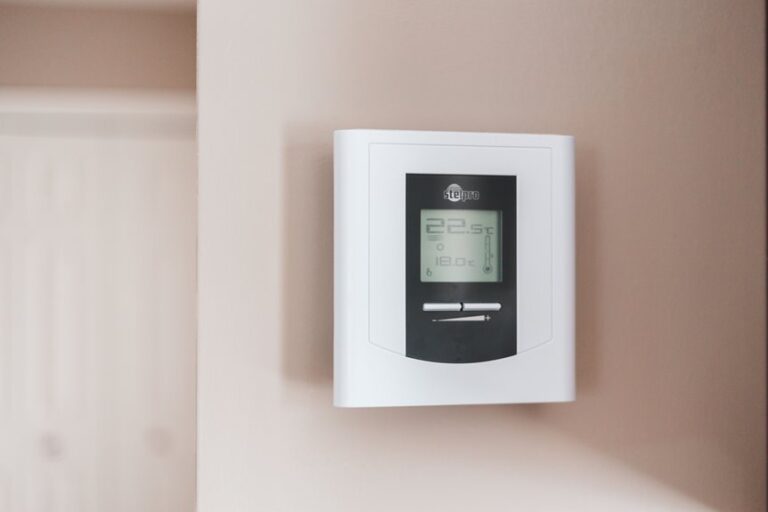
- Smart thermostats: Programmable setbacks trim heating costs 10–15%. Ecobee and Nest models learn schedules and adjust automatically.
- Duct sealing: Mastic-sealed ducts in conditioned space recover 20–30% of heated air that was previously leaking into attics or crawlspaces.
- Window treatments: Heavy curtains, interior storm panels, or low-e film cut heat loss through single-pane glass by up to 50%.
Wood and pellet stoves can supplement a primary system in regions where fuel is affordable and accessible. EPA-certified wood stoves burn cleanly and efficiently when fueled with seasoned wood under 20% moisture content. Pellet stoves automate feeding and produce consistent heat. Neither should be your only heat source in most modern homes, because they require loading, cleaning, and a safe exhaust path, but they can offset 20–40% of your primary fuel use.
Passive Solar and Thermal Mass
South-facing windows with proper overhangs let winter sun warm interior floors and walls, which then radiate heat back into the room after sunset. Thermal mass in the form of tile, concrete, or masonry captures and slowly releases that warmth. Passive solar is free once the windows are in place, and a well-designed approach can offset 10–25% of heating needs in sunny climates.
The Department of Energy publishes climate-specific design guides for incorporating passive solar into both new construction and retrofits.
Passive solar helps, yet it rarely covers a full heating load on its own.
Matching a System to Your Climate, Home, and Budget
Climate zone, local fuel prices, your home’s existing infrastructure, and how long you plan to stay all shape which heating system makes the most sense. A cold-climate air-source heat pump with backup electric resistance works beautifully in a well-sealed Minnesota home with a 200-amp panel, but the same setup underperforms in a leaky Vermont farmhouse with knob-and-tube wiring. Match the system to the house, not the other way around.
Climate-Based Recommendations
| Climate Profile | Recommended Primary System | Pair With |
|---|---|---|
| Hot south, mild winters (ZONE 2–3) | Standard air-source heat pump | Window upgrades, smart thermostat |
| Mixed climate (ZONE 4–5) | Cold-climate heat pump or 96% gas furnace | Attic insulation, duct sealing |
| Cold climate (ZONE 6–7) | Cold-climate heat pump + gas backup, or geothermal | Full envelope upgrade, possibly panel upgrade |
| Severe cold (ZONE 8) | Geothermal or hybrid (heat pump + high-efficiency furnace) | Triple-pane windows, deep wall insulation |
Federal tax credits under the Inflation Reduction Act cover 30% of heat pump installation costs (up to $2,000) for qualifying equipment, and many utilities offer $500–$2,000 in rebates for ENERGY STAR-certified cold-climate models. State programs in Massachusetts, New York, California, and several other states stack additional incentives.
These credits can cut a heat pump payback from 10–12 years to 5–7 years, and in high gas-price regions the payback drops below 5 years even before incentives.
Older homes often need a 200-amp electrical service upgrade before installing a heat pump, which adds $1,500–$3,000 to the project. Skipping this step forces undersized breakers and tripping circuits. If your panel is already maxed out, a panel upgrade should be priced into the heat pump quote from the start.
Selecting the right equipment is only half the equation, because installation choices quietly drive most real-world performance gaps.
Common Mistakes That Undermine Even the Best Systems
The most expensive heating system in the world cannot rescue a house that is fundamentally broken. The mistake pattern is consistent: homeowners buy top-tier equipment, skip the audit, and then wonder why their bills stay high. Avoiding the pitfalls below saves more money than any single equipment upgrade.
Five Pitfalls That Quietly Destroy Efficiency
- Choosing by nameplate efficiency alone: A 98% AFUE furnace installed with oversized ductwork and poor airflow delivers worse comfort than a properly sized 92% unit. Manual J load calculations matter more than the brochure.
- Skipping the home energy audit: A $300 audit often reveals $2,000 worth of air leaks and insulation gaps. Without it, you may replace a furnace before fixing the house.
- Neglecting duct sealing and balancing: Leaky ducts waste 20–30% of heated air. Sealing and balancing usually costs $500–$1,500 and returns that investment in 2–4 years.
- Forgetting maintenance: Dirty filters, neglected coils, and uncalibrated thermostats quietly erode performance. Annual tune-ups and monthly filter checks during heavy use protect both efficiency and equipment life.
- Ignoring hybrid opportunities: A heat pump handles 80–95% of heating needs in most climates, but a small gas furnace backup covers the coldest 5% more cheaply than oversized electric resistance strips. Hybrid setups often deliver the best comfort and cost balance in mixed climates.
In most U.S. regions with gas prices under $1.50 per therm, gas furnaces still edge out electric resistance heating on operating cost, but heat pumps flip that math because of their 2–4x efficiency. In regions where electricity is cheap (under $0.12/kWh) and gas is expensive (over $1.80/therm), a cold-climate heat pump beats gas on operating cost. Run the numbers for your local utility rates before committing.
Bottom Line
The single best move is a home energy audit followed by air sealing and insulation, then equipment sized to your actual heating load. From there, a cold-climate heat pump paired with a small backup furnace covers most U.S. homes efficiently, while geothermal remains the long-term efficiency champion for owners who can absorb the upfront cost. Your climate, fuel prices, and existing infrastructure decide which path pays back fastest.
FAQ
What is the cheapest way to heat a home?
Cutting heat loss with air sealing, attic insulation, and duct sealing comes first, and a high-efficiency heat pump or condensing furnace does the rest for the lowest annual bill. In regions with cheap natural gas, a 96% AFUE furnace paired with a smart thermostat often delivers the lowest annual heating cost; in regions with expensive gas or no gas service, a cold-climate heat pump wins on operating cost.
Are heat pumps more efficient than furnaces?
Moving heat instead of generating it is why heat pumps deliver 2–4 units of heat per unit of electricity while furnaces top out near full conversion efficiency.96 units per unit of gas in a 96% AFUE furnace. Operating cost depends on local utility rates, so heat pumps win in regions with cheap electricity and expensive gas, while high-efficiency furnaces win where gas is unusually cheap.
How can I reduce my heating bill in winter?
Reduce your heating bill by sealing air leaks, adding attic insulation to R-38, installing a smart thermostat with setback scheduling, and changing filters monthly during heavy use. These steps typically cut heating consumption 20–30% without replacing your existing equipment.
What type of heating system is most energy efficient?
Ground-loop geothermal units reach COP values of 3–6 and use 30–60% less electricity than their air-source cousins, putting them at the top of every efficiency ranking. Among combustion equipment, condensing gas furnaces at 96–98.5% AFUE represent the practical ceiling for fuel-burning systems.
Is it cheaper to heat with gas or electric?
It depends entirely on local utility rates and equipment efficiency. Heat pumps using electricity typically beat gas furnaces on operating cost in regions where electricity is cheap and gas is expensive, while gas furnaces win where gas is unusually cheap relative to electricity. Calculate both scenarios using your local rates before choosing.
Does insulation really lower heating costs?
Blocking conductive heat loss through ceilings, walls, and floors cuts heating consumption by 10–30% in most homes once attic insulation reaches current code levels. The impact is largest in older homes with little or no insulation, where wall insulation alone can cut heating bills by 20%.