A dull chef knife turns dinner prep into a chore, and pulling out bulky hardware to fix it feels like overkill. Wet stones offer a quieter solution: soak, sweep the blade, rinse, repeat. The picks below cover everything from beginner-friendly kits with angle guides to single-grit prosumer stones that demand a steady hand. Each one was selected for a clear reason, and every recommendation comes with an honest tradeoff.
A Snapshot Of The Selections

Shapton K0709 #320 Rough Whetstone

Sharp Pebble 1000/6000 Whetstone Kit

Sharp Pebble 400/1000 Whetstone Kit

Sharp Pebble Complete 1000/6000 Kit

Suehiro Cerax 1010 #1000 Stone

S SATC Adjustable Stone Holder

S SATC 4-Side 400/1000/3000/8000 Kit
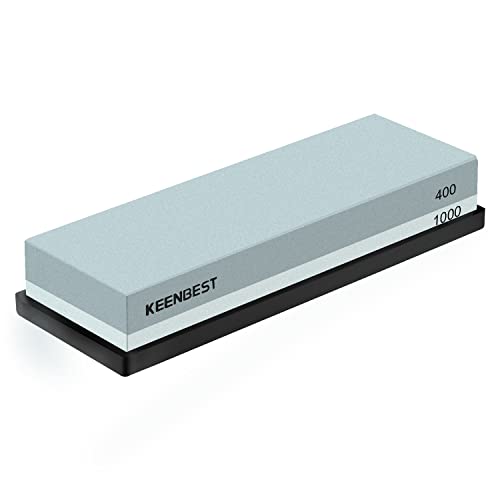
KEENBEST 400/1000 Whetstone Set
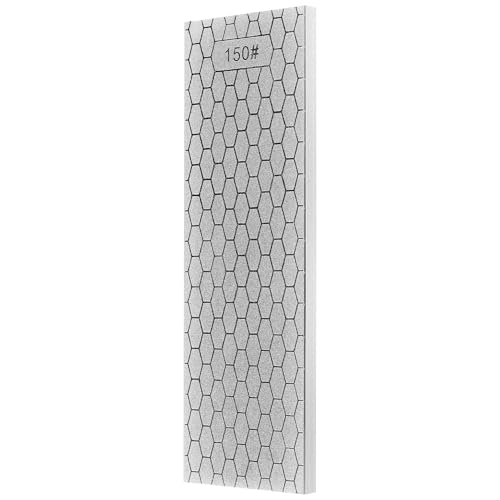
S SATC Diamond 150/600 Plate
The Strengths Of Each Pick
Shapton built its reputation on glass-ceramic stones that cut fast and stay flat, and the K0709 in #320 sits at the rough end of that family. This is a repair-grade stone: it removes metal quickly enough to reshape a chipped tip or thin a rolled edge on a neglected chef knife. Unlike the Shapton 1010 you’d meet later in this roundup, the K0709 does double duty as the first stop on a serious restoration job.
Where this stone earns its keep is on blades that have been mistreated. If you inherited a vintage slicer with a folded tip or a paring knife that’s been used as a screwdriver, the K0709 chews through damaged steel in a way a 1000-grit stone simply can’t. The included plastic case doubles as a non-slip base during use, which keeps the stone planted on a wet countertop. For most home cooks, you’ll use this stone once a season, then move on to finer grits the rest of the year.
The Good Stuff
- #320 grit strips metal quickly, making it ideal for chipped or rolled edges that need reshaping before finer work.
- Glass-ceramic construction stays flat longer than softer water stones, so you spend less time on maintenance flattening.
- The included plastic case flips into a functional sharpening base, removing the need to buy a separate holder.
- Color-coded edge takes the guesswork out of grabbing the right stone when several Shapton grits sit on the shelf.
- Works with water, which means no oil smell and faster cleanup in a busy kitchen.
Things To Consider
- This is a single-grit stone, so you’ll still need a medium and finisher for a complete sharpening session.
- Repair stones feel slow to anyone used to pull-through sharpeners; expect to spend real time at the bench.
Feature Snapshot
Right Fit For
Restorers working on damaged or vintage blades who already own a finisher and need the rough-grit workhorse to pair with it.
Consider Something Else When
Casual sharpeners maintaining already-healthy edges should grab the Sharp Pebble 1000/6000 Kit instead, since it covers both medium and finishing in one box.
The Sharp Pebble 1000/6000 kit is the stone most first-timers end up owning, and for good reason: it pairs a medium 1000-grit face with a polishing 6000-grit face, and bundles an angle guide that locks your blade into a consistent position. A 1000-grit stone is the workhorse of sharpening, used to refresh a dull edge into something that shaves paper. The 6000 side pushes that edge toward a mirror finish without crossing into razor territory.
What separates this kit from bare stones is that angle guide. New sharpeners typically ruin edges by wobbling between fifteen and twenty-five degrees; the guide clamps the knife and removes that variable. Soak the stone for ten minutes, lock the blade, sweep it across the surface, flip, and repeat. Cleanup is a wipe-down and a rinse, since the stone uses water rather than oil.
What Earns Its Place
- Dual 1000/6000 grits cover the full path from dull to polished in a single stone.
- Included angle guide helps beginners hold consistent pressure and tilt.
- Water-based sharpening means no oily residue on blades or counters.
- Solid build quality for the price tier; many owners report years of regular use.
Worth Noting
- The angle guide clamps to the blade, which can scratch polished finishes on premium knives.
- 1000 grit won’t rescue badly chipped edges; you’ll want a coarser stone for that.
Made For
First-time stone users who want a forgiving setup that walks them through angle control on kitchen knives.
Look Elsewhere When
You want a coarser repair grit in the box, in which case the Sharp Pebble 400/1000 Kit serves a similar beginner audience with extra metal-removal power.
The 400/1000 variant of the Sharp Pebble line drops the angle guide and shifts down to a coarser grit on one side. A 400-grit stone is the second-coarsest tier you’ll find in a home kit, aggressive enough to bring a genuinely dull or slightly chipped knife back from the brink without reaching for power tools. The 1000 side finishes the job the same way the all-in-one kit does.
Compared to the 1000/6000 kit earlier in this list, this version trades the polishing stone for repair capability. For most home cooks, that’s a smarter swap: a dull knife needs reshaping before it needs polishing. The included base keeps the stone steady on the counter during use, and water lubrication keeps cleanup to a quick rinse.
Reasons It Performs
- 400 grit handles dull or lightly chipped edges that 1000-grit stones struggle with.
- Dual-sided design means you don’t need a second stone for finishing work.
- Non-slip base included, no separate holder required.
- Water-only sharpening keeps the kitchen free of residue and lingering odors.
Trade Offs
- No polishing stone means edges won’t reach the mirror sharpness a 6000-grit finish provides.
- No angle guide, so beginners still need to learn freehand control.
- Requires soaking for ten to fifteen minutes before each session.
Quick Facts
Best Suited To
Home cooks sharpening well-used chef knives and utility blades who care more about a working edge than a mirror polish.
Skip It When
You want a single kit that covers everything from repair to polish, in which case the S SATC 4-Side 400/1000/3000/8000 Kit covers all four grits in one box.
The Complete kit builds on the standard 1000/6000 stone with a four-position angle guide set to fifteen, seventeen, twenty, or twenty-two degrees. Different knife styles call for different angles: Japanese gyutos typically ride at ten to fifteen degrees, while western chef knives prefer twenty or higher. Having a guide that switches between them means one stone covers everything in your drawer.
For households with a mixed knife block, that flexibility is the headline feature. Pull a fifteen-degree gyuto, snap the guide to the matching slot, sharpen; then switch to a twenty-degree German chef knife without buying a second stone. The 1000-grit face handles routine maintenance, and the 6000-grit face polishes toward a clean working edge. Soak, sharpen, flip, repeat.
Everyday Perks
- Four-angle guide (15°, 17°, 20°, 22°) covers both Japanese and western knife styles.
- Same 1000/6000 pairing as the standard kit, so the cutting performance carries over.
- Adjustable guide reduces the freehand wobble that ruins beginners’ edges.
- Water-only sharpening works cleanly on stainless and carbon blades alike.
Room For Improvement
- Still no coarse repair grit, so deeply dull or chipped edges need a separate stone.
- Angle guide adds bulk to the setup and takes longer to stow than a bare stone.
Whose Shelf It Belongs On
Multi-knife households with both Japanese and western blades who want one kit that adapts to each style.
Reach For A Different Pick When
Your drawer is mostly western chef knives and you don’t need the lower-angle slots, in which case the simpler Sharp Pebble 1000/6000 Kit delivers the same grits without the extra mechanism.
The Suehiro Cerax 1010 is a ceramic medium stone that sits firmly in enthusiast territory. The dimensions (twenty by seven and a half centimeters, almost three centimeters thick) make it one of the more substantial bench stones on the market, and the ceramic-bonded abrasive cuts cleanly without the deep scratches a softer stone leaves behind. Suehiro has been making whetstones in Japan for decades, and the Cerax line is their mid-tier workhorse.
Where the Cerax differs from the Sharp Pebble stones earlier in this roundup is feel. Ceramic stones wear slower than bonded aluminum-oxide, so the surface stays flatter longer and the cutting feedback stays consistent across years of use. It’s a single-grit #1000 stone, which means you’ll pair it with a finisher to reach a polished edge; think of the Cerax as the medium step in a two- or three-stone progression.
The Practical Payoff
- Ceramic bond resists wear, keeping the cutting surface flat across many sharpening sessions.
- Substantial thickness (nearly 3 cm) keeps the stone stable on the bench during heavy pressure.
- Leaves a refined scratch pattern that polishes out faster on finishing stones.
- Trusted Japanese construction with a long reputation among sharpening enthusiasts.
Minor Gripes
- Single #1000 grit means a separate finisher is required for a complete sharpening session.
- Premium positioning commands a higher price than dual-grit starter kits.
Technical Sheet
Perfect Match For
Knife enthusiasts and pros who already own finishing stones and want a long-lasting medium-grit workhorse at the center of their setup.
Where A Sibling Pick Shines
Beginners who want a finisher bundled in the same box should reach for the Sharp Pebble Complete 1000/6000 Kit, since it ships with both grit steps in a single package.
The S SATC stone holder isn’t a sharpening stone at all; it’s the accessory that holds one. A non-slip base is essential for wet sharpening, because the stone itself gets slippery once soaked, and a sliding stone turns a careful session into a safety issue. This holder stretches from five-and-a-half to nine inches, so it clamps most bench stones you’ll find on the market.
Unlike the Shapton K0709’s built-in case or the rubber bases bundled with beginner kits, this is a dedicated tool for sharpeners who already own multiple stones in different sizes. Pull a stone out of the holder, swap to a different grit, drop the next one in. The rubber feet keep the whole rig planted on the bench while the stainless frame holds the stone at a comfortable working height.
Good Reasons To Consider
- Adjustable width (5.5″ to 9″) fits almost any bench stone in a home setup.
- Non-slip rubber base keeps the stone planted during heavy pressure strokes.
- Stainless steel frame resists corrosion from constant water exposure.
- Useful upgrade for sharpeners who’ve outgrown the throwaway bases bundled with starter stones.
Softer Spots
- Adds bulk to a setup; bare counter space is needed for the holder plus stone.
Key Product Details
Who Should Grab It
Sharpeners building a multi-stone progression who need one stable base to handle stones of different lengths.
A Better Fit Elsewhere
Anyone starting from scratch should pick up the S SATC 4-Side 400/1000/3000/8000 Kit instead, since that kit ships with rubber bases already included.
Most starter kits ship with two grits, which is enough to keep an edge serviceable. The S SATC four-side kit ships with four: 400 for repair, 1000 for routine sharpening, 3000 for refining, and 8000 for the mirror-polish finish that comes close to straight-razor territory. You also get rubber bases, a wood holder, an angle guide, a flattening stone, and a leather strop, all in one box.
The flattening stone deserves a callout. Every whetstone eventually dishes in the middle from repeated strokes, and a dished stone stops cutting flat. The included flattening block resets the surface in a few minutes, which extends the life of the finer stones that wear slowly but suffer most from uneven pressure. Compared to the bare Sharp Pebble 400/1000 kit earlier, this kit trades simplicity for full workshop capability.
Where It Excels
- Four grits cover the full sharpening progression from repair to mirror polish.
- Included flattening stone resets dished surfaces and extends the life of the finer stones.
- Leather strop refines the edge after the 8000-grit stone for an extra step of refinement.
- Wood holder plus rubber bases give you options depending on the bench setup.
Points To Note
- More stones means more storage space and more setup before each session.
- White corundum abrasive cuts slightly slower than ceramic alternatives in the same grit tier.
Built With In Mind
Sharpeners who want a single box that handles every step from chipped-knife repair to a polished finish.
Swap It Out When
You only sharpen one or two knives a few times a year and don’t need the 3000 and 8000 stages; in that case, the Sharp Pebble 1000/6000 Kit keeps the footprint smaller.
The KEENBEST 400/1000 set covers the two grits that matter most for routine home sharpening, with a non-slip rubber base included. Soak the stone in water for ten to fifteen minutes, then add water to the surface as you work to keep the abrasive lubricated. That water-only setup means no oil smell and no greasy residue on your knives when you’re done.
Versus the Sharp Pebble 400/1000 kit earlier, the KEENBEST lands in a similar tier on grits and accessories, with a focus on basic maintenance rather than advanced progression. It’s the kind of stone you buy once, store on a shelf, and pull out when a knife stops slicing cleanly. For most casual cooks, that cycle is all you ever need.
Positive Points
- Soak-and-go water setup removes the friction of buying honing oil separately.
- 400/1000 pairing handles routine sharpening without extra stones.
- Non-slip rubber base keeps the stone planted during use.
- Works across chef knives, pocket knives, hunting knives, and Japanese blades alike.
Honest Caveats
- No polishing stone means the edge won’t reach the refined sharpness higher grits deliver.
- Soaking time adds ten to fifteen minutes before each session starts.
Who Will Love This
Casual home cooks sharpening a few kitchen knives a couple of times a year who want a no-fuss water stone.
Not Your Match When
You want finisher-grit capability in the same box, in which case the Sharp Pebble 1000/6000 Kit covers polishing without a separate purchase.
Diamond plates sit in a different category from ceramic or corundum whetstones. Where whetstones cut by fracturing abrasive grains, diamond plates use electroplated monocrystalline diamonds bonded to a steel backing, so they cut by abrasion instead. The result is a stone that chews through hard steels (think VG-10, S30V, or M390) faster than any ceramic equivalent.
The 150/600 pairing is aggressive on both sides. The 150 face resets damaged edges faster than the Shapton K0709’s #320, and the 600 face handles routine maintenance. The steel plate won’t dish or crater under pressure, which means no flattening stone is required; owners commonly report that the surface stays flat for years. Eight inches of working length handles full-size chef blades without crowding.
Notable Upsides
- Diamond abrasive cuts hard steels that resist ceramic whetstones.
- Steel backing won’t dish or crater, eliminating flattening maintenance.
- 150-grit face resets damaged edges quickly, paired with a 600-grit finisher in the same plate.
- Eight-inch length accommodates full-size chef knives in a single stroke.
Possible Compromises
- Diamond scratches are coarser than ceramic scratches at the same nominal grit, so edges feel less refined.
- No fine or polishing grits, so you’ll still want a separate finishing stone for a polished edge.
The Right Fit
Sharpeners working with modern high-hardness steels who want a low-maintenance plate that cuts aggressively without dishing.
Where Another Pick Suits Better
Cooks sharpening traditional stainless or carbon kitchen knives should pick up the Suehiro Cerax 1010 instead, since ceramic leaves a cleaner scratch pattern on softer steels.
Picking The Right Stone For Your Drawer
Grit Range Drives Most Decisions
Grit number is the single biggest factor in how a stone performs. Anything below 400 is repair territory: chipped tips, rolled edges, badly neglected blades. The 600 to 1000 band handles routine dulling, which is where most home cooks spend ninety percent of their time. Above 2000, you’re refining and polishing, not really sharpening. Beginners often buy a four-grit kit and use only the middle stone, so a two-grit 400/1000 or 1000/6000 setup covers most needs without filling a drawer.
Stone Material Shapes Long-Term Ownership
Ceramic stones wear slowly and stay flat, which means less maintenance but slower cutting. Aluminum-oxide and corundum stones cut faster but dish in the middle and need periodic flattening. Diamond plates don’t dish at all and cut hardest steels, but they leave a coarser scratch pattern. Water stones in general need a soak before use, and the slurry they produce makes for a slightly messier session than diamond plates.
Accessories Matter More Than You’d Think
A non-slip base is essential once a stone is wet, because a sliding stone turns into a safety hazard fast. An angle guide helps beginners hold a consistent tilt, which matters more than the stone itself for the first few months. A flattening stone extends the life of the medium and fine stones in the kit, since those dish fastest under repeated pressure.
Single Stone Or Full Kit
A single medium-grit stone is enough to maintain a healthy edge on most kitchen knives, and it’s a smaller commitment for someone sharpening for the first time. A two-grit stone adds a finisher for a polished result. A four-grit kit covers repair to mirror polish, but the upper grits earn their keep only if you’re willing to spend the time working through each step. Match the kit size to how often you actually sharpen, not to how many stones sound impressive.
What These Picks Share
Pitfalls Shoppers Hit
The biggest mistake is buying a four-grit kit and never using the coarser or finer stones, leaving two-thirds of the box sitting on a shelf. A better starting point is a two-grit stone matched to your actual sharpening frequency, with coarser or finer grits added later as needed. The second mistake is skipping the soak: jumping into sharpening on a dry stone produces dust, poor cutting, and a scratched blade. Ten minutes of soaking is non-negotiable for water stones. Finally, many beginners underestimate how much pressure matters. Pressing too hard removes metal faster but produces an uneven edge, while too little pressure barely sharpens at all. A consistent, moderate stroke across the full length of the stone tends to win.
Where The Extra Money Goes
Premium stones like the Suehiro Cerax 1010 cost more because they cut cleaner and wear slower, which means less maintenance over years of use. Diamond plates like the S SATC 150/600 cost more because the abrasive doesn’t dish and cuts hard steels that frustrate ceramic stones. Kits with four grits cost more because you’re buying multiple stones plus accessories. The honest read is that you pay for consistency and longevity, not for sharper edges; a mid-range stone sharpened correctly will out-cut an expensive stone used poorly. The upgrade is worth it once you’re confident you’ll keep sharpening regularly, not before.