A sudden sewer backup can soak a basement floor in minutes, ruin drywall, and force a family into costly cleanup. Heavy rain, a municipal main blockage, or a slow house-side drain can all push contaminated water back through the line. Sewer backflow preventers sit inside that line and stop reverse flow before it reaches tubs, toilets, and floor drains, and choosing the right one depends on pipe size, install location, and the level of hazard you’re protecting against.
How The Shortlist Stacks Up

3″ x 4″ Sewer Popper Cleanout & Relief Valve

HYDRO MASTER PVC Backwater Valve (4 Inch)

Zurn Wilkins 34-720A 3/4″ Pressure Vacuum Breaker

3/4″ 009M3-QT Reduced Pressure Zone Assembly

ONDAQUA 1″ Brass Pressure Vacuum Breaker 400PSI
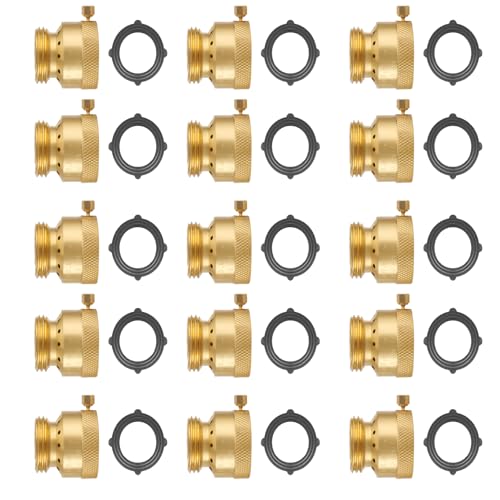
Brass Hose Bib Backflow Preventer 15-Pack

Watts LF007 Lead-Free Double Check 3/4″ NPT

3/4″ 975XL Reduced Pressure Principle Assembly
A Closer Look At Each Pick
When a municipal main chokes and wastewater starts hunting for a path back into the house, this Jones Stephens relief valve gives it somewhere safer to go. The unit installs at the exterior cleanout and pops open when reverse pressure builds, diverting overflow onto the lawn rather than across a finished basement floor.
It’s sized for 3″ or 4″ main lines, which covers most residential laterals. Homeowners who’ve watched one storm turn a basement into a biohazard tend to appreciate the simple, mechanical design: no electronic sensors, no battery backup, just gravity and a spring-loaded cap.
What It Does Well
- Diverts overflow outside instead of letting sewage back up through basement drains
- Fits standard 3″ or 4″ residential sewer laterals without special adapters
- Mechanical pop-up action means no power or control box to maintain
- Cuts down cleanup costs by keeping contaminated water out of living space
Things To Consider
- Discharges onto the property during a backup, which can leave a visible mess outdoors
- Requires a code-approved installation depth and a frost-protected location in cold climates
- Not a substitute for an interior backwater valve in homes with below-grade fixtures
Who It Suits Best
Homeowners on slab or crawlspace foundations in older neighborhoods with mature trees and recurring main-line surcharge.
Look Elsewhere When
The HYDRO MASTER PVC Backwater Valve (4 Inch) is a smarter pick for tight-budget retrofits where you need a one-way interior gate rather than an exterior relief point.
Where the Jones Stephens unit vents outside, this HYDRO MASTER valve stays underground and stops reverse flow at the main interior line. It’s a true one-way backwater valve, built from PVC with a slip-connection body, and the casing shows a flow direction indicator so installation orientation isn’t a guess.
For homeowners with a wet basement after every cloudburst, the appeal is direct: water that tries to flow backward hits a flapper and stays in the municipal main. Compared to the relief approach of the first pick, this one keeps everything contained inside the pipe.
Useful Highlights
- Slip-joint ends speed installation into existing PVC lateral runs
- Clear flow-direction marking prevents reversed installs at the job site
- PVC body resists corrosion in acidic soils common near older septic fields
- Compact form factor fits inside a shallow exterior access box
Honest Caveats
- Access to the internal flapper is limited, so periodic cleaning requires digging down to the box
- Not intended for hot-water discharge lines or systems that see grease-heavy flow
- Slip connection needs primer and solvent cement, which adds a step versus threaded options
Made For
DIY-comfortable homeowners with PVC laterals who want a one-way gate against surcharge without paying for a brass-bodied assembly.
Consider Something Else When
You need a potable-water-rated device on a continuous-pressure line: the Watts LF007 Lead-Free Double Check 3/4″ NPT handles that scenario with a lead-free copper-silicon body.
A pressure vacuum breaker, or PVB, blocks backsiphonage on irrigation and service lines where the hazard is fertilizer or yard chemicals rather than raw sewage. The Zurn Wilkins 720A is a familiar sight on commercial sprinkler feeds, with center-line test cocks that let inspectors verify the internal check without pulling the valve.
For homes where the worry is contaminated yard water siphoning back into a kitchen tap through an irrigation crossover, this category of device is the right tool. The 720A ships as a complete assembly rather than a loose kit, which trims install time.
The Case For It
- Test cocks sit on the center line, giving installers flexible orientation choices
- Serial-numbered body simplifies compliance paperwork during inspection
- Corrosion-resistant construction holds up through winterization cycles
- Recognized brand on most municipal approved-equipment lists
Points To Note
- Annual testing is required in many jurisdictions to keep the approval current
- Must be installed at a minimum height above the highest downstream sprinkler for the air gap to function
- Heavier than a residential hose-bibb vacuum breaker and harder to retrofit in a tight crawlspace
Feature Snapshot
Best Suited To
Irrigation contractors and homeowners on lots with chemical-fed sprinkler systems who need a listed, inspector-friendly assembly.
A Better Fit Elsewhere
The ONDAQUA 1″ Brass Pressure Vacuum Breaker 400PSI suits you better if 1″ main piping and higher pressure ratings matter more than on-unit test cocks.
An RPZ, or reduced pressure zone assembly, is the high-hazard option in the backflow world. Inside this huoyeao 009M3-QT sit two independent check valves plus a pressure-relief chamber that physically vents water if both checks fail. The body is bronze, the quarter-turn handles are full-port ball valves, and the threaded ends follow NPT (National Pipe Thread) conventions for North American plumbing.
Where PVBs handle irrigation, an RPZ handles scenarios where contamination could make someone sick: a boiler chemical feed, a carwash bay, or a commercial espresso machine tied to a janitorial sink. The relief port gives this unit a second chance to protect the potable side.
Strong Points
- Dual independent checks plus a relief port make it the highest-hazard option on the list
- Bronze body and captured springs resist mineral buildup in hard-water regions
- Single access cover and modular check design let you service internals without removing the whole valve
- Replaceable seats extend service life and keep long-term repair costs in check
Trade Offs
- Requires annual certification testing in most jurisdictions, adding a yearly inspection fee
- Needs a drain nearby because the relief port will discharge water during a failure event
- Heavier than a PVB and typically overkill for ordinary residential yard work
Perfect Match For
Light-commercial property owners and homeowners with cross-connections to boilers, solar loops, or chemical-fed equipment who need the strictest containment.
Not Your Match When
The Zurn Wilkins 34-720A 3/4″ Pressure Vacuum Breaker is the smarter buy for a basic irrigation tie-in without chemical hazards.
Sprinkler manifolds that see higher static pressure benefit from a vacuum breaker rated well past standard residential levels. This ONDAQUA unit is built around a 400 PSI ceiling and ships with PTFE thread tape (a denser, plumber-grade tape designed for pressurized joints) in the box rather than asking you to source your own. The brass body and 1″ connections suit larger residential lots with multi-zone irrigation.
The 1″ size and heavy-duty pressure rating put it a step up from a typical hose-bibb vacuum breaker. For homeowners upgrading an older sprinkler feed, the higher flow capacity is the headline improvement.
Standout Benefits
- 400 PSI rating leaves headroom for booster pumps and high static zones
- All-brass body resists the cracking that plastic vacuum breakers suffer in winter
- Includes PTFE tape for a leak-resistant seal right out of the package
- 1″ port matches larger residential irrigation manifolds without reducer bushings
Less Ideal Details
- Pressure rating exceeds most residential systems, so you pay for capacity you may never use
- Brass body adds weight to a wall-mounted irrigation manifold
- Annual testing is still required where PVBs are mandated by local code
Who Should Grab It
Homeowners on larger lots with 1″ irrigation mains who want a vacuum breaker that won’t be the weak link during pressure spikes.
Skip It When
The Brass Hose Bib Backflow Preventer 15-Pack covers basic outdoor faucets more affordably for homes without a full sprinkler system.
Not every backflow fix needs a buried valve. This PLUMBINGMASTER bundle gives you fifteen brass vacuum breakers for outdoor hose bibbs, each one threading onto a standard 3/4″ hose spigot (FHT inlet, or Female Hose Thread, mated to MHT, or Male Hose Thread, on the hose side). The pack format makes sense for landlords, handymen, or homeowners with multiple hose-fed appliances.
Each unit carries a break-off screw for permanent attachment and a drain hole that lets trapped water escape before freezing. The brass build is a clear upgrade over the chromed-plastic vacuum breakers that crack after two winters.
Points In Its Favor
- Fifteen units cover a whole property’s outdoor faucets in one purchase
- Brass body outperforms plastic vacuum breakers in freeze-thaw conditions
- Break-off screw lets you lock the device on so it can’t be removed accidentally
- Drain hole reduces split bodies by emptying the chamber before cold snaps
Practical Considerations
- Hose-bibb vacuum breakers protect a single outlet, not the whole house supply
- Fifteen units is overkill for a small urban lot with two outdoor faucets
- Not approved for continuous-pressure irrigation duty in many jurisdictions
Right Fit For
Property managers, rental owners, or households with multiple garden hoses, car-wash setups, and outdoor kitchen sinks.
Reach For A Different Pick When
The HYDRO MASTER PVC Backwater Valve (4 Inch) is the better fit for protecting a home’s main interior line rather than individual outdoor faucets.
A double-check valve assembly uses two spring-loaded check valves in series, and the Watts LF007 builds those checks into a lead-free copper-silicon body. It’s the standard solution for non-health-hazard cross-connections on continuous-pressure potable lines, which is most residential service tie-ins that aren’t feeding chemicals or fertilizers.
The 3/4″ NPT (National Pipe Thread, the tapered thread standard used on iron and brass pipe fittings) connection threads directly into common domestic manifolds and pressure regulators. Lead-free construction matters in any application where the device sits upstream of a drinking-water tap.
The Good Stuff
- Lead-free copper-silicon alloy meets current potable-water standards
- Two-spring check design stops backsiphonage and backpressure events
- Suitable for continuous-pressure piping, unlike PVBs that need depressurization cycles
- Watts is a recognized name on most municipal approved-equipment lists
Less-Strong Areas
- Not rated for high-hazard applications where an RPZ is required
- Internal checks require annual testing in many jurisdictions
- Body weight demands solid mounting rather than free-hanging installation
Key Product Details
Whose Shelf It Belongs On
Homeowners on private wells or those wanting a code-recognized device on the service line entering the house without stepping up to an RPZ.
Swap It Out When
The 3/4″ 975XL Reduced Pressure Principle Assembly is the right upgrade if your inspector calls for RPZ-level protection on the same 3/4″ line.
The 975XL is the short-bodied cousin to the RPZ in slot four, and it solves a real installation headache: reduced pressure assemblies are notoriously tall, and many older homes don’t have a wall cavity tall enough to host one. The wye-pattern layout (a Y-shaped flow path that turns the inlet and outlet at an angle rather than stacking them straight) shaves length off the run, and the short-pipe arrangement helps in tight mechanical rooms.
For irrigation contractors and homeowners retrofitting a small utility room, the size advantage is the headline feature. Functionally it still delivers the two-check-plus-relief protection of any RPZ.
Everyday Advantages
- Wye-pattern body fits where a straight-pattern RPZ physically cannot
- Compact layout shortens installation labor and wall-mount framing work
- Two independent checks plus a relief port match standard RPZ protection
- Suited to service line entry points and cross-connection tie-ins
Worth Bearing In Mind
- RPZ-level testing is mandatory in most jurisdictions, adding a yearly service call
- Drain port routing still requires a floor drain or air-gap fitting nearby
- Higher cost than a PVB for installations that don’t actually require RPZ protection
Quick Facts
Built With In Mind
Homeowners and contractors with shallow walls or crowded mechanical rooms who still need full RPZ-level containment.
Another Choice May Suit
The Zurn Wilkins 34-720A 3/4″ Pressure Vacuum Breaker handles irrigation duty more economically when true RPZ protection isn’t called for.
What Matters Before You Pick A Backflow Preventer
Start with the kind of hazard you’re actually defending against. A wet basement from municipal surcharge calls for a sewer-line solution like a relief valve or interior backwater gate. Sprinkler cross-connections call for a PVB. Chemical or boiler cross-connections on the service line call for an RPZ or double-check assembly. Picking the right tier saves you from overpaying for protection you don’t need, or worse, under-protecting a line that carries real risk.
Pipe size and connection type drive the next decision. Sewer main-line valves cluster around 3″ and 4″ PVC, while potable and irrigation devices stick to 3/4″ and 1″ NPT or hose threads. Measure the existing line before ordering; a mismatch usually means a trip back to the retailer rather than a working install.
Installation environment matters as much as the valve itself. RPZs and double-check assemblies both require a drain nearby because the relief port will discharge water during a failure event. PVBs need to sit a minimum height above the highest sprinkler head, and exterior relief valves need frost-protected burial depth in cold climates.
Finally, plan for the long tail of ownership. Most jurisdictions require annual testing on listed devices, and that ongoing service cost belongs in your decision. A cheaper valve that needs yearly certification may cost more over a decade than a pricier device in a low-hazard role.
Key Considerations Across These Picks
Where Shoppers Go Wrong
The most common slip is choosing a device based on thread size alone without matching it to the actual hazard. A hose-bibb vacuum breaker on an outdoor faucet won’t protect a basement from municipal surcharge, and an RPZ on a simple yard line is overkill that triggers unneeded annual testing.
Another mistake is forgetting the drain requirement. RPZs and double-check assemblies will discharge water through the relief port during a failure, and without a floor drain or air gap that water ends up somewhere you don’t want it. Confirm a drain location before you commit to a high-hazard device.
Why Top Tier Costs More
Premium picks like the ONDAQUA 400 PSI vacuum breaker and the bronze RPZ assemblies charge more because of body material, pressure headroom, and listing paperwork. Higher PSI ratings let the valve survive pressure spikes that cheaper units can’t, and listed devices often satisfy inspectors without extra documentation. When the alternative is a flooded basement or a failed inspection, the upgrade tends to pay for itself. For ordinary yard faucets on a quiet municipal system, a budget pick is the honest answer.
Frequently Asked Questions
What’s the difference between a sewer backflow preventer and a regular backflow preventer? Sewer backflow preventers sit on the wastewater line and stop municipal surcharge from pushing sewage back into the house. Regular backflow preventers sit on potable lines and stop contaminated water from being siphoned into drinking water.
Do I need a plumber to install one? Sewer-line and RPZ installations typically require a licensed plumber and a permit, and most jurisdictions require a certified tester for the annual inspection. Hose-bibb vacuum breakers are usually a DIY-friendly swap.
How often do these devices need testing? PVBs, RPZs, and double-check assemblies generally require annual testing where they’re mandated by code. Sewer-side relief valves and interior backwater gates usually have no scheduled testing requirement.
Can one device handle both sewer and potable protection? No. Sewer backflow preventers handle wastewater flow, while potable backflow preventers handle pressurized drinking water. The right answer is usually one device per line.
Will a backflow preventer stop a sump pump failure? No. Sump pumps handle groundwater under the foundation, while backflow preventers handle reverse flow inside the sewer or potable lines. The two problems need separate solutions.
Closing Thoughts
The right sewer backflow preventer depends less on brand hype and more on which line you’re protecting and what kind of contamination you fear. Match the device tier to the hazard, confirm the pipe size and connection type, and budget for any annual testing your local code requires. Done thoughtfully, the right valve turns a stressful storm into just another rainy weekend.