Screen printing asks for steady heat, not drama. You want a tool that can shrink film, soften adhesive, or help with vinyl work without sending hot air everywhere like a loose leaf in a storm.
The picks below lean toward control, comfort, and practical nozzle sets. Some are better for occasional craft jobs, while others suit longer sessions in a shop, garage, or busy home workspace.
Quick Look At The Shortlist

SEEKONE Heat Gun 1800W 122℉-1202℉ 4 Nozzles

SEEKONE 1800W Hot Air Gun Kit LCD Display

SEEKONE 1800W Heavy Duty Heat Gun 2 Temp Settings

BLACK+DECKER Heat Gun for Crafts HG1300
DEWALT Classic Heat Gun D26960K Yellow

ROMECH 1500W Heavy Duty Heat Gun Blue

ROMECH 1500W Heavy Duty Heat Gun Yellow
ROMECH 1500W Heavy Duty Heat Gun Gray

SATA Heat Gun LCD Display Memory Function
More Details On Our Top Picks
For screen-printing cleanup, this SEEKONE model brings a wide temperature span and a familiar 1800W layout, so you can handle shrink film, vinyl work, and stubborn adhesive without jumping between tools. The four included nozzles help shape airflow, which matters more than people expect in cramped shop spaces.
The 5.2-foot cord keeps the tool practical on a bench, though that reach can feel short in a larger garage. It suits you best when you want one heat gun that can cover many small jobs without getting fussy.
Strong Points
- Broad temperature span supports both gentle and hotter tasks.
- Four nozzle options help direct heat more cleanly.
- 1800W output gives you plenty of working headroom.
- Overheat protection adds a useful layer of peace of mind for longer sessions.
- The cord length works well on a crowded craft bench.
Things To Consider
- The higher output can feel a bit aggressive on delicate material.
- The 5.2-foot cord may ask for an extension in larger work areas.
- Accessory storage is still your job once the session ends.
Feature Snapshot
Who It Suits Best
You benefit most here if your projects range from vinyl wrap to paint-stripping chores and you want one corded tool that feels versatile on a home bench.
A Better Fit Elsewhere
SEEKONE 1800W Hot Air Gun Kit LCD Display suits you better if you want a digital readout and memory settings for repeat jobs.
The LCD display gives this SEEKONE a more readout-friendly feel than the simpler dual-setting tools in the roundup. Memory settings matter in real shop use because repeating a known temperature saves time on jobs that come up again and again.
The shape still feels like a serious corded heat gun rather than a light craft wand, so it suits benches, garages, and restoration corners better than tiny drawer-sized work areas. That said, the clear display makes it easier to hand off to someone else without a long explanation.
What We Like
- LCD readout makes the current setting easy to check at a glance.
- Memory settings are handy for repeated production-style tasks.
- Four nozzles give you useful airflow control for different surfaces.
- 1800W power keeps it in the serious-use lane.
Worth Noting
- The extra controls add a little learning time at first.
- Digital features help most when you repeat the same jobs often.
- Like most corded tools, storage takes a bit more bench space.
Technical Sheet
Who Will Love This
You fit this model well if you like clear settings, repeatable results, and a tool that feels suited to restoration, wrapping, or frequent craft sessions.
Swap It Out When
SEEKONE 1800W Heavy Duty Heat Gun 2 Temp Settings makes more sense for you if you prefer simpler controls over the LCD readout and memory features.
This one keeps the control scheme simple with two fixed heat levels, which can be a relief in a garage where you want to get moving instead of fine-tuning a dial. The trade-off is obvious, though, because you give up the fine gradations that the LCD SEEKONE model offers.
One source note mentions a smoke or burnt smell at first use from the anti-rust coating on the heating core, so that initial run may smell odd before the tool settles in. For short screen-printing cleanup sessions or PVC work, the straightforward setup makes sense.
Bright Spots
- Two temperature steps keep operation straightforward.
- 1800W output gives it enough punch for common shop tasks.
- Four nozzles help narrow the airflow where you need it.
- Overheat protection is useful during longer stretches of use.
Small Caveats
- The simple control layout offers less fine tuning than a digital model.
- The first run can bring an unusual smell from the core coating.
- Those two settings suit broad use better than precision-minded jobs.
Core Details
Built With In Mind
You suit this pick best if you want a no-nonsense tool for short, repeated jobs and you do not need a digital interface to stay organized.
Another Choice May Suit
SATA Heat Gun with LCD Display, Variable Temperature 120℉-1200℉ makes more sense for you if one-touch cooling and memory function matter more than a two-setting layout.
This BLACK+DECKER feels scaled for lighter craft work rather than the heavier, higher-output style of the SEEKONE and ROMECH tools above. The dual heat settings and 1350W rating make it easier to keep things simple on a crowded bench.
For screen-printing touch-ups, small adhesive jobs, or occasional home projects, that leaner format is often enough. The honest read is that you trade away some temperature flexibility, but you also get a tool that stays approachable.
Best Bits
- Dual heat settings keep operation easy to learn.
- The lighter craft focus suits smaller projects well.
- 1350W output still covers many routine tasks.
- Corded power avoids battery planning during longer sessions.
Points To Note
- Two heat levels leave less room for fine tuning.
- The lower power fits light use better than aggressive stripping jobs.
- Accessory storage is basic, so keeping the space tidy falls to you.
Details At A Glance
The Right Fit
You fit this model best if you want a straightforward heat gun for smaller craft projects and you do not need a full set of advanced controls.
Where A Sibling Pick Shines
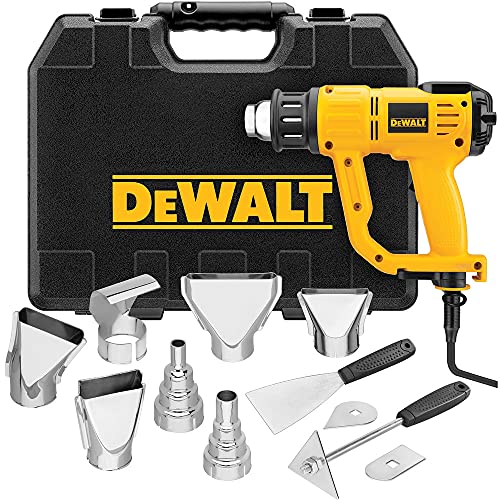
DEWALT Classic Heat Gun D26960K Yellow suits you better if you want a LCD display and a hard case for more organized workshop storage.
The hard case gives this DEWALT a more organized feel right out of the gate, which matters a lot in a garage where tools can disappear into clutter. The LCD display adds a clearer control layer than the simpler BLACK+DECKER, so you spend less time guessing about settings.
That combination makes sense for regular workshop use, especially where the tool gets moved between storage and a work surface. It feels like a cleaner fit for someone who wants the heat gun, accessories, and transport all handled in one package.
Upsides
- LCD display makes the current setting easy to track.
- Hard case helps keep the tool and accessories together.
- Accessory kit support improves day-to-day workshop organization.
- The yellow housing is easy to spot in a crowded space.
Areas To Watch
- The stronger feature set makes sense most for regular use.
- Case storage takes a little more shelf room than a bare tool.
- Extra organization helps, but it also adds more parts to keep track of.
Spec Overview
Whose Shelf It Belongs On
You fit this pick best if you keep your tools stored and moved often, and you like a more polished setup than the bare-bones craft models.
Reach For A Different Pick When
SEEKONE 1800W Hot Air Gun Kit LCD Display is the better match for you if a wider temperature span matters more than the bundled case.
The blue ROMECH keeps the formula familiar, but its 1500W rating and two airflow settings put it in a more approachable middle ground. That balance suits people who want useful control without the extra control layers that come with the SEEKONE LCD model.
For shrink wrap, light stripping, and craft work, the four nozzles give the tool enough flexibility to feel useful across a home bench. The finish is straightforward to wipe down, though the accessory pieces still need a place to live afterward.
Reasons To Buy
- Variable temperature control gives you useful adjustment room.
- Two airflow settings help tailor the heat pattern.
- Four nozzles add practical versatility for small projects.
- 1500W output keeps it friendly for everyday bench use.
Room For Improvement
- It leaves less raw power headroom than the 1800W options.
- Two airflow levels are useful, though not deeply granular.
- Accessory organization still depends on your storage setup.
Core Details
Made For
You fit this model best if you want an affordable-feeling, flexible heat gun for general crafting and periodic screen-printing cleanup.
Look Elsewhere When
SEEKONE 1800W 122℉-1202℉ 4 Nozzles suits you better if you want more output and a broader heat ceiling for heavier jobs.
This yellow version follows the same core ROMECH formula, so your decision here is really about the color and how you organize your workspace. In most shared benches, bright housings are easier to spot than neutral tools buried among cords and clamps.
Because the feature set mirrors the blue model, the use case stays the same: light to moderate craft work with variable temperature control and two airflow settings. The honest read is that it fits best when you want the ROMECH shape and simply prefer a brighter finish.
Positives
- Same flexible control layout as the other ROMECH version.
- Four nozzles give you practical shaping options.
- Yellow housing stands out in cluttered storage areas.
- 1500W output suits routine home projects.
Softer Spots
- The appeal is largely the finish, not a different feature set.
- It still sits below the 1800W models for heavy-duty work.
- Accessory tidiness depends on your own storage habits.
Feature Rundown
Best Suited To
You fit this pick best if you already know the ROMECH setup works for your projects and you want a bright, easy-to-spot color on the bench.
Where Another Pick Suits Better
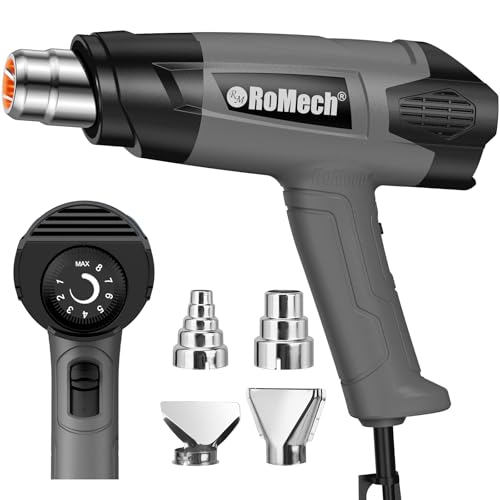
ROMECH 1500W Heavy Duty Heat Gun Gray makes more sense for you if you prefer a quieter-looking tool that blends into a calmer workspace.
The gray finish makes this ROMECH feel a little calmer on the shelf than the yellow version, and that matters more than people think in a compact workshop. Same controls, same output range, same four nozzles, so the choice here is mostly about presentation and how the tool sits in your setup.
For screen-printing work, that makes it a sensible fit for someone who wants a plain, usable heat gun without visual noise. It is not flashy, but that plainness can be a plus in a tidy tool drawer.
Highlights
- Neutral gray finish blends into most tool storage.
- Variable temperature control supports a broad range of jobs.
- Two airflow settings keep adjustment simple.
- Four nozzles add useful airflow shaping.
Minor Gripes
- The feature set matches the other ROMECH versions closely.
- It still sits below the 1800W units for more demanding work.
- Gray finish helps with looks, not with performance changes.
Feature Card
Perfect Match For
You fit this pick best if you like neutral tools, organized storage, and a simple setup for light to moderate craft jobs.
Skip It When
SATA Heat Gun with LCD Display, Variable Temperature 120℉-1200℉ makes more sense if you want a display, memory function, and one-touch cooling.
The SATA stands apart because it pairs an LCD display with memory function and one-touch cooling, which is handy in any setup where you move between tasks and want less waiting around. The anti-scald air nozzle also adds a more comfort-minded touch, especially during longer bench sessions.
That mix makes it feel more polished than the simpler ROMECH tools, though the real value shows up when you actually use those convenience features repeatedly. For vinyl wrap, screen-printing cleanup, and craft jobs that run in batches, it feels thoughtfully arranged.
What We Like
- LCD display makes temperature reading straightforward.
- Memory function helps you return to a preferred setting quickly.
- One-touch cooling is useful between repeated passes.
- Anti-scald air nozzle improves comfort during routine handling.
Worth Noting
- The convenience features make more sense for repeat work than for rare one-off jobs.
- Digital extras add value, but they also raise the tool’s complexity.
- As with other corded models, storage and cord management still matter.
Quick Facts
Who Should Grab It
You fit this pick best if you want a more polished control experience and you do repeated craft or vinyl jobs that benefit from memory and cooling.
Another Choice May Suit
SEEKONE 1800W Hot Air Gun Kit LCD Display suits you better if you want a similar digital feel with a different accessory mix.
How To Choose The Right Heat Gun for Screen Printings
Heat Control Comes First
Screen-printing work usually rewards control more than raw force. A wide temperature range helps you handle different materials, but the real trick is being able to land on a setting that feels steady from one pass to the next.
Digital displays and memory functions help most when you repeat the same jobs often. Simple dual-setting tools can still work well for occasional use, though they leave less room for fine tuning.
Nozzles Change How The Heat Feels
A nozzle shapes the airflow, which matters when you want heat to stay where it belongs. Narrower nozzles help with tighter spots, while broader ones spread the stream across a larger area.
For screen-printing cleanup, that extra control can make a tool feel calmer and more predictable. It also reduces the chance that you push too much heat across nearby material.
Power And Comfort Need To Balance Out
Higher wattage usually means stronger output and faster warm-up, but that does not automatically make a tool easier to live with. A 1800W model can feel more capable, while a 1350W or 1500W option may feel friendlier for smaller benches and lighter jobs.
Handle shape, cord length, and overall weight matter during longer sessions too. A tool that fits your hand cleanly often feels more useful than a more powerful one that tires you out.
Think About Storage And Repeat Use
Hard cases, bundled accessories, and clear labeling help when your workspace gets crowded. They also make it easier to keep nozzles together instead of hunting for them later.
Frequent users benefit most from organized kits and repeatable controls. Occasional crafters can stay with a simpler setup and skip the extra bulk.
What To Weigh Before You Choose
Common Shopping Slip Ups
Many people focus only on heat output and forget about airflow control. In screen-printing work, that omission can make a tool feel harsher than it needs to.
Storage is another easy miss. A bare tool can be fine, but accessory clutter grows fast once nozzles and cords enter the picture.
When Paying More Pays Off
Higher-tier models usually bring better displays, memory settings, cooling features, and more complete accessory setups. Those extras matter most for repeated work, longer sessions, or shared shop spaces.
Spending up also makes sense when you want a tool that feels easier to grab, read, store, and hand off. That convenience can matter as much as raw output.
Frequently Asked Questions
What temperature range works best for screen-printing cleanup?
A broad range helps because different films, adhesives, and painted surfaces respond differently. A model with clear adjustment steps is easier to manage than one that feels vague.
Do digital displays matter on a heat gun?
They help most when you repeat tasks and want the same setting each time. For occasional craft work, a simple control layout can still be enough.
How many nozzles do you really need?
Two can cover basic use, but four gives you more flexibility for narrow and broad airflow. That extra set becomes useful once you start working across different materials.
Is a higher wattage always better?
Not always, because more power can feel harder to control on small jobs. The better match depends on whether you want brute force or a calmer touch.
What makes a heat gun easier to live with?
A clear display, sensible cord length, and organized storage all help more than you might expect. Those details make daily use smoother even when the job itself is simple.