A good blade changes the whole feel of a saw, especially in a busy garage, a trim shop, or a corner of the basement that has to do real work. Some of these picks lean toward fast crosscuts, others favor fine finishes, and a few make more sense for mixed materials or larger saws. You get the right fit by matching tooth count, arbor size, and material to the kind of woodwork you actually do.
The Shortlist At A Glance
IVY Classic 35056 Swift Cut 10″ 200 Tooth Blade

Benchmark Abrasives TCT 8 1/2 Inch Circular Saw Blade

Diablo 10-Inch 40-Tooth ATB General Purpose Saw Blade

COMOWARE 10 inch Miter Saws Blade, 80T ATB Circular Saw Blade

WEN BL1248 12-Inch 48-Tooth Carbide-Tipped Saw Blade

COMOWARE 7-1/4″ Circular Saw Blade, 140T Table Saw Blade
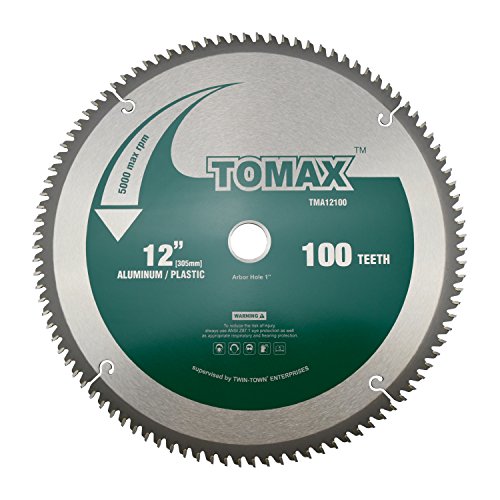
TOMAX 12-Inch 100 Tooth TCG Aluminum and Non-Ferrous Metal Saw Blade

Metabo HPT 10-Inch Single Bevel Compound Miter Saw C10FCG2

WEN BL1200 12-Inch 100-Tooth Carbide-Tipped Saw Blade
More Details On Our Top Picks
That 200-tooth layout points this blade toward very clean slicing on thinner stock, which matters in trim shops and home projects where tear-out can ruin the look. The 5/8-inch arbor is a standard mounting size, so it fits the kind of saw setup many people already own, and the honest trade-off is that this is not the blade you reach for to rip thick hardwood all day.
Compared with Diablo’s 40-tooth blade later in the list, this one is much more finish-first and much less forgiving of rough work. You get the most value from it in controlled cuts on aluminum or plastic trim pieces, though the 10-inch diameter still keeps it relevant for common miter saw work.
Strong Points
- 200 teeth support smoother edge quality on thin material.
- The standard 5/8-inch arbor helps with common saw fit.
- Well suited to detail jobs where clean edges matter.
- Useful for aluminum and plastic trim pieces.
Things To Consider
- High tooth count usually means slower cutting through stock.
- It is less suited to rough framing chores.
- Blade care matters, since fine teeth can load up sooner in dusty work.
Feature Snapshot
Who It Suits Best
Trim-focused DIYers and shop users who need cleaner edge quality on thinner material get the most from this blade.
A Better Fit Elsewhere
Diablo’s 10-Inch 40-Tooth ATB General Purpose Saw Blade suits you better for mixed everyday cutting, especially when speed matters more than a glassy edge.
This 8 1/2-inch blade makes sense for smaller saws, especially in shops where compact tools get used on plywood, hardwood, or MDF panels. Tungsten carbide tips, meaning the cutting edges use a very hard metal compound, usually help a blade stay useful across more cuts, though the smaller diameter naturally leaves you with less reach than a 10-inch option.
Compared with IVY Classic’s 200-tooth blade, this one looks more like a practical general wood cutter than a specialty finish tool. That makes it a sensible match for portable setups, as long as you want a blade sized to the saw instead of forcing a bigger format into a tighter machine.
Upsides
- Small 8 1/2-inch size fits compact saws well.
- TCT teeth suit repeated use on wood products.
- Works across plywood, hardwood, and MDF panel work.
- Useful for small spaces with limited tool room.
- Balanced tooth count helps keep cutting less fussy.
Areas To Watch
- Smaller diameter means less cutting reach than 10-inch blades.
- It is more focused on wood tasks than mixed-material jobs.
- Fine dust can build up, so regular cleaning helps.
Core Details
Built With In Mind
Apartment workshops, portable saw setups, and home projects with limited storage space suit this blade well.
Where A Sibling Pick Shines
WEN BL1248 is the better match for a 12-inch miter saw owner who wants a broader blade size and a more conventional woodworking setup.
A 40-tooth ATB blade, with ATB meaning alternate top bevel, sits in that useful middle zone between speed and finish. In a garage shop or for routine trim work, that balance makes more sense than the ultra-fine 200-tooth IVY Classic blade, especially when you want a blade that can keep up without feeling rough.
The 10-inch size fits a lot of common miter saws, and the general-purpose shape keeps it broad enough for everyday tasks. The trade-off is simple, you won’t get the polished edge that a higher-tooth finish blade can leave behind, but you also won’t be waiting on every cut.
What We Like
- 40 teeth give a useful middle ground for shop work.
- ATB tooth geometry helps keep cut edges cleaner.
- 10-inch sizing fits many standard miter saws.
- Good everyday choice for mixed woodworking tasks.
Worth Noting
- It is not a dedicated fine-finish blade.
- Rougher stock may still need extra cleanup.
- Blade performance depends on keeping pitch buildup under control.
Details At A Glance
Who Should Grab It
DIY woodworkers who need one blade for frequent household cutting and trim work get strong value here.
Look Elsewhere When
WEN BL1200 suits you better for cabinet-grade finishing, since its 100-tooth layout is built around a finer surface result.
The 80-tooth count pushes this blade toward cleaner edges than the 40-tooth Diablo, and the anti-vibration design is a nice touch for steadier cuts. Teflon, a slick low-friction coating, helps reduce material drag, which can matter on laminate or hardwood trim where a sticky blade feels slower than it should.
That said, the honest read is that this is a finish-leaning blade, not a rough-dimensioning tool. People doing detailed room trim, furniture parts, or laminate pieces will appreciate the extra polish more than someone ripping long boards in a hurry.
Reasons To Buy
- 80 teeth help improve edge smoothness.
- Anti-vibration design supports steadier feed feel.
- Teflon coating can reduce drag on sticky stock.
- 5/8-inch arbor is common on many saws.
- Carbide-tipped teeth help with regular shop use.
Small Caveats
- Higher tooth count slows rough cutting.
- Finish-focused blades usually need a cleaner storage routine to protect the teeth.
- It is less suited to aggressive ripping.
Feature Card
Whose Shelf It Belongs On
Finish-minded homeowners and weekend woodworkers who want cleaner edges on common materials will use this well.
Another Choice May Suit
Diablo 10-Inch 40-Tooth ATB General Purpose Saw Blade makes more sense for faster, more flexible day-to-day cutting.
The broader 12-inch format makes this a natural fit for larger saws, including setups that move between miter saw and table saw duty. With 48 teeth, it sits closer to the middle of the road, so you get a useful blend of speed and finish without going as specialized as the higher-tooth WEN BL1200 later in the list.
For a busy shop, that kind of flexibility matters more than a flashy spec sheet. The trade-off is that a 12-inch blade takes up more storage space, and you need to keep an eye on tooth wear because larger blades usually see more varied use.
Highlights
- 12-inch size suits larger saw platforms.
- 48 teeth keep it versatile for many woodworking tasks.
- Carbide-tipped teeth suit repeated shop use.
- Works on both miter saws and table saws.
Points To Note
- It takes more storage room than 10-inch blades.
- Not as refined as the 100-tooth finish blades here.
- Larger blades benefit from careful cleaning after dusty jobs.
Core Details
Made For
Woodworkers who run larger saws and want one blade for mixed shop tasks get a good match here.
Swap It Out When
WEN BL1200 is the stronger fit for trim and cabinet work that calls for a much finer finish.
A 7 1/4-inch blade with 140 teeth is built for fine cuts from a smaller saw platform, and that tooth count is unusually dense for this size. The result should suit finish work where you care more about edge quality than speed, though the smaller diameter also means it feels more specialized than the 10-inch options above it.
Compared with Benchmark Abrasives, this one leans even harder into fine-cut territory. It is a smart fit for portable saw users, cabinet touch-ups, and laminate work, provided you’re comfortable giving up some cutting pace.
Best Bits
- 140 teeth support very fine edge quality.
- 7 1/4-inch size suits portable saw work.
- ATB profile helps with cleaner crosscuts.
- Teflon coating can reduce sticky-feeling feed.
- Good match for detail-minded home projects.
Room For Improvement
- Very high tooth count usually cuts more slowly.
- Smaller blade size limits reach versus 10-inch choices.
- Fine teeth call for careful handling in storage.
Technical Sheet
The Right Fit
Portable saw owners who want fine finishing power in a smaller format will get the most value from this blade.
Reach For A Different Pick When
Diablo 10-Inch 40-Tooth ATB General Purpose Saw Blade is the better all-around choice for faster everyday work.
TCG, short for triple-chip grind, is a tooth style meant to handle harder cutting tasks with more control on non-ferrous materials like aluminum. That matters because the blade is built very differently from the wood-first WEN and Diablo options, so you are looking at a more specialized tool rather than a general shop blade.
In a metalwork corner or on projects with aluminum trim, this blade makes far more sense than a standard woodworking blade. The 1-inch arbor is also a key detail, since you need a saw that matches that mounting size before anything else matters.
Positives
- 100 teeth support finer control on metal cutting.
- TCG tooth style suits aluminum and similar materials.
- 12-inch diameter gives it broad saw compatibility.
- Good choice for non-ferrous trim projects.
Honest Caveats
- It is specialized, not a general wood blade.
- 1-inch arbor limits compatibility to matching saws.
- Metal-cutting blades need careful cleaning to avoid buildup.
Spec Overview
Perfect Match For
Shop users who cut aluminum trim, extrusions, or other non-ferrous stock need this more than a standard wood blade.
Skip It When
IVY Classic 35056 Swift Cut 10″ 200 Tooth Blade is the more sensible pick for thin wood, plastic, or trim work.
Not every shop needs just a blade, and this pick matters because it pairs a 15-amp miter saw with a 40T TCT blade right out of the gate. The Xact Cut shadow line helps place the cut more confidently, and the single bevel range from 0 to 45 degrees gives you a practical amount of angle control for trim and framing tasks.
Compared with the loose-blade options in this list, this is the route for someone setting up a saw from scratch or replacing an older unit. It is lighter than many full-size saws in this class, though the single-bevel design means complex compound cuts take more planning than they would on a dual-bevel machine.
What We Like
- 15-amp motor suits tougher home-shop work.
- Xact Cut shadow line helps with cut placement.
- Single bevel from 0 to 45 degrees adds useful flexibility.
- 40T TCT blade gives a workable starting setup.
- Lightweight design helps with moving and storage.
Minor Gripes
- Single bevel design is less flexible than dual-bevel saws.
- This is a full saw, so it takes more bench space.
- Moving parts and alignment points need routine attention over time.
Feature Rundown
Built For
Home improvement projects, trim installation, and first-time saw setups suit this package well.
Where Another Pick Fits Better
WEN BL1248 is the better route for someone who already owns a saw and only needs a versatile 12-inch blade.
The 100-tooth count puts this blade firmly in fine-finish territory, which is exactly why it stands apart from the more general WEN BL1248. In cabinet work, trim work, or any job where edge quality matters more than speed, that extra tooth density usually pays off in smoother-looking cuts.
There is a trade-off, of course, because ultra-fine blades take more time on the cut and reward a steadier feed. For most shops, that is a fair exchange when the goal is a cleaner face on expensive stock or visible trim.
Positives
- 100 teeth support very smooth finish cuts.
- 12-inch size suits larger saw platforms.
- Carbide-tipped teeth help with repeated woodworking use.
- Strong fit for visible trim and cabinet edges.
- Good choice where a cleaner surface saves sanding time.
Softer Spots
- High tooth count cuts more slowly.
- It is overkill for rough carpentry.
- Fine teeth deserve careful storage and cleaning.
Feature Snapshot
Right Fit For
Cabinet installers, trim carpenters, and detail-minded woodworkers who want a cleaner visible edge will like this blade.
Where Shoppers Go Wrong
Diablo 10-Inch 40-Tooth ATB General Purpose Saw Blade is the safer middle-ground pick for everyday work that needs more pace.
How To Choose The Right miter saw blade for woods
Tooth Count Shapes The Cut
A blade with fewer teeth usually moves faster and clears waste more quickly, which helps on rough framing or general shop work. More teeth create a finer edge, and that matters most on trim, cabinets, and any visible joint where sanding time adds up.
Think of tooth count as the balance knob for speed versus finish. Around 40 teeth feels broad and forgiving, 80 teeth leans cleaner, and 100-plus teeth pushes into fine-finish territory.
Match Diameter And Arbor First
Diameter has to match the saw, because a 12-inch blade simply belongs on a different setup than a 7 1/4-inch blade. Arbor size matters just as much, since the arbor is the center hole that locks onto the saw spindle.
A standard 5/8-inch arbor covers a lot of common saws, while a 1-inch arbor narrows the field quickly. That makes the spec check simple: verify the saw size first, then pick the tooth style that fits your work.
Material And Tooth Geometry Matter
Carbide-tipped teeth tend to suit repeated wood cutting better than plain steel on most household or shop setups. ATB, meaning alternate top bevel, usually helps with cleaner crosscuts, while TCG, or triple-chip grind, is built more for harder materials like aluminum and similar stock.
You get the most from the blade when the tooth shape matches the job, not just the saw size. A finish blade on rough lumber can feel slow, and a general-purpose blade on visible trim can leave more cleanup than you want.
Pick For The Way You Work
Home remodelers often do better with a middle-ground blade that can handle a little of everything. Cabinet and trim work favor higher tooth counts, while portable saw owners often benefit from smaller blades that fit compact machines without fuss.
Storage and maintenance matter too, especially with fine-tooth blades. Clean teeth and a dry storage spot help keep the blade ready, which matters more than many people expect once dust and pitch start building up.
What To Weigh Before You Click
Mistakes Worth Dodging
A common slip is buying by tooth count alone and forgetting saw size. Another is mixing up wood blades with specialty metal blades, which can leave you with the wrong tooth geometry for the job.
Storage gets overlooked too, especially with fine blades that have delicate edges. A simple blade case or dry shelf space keeps teeth from getting nicked in a crowded garage.
The Case For Spending Up
Higher-tier blades usually use better carbide, tighter tooth grinding, and coatings that reduce drag. Those details matter most on visible trim, frequent shop use, and larger saws that work through a lot of material.
The upgrade makes sense when you cut often enough to feel the difference in finish or cut feel. For occasional rough work, a middle-priced option usually gives enough performance without making the job feel fussy.
Frequently Asked Questions
What tooth count works best for wood?
A 40-tooth blade usually gives you a balanced mix of speed and finish for general cutting. For cleaner trim or cabinet work, 80 to 100 teeth makes more sense.
Do you need a special blade for hardwood?
Hardwood does better with carbide-tipped teeth and a blade that stays stable under load. A higher tooth count also helps keep the cut cleaner on visible edges.
Can one blade handle both trim and framing?
Yes, a general-purpose blade around 40 to 48 teeth can cover both in a pinch. You give up some finish quality on trim, but you gain speed and flexibility.
How do you know the blade will fit your saw?
Check the diameter and arbor size printed on the blade and match them to your saw. A mismatch there stops the whole setup before any cutting starts.
What makes a finish blade different from a general-purpose blade?
A finish blade uses more teeth, so each cut leaves less visible tear-out. The trade-off is slower cutting, which is worth it on furniture parts and exposed trim.