Stainless-steel appliances clean up nicely with the right tools and technique. Use a soft microfiber cloth, warm water, and a little dish soap to avoid fine scratches that trap grease. Wipe along the grain rather than across it for the best shine. Handle fingerprints, streaks, and stubborn spots with gentle, non-abrasive cleaners and targeted spot treatment. Regular light cleaning keeps finishes looking fresh and prevents buildup.
What You Need to Clean Stainless Steel
Before you start wiping down your stainless steel, it helps to gather the right supplies so the job feels easy instead of messy. You’ll want a soft microfiber cloth, warm water, mild dish soap, and a dry towel.
Should your appliances show fingerprints, keep a gentle cleaner made for stainless steel nearby. You can also use a small bowl for mixing soap and water, plus a second cloth for drying.
These basics fit most maintenance schedule routines and help you care for the finish without stress. In case your appliance has special protective coatings, choose products that match them so you don’t strip away that extra care.
With the right tools close at hand, you’ll feel prepared, confident, and ready to keep your kitchen looking like it belongs to you.
Clean Stainless Steel Appliances Step by Step
Start with a gentle reset, and your stainless steel will thank you. To begin, mix a few drops of mild soap with warm water, then dip in a soft cloth and wring it out well.
Next, gently wash the surface, so you lift grease without stressing the finish.
- Wipe the panel in short, calm strokes.
- Rinse the cloth and clear away soap.
- Dry right away with a clean towel.
- Complete seasonal maintenance by checking for smudges and adding protective coatings only in case the maker recommends them.
You’re not just cleaning; you’re keeping your kitchen feeling polished and welcoming.
Should you see a stubborn spot, pause and repeat the wash instead of scrubbing hard. That way, your appliances stay bright, and you feel right at home with every shine.
Wipe Stainless Steel With the Grain
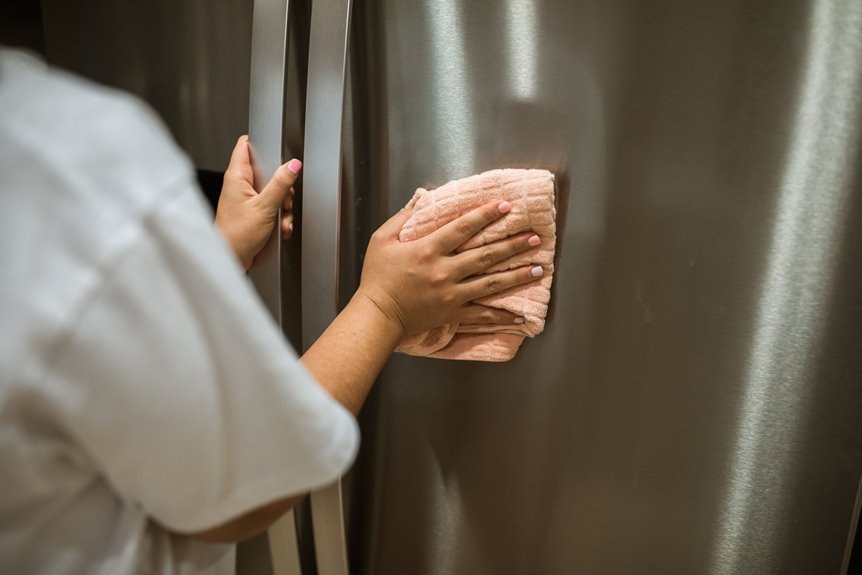
Usually, wiping stainless steel with the grain makes the whole job feel easier and look better right away. You follow the directional brushing, so your cloth works with the finish instead of fighting it. That small move helps you blend away streaks and gives your appliance a calmer, more polished look.
Choose a soft microfiber choice, then move your hand in one steady path from top to bottom or side to side, depending on the lines you see. Provided you keep your pressure light, you’ll protect the surface and avoid extra shine marks.
You’re not just cleaning here, you’re helping your kitchen feel cared for. And whenever you wipe this way each time, your stainless steel starts to look like it belongs in your home, not just in a showroom.
Use Dish Soap on Stainless Steel Appliances
A little dish soap can do a lot of good after you’ve wiped away loose dust and fingerprints with the grain.
Mix a few drops of dish soap into warm water for a simple water dilution, then dip a microfiber cloth into it and wring it out well.
- Wipe the surface gently.
- Use a gentle scrub on sticky spots.
- Rinse the cloth and remove soap film.
- Dry right away with a clean microfiber cloth.
You don’t need to work hard here. A light touch keeps your appliance looking polished and helps you feel at home in a kitchen that shines.
Should a spot still linger, repeat the pass instead of pressing harder. That steady, calm approach protects the finish and keeps your stainless steel looking cared for.
Remove Fingerprints With Vinegar
Mix equal parts vinegar and water in a spray bottle, then mist the smudged area lightly.
Wipe the surface with a soft cloth, moving with the grain so you lift the prints without streaks.
After that, buff the spot dry with a clean towel so your stainless steel looks calm and polished again.
Vinegar Spray Solution
Want an easy way to wipe away those stubborn fingerprints? Mix equal parts water and white vinegar in a spray bottle, and you’ve got a simple cleaner that fits right into your routine.
It feels good to use something basic that still works. For a fresher touch, add a few drops of scented essential oil, and you’ll also have a light homemade deodorizer.
- Spray a small amount on the steel.
- Let it sit for a few seconds.
- Wipe with a soft microfiber cloth.
- Repeat on smudged spots as needed.
This quick step helps you feel on top of the mess, not buried under it. You’re not just cleaning; you’re making your kitchen feel cared for and welcoming.
Keep the spray handy, and those marks won’t stand a chance.
Wipe With Grain
After the vinegar spray has loosened the smudges, wipe the stainless steel in the direction of the grain to lift fingerprints cleanly and avoid streaks. You’ll feel more in control whenever you follow that natural line. Use a soft microfiber cloth and keep your strokes steady, like directional brushing on a fresh surface. This helps the metal look even and cared for.
Should you meet a stubborn mark, press lightly and repeat the pass instead of scrubbing hard. Your microfiber alignment matters because the cloth should move with the grain, not against it. As you work across doors, handles, and panels, you’ll see the shine return and the appliance start to feel right at home again in your kitchen.
Buff Dry Surface
Buff the surface dry with a clean microfiber cloth, and you’ll make those last faint fingerprints disappear fast.
After your vinegar wipe, this step brings back that smooth, cared-for shine you want in your kitchen.
Use microfiber cloths because they grab moisture without scratching, and keep gentle buffing light so you don’t push streaks around.
- Fold the cloth into a soft pad.
- Wipe with small circles, then follow the grain.
- Switch to a dry spot once the cloth feels damp.
- Check handles and edges, where prints love to hide.
You’re not chasing perfection here.
You’re giving your appliance that polished finish that makes the whole room feel tidy and welcoming.
With a little patience, you’ll see the steel glow again.
Handle Tough Stains and Marks
Tackle tough stains and marks with a calm, careful approach, because even the most stubborn spots on stainless steel can usually be lifted without damage.
Start by mixing a little dish soap with warm water, then use a soft cloth to loosen grime.
For sticky marks, hold a warm, damp cloth on the area for a minute before wiping.
Should you see rust, try gentle rust removal with baking soda paste, rubbing lightly with the grain.
For scuffs or dried spills, use a plastic scraper, not anything sharp.
After each treatment, wipe the surface clean and dry it well so the spot doesn’t return.
In case your appliance has protective coatings, trial a concealed spot initially.
You’re handling it like part of the family now.
Polish Stainless Steel for a Brighter Finish
To give your stainless steel a brighter finish, start with a clean, dry surface so the polish can work evenly.
You deserve that fresh, cared-for look, and a few simple steps can bring it back fast.
Then follow these steps:
- Put a small amount of microfiber polish onto a soft cloth.
- Wipe with the grain in smooth, light passes.
- For extra glow, try a tiny olive oil buff on a separate cloth.
- Finish by wiping away any excess so the surface looks even.
As you polish, use calm, steady strokes and let the shine build naturally.
That gentle touch helps your appliances look welcoming again, like they belong in a home that’s loved.
Avoid Scratches While Cleaning Stainless Steel
Scratches can sneak in fast, so it helps to clean stainless steel with a gentle hand from the start. You can keep your appliance looking smooth by using a soft cloth and light pressure, not a scrubby grip. Wipe with the grain, and your strokes will feel easier and safer.
Should you need a little extra lift, choose microfiber alternatives that stay plush and won’t rough up the surface. Rinse your cloth often so trapped grit doesn’t drag across the finish.
You can also protect busy spots alongside protective coatings that help cut down on wear during regular cleanup. Small habits like these make a big difference, and they enable you care for your kitchen without second guessing every swipe.
What Not to Use on Stainless Steel
You should skip abrasive cleaners because they can scratch stainless steel and leave it looking dull fast. Harsh chemicals can also damage the finish, so choose gentler products that protect the shine instead.
Whenever you use the wrong cleaner, it can feel like your appliance is fighting back, and nobody wants that extra hassle.
Abrasive Cleaners
Abrasive cleaners can really do a number on stainless steel, even though they seem like the fastest fix for stuck-on messes.
When you reach for rough powders or pads, you might believe you’re saving time, but you’re inviting dull spots and tiny scratches. That’s why your crowd of careful cleaners skips these abrasive techniques.
- Soft cloths protect the finish.
- Gentle soap lifts grime without scuffing.
- Warm water helps loosen dried spills.
- Microfiber keeps shine steady.
Should you’ve ever tried sanding experiments on a concealed corner, you already know the surface can lose its smooth look fast. So stick with kinder tools, and your appliances will keep that clean, polished feel that makes your kitchen feel cared for and welcoming.
Harsh Chemicals
Some cleaners promise a fast shine, but harsh chemicals can leave stainless steel looking worse than before.
You should skip bleach, ammonia, oven cleaner, and drain cleaner because they can dull the finish and damage the protective layer. Should you breathe in fumes or splash them on your skin, chemical exposure can make cleaning feel unsafe fast. So, keep your routine gentle and stay with mild soap and warm water instead.
Whenever you handle any strong product nearby, wear protective gear like gloves and make sure the room has fresh air. That way, you protect your appliances and yourself.
In case a stain feels stubborn, pause and use a soft cloth with care. Your kitchen deserves that kind of attention, and you do too.
Keep Stainless Steel Appliances Cleaner Longer
With a few steady habits, stainless steel can stay bright much longer between deep cleans. You’re not fighting every smudge alone; you’re building a routine that feels easy. Start with
- Wipe spills quickly so they can’t dry and cling.
- Use a soft microfiber cloth for daily touch-ups.
- Add fingerprint prevention by rubbing on a tiny amount of mineral oil or using protective coatings crafted for stainless steel.
- Keep hands clean before opening doors, and use handles whenever possible.
Next, dry the surface after wiping so water spots don’t settle in.
Also, clean along the grain’s direction, because that helps the finish look smooth and cared for.
These small moves protect your appliance and save you from that “why is it marked again?” feeling.
How Often to Clean Stainless Steel Appliances
Most people don’t need to clean stainless steel every day, but a light daily wipe can stop fingerprints and smudges from piling up.
For daily upkeep, use a soft microfiber cloth and a little warm water, then dry the surface so it keeps its shine.
Should you cook often or have kids grabbing doors, you might need a quick wipe more often.
Once a week, give your appliances a fuller clean with a mild cleaner to remove grease and sticky spots.
Then, plan seasonal deep cleaning every few months to reach handles, seams, and edges you usually miss.
This simple rhythm helps your kitchen stay calm, polished, and ready for company, without turning cleaning into a full-time job.
Frequently Asked Questions
Can I Clean Stainless Steel Appliances With Baby Wipes?
Yes, but don’t rely on baby wipes alone. You will face baby wipe limitations and residue concerns, so wipe gently, then dry and buff. A little prevention goes a long way, and you will fit right in.
Will Stainless Steel Cleaners Damage Colored Appliance Finishes?
Usually you won’t damage colored finishes provided you choose a cleaner made for them. You will protect coating integrity and reduce color fade by checking initially, wiping gently, and avoiding harsh abrasives or ammonia.
How Do I Clean Around Appliance Handles and Crevices?
Use microfiber swabs and grout brushes to reach handles and crevices. You will lift grime gently, protect the finish, and keep your appliances looking cared for. Join the tidy crew with confidence.
Can Hard Water Spots Be Removed From Stainless Steel?
Yes, you can remove hard water spots, and you’ll feel right at home once they vanish. Gently use vinegar, then dry well; tackle mineral buildup promptly, because surface etching can make stains look permanent.
Is It Safe to Use Olive Oil on Stainless Steel?
Yes, you can use olive oil sparingly on stainless steel, but you should wipe it well. It is food safe, yet it can leave residue buildup and surface discoloration if you overapply it.