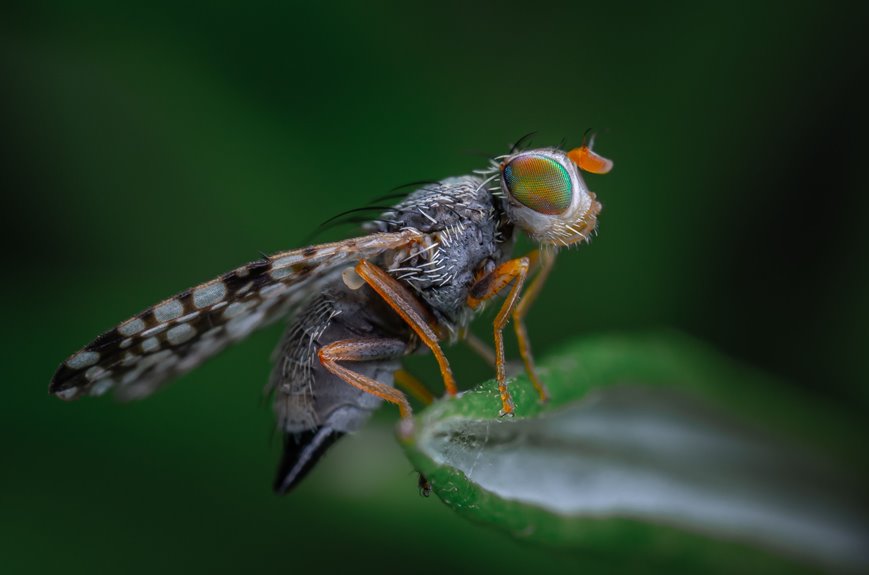
Yes — fruit flies often appear after a forgotten banana, yet they frequently breed in drains, trash, damp soil, or spills nearby. Start by locating the source: inspect sink drains, garbage, potted plants, and any sticky surfaces. Remove or clean whatever attracts them, and seal trash and food containers. Use simple traps like vinegar jars or sticky traps to cut adult numbers quickly. With source control and traps used together, infestations clear up within days.
Why Fruit Flies Appear Indoors
In many homes, fruit flies show up because they only need a tiny food source and a little moisture to settle in.
You may notice them after you bring home ripe produce, leave a drink out, or forget a trash can lid.
Warm rooms help them move faster, and seasonal migration can nudge them indoors whenever outdoor conditions change.
They also slip in through open doors or windows, especially when ventilation issues let damp air linger.
That mix of warmth, moisture, and easy access makes your kitchen feel inviting to them, even while you’re just trying to make dinner.
Should you see a few, you’re not alone.
Many people deal with the same thing, and it usually means your home has the kind of comfort they can’t resist.
Find the Breeding Source First
Start near hunting down the place where the fruit flies are raising their tiny families. You’ll save time whenever you focus on the source, not the swarm.
To begin, inspect drains, since sticky residue can hide a nursery there. Then check potted soil, especially provided it stays damp and rich.
Next, look under sink liners, trash can lids, and the bottoms of recycling bins. These spots often feel ordinary, but they can shelter the eggs and larvae that keep the problem going.
As you search, stay calm. You’re not behind, and you’re not alone in this. A careful sweep gives you control and makes the next cleanup work better.
Once you find the breeding site, you can tackle the real problem with confidence and a little less frustration.
Throw Out Overripe Fruit and Produce
Check your ripening fruit and vegetables each day, because one soft banana or bruised peach can turn into a fruit fly magnet fast.
Toss out anything mushy or overripe, and don’t let forgotten produce sit around for a second chance at greatness.
Then clean your storage bins and drawers, since sticky residue and tiny spills can keep the problem going.
Inspect Ripening Produce
Fruit flies love ripe fruit, so you’ll want to inspect your produce often and move fast as something starts to soften too much.
A quick daily glance can save you a lot of hassle later. Whenever you put groceries away, check firmness with your fingertips and observe scent as you go.
Should a peach feel extra tender or a banana smell sweeter than usual, it’s time to pay closer attention.
Keep fruit in one spot so you can spot changes easily, and stay with the routine even whilst life gets busy.
You’re not being fussy here, you’re protecting a shared, welcoming kitchen. A little attention helps everyone enjoy fresher snacks, cleaner counters, and fewer tiny pests buzzing around your space.
Discard Softened Fruit
Once a peach turns mushy or berries begin to leak, toss them right away so they don’t keep feeding fruit flies. You’re not being wasteful, you’re protecting your kitchen and your peace of mind.
Whenever you check texture, press gently and trust your hands. Should the fruit feel soft, shriveled, or sticky, move it out of the bowl fast. Then sort the rest with care, because one bad piece can spoil the group.
You can compost softened fruit provided your bin is sealed and you empty it often. That keeps scraps from sitting around and drawing pests back in.
Should a banana look bruised but still firm, use it soon. The goal is simple: keep only fresh produce where you can see it, and give the rest a quick exit.
Clean Storage Bins
Give your storage bins a fresh start through emptying them out and tossing anything overripe, bruised, or forgotten. You’ll cut off a big fruit fly food source and make your kitchen feel calmer fast.
Wipe each bin with hot soapy water, then dry it well so no damp spots stay behind. Should sticky juice have built up, scrub the corners too, because flies love those tiny leftovers.
Next, move fresh fruit and produce into airtight containers whenever you can, especially for items that spoil quickly. This helps you protect food and keeps smells from spreading.
Finally, arrange the clean bins on labeled shelving so you can spot old produce before it hides. Once you keep things clear, you help your home feel more organized, welcoming, and fly free.
Clean Drains, Trash Cans, and Disposals
You can cut down fruit flies fast through cleaning the places where they breed, starting with drain buildup, trash cans, and your garbage disposal.
Scrub the inside of your trash can, rinse away sticky residue, and clear slimy gunk from drains so flies have fewer spots to hide and lay eggs.
Then flush and clean the disposal often, since food scraps can linger there and keep the problem going.
Drain Buildup Removal
Drain buildup can turn a clean kitchen or bathroom into a fruit fly magnet fast, so start there provided the tiny pests keep showing up. You can fix the concealed gunk without much stress, and you’re not alone in this. Pour hot water through the drain, then use enzymatic cleaners to dissolve sticky buildup. In case the slime clings, work a pipe snake through the opening to loosen it.
| Step | What you do |
|---|---|
| 1 | Flush with hot water |
| 2 | Add enzymatic cleaners |
| 3 | Scrub the drain opening |
| 4 | Use pipe snakes as needed |
Afterward, rinse again and check for slow draining. Once the drain stays clear, fruit flies lose their favorite place to breed, and your space feels fresher right away.
Trash Can Sanitizing
Trash cans can turn into a concealed fruit fly nursery faster than you’d expect, so it’s worth tackling them right after the drains. You’re not alone when the smell hits initially; these pests love warm leftovers and sticky residue. Wash the can with hot soapy water, then dry it fully so moisture doesn’t invite more flies.
- Use odor neutralizers on the inside and lid.
- Replace liners often, especially after fruit scraps.
- Wipe the rim, handle, and bottom edge.
- Keep the lid closed between pickups.
Should juice or food leaks out, clean it right away. A fresh liner replacement and a clean surface help your kitchen feel calmer and more welcoming.
That small routine protects your space and helps everyone in the home breathe easier.
Garbage Disposal Cleaning
A clean trash can helps, but the garbage disposal often hides the next fruit fly problem.
You can keep your kitchen calmer by running cold water, then grinding citrus peels or ice to loosen stuck bits.
After that, scrub the rubber splash guard and rinse the drain opening.
This simple disposal maintenance helps with odor control and cuts the damp crumbs flies love.
Should smells persist, use enzyme treatments to decompose residue in the trap and drain lines.
You can also wipe the sink rim and empty the bin nearby, so the whole area feels fresh.
Whenever you stay on top of your garbage disposal, you make your kitchen less inviting for pests and more comfortable for everyone at home.
Wash Dishes and Wipe Sticky Surfaces
Every day, wash any dishes, cups, and utensils right after you use them, because leftover food and even a thin film of juice can draw fruit flies fast.
Then wipe counters, table edges, and sink rims with a damp cloth so sweet residue doesn’t linger.
Whenever you clean utensils, you also cut off easy feeding spots that help flies settle in.
Should your sponge starts smelling musty, sanitize sponges often, because a dirty one can spread grime instead of removing it.
- Rinse sticky jars and lids
- Dry the sink after dishes
- Sweep crumbs from corners
- Check behind coffee makers
These small habits help you feel on top of your space, and they make your kitchen feel calmer, cleaner, and more welcoming for everyone who shares it.
Make a Vinegar Fruit Fly Trap
You can make a simple vinegar fruit fly trap with a few basic ingredients, like apple cider vinegar, a drop of dish soap, and a small jar or bowl.
Set it near the problem area so the smell pulls the flies in, and the soap helps keep them from escaping.
Check the trap each day, and refresh the mixture once it starts to lose its strength.
Vinegar Trap Ingredients
Mixing up a vinegar trap is one of the easiest ways to start cutting down fruit flies fast. You only need a few simple ingredients, and they work well together. Apple cider vinegar gives off the smell that draws flies in, while a drop of dish soap breaks the surface so they sink. A little sugar can help enhance the scent, and the container should be easy for you to cover with a plastic wrap seal. Use what you already have, and you’ll feel more in control right away.
- Apple cider vinegar for the lure
- Dish soap to trap them
- Sugar for a stronger scent
- A small cup or bowl to hold it
Setting Up The Trap
Set the trap near the trouble spot, and give the flies no room to hide. You can use a small jar or cup, then line the top with a paper towel provided you want extra support around the opening.
Next, shape a cone from paper and slip it in as a taped funnel, leaving a small gap at the tip. That gap helps flies go in but not out.
For bait placement, pour the vinegar mixture into the bottom, then check the placement depth so the liquid sits low enough for easy entry. Keep the trap steady on a flat counter, away from busy hands, and you’ll make your kitchen feel like a team effort.
Whenever you set it with care, you give yourself a simple win.
Replacing The Mixture
After the trap starts catching flies, the bait won’t stay fresh forever, and that’s normal. You don’t need to fuss over it. Just replace weekly so the vinegar smell stays strong and the fruit flies keep coming back.
Should the liquid look cloudy, have bugs floating in it, or smell weak, it’s time to refresh weekly. Pour out the old mix, rinse the container, and add new apple cider vinegar with a drop of dish soap.
You can keep the same paper cone or plastic wrap top provided it still fits. Whenever you stay on this simple routine, you’re not fighting the problem alone. You’re keeping your kitchen a little calmer, and that feels good.
- Check the trap every few days
- Dump out old bait
- Rinse the container well
- Refill with fresh mixture
Use Vinegar, Soap, or Wine Traps
Whenever fruit flies keep buzzing around your kitchen, a simple trap can help you take back control fast. Mix apple cider vinegar with a drop of dish soap in a small bowl, then cover it with plastic wrap and poke tiny holes. The sweet scent pulls them in, and the soap keeps them from escaping.
Should you don’t have vinegar, try a little wine or another fermented bait alternative in the same setup. You can also set nearby natural repellent plants, like basil or mint, to make the space feel less inviting.
Place your trap close to fruit bowls, drains, or trash, where flies gather most. Check it daily, refresh the bait, and keep going. You’ve got this, and your kitchen can feel calm again.
Use Fruit Fly Sprays Safely
Provided you choose a fruit fly spray, use it carefully so you solve the problem without adding a new one. You’re not alone in wanting fast relief, and the right approach can feel manageable. Read the label initially, then wear protective gear like gloves and a mask in case the directions ask for it. Spray only where fruit flies gather, and keep food, dishes, and pets away until the area is safe.
- Try homemade sprays only when the recipe is trusted and mild.
- Trial a small spot before you treat the whole area.
- Ventilate the room while you spray.
- Store the bottle away from kids and pets.
When you stay calm and follow directions, you protect your home and your peace of mind.
Block Entry Points With Screens and Seals
Fruit flies often slip in through the tiniest gaps, so sealing your home can make a real difference fast. You deserve a space that feels calm, and a few simple fixes can help protect it.
Check window screening for tears, loose corners, or bent frames, then patch or replace them right away. Next, add door sweeps to exterior doors so bugs can’t sneak under the edge whenever you come and go. You can also inspect threshold gaps and weatherstripping, since small cracks invite unwanted visitors.
In case you share your home with kids or pets, choose sturdy materials that stay put. These steps don’t take long, and they help you keep your place more comfortable, clean, and fruit-fly free without turning home care into a chore.
Keep Your Kitchen Dry and Unattractive
A dry kitchen is much less welcoming to fruit flies, so start from cutting off the moisture they love. You can create a cleaner, calmer space by wiping sinks, counters, and backsplashes after each use.
Then improve airflow management by opening a window or running a fan whenever you cook or wash dishes.
- Fix dripping faucets fast.
- Empty and dry sponge holders.
- Keep dish towels fresh and spread out.
- Wipe up spills before they sit.
Good moisture control also means checking under the sink and around the fridge for damp spots.
Once you keep surfaces dry, you make your kitchen feel cared for, and fruit flies lose the cozy little home they wanted.
Handle Houseplants and Compost Bins
Houseplants and compost bins can quietly keep fruit flies hanging around, even though your counters are spotless.
Inspect damp soil initially, because these tiny pests love to nest there. Let the top inch dry, then improve soil aeration with a chopstick or small fork. That simple step helps roots breathe and makes the pot less cozy for flies. Also, make sure pot drainage works well, so water doesn’t sit at the bottom like an unwanted guest.
For compost, keep the lid tight and add fresh scraps often, then cover them with dry material like shredded paper. In case you store kitchen scraps indoors, empty the bin often and rinse it out.
Small changes like these help you feel in control and keep your space feeling welcoming.
Prevent Fruit Flies From Coming Back
Once you’ve cleared out the main hiding spots, keep the area less inviting through staying ahead of the mess that draws flies back in. You’ll protect your home best whenever you treat cleanup like a shared habit, not a one-time fix.
Wipe counters, empty trash often, and rinse sticky cans before they sit. Then check for seasonal patterns, since warmer weeks can bring faster breeding. Should you cook, snack, or host friends, clean right after so everyone enjoys the space without surprise guests.
- Seal fruit in the fridge or a closed bowl
- Scrub drains and sink edges every few days
- Wash towels and sponges before they smell
- Keep compost lids tight and dry
These small steps also open marketing opportunities for fresh produce habits, because a tidy kitchen feels welcoming, calm, and ready for company.
When to Call a Pest Control Pro
When the flies keep showing up even after you’ve cleaned the kitchen, it could be time to call a pest control pro. You’re not failing, and you don’t need to keep fighting alone.
A professional assessment can find concealed breeding spots in drains, wall voids, or spoiled food you might’ve missed. In case the problem spreads to other rooms, gets worse fast, or keeps returning after traps and cleaning, a pro can give you a clear plan.
You should also ask about insurance coverage in case the flies came after water damage or another home issue. That way, you know what help could be available. With the right support, you can get your space back and breathe easier.
Frequently Asked Questions
How Long Do Fruit Flies Usually Live Indoors?
You’ll usually see fruit flies live about 30 days indoors, though the typical lifespan can shrink or stretch with environmental factors like warmth, food, and moisture. You can limit their stay by cleaning up quickly.
Can Fruit Flies Breed in Sink Drains?
Yes, they can; your sink drain can become a tiny nursery provided drain biofilms feed them and sewer access lets adults enter. You’re not alone—scrub, flush, and seal to reclaim your shared home.
Do Fruit Flies Bite Humans or Pets?
No, you do not need to worry; fruit flies do not bite humans or pets. Their feeding behavior targets fermenting fruit and spills, so your bite risk is basically zero and you are safe together.
Are Fruit Fly Traps Safe Around Children?
Yes, you can use fruit fly traps safely around children provided you choose non toxic ones and keep them out of reach. Like a nightlight in a hallway, smart trap placement protects child safety while you can rest at ease.
Why Do Fruit Flies Keep Returning After Cleaning?
You’re missing concealed breeding spots: rotting produce, drains, trash, or damp mops. They lay eggs fast and room temperature clusters hatch quickly. Clean deeper, seal food, and you will keep your home feeling welcoming.